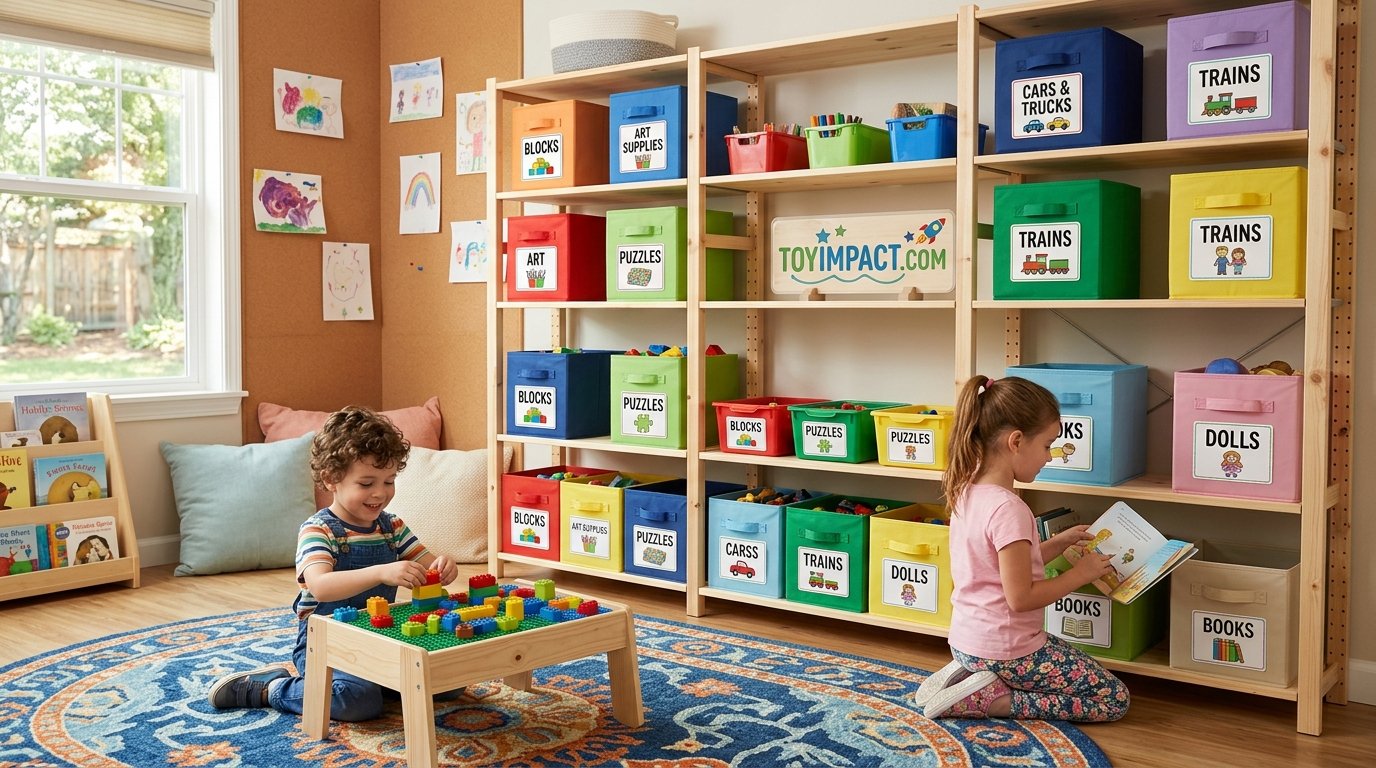
How to Organize Toy Storage in Small Spaces
A room-by-room, budget-friendly system for taming toy clutter when square footage is tight — no renovation required.
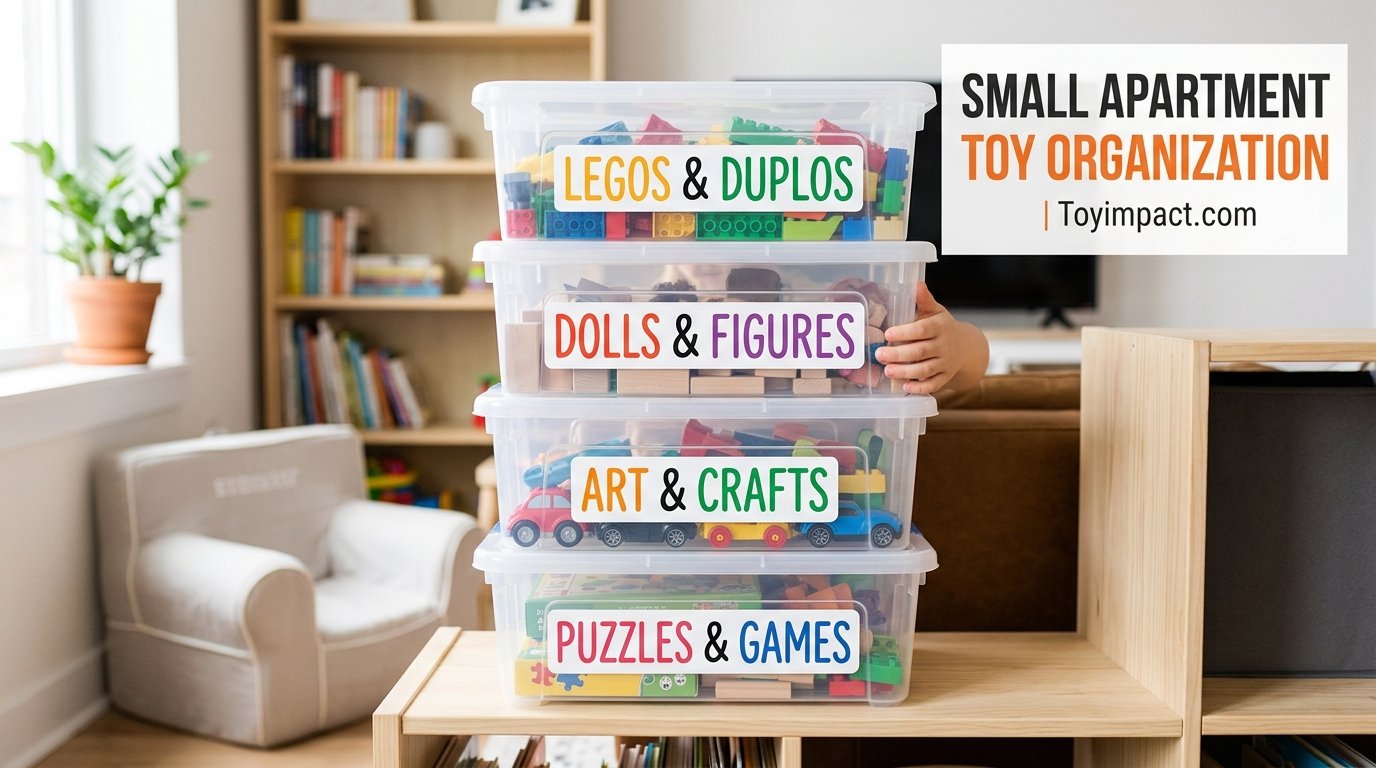
If your living room doubles as a playroom, a toy tornado every evening, and a landmine of stray LEGO bricks in the morning, you’re not alone. Small spaces make toy storage feel like an impossible puzzle — there’s rarely a dedicated playroom, closet space is limited, and every square foot has to pull double duty. The good news is that organizing toys in a small home isn’t about owning less stuff (though that helps) — it’s about using the right systems, furniture, and habits so toys have a defined “home” instead of drifting across every surface.
This guide walks through a complete, practical system for organizing toy storage in apartments, small houses, shared bedrooms, and multi-purpose living rooms. We’ll cover vertical storage, furniture that hides clutter, rotation systems that reduce the volume of toys out at once, and room-specific setups so you can adapt the plan to your actual space.
Step 1: Audit and Declutter First
Sort before you store
Before buying a single bin, pull every toy out into one pile. It sounds chaotic, but seeing the full volume is the only way to know how much storage you actually need — and it’s usually far less than what’s spread across the house right now. Sort into four piles: keep and use often, keep but rotate, donate, and toss (broken pieces, missing-parts puzzles, fast-food toys).
Aim to cut total toy volume by at least a third. Fewer toys means smaller storage furniture, which is exactly what small spaces need. For age-specific guidance on what’s worth keeping, see our guide on how often to rotate kids’ toys.

Clear Stackable Storage Bins (Set of 6)
See-through bins make sorting and daily cleanup dramatically faster.
Check Price on AmazonStep 2: Zone Your Space by Activity
Group toys by how they’re played with
Instead of one giant toy box, create small zones: a building zone (blocks, LEGO), a pretend-play zone (kitchen sets, dolls), an art zone (crayons, paper), and a quiet zone (books, puzzles). Zoning means kids know exactly where to grab and return items, which cuts down on the “everything everywhere” spread that eats up small rooms.
Pair this with our guide to educational toys for 3-year-old boys if you’re stocking a building or STEM zone from scratch.
Step 3: Go Vertical With Wall Storage
Use wall height, not just floor space
Floor space is the scarcest resource in a small home, but wall space is usually wide open. Floating shelves, pegboards, and hanging mesh bags let you store toys up and off the floor, which also makes rooms visually calmer.
Keep the bottom shelf within a toddler’s reach for independent cleanup, and reserve higher shelves for toys with small parts. Pegboards are worth a special mention here: a single 2-foot-by-4-foot pegboard panel, hung with S-hooks and small bins, can hold an entire category of toys — matchbox cars, dress-up accessories, or craft supplies — using only a few inches of depth off the wall. Magnetic knife strips, usually sold for kitchens, also do double duty as budget wall storage for metal die-cast cars and trains.

Floating Wall Shelves (Set of 3)
Adds display and bin storage without using any floor footprint.
Check Price on AmazonStep 4: Use Multi-Purpose Furniture
Let furniture hide the clutter
Storage ottomans, benches with lift-top seating, and beds with built-in drawers turn “dead” furniture into hidden toy storage. This is one of the highest-impact changes for a small living room that also functions as a playroom.
Pros of Multi-Purpose Furniture
- Doubles as seating or a coffee table
- Hides visual clutter instantly
- Works in shared or guest-facing rooms
Cons to Consider
- Deep bins can bury smaller toys
- Heavier lids aren’t ideal for very young toddlers
- Costs more upfront than open bins
Step 5: Set Up a Toy Rotation System
Store, don’t display, the overflow
Keep only a fraction of the toy collection accessible at any time — the rest goes into labeled bins in a closet, under a bed, or on a high shelf. Swap every couple of weeks. Kids play more deeply with fewer options, and this alone can solve most small-space storage problems without buying anything new.
Read more on cadence in our guide to how often to rotate kids’ toys. Rotation also pairs naturally with keeping certain toys deliberately out of reach — not locked away forever, but offered as a planned activity rather than left as constant background clutter. Many parents find this cuts down on the “bored five minutes after cleanup” cycle, since a toy that’s been out of sight for two weeks gets played with far more intently than one that’s been sitting on the floor the whole time.
Step 6: Label Everything for Easy Cleanup
Make cleanup a kid-led task
Picture labels (for pre-readers) or word labels on bins tell kids exactly where each toy belongs. This is the step that actually keeps a small space organized long-term — without it, even the best bins end up as a mixed dumping ground within a week.

Picture + Word Bin Labels (Reusable)
Waterproof, reusable labels that work for pre-readers and older kids alike.
Check Price on AmazonRoom-by-Room Storage Ideas
Living Room
Use a storage ottoman as the coffee table, add a slim bookshelf against an unused wall, and keep only the current rotation bin visible. Pair with our shared-play toy picks for siblings so the living room bin covers multiple ages at once.
Shared Bedroom
Assign each child a labeled under-bed bin and a top shelf for personal items, keeping shared toys in the main zone. See best toys for siblings to play together for picks that minimize duplicate storage needs.
Apartment / No Playroom
Lean entirely on vertical wall storage and rotation — this is the setup where cutting toy volume matters most. A rolling cart can also double as mobile storage that tucks into a closet.
Car and Travel Storage
Small spaces extend to the car. A soft organizer with individual pockets keeps travel toys contained; see our best toys for car rides and long trips for space-efficient picks, and best travel toys for airplane trips for carry-on-sized options.
| Room | Best Storage Type | Key Tip |
|---|---|---|
| Living Room | Storage ottoman / slim shelving | Keep only current rotation visible |
| Shared Bedroom | Under-bed bins, labeled shelves | One bin per child, one shared zone |
| Apartment | Wall shelving, rolling cart | Rotate aggressively, cut volume |
| Car | Hanging seatback organizer | Limit to travel-only toy set |
Toy Storage by Age
The “right” storage setup changes a lot as kids grow, because the toys themselves change shape, size, and how independently a child can put them away. Matching storage to developmental stage prevents a lot of wasted furniture purchases — a beautiful bin system a toddler can’t lift the lid on, for example, just becomes a parent-only chore.
Baby Toy Storage (0–12 months)
At this stage, toy storage is really about convenience for whoever is doing the picking up — usually a parent holding a baby in one arm. Soft-sided baskets, a low open bin near the changing area, and a single shallow tray for teethers and rattles are enough. Skip lids and latches entirely; babies aren’t putting anything away yet, and fumbling with a lid one-handed defeats the purpose. A rolling cart next to the crib or play mat keeps board books, soft blocks, and rattles within arm’s reach without needing a dedicated nursery shelf.
Toddler Toy Storage (1–3 years)
Toddlers are mobile, curious, and not especially gentle with storage furniture, so this is where low, open shelving really earns its keep. A funky storage ottoman that doubles as a stool works well here — toddlers can climb up, sit, and dig through the bin without needing help. Avoid anything with a heavy hinged lid a small hand could get caught under; open bins or lightweight fabric baskets are safer and just as functional. This is also the age where toy rotation starts to matter, since toddlers genuinely can’t process a room with fifty toys visible at once — a smaller active rotation reduces overstimulation as much as it reduces clutter.
Preschool Toy Storage (3–5 years)
Preschoolers can follow a labeled system independently, which makes this the ideal age to introduce picture labels and a consistent “everything has a home” rule. Clear bins matter more here than at any other age, because preschoolers are visual — if they can’t see what’s inside a bin, they’ll dump it out to check. Low shelving at eye level, sorted by category (blocks, cars, dress-up, art), supports the kind of independent play and independent cleanup this age group is capable of with the right setup.
School-Age Toy Storage (6+ years)
By school age, toy collections shift toward LEGO sets, board games, collectibles, and hobby gear, and storage needs to shift with them. Stackable bins with compartments, a dedicated shelf for board games stored spine-out, and closet space for bulkier items (scooters, sports gear) tend to work better than open floor bins at this stage. This is also a good age to hand over more control of the system — letting a child choose their own labels or bin arrangement tends to improve buy-in on keeping it tidy.
Montessori-Style Low Shelving
Child-led access, adult-led curation
A Montessori-inspired approach to toy storage doesn’t require a special shelf brand — it’s really a philosophy about height and quantity. Toys and materials sit on a low, open shelf at the child’s height, so nothing needs to be requested or reached for with help. Each item gets its own visible spot rather than being grouped into a bin, which naturally limits how much can be displayed at once and encourages a child to finish one activity before starting another.
In a small space, this pairs especially well with rotation: instead of a large shelf holding everything, use a compact 3- or 4-shelf unit with only 6–10 items displayed, and swap the contents from your stored rotation bins every couple of weeks. The shelf becomes a “menu” of current activities rather than a storage dump, which keeps a small room looking intentional instead of cluttered even when it’s fully stocked for play.
Trays are a useful add-on to this system — placing a puzzle, a matching game, or a set of loose parts on its own tray keeps activities contained and makes it obvious when something is finished and ready to go back on the shelf.
Closet Toy Storage Ideas
Turn a shallow closet into a toy hub
The closet is one of the most underused storage spaces in a small home, mostly because it defaults to a single high rod and one shelf. Removing the rod (or lowering it) and adding stackable shelving units instantly doubles or triples usable storage. Over-the-door organizers with clear pockets are ideal for small, loose items — art supplies, small figures, card games — since they use the back of the door, a surface that’s otherwise completely wasted.
For bulkier items like ride-on toys, dollhouses, or large building sets, floor-level closet space works best when paired with a labeled bin system rather than loose stacking; loose stacking is what turns a closet into the place toys go to disappear. A tension rod mounted partway up a closet can also hold hanging mesh bags for stuffed animals or dress-up clothes, using vertical space that would otherwise sit empty above floor-level bins.
If the closet is being used for toys instead of clothes entirely, consider adding a second, lower rod or shelf specifically sized for a child’s reach — this turns “the closet” into functional storage a child can use without asking for help, which reduces how often toys get abandoned on the floor because putting them away required an adult.
Under-Bed Storage Solutions
Use the most overlooked square footage in the room
The space under a bed is often the single largest unused storage area in a small bedroom, and it’s especially useful for toys that don’t need to be part of the daily rotation — off-season items, larger sets currently in storage, or a sibling’s personal bin in a shared room. Low-profile bins with wheels make it easy to pull the whole thing out rather than reaching blindly under the bed frame, and clear bins again help avoid the “which one has the puzzles” guessing game.
Bed risers are a simple, inexpensive way to add several extra inches of clearance if a standard bed frame sits too low for a full-size bin. For shared bedrooms, assigning one under-bed bin per child — each with its own label or color — keeps personal items separate from the shared toy zone without needing extra furniture in an already tight room.
Under-bed storage works best for items accessed occasionally rather than daily favorites; toys a child wants several times a day are better placed somewhere they can reach and return to without help, since bending down and pulling out a heavy bin adds enough friction that cleanup starts getting skipped.
Storage by Toy Category
Different toy types genuinely need different storage approaches — a system built around blocks and LEGO won’t work well for stuffed animals or board games. Matching the container to the category cuts down on the “one giant bin” problem almost automatically.
Stuffed Animals
Stuffed animals are bulky, soft, and don’t stack well in a rigid bin, which makes them one of the trickiest categories in a small space. Hanging mesh bags on a wall, the back of a door, or inside a closet contain them without eating floor or shelf space, and the mesh lets kids see favorites at a glance. A large woven basket also works well for stuffed animals specifically, since it can be left out in a living room without looking overtly “toy-like,” and stuffed animals don’t have small parts that need to stay contained the way blocks or puzzles do.
Board Games and Puzzles
Board game boxes are awkward shapes that don’t stack cleanly with anything else, so giving them their own dedicated shelf — stored spine-out like books — keeps them from crushing softer items in a mixed bin. For puzzles, shallow trays work far better than deep bins, since a deep bin means digging through loose pieces from three different puzzles at once. Ziplock bags or small pouches inside each puzzle box also prevent pieces from migrating between games during storage.
Art and Craft Supplies
Art supplies benefit from a caddy or drawer system rather than a single bin, since crayons, markers, paper, and glue all have different shapes and needs. A rolling cart with several small drawers is a popular small-space solution here because it can move to wherever the art zone is set up that day and roll back into a closet corner afterward. Keeping paper flat in a slim folder or tray (rather than rolled or bunched into a bin) also prevents the crumpled-paper clutter that tends to pile up around an art zone.
Bath Toys
Bath toys need to drain and dry, so a solid bin is actually the wrong container — mesh or mesh-bottomed bins that hang from a suction hook on the tub wall let water drain out instead of pooling and growing mildew. This is a small but important category-specific fix: matching container to material (mesh for wet toys, solid bins for dry ones) avoids a recurring maintenance headache rather than just a storage one.
Outdoor and Backyard Toys
Balls, sidewalk chalk, bubbles, and other outdoor toys don’t need to compete for indoor space at all if there’s any exterior storage available — a small deck box, a lidded bin by the door, or a wall-mounted rack in a garage or entryway keeps them out of the living room entirely while staying grabbable on the way outside. For apartments without outdoor storage, a single labeled bin by the entry door serves the same purpose at a smaller scale.
Dress-Up and Costumes
Dress-up items do best on hooks or a small tension-rod rack rather than folded into a bin, since costumes get worn far more often when they’re visible and easy to grab than when they’re buried. A few decorative hooks on the back of a closet door or a low wall are usually enough for a rotating dress-up collection in a small room.
DIY and Budget-Friendly Storage Ideas
Storage doesn’t have to be purchased new
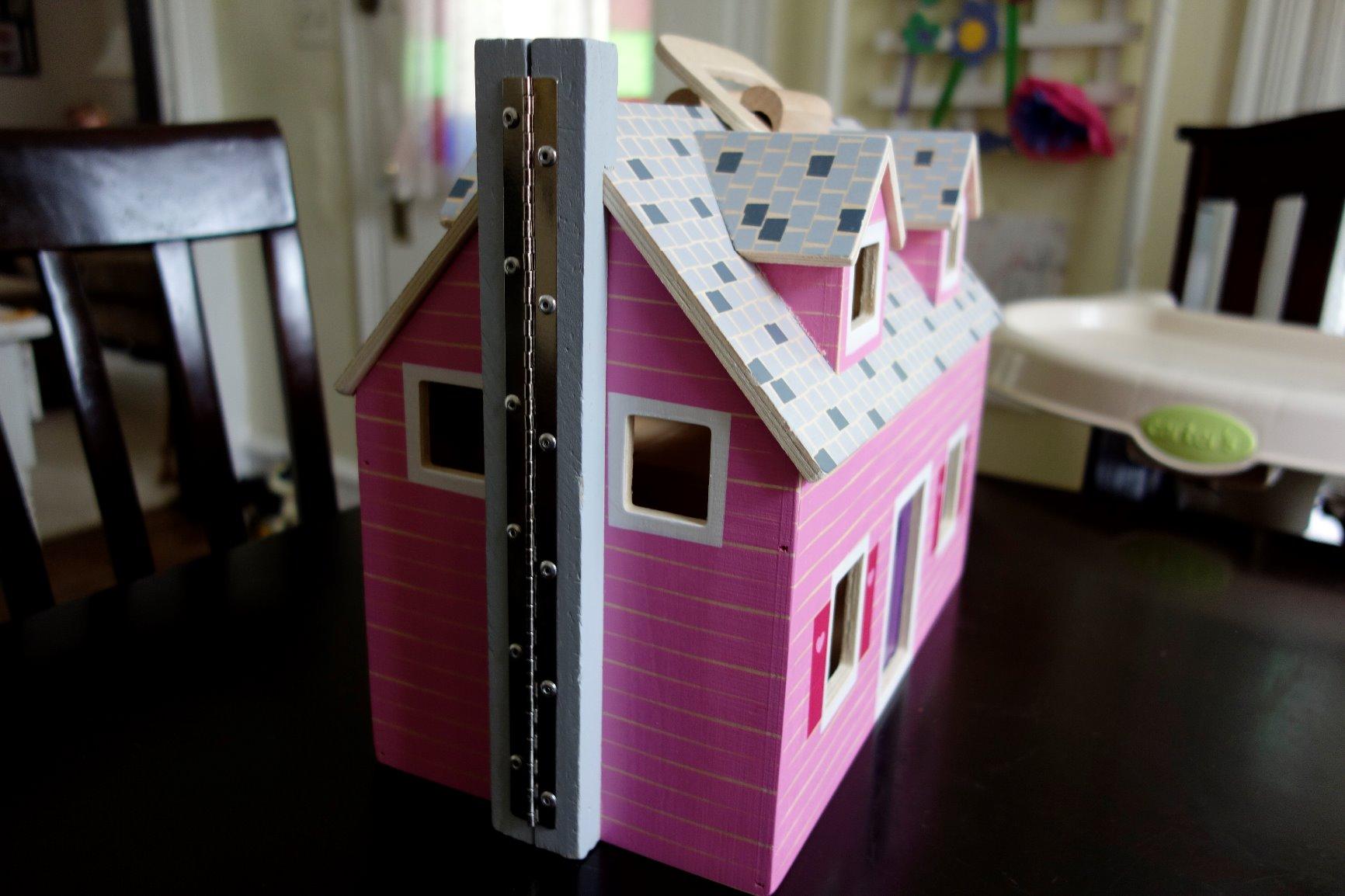
Some of the most effective small-space toy storage costs little to nothing. Sturdy gift boxes with lids make surprisingly good drawer-style storage for small items, and they tend to be sturdier than shipping boxes despite their smaller footprint. A repurposed dollhouse a child has outgrown can become an open-front storage cabinet for figures and small dolls instead of being donated outright. Decorative buckets — especially ones a child helps paint or decorate — add a sense of ownership that plain storage bins don’t, which can make cleanup feel less like a chore.
Secondhand furniture is also worth checking before buying new: local buy-sell-trade groups, yard sales, and thrift stores frequently have bookshelves, cube organizers, and small dressers in good condition at a fraction of retail cost, and repainting a secondhand piece is an easy weekend project that fits a small room’s color scheme exactly.
Repurposing furniture already in the home is another zero-cost option — a mantle, a low bookshelf originally meant for adult books, or a media cabinet no longer holding DVDs can all be reassigned to toy storage duty once the original contents are cleared out.
No-Playroom Living Room Deep Dive
Designing around a shared adult-and-kid space
When the living room is the only play space in the home, the goal shifts from “storage” to “storage that also looks like a living room.” Floating the main seating arrangement away from one wall — even by a few feet — can free up a surprisingly usable strip of space for a low shelf or art station without shrinking the room’s main function. This keeps the play zone visually distinct from the seating zone, which helps both kids and guests read the room correctly.
Storage ottomans are a popular pick here, but they’re worth a second look before committing: a heavy hinged lid isn’t ideal for a toddler who wants independent access, and if the ottoman also serves as a footrest or extra seat, digging through it for a specific toy gets old fast. A console table with baskets underneath, or a low bench with cubbies instead of a solid lid, can offer similar hidden storage with faster, easier access.
Kids also tend to play better at a low table than directly on the floor, so if space allows, a small collapsible or nesting table near the storage zone gives play a defined “spot” the same way a kitchen table defines mealtime — which indirectly keeps toys from spreading across the whole room.
Nursery Toy Storage
Keep it simple and one-handed
Nursery toy storage should assume the person putting things away is holding a baby, running on little sleep, or both. A single open basket near the crib or glider, a shallow shelf for board books at arm’s reach, and a soft bin for oversized plush toys cover most of what a nursery actually needs. Skip anything with small parts stored at floor level, since crawling babies will find and mouth anything within reach regardless of what bin it’s supposed to be in.
As the nursery transitions into a toddler room, the same furniture can usually be repurposed rather than replaced — a low open shelf just needs its contents swapped from rattles and board books to blocks and puzzles, which is a good example of how choosing simple, low storage early pays off across multiple stages instead of needing a full redo.
Toy Storage Safety Tips
Storage should never create a new hazard
It’s easy to focus entirely on tidiness and forget that storage furniture itself needs to be safe around small children. Any bookshelf or cube organizer taller than it is wide should be anchored to the wall with an anti-tip strap, especially in a small room where a child is likely to climb it to reach a top shelf. This matters even more in tight apartments, where furniture often gets pushed against every available wall and climbed on more than it would be in a spacious playroom with open floor area to play on instead.
Toy chests and ottomans with hinged lids deserve a specific safety check: look for a lid-support hinge that prevents the lid from slamming shut on small fingers, and confirm there are ventilation gaps in case a child ever climbs inside and the lid closes. If an older toy chest in the home doesn’t have these features, it’s worth either retrofitting a soft-close hinge or retiring the piece in favor of an open-bin alternative.
Small parts are the other major safety consideration tied directly to storage. Toys with pieces smaller than a toilet paper tube shouldn’t be stored at floor level in a home with a crawling baby or toddler, regardless of how well-labeled the bin is — a bin lid isn’t a reliable barrier against a determined toddler. Keeping small-parts toys on a higher shelf, in a latched bin, or in a separate room entirely is a more dependable safety layer than labeling alone.
Finally, keep an eye on weight distribution in wall-mounted storage. Floating shelves and pegboards are excellent for saving floor space, but they need to be rated for the actual weight of what’s stored on them — a shelf rated for books may sag or pull loose under a row of dense wooden toys. Checking the weight rating before mounting avoids a shelf failure that could send toys (and hardware) down onto a child playing below.
Choosing Storage Materials: Fabric, Plastic, and Wood
Match the material to the room, not just the toy
Plastic bins are the default for a reason — they’re inexpensive, wipeable, and often come in stackable, clear designs that make contents easy to see. In a small space, clear plastic specifically earns its price premium over solid colors, since being able to see what’s inside without opening every bin saves real time during a quick cleanup.
Fabric bins and baskets bring a softer look that blends more naturally into a shared living room or a room where the storage needs to look presentable to guests. They’re generally lighter than plastic, which matters for anything stored on a higher shelf, but they don’t hold their shape as well when partially empty and can’t be wiped down the way plastic can, so they’re a better fit for dry goods like stuffed animals or soft blocks than for anything that gets sticky.
Wood storage — cubbies, low shelving units, toy chests — tends to be the most durable option and ages well stylistically, which matters if the furniture needs to double as “real” living room furniture in a no-playroom setup. The tradeoff is weight and cost: solid wood pieces are harder to move around a small apartment and cost more upfront than plastic or fabric equivalents, though they also tend to outlast several rounds of plastic bins that crack or discolor over a few years of daily use.
A practical approach for most small spaces is to mix materials by function: rigid plastic or wood for anything stacked or weight-bearing, fabric for soft goods and anything moved often, and reserve real wood furniture for the pieces that need to look intentional in a shared adult space.
Toy Storage Ideas for Renters and Temporary Spaces
Storage that doesn’t require drilling or painting
Renters and anyone in a temporary living situation — a short-term sublet, a grandparent’s guest room used regularly, a studio shared with roommates — often can’t rely on wall-mounted shelving or built-in solutions at all. Freestanding furniture becomes the backbone of the system instead: bookshelves, rolling carts, and cube organizers that can be moved or taken along at the end of a lease.
Command-style adhesive hooks and strips are a workable substitute for permanent wall mounting in a rental, holding lightweight items like hanging mesh bags, dress-up costumes, or a small pegboard panel without leaving holes behind. They’re rated for specific weights, so it’s worth checking the label against what’s actually being hung rather than guessing.
For toys that live at a grandparent’s house or a second home used only occasionally, a single labeled tote that stays packed and ready cuts down on the packing-and-unpacking cycle every visit. Keeping a smaller, curated set of toys specifically for that second location — rather than shuttling the main collection back and forth — also reduces how often something important gets left behind or lost in transit.
Organizing Toy Storage for Multiple Ages Under One Roof
When a toddler and a school-age child share a small space
Households with kids spanning several years apart face a specific small-space challenge: a toddler’s blocks and a ten-year-old’s LEGO sets can’t safely share the same open floor bin, since small building pieces are a choking hazard for the younger sibling. The most reliable fix is height-based separation rather than room-based separation, especially when both kids share a bedroom or a single living space. Small-parts toys belonging to the older child go on a shelf above toddler reach, while anything safe for the youngest stays on the low, open shelf both kids can access.
A shared “together” zone for toys both kids actually play with — a shared building set, board games suited to both ages, or joint pretend-play items — helps reduce the sense that storage is entirely segregated by age, which can otherwise feel unfair to a child watching a sibling get their own dedicated shelf. Labeling by child’s name in addition to category also helps everyone, including visiting family or babysitters, know which bin belongs to which routine.
Sustainable and Low-Waste Toy Storage
Storage habits that reduce overall toy volume
A toy storage system built around rotation and a defined “one in, one out” rule for new arrivals naturally produces less waste than a system that just keeps expanding to fit more bins. Before buying new storage furniture, it’s worth running the full audit from Step 1 again — sometimes a volume reduction solves the space problem without any purchase at all.
When new storage is needed, secondhand furniture and bins reduce both cost and environmental impact, and toy storage furniture in particular tends to show up frequently in resale marketplaces as families move through stages quickly — a toddler shelf might see barely two years of use before a family no longer needs it, which means good-condition secondhand options are usually easy to find. Donating outgrown toys, rather than storing them indefinitely “just in case,” keeps a small space from slowly filling with items no one is actually rotating back into play.
Best Storage Products for Small Spaces
These categories consistently work well in tight square footage. Prices and exact models vary, so check current listings before buying.

3-Tier Rolling Storage Cart
Mobile storage that tucks into a closet or corner when not in use.
Check Price on Amazon
Storage Ottoman Bench
Doubles as seating and a coffee table while hiding a full bin of toys.
Check Price on Amazon
Hanging Mesh Storage Bags (Set of 8)
Great for stuffed animals and bath toys — uses wall or door space only.
Check Price on AmazonTips From Professional Organizers
How the pros approach a small, toy-heavy room
Professional organizers who specialize in family spaces tend to repeat a few core principles regardless of square footage, and most of them map directly onto the steps in this guide. The first is starting with a hard cap on volume before ever touching storage furniture — deciding how much space is available for toys and treating that as a fixed budget, rather than buying storage to match however many toys currently exist. This flips the usual approach, where storage expands to absorb whatever’s accumulated, and instead forces a decision about what actually earns a spot.
The second recurring principle is designing storage around the child’s independence level rather than around what looks tidiest on a shelf. A beautifully arranged high shelf that a child can’t reach just relocates the mess to the floor in front of it, since the child still needs to get the toy down somehow — and it usually isn’t put back the same way it came out. Storage that matches reach and dexterity gets used the way it’s designed to be used; storage that doesn’t gets bypassed.
Organizers who work specifically in small apartments often emphasize a “one system per zone” rule: pick a single storage method for a given area — bins, hooks, or shelving — and dividing an area’s storage across multiple systems and thinking that adds flexibility usually undermine consistency in a small space. When there is only one children’s zone in the entire home, a single, consistent system there tends to survive daily use far longer than a piecemeal mix of clear bins, laundry baskets, and cardboard boxes assembled from whatever was around.
Finally, many professional organizers recommend involving the child directly in the initial setup — not just the decluttering pile, but choosing bin colors, deciding where a favorite zone goes, or picking labels. A system a child helped design tends to get maintained far better than one that was simply installed around them, since ownership over the space translates into more consistent follow-through on putting things away.
Small-Space Storage vs. Full Playroom Storage
It helps to understand exactly what changes when square footage drops, since it clarifies which advice from a general parenting blog actually applies to a tight apartment and which advice assumes a dedicated playroom that doesn’t exist in the home.
| Factor | Full Playroom | Small / Shared Space |
|---|---|---|
| Toy Volume | Can accommodate a large, varied collection | Needs aggressive rotation and regular decluttering |
| Furniture Role | Dedicated to play only | Must double as adult-facing furniture |
| Storage Visibility | Open display is fine | Closed or hidden storage preferred |
| Zoning | Multiple distinct activity areas | One flexible zone that shifts by time of day |
| Cleanup Speed | Less urgent, contained to one room | Needs to be fast since the room serves other functions |
Recognizing these differences is why a straight copy of “playroom organization” advice often falls flat in a small apartment — the underlying constraints are different enough that the whole system needs to be built around visibility, speed, and dual-purpose furniture rather than around dedicating unlimited space to a single activity.
Toy Storage at Grandparents’ Houses and Second Homes
Small, curated collections for occasional visits
A grandparent’s house or a vacation home doesn’t need to replicate the full toy collection from the primary residence — in fact, trying to do so usually creates the exact small-space clutter problem this guide is meant to solve, just in a second location. A single labeled bin or basket stored in a closet or under a guest bed, stocked with a deliberately smaller set of toys suited to the visiting age range, tends to work better than an ever-growing pile that accumulates from years of “just leave it here” gifts.
Rotating what’s kept at a second home on a seasonal basis — swapping out toys as a grandchild grows, rather than letting outgrown items sit indefinitely — keeps that space from becoming an overflow storage unit no one ever revisits. It’s also worth applying the same one-in-one-out rule here as at the primary home, especially since gifts from grandparents are a common source of the “sudden volume spike” that overwhelms small storage systems everywhere.
Common Mistakes to Avoid
- Buying storage before decluttering — you’ll just organize clutter instead of removing it.
- One giant toy box for everything — kids dump the whole bin looking for one item.
- Skipping labels — even adults forget where things “go” without a visual cue.
- Ignoring wall space — the most underused storage area in small homes.
- Keeping every toy accessible at once — rotation matters more than square footage.
- Storing wet bath toys in solid bins — mildew builds up fast without drainage.
- Choosing heavy-lidded furniture for toddlers — it discourages independent access and can pinch small fingers.
- Overlooking closet and under-bed space — the two most common “hidden” storage areas in small homes.
How to Maintain the System Long-Term
Set a 5-minute nightly reset, do a full re-sort every season, and revisit the rotation schedule as your child’s interests shift. For guidance on when to swap out toys as kids grow, see what age kids stop playing with certain toys, and for cleaning guidance during resets, check how to clean plastic toys safely.
Long-term maintenance tends to fail for one of two reasons: the system gets more complicated than the household can realistically keep up with, or the storage furniture stops matching what the toys actually are as a child grows. Revisiting both — simplicity and fit — every few months keeps a small-space system working instead of slowly reverting back to loose piles.
Seasonal Maintenance Checklist
| Season | Task | Why It Matters |
|---|---|---|
| Start of Season | Full re-sort and donate pass | Removes outgrown or unused items before new gifts arrive |
| Mid-Season | Rotation swap and bin check | Keeps active toys fresh, catches broken pieces early |
| Holiday / Gift Season | One-in-one-out pass before new toys arrive | Prevents volume creep in already-tight storage |
| End of Season | Relabel and reassess bin sizes | Storage needs shift as kids grow and interests change |
Running this checklist on a predictable schedule — rather than only when the clutter becomes unmanageable — is what separates a toy storage system that lasts years from one that needs to be rebuilt from scratch every few months.
Frequently Asked Questions
What’s the best toy storage for a small apartment?
Wall-mounted shelving paired with a rotation system is generally the most space-efficient combination, since it uses vertical space instead of floor footprint.
How many toys should a child have out at once?
Many parents find a range of roughly 8–12 accessible toys keeps play focused without overwhelming a small room; the rest can stay in rotation storage.
Is toy rotation actually effective?
Yes — rotating toys keeps play engaging by reintroducing “new” items periodically, while also cutting the volume of toys that need visible storage.
What storage works best for LEGO and small building pieces?
Clear stackable bins with compartments or a shallow tray-style bin make sorting and cleanup easier than one deep container.
How do I organize toys in a shared bedroom?
Give each child their own labeled bin or shelf section, and keep a separate shared zone for toys used together.
Can furniture double as toy storage?
Yes — storage ottomans, benches, and beds with built-in drawers are some of the highest-impact small-space storage solutions.
How often should I declutter toys?
A seasonal declutter (roughly every 3 months) works well for most families, with a quick sort whenever new toys come in.
What’s a good labeling system for toddlers who can’t read?
Picture labels — a simple photo or icon of the toy category taped to the bin — work well for pre-readers.
Where should stuffed animals go in a small room?
Hanging mesh bags on a wall or the back of a door keep stuffed animals contained without using floor or shelf space.
How do I keep toy storage tidy without constant nagging?
Clear labeling plus a short nightly reset routine tends to work better long-term than repeated reminders alone.
What’s the best way to store toys without a playroom?
Treat the living room as a dual-purpose space: use closed storage like an ottoman or console baskets for most toys, and keep only a small current rotation visibly out.
Is under-bed storage safe and practical for toys?
It works well for occasional-use items and off-rotation toys, but it’s less practical for daily favorites since bending down to reach a bin adds friction to cleanup.
How do I organize a closet for toy storage?
Lower or remove the hanging rod, add stackable shelving, and use an over-the-door organizer for small loose items to make use of otherwise wasted vertical space.
What’s a Montessori-style toy shelf and does it work in small spaces?
It’s a low, open shelf displaying a small number of toys at a child’s height and reach; in small spaces it works especially well when combined with a rotation system so only a limited set is ever on display.
How should bath toys be stored differently from other toys?
Bath toys need to drain, so mesh or mesh-bottomed containers are a better fit than solid bins, which can trap water and lead to mildew.
What toy storage works best for board games?
A dedicated shelf with games stored spine-out, similar to books, prevents boxes from crushing softer toys and keeps the awkward shapes contained in one predictable spot.
How do I store toys in a nursery without a lot of furniture?
A single open basket within arm’s reach of the crib or glider, plus a shallow shelf for board books, covers most nursery needs without requiring dedicated storage furniture.
Conclusion
Organizing toy storage in a small space isn’t about finding one perfect bin — it’s a system of decluttering, zoning, going vertical, and rotating what’s accessible. Start with the audit, add one or two storage upgrades, and build the labeling and rotation habits around them. Once the system is in place, cleanup stops being a nightly battle.
Shop Toy Storage Solutions on Amazon





Pingback: How to Clean Squishy Toys Without Ruining the Squish
Pingback: How to Clean Battery Corrosion in Toys Safely