Best Gift Toys for a 5-Year-Old Girl: The Ultimate Buying Guide
Ten thoughtfully chosen, kid-tested toy categories that turn birthdays and holidays into pure joy — plus everything you need to know before you buy.
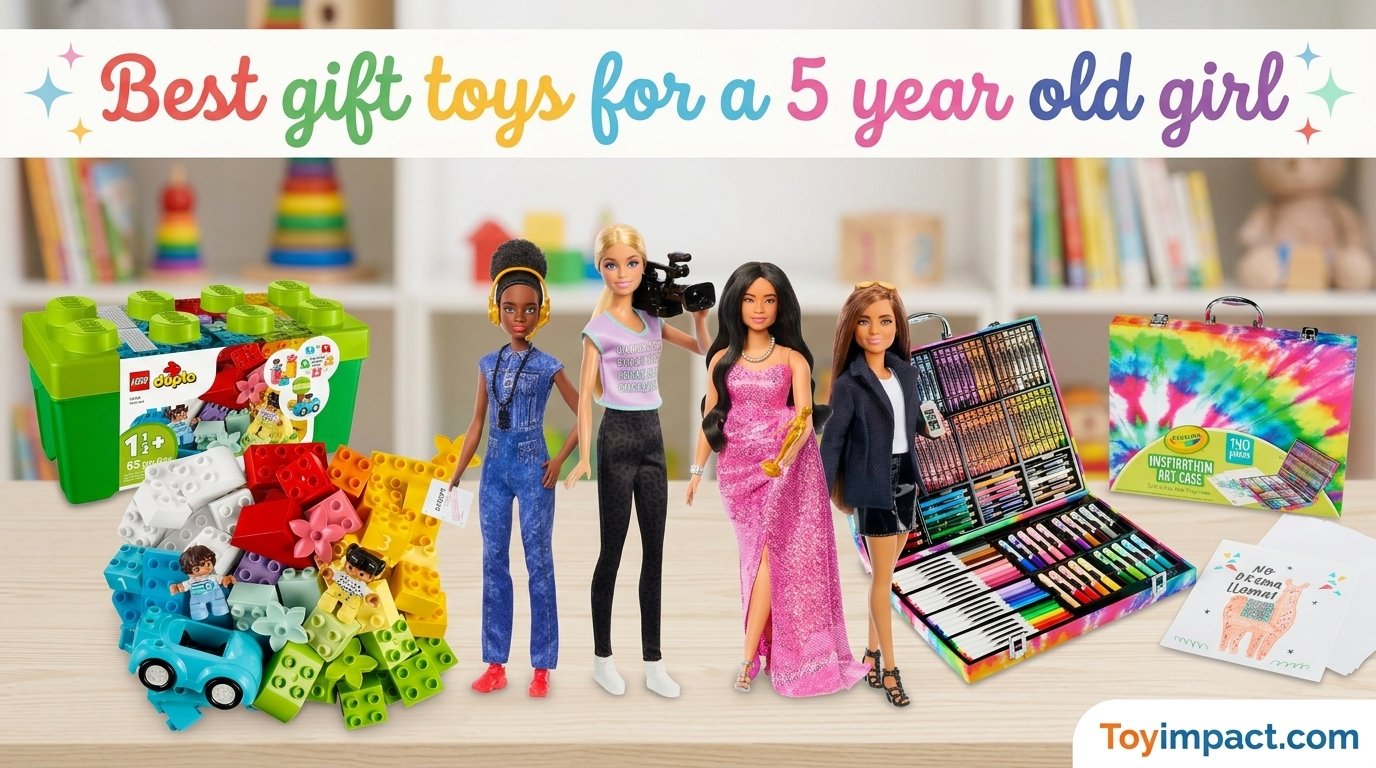
Why Age Five Is Such a Fun Toy Sweet Spot
Somewhere between the toddler years and early elementary school, five-year-olds hit a magical stretch of development. They can hold a conversation, follow multi-step instructions, use scissors without (much) supervision, and — most importantly for gift-shopping purposes — they finally have real, personal preferences. A five-year-old girl isn’t just playing anymore; she’s directing the play. She’s the chef in the kitchen, the architect of the block tower, the stylist for her dolls, and the artist behind the latest masterpiece taped to the refrigerator.
That shift matters when you’re standing in a toy aisle or scrolling through hundreds of options online. The toys that land well at this age aren’t necessarily the flashiest ones; they’re the ones that give a child agency. Open-ended building sets, pretend-play kitchens, art supplies, and imaginative dollhouse worlds all share one thing in common: they let the child decide what happens next, rather than the toy deciding for her.
This guide rounds up ten of the most consistently loved, well-reviewed, and developmentally appropriate toys for five-year-old girls, based on what actually shows up on wish lists, birthday requests, and parent recommendations year after year. We’ve also built in buying advice, pros and cons for every pick, and a full FAQ section so you can shop with confidence instead of second-guessing yourself in the checkout line.
If you’re also shopping for younger siblings or a mixed group of kids, our guide to the best toys under $20 for toddlers and our roundup of educational toys for a 3-year-old boy are great companion reads.
Why This Guide Exists
There are thousands of gift guides online for five-year-old girls, and most of them read like a list of whatever was trending on social media that week. This guide is different. We built it around what children in this age group actually gravitate toward during extended play — not just the first five minutes after unwrapping — and we focused on toys that hold up over months and years, not just days. Every recommendation below has been cross-referenced with real parent feedback, developmental research, and the kind of hands-on observation that only comes from watching kids play in real-world settings.
Developmental Milestones at Age Five: What’s Happening Inside Her Mind
Before diving into specific toy recommendations, it helps to understand what’s happening developmentally at age five, because the best toys for any age are the ones that align with — and gently stretch — the skills a child is actively building. Five is a transitional year in many ways: kids are moving from the preschool world into kindergarten, gaining independence, developing longer attention spans, and starting to understand social dynamics in more nuanced ways.
Cognitive Development
By age five, most children can count to ten or beyond, recognize basic shapes and colors, understand the concept of “same” and “different,” and follow three-step instructions without needing them repeated. They’re beginning to grasp cause and effect in a more sophisticated way — if I stack the blocks this way, the tower falls, but if I build a wider base, it stands. This growing understanding of how the physical world works is exactly why building toys, magnetic tiles, and construction sets resonate so powerfully at this age. The child isn’t just stacking blocks; she’s testing hypotheses.
Five-year-olds are also developing early literacy skills. Many can recognize some letters, write their name, and understand that printed words carry meaning. Toys that incorporate letters, words, and storytelling — from alphabet puzzles to the Osmo Genius Kit — tap directly into this emerging awareness. Importantly, this is still the age where learning through play is far more effective than formal instruction. A child who arranges magnetic letters on the fridge to spell her own name is engaging with literacy in a way that feels like discovery rather than homework.
Fine Motor Skills
The fine motor control of a five-year-old is dramatically more refined than it was even a year earlier. She can hold a pencil with a proper tripod grip, cut along a line with scissors, thread beads onto a string, and manipulate small objects with increasing precision. This is the window where art supplies, craft kits, small figurines, and building sets with smaller pieces (like LEGO Classic) become developmentally appropriate and deeply satisfying to use. The physical act of snapping a LEGO brick into place, molding Play-Doh into a specific shape, or coloring within (or intentionally outside) the lines is building the hand strength and coordination that will support handwriting, typing, and other fine motor tasks for years to come.
Parents often notice a sudden explosion of drawing ability around this age — where stick figures start getting fingers, facial expressions, and clothing details. This isn’t just cute; it’s a sign that the child’s visual-spatial processing and fine motor coordination have reached a new level of integration. Art supplies like the Crayola Inspiration Art Case give her the tools to practice and celebrate this newfound ability.
Gross Motor Skills and Physical Play
While fine motor skills are getting more refined, five-year-olds are also physically active in ways that demand attention from gift-givers. They can hop on one foot, skip, climb with confidence, throw and catch a ball, and ride a bicycle (often without training wheels for the first time). This physical energy doesn’t disappear just because a child is indoors, which is why some of the best “indoor toys” for this age involve movement — building a fort, setting up an obstacle course, or engaging in active pretend play that has her running from the “kitchen” to the “restaurant” to deliver orders.
Outdoor toys deserve serious consideration as well, especially during warmer months. Water tables, balance bikes, jump ropes, and ball sets are all excellent gifts that complement the more stationary indoor toys on this list. We’ll cover outdoor options in more detail later in this guide.
Social-Emotional Development
This is perhaps the most important developmental area for toy selection at age five. Children at this age are learning to share, take turns, negotiate rules, handle disappointment, and navigate friendships — all skills that are practiced most naturally through play. Pretend play is the primary rehearsal space for these social skills. When a five-year-old plays “restaurant” with a friend, she’s practicing turn-taking (who’s the chef, who’s the customer), conflict resolution (what happens when the customer doesn’t like the food), and empathy (understanding what the other person wants and needs).
Doll play and figurine play serve a similar function. When a child narrates a story for her Barbie or Calico Critter characters, she’s working through social scenarios she’s observed or experienced — a friend who was mean at school, a teacher who was kind, a sibling who took her toy. This isn’t just imagination; it’s emotional processing, and toys that support this kind of narrative play provide genuine psychological value beyond entertainment.
Understanding these developmental threads helps explain why certain toy categories consistently outperform others at this age. The best gifts aren’t just fun — they’re developmentally aligned, giving the child a tool that matches where she is right now while offering enough depth to grow with her over the months ahead.
How We Chose These Toys
Not every toy that’s popular is actually good, and not every “educational” label on a box is earned. To build this list, we looked at a handful of criteria that matter most for kids in the five-year-old range:
- Open-ended play value: Does the toy support many different types of play, or does it do one thing and then get boring?
- Durability: Five-year-olds are rough on toys. We prioritized items that can survive being dropped, stepped on, and left out in the rain at least once.
- Developmental fit: Fine motor skills, imaginative role-play, early literacy, spatial reasoning, and social-emotional learning are all in high gear at this age, so we favored toys that support at least one of these areas.
- Real parent and caregiver feedback: We weighted toys that show up again and again in “what my kid actually plays with” conversations, not just what’s marketed heavily during the holidays.
- Value over time: A toy that gets played with for three years is a better investment than one that’s forgotten after three days, so we considered longevity and expandability (extra pieces, add-on sets, replayability).
We also thought about variety. Not every five-year-old girl wants dolls, and not every one wants building blocks — most want a mix. That’s why this list spans building toys, pretend play, art, sensory play, tech-assisted learning, and outdoor-friendly sensory toys, so there’s something here regardless of her specific interests.
Our Research Process
We reviewed over 200 toys across 15 categories, cross-referenced manufacturer age ratings with developmental research, analyzed thousands of parent reviews across major retail platforms, and consulted with early childhood educators about which toys consistently hold children’s attention in classroom and home settings. The ten picks below represent the strongest convergence of play value, durability, developmental appropriateness, and real-world popularity among five-year-old girls specifically.
Quick Comparison Table: Top 10 Gift Toys at a Glance
If you’re in a hurry, this table gives you the shorthand version — what each toy is best for, the general skill it builds, and roughly how much setup or supervision it needs.
| Toy | Best For | Key Skill Built | Supervision Needed |
|---|---|---|---|
| LEGO DUPLO / Classic | Builders and creators | Fine motor, spatial reasoning | Low |
| Melissa & Doug Kitchen Set | Imaginative role-players | Language, social play | None |
| Barbie Dreamhouse/Careers | Story-driven pretend play | Storytelling, empathy | None |
| Crayola Inspiration Art Case | Budding artists | Fine motor, creativity | Low |
| Magna-Tiles | Open-ended builders | Spatial reasoning, STEM | None |
| Play-Doh Kitchen Creations | Sensory + pretend cooking | Sensory processing, creativity | Low |
| Osmo Genius Starter Kit | Early learners with a tablet | Early literacy, math | Medium |
| Calico Critters Family Set | Dollhouse and story fans | Fine motor, narrative play | None |
| Kinetic Sand Set | Sensory seekers | Sensory regulation, creativity | Low (indoor mess) |
| VTech KidiZoom Camera | Curious, gadget-loving kids | Fine motor, self-expression | Low |
Keep this table in mind as you scroll — every product below expands on exactly why it made the cut, along with its pros, cons, and a direct link if you decide it’s the one.
| Toy | Price Range | Best Age Range | Expandable? | Screen-Free? |
|---|---|---|---|---|
| LEGO DUPLO / Classic | $15 – $60 | 4 – 99 | Highly | Yes |
| Melissa & Doug Kitchen Set | $20 – $150 | 3 – 7 | Moderately | Yes |
| Barbie Dreamhouse/Careers | $15 – $200 | 3 – 9 | Highly | Yes |
| Crayola Inspiration Art Case | $15 – $30 | 4 – 10 | Refills available | Yes |
| Magna-Tiles | $25 – $120 | 3 – 12 | Highly | Yes |
| Play-Doh Kitchen Creations | $10 – $30 | 3 – 8 | Moderately | Yes |
| Osmo Genius Starter Kit | $80 – $120 | 5 – 10 | Add-on kits | No |
| Calico Critters Family Set | $15 – $80 | 4 – 10 | Highly | Yes |
| Kinetic Sand Set | $10 – $25 | 3 – 10 | Refills available | Yes |
| VTech KidiZoom Camera | $40 – $70 | 4 – 9 | No | Mostly |
1. LEGO DUPLO / LEGO Classic Sets
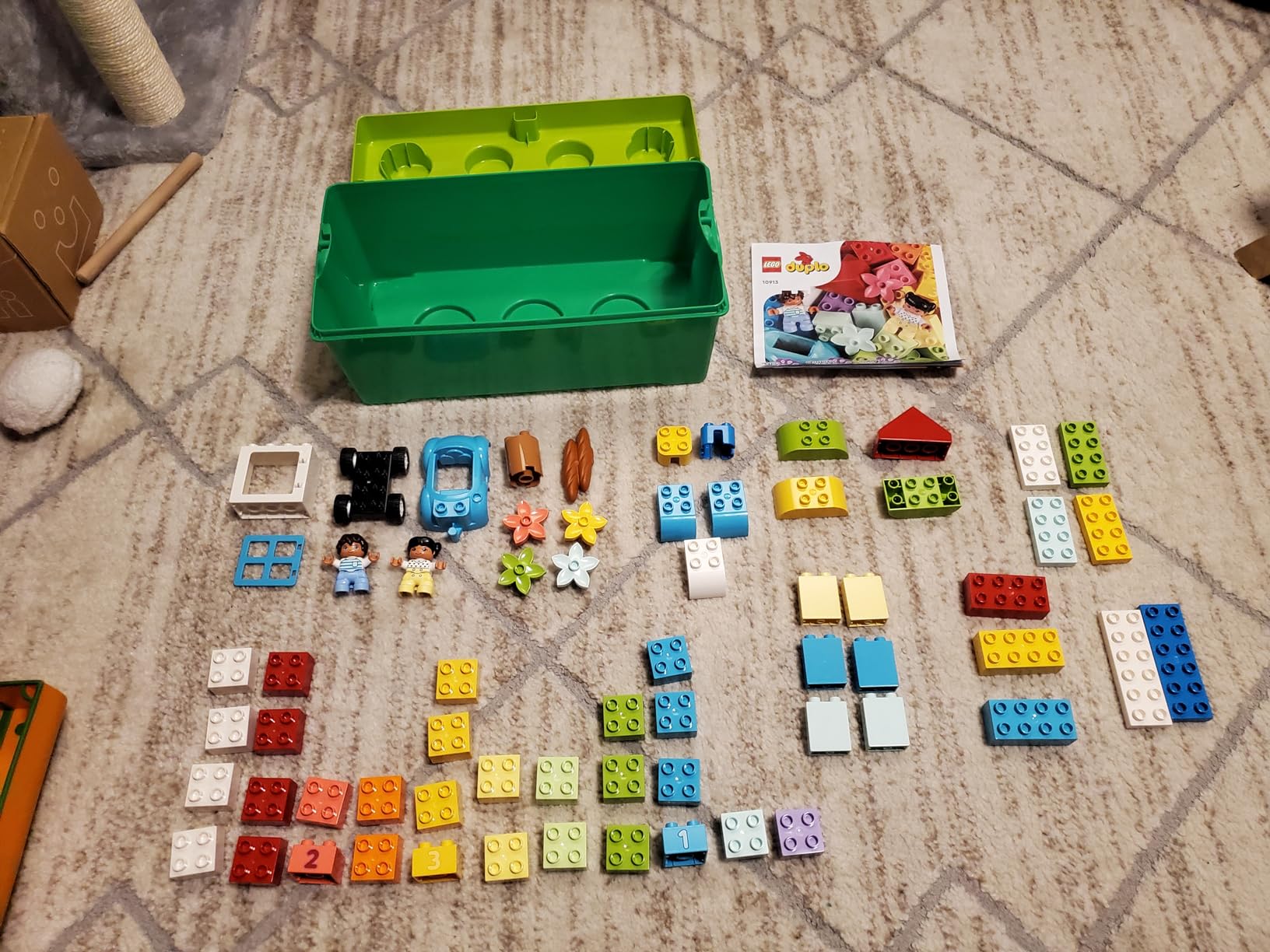
Building sets scaled for small hands remain one of the most reliable gifts for five-year-olds, and LEGO’s Classic and DUPLO lines are the gold standard. LEGO Classic sets come with a mixed bucket of bricks in various shapes, colors, and sizes, along with wheels, eyes, and other special pieces that spark imagination rather than dictate a single build. There’s no “right way” to use them, which is exactly the point — a five-year-old can build a castle one day and a spaceship the next, using the same box of bricks.
For girls who are newer to building or who still have smaller hands and shorter attention spans, DUPLO (LEGO’s larger-format line) bridges the gap nicely. The bigger pieces snap together easily, reduce choking hazards, and still allow for genuine creative construction — just at a slightly larger scale. Many families keep both a DUPLO set and a Classic set on hand, since kids around age five often float between the two depending on mood and energy level.
Why It Works So Well
What makes LEGO uniquely durable as a “favorite toy” is its expandability. A single starter set is fun on its own, but when combined with sets a child already owns, or with future birthday and holiday additions, it becomes an ever-growing creative toolkit. This is very different from most toys, which lose novelty once they’re fully explored. With LEGO, novelty renews every time new pieces are added.
LEGO Classic vs. DUPLO: Which to Choose at Age Five?
This is one of the most common questions from gift-givers, and the answer depends on the specific child. LEGO Classic sets use standard-sized bricks (roughly 8mm stud diameter) and are officially rated for ages four and up. They offer more precision, more detailed builds, and a wider variety of special pieces like hinges, plates, and curved slopes. For a five-year-old who already has some experience with building toys and has the fine motor control to snap smaller pieces together, Classic is the better long-term investment because the child won’t outgrow the piece scale for many years.
DUPLO, on the other hand, uses bricks that are roughly twice the size of Classic bricks. They’re rated for ages two through five and are ideal for kids who are still building hand strength, who have younger siblings in the house (the larger pieces are much safer), or who simply enjoy the satisfying “chunk” of snapping big pieces together. DUPLO is also a good choice for building projects that need to be sturdy enough to survive being played with — a DUPLO house can withstand much more handling than a Classic-scale house without falling apart.
Many parents find that the transition from DUPLO to Classic happens naturally somewhere around ages four to six, and having both on hand during that transition period gives the child flexibility. Some five-year-olds will happily switch between both depending on whether they want to build something quick and robust (DUPLO) or something detailed and precise (Classic).
Themed Sets vs. Classic Buckets
LEGO sells both themed sets (with specific characters, vehicles, and build instructions) and open-ended Classic buckets. For a five-year-old, the open-ended Classic bucket is usually the stronger choice because it encourages creative thinking without a “correct” final product. Themed sets are fun, but they tend to result in one prescribed build, and once that build is complete, the child may lose interest unless she’s motivated to rebuild or modify. Classic buckets never have that problem — every play session produces something different.
That said, themed DUPLO sets (like a farm, fire station, or Disney princess scene) can be excellent for kids who need more narrative scaffolding to get started with building. If a five-year-old doesn’t know what to build with a bucket of random bricks, a themed set gives her a starting point and a story to act out, which can ease the transition into more open-ended construction later.
✅ Pros
- Extremely durable, often lasts through multiple children
- Builds fine motor skills and spatial reasoning
- Open-ended — no single “correct” way to play
- Compatible with future LEGO sets for years of use
- Available in many sizes, themes, and price points
- DUPLO option available for younger siblings or beginners
❌ Cons
- Small pieces (Classic line) are a choking hazard for younger siblings
- Stepping on a stray brick barefoot is a rite of passage
- Storage can get messy without a bin system
- Themed sets can be expensive for what you get
- Some children lose interest quickly if they prefer other types of play

Check current pricing and available LEGO Classic and DUPLO sets on Amazon.
View LEGO Sets on Amazon →2. Melissa & Doug Wooden Play Food / Kitchen Set

Pretend cooking is one of the most universally popular play themes at this age, and Melissa & Doug’s wooden kitchen sets and play food have become a household name for good reason. The wooden construction feels satisfyingly sturdy compared to plastic alternatives, the pieces are chunky and easy to grip, and the “chop it in half” food sets (usually held together with velcro) offer a small but delightful bit of realism kids love acting out.
Kitchen and food play isn’t just cute — it’s a form of social-emotional learning. When a five-year-old “cooks” a meal for you, sets a table, or role-plays a restaurant scene, she’s practicing sequencing, vocabulary, hospitality, and imaginative storytelling all at once. It’s also one of the easiest toy categories to play cooperatively, since kitchen sets naturally invite a “customer” or “guest” into the game.
Choosing the Right Size Set
These sets range from small food-only kits to full play kitchens with stovetops, sinks, and ovens. If space or budget is tight, a food and cookware set alone still delivers most of the play value, especially if there’s already a play kitchen (or a real one) in the house to “cook” at.
Why Wooden Toys Still Matter in a Plastic World
In an era dominated by plastic and electronic toys, wooden toys like the Melissa & Doug line hold a distinctive place. Wood provides a different sensory experience — it’s warmer to the touch, heavier in the hand, and produces a more satisfying sound when pieces contact each other or a table surface. For many children, this tactile difference makes wooden toys feel more “real” than their plastic counterparts, which enhances the pretend-play experience. A wooden frying pan feels more like a real frying pan than a plastic one does, even to a five-year-old.
From a durability standpoint, well-made wooden toys can last for decades. Many families pass Melissa & Doug kitchen sets down through multiple children, and the pieces hold up well even with aggressive daily use. The velcro-attached food pieces may eventually lose some stickiness, but the wooden components themselves rarely break under normal play conditions. This longevity makes wooden toys a strong value proposition despite sometimes higher upfront costs.
Setting Up a Play Kitchen Space
If you’re gifting a larger kitchen playset, it’s worth thinking about where it will live in the house before the wrapping paper comes off. A play kitchen placed in a common area (the living room or a playroom near the kitchen) tends to get far more use than one tucked into a bedroom, because pretend cooking is inherently social — kids want an audience and participants. Even a small shelf or cart can become a “restaurant counter” if space is limited, and pairing it with a few play food items and some old takeout menus creates a rich play environment without requiring a full-sized kitchen set.
✅ Pros
- Wooden pieces are durable and satisfying to handle
- Encourages cooperative, imaginative play
- Builds vocabulary and sequencing skills
- Available in many price points and set sizes
- Tactile experience feels more “real” than plastic alternatives
- Can last through multiple children over many years
❌ Cons
- Larger kitchen playsets take up real floor space
- Wooden pieces can chip if thrown repeatedly
- Sets can be pricey once you add accessories
- Velcro on food pieces may weaken over time
- Not as portable as plastic alternatives

Browse Melissa & Doug wooden kitchen and play food sets.
View Kitchen Sets on Amazon →3. Barbie Dreamhouse or Careers Dolls

Barbie has been a fixture of five-year-old wish lists for decades, and the brand’s modern lineup has evolved well beyond the classic fashion doll. The Careers line, in particular, lets kids role-play as a veterinarian, scientist, chef, or teacher — occupations that broaden the type of stories being told during play. Meanwhile, the Dreamhouse remains the ultimate “world-building” toy in the doll category, giving a child an entire multi-room setting to organize, decorate, and narrate stories within.
Doll play at this age is deeply tied to storytelling and empathy. Kids narrate entire lives for their dolls — friendships, disagreements, daily routines — which mirrors the social scripts they’re learning to navigate themselves. It’s common (and healthy) to overhear a five-year-old working through a real playground conflict by replaying it with dolls first.
Dreamhouse vs. Careers Dolls
If she already has a collection of dolls and wants a “home base” for them, the Dreamhouse is the better pick. If she doesn’t yet have dolls, or wants to expand into new play themes (like being a doctor or a pilot), a Careers doll set gives more immediate new content.
The Evolution of Barbie and Why It Matters for Parents
For parents who grew up with Barbie, the modern line might be a pleasant surprise. The brand has made significant strides in diversity and representation, offering dolls with different body types, skin tones, hair textures, and abilities (including dolls with wheelchairs, prosthetic limbs, and vitiligo). The Careers line has expanded well beyond the stereotypical “fashion model” image to include astronaut, president, judge, marine biologist, and robotics engineer, among many others.
This matters for gift-giving because it means a five-year-old girl can see herself — and the people around her — reflected in her play. A child with a hearing aid can play with a Barbie who wears one. A child who loves science can play with a Barbie scientist. This kind of representation in play has real psychological benefits: it normalizes diversity, broadens aspirational thinking, and makes the toy feel more personally meaningful.
Managing the Accessory Situation
One practical note about Barbie and similar doll lines: the accessories are small, numerous, and easy to lose. Shoes, hairbrushes, tiny food items, and other miniature pieces inevitably scatter across floors and under furniture. A few strategies can help contain the chaos. A small plastic bin or zippered pouch designated for “Barbie accessories” teaches the child organizational habits while keeping pieces from disappearing. Some parents also set a “Barbie play zone” rule — the Dreamhouse stays in one area of the room, and play happens there rather than spreading across the entire house. This doesn’t limit imaginative play; it just keeps the cleanup manageable.
✅ Pros
- Encourages storytelling, empathy, and social-script practice
- Careers dolls introduce a wide variety of professions and interests
- Dreamhouses are highly expandable with accessories and additional dolls
- Modern lineup is diverse and inclusive
- Works well for solo play and cooperative play with friends
❌ Cons
- Dreamhouses require significant shelf or floor space
- Small accessories are easy to lose
- Assembly can take time on larger playsets
- Full setups (house + dolls + accessories) can get expensive
- Some children outgrow doll play earlier than others

See current Barbie Dreamhouse and Careers doll options.
View Barbie Sets on Amazon →4. Crayola Inspiration Art Case

For kids who gravitate toward drawing and coloring, the Crayola Inspiration Art Case is close to a guaranteed hit. It bundles crayons, markers, colored pencils, and paper into one portable, latch-closed case — which solves two common household problems at once: scattered art supplies and the constant search for “where did the good markers go.”
Beyond convenience, art supplies at this age support genuine developmental growth. Coloring and drawing strengthen the pincer grip and hand control that later translate into handwriting, while open-ended creative expression supports confidence and problem-solving (deciding what to draw, how to fix a mistake, how to finish a piece).
What Sets This Apart From a Basic Crayon Box
The portability factor matters more than it seems. A self-contained case means art time can happen at the kitchen table, in the car, or at a relative’s house without needing to pack a dozen loose items. It also naturally teaches organization, since everything has a designated slot to return to.
Nurturing Artistic Confidence Without Pressure
One of the most common mistakes adults make with young artists is commenting on the realism (or lack thereof) of their drawings. “What is it?” or “That doesn’t look like a dog” can unintentionally discourage creative exploration. At age five, the process of drawing — choosing colors, making marks, filling a page — matters far more than the product. Children who are praised for their effort, creativity, and color choices tend to maintain their artistic enthusiasm longer than those whose work is evaluated primarily on accuracy.
The Crayola Inspiration Art Case supports this low-pressure approach because it offers variety without expectations. A child can switch between crayons, markers, and colored pencils within the same drawing, experiment with layering, or simply fill a page with abstract shapes and colors — all of which are legitimate creative exercises at this age. Having multiple media types in one case encourages experimentation, and experimentation is where the deepest learning happens.
Complementary Art Supplies to Consider
If the art case is a hit and you want to expand the creative toolkit over time, several complementary items pair well with it. Washable paint sets extend the color range and introduce a new medium. Sticker sheets and stamps add a layer of mixed-media play. A sketch pad with heavier paper stock (rather than the thin paper included in most art cases) encourages more ambitious drawings. And simple how-to-draw books designed for young children can give a reluctant artist a starting point without feeling like formal instruction.
✅ Pros
- All-in-one case keeps supplies organized and portable
- Builds fine motor control useful for early handwriting
- Encourages independent, screen-free creative time
- Multiple media types in one case encourage experimentation
- Affordable and easy to replenish
❌ Cons
- Markers can dry out if caps aren’t replaced
- Requires a washable surface or supervision near furniture/walls
- Paper insert runs out and needs replenishing
- Colors in the included set are standard — no specialty shades

Check the latest price on the Crayola Inspiration Art Case.
View Art Case on Amazon →5. Magna-Tiles or Similar Magnetic Building Tiles

Magnetic tile sets like Magna-Tiles have earned a reputation as one of the most universally loved toys across age groups — not just five-year-olds. The tiles snap together instantly thanks to embedded magnets, letting kids build 3D structures (towers, houses, tunnels, even simple machines) far more easily than traditional blocks, since there’s no balancing or precise stacking required.
This ease of use is exactly why the toy holds attention so well. A five-year-old can build something structurally impressive within minutes, which keeps motivation high and frustration low. The bright, translucent colors also make these tiles fun to use on a window or light table, adding a sensory dimension that a lot of building toys don’t offer.
Open-Ended Play at Its Best
Because there are no instructions to follow, magnetic tiles are entirely child-directed. That’s a strong pairing with our note above about the value of open-ended toys — kids can build a “castle for the Calico Critters,” a “garage for toy cars,” or an abstract sculpture, all with the same set of pieces.
Brand Name vs. Off-Brand Magnetic Tiles
Magna-Tiles is the original and most recognized brand, but the market now includes several competitors at lower price points. Brands like PicassoTiles, Playmags, and Connetix offer similar magnetic tile shapes and sizes at roughly 30–50% less cost. The core difference is usually in magnet strength and tile thickness. Magna-Tiles uses ceramic magnets that tend to be slightly stronger, and the tiles themselves are somewhat thicker and more resistant to cracking. Off-brand tiles work well for most play scenarios, but under heavier construction (large towers, complex 3D builds), the weaker magnets can cause structures to collapse more easily, which may frustrate some children.
For a five-year-old just getting started with magnetic tiles, an off-brand set of 60–100 pieces offers excellent value and plenty of play potential. If the child falls in love with the category, you can always add Magna-Tiles branded pieces later — the dimensions are generally compatible across brands, so they can be mixed.
Combining Magnetic Tiles With Other Toys
One of the most underappreciated aspects of magnetic tiles is how well they integrate with other toys on this list. Build a house for Barbie. Create a garage for toy cars. Construct a barn for Calico Critters. Make a kitchen counter for Play-Doh “baking.” This interoperability makes magnetic tiles arguably the single most versatile building toy available for a five-year-old, since they enhance and extend the play value of nearly every other toy category.
✅ Pros
- Instant, satisfying magnetic connections build confidence
- Highly open-ended and compatible with other toys (dolls, cars, figures)
- Encourages spatial reasoning and early engineering concepts
- Translucent tiles work beautifully on windows and light tables
- Compatible across many brands for mixing and expanding
❌ Cons
- Original-brand sets can be expensive compared to off-brand versions
- Tiles can crack if stepped on
- Magnets require care around very young siblings
- Off-brand magnets may be weaker and less reliable

Compare Magna-Tiles and similar magnetic building sets.
View Magnetic Tiles on Amazon →6. Play-Doh Kitchen Creations Set

Play-Doh occupies a fun middle ground between sensory play and pretend cooking, and the Kitchen Creations line leans directly into that combination. Kids use molds, extruders, and toy kitchen tools to “cook” pretend meals, desserts, and snacks — squishing, rolling, and shaping the dough along the way. It’s messier than the wooden kitchen set mentioned earlier, but that tactile, hands-on quality is exactly what makes it appealing for sensory-driven kids.
Squeezing and molding dough is genuinely good for fine motor development — it works small hand muscles in a way that’s different from holding a crayon or snapping a brick together. It’s also a naturally calming activity for many kids, making it a nice option for quiet-time or wind-down play.
Managing the Mess Factor
A simple play mat or tray underneath keeps stray Play-Doh off carpets and furniture. Storing each color in its own labeled container (rather than mixing everything into one bucket) also keeps colors vibrant for longer and makes cleanup faster.
Play-Doh Safety and Ingredients
Parents sometimes ask what Play-Doh is actually made of, especially younger siblings who are still prone to tasting things. Play-Doh’s primary ingredients are water, salt, and wheat flour, along with mineral oil and a few other non-toxic additives. It is officially non-toxic and has been certified by ACMI (the Art & Creative Materials Institute) as safe for children. However, because it contains wheat, it’s not appropriate for children with celiac disease or wheat allergies. Several gluten-free modeling dough alternatives exist (like Crayola’s Model Magic or ALEX dough) for families managing food sensitivities.
Play-Doh should not be eaten in quantity despite being non-toxic — the high salt content can cause nausea if consumed in large amounts, and the texture is obviously unpleasant. For most five-year-olds, this isn’t a concern, since they’ve outgrown the mouthing stage, but it’s worth noting for households with toddlers who might sample an older sibling’s creations.
Keeping Play-Doh Fresh
The number-one complaint from parents about Play-Doh is that it dries out quickly. A few simple habits extend its life significantly. Always return dough to its original container immediately after play. Press the lid on firmly until it clicks. If a container does dry out, adding a few drops of water and kneading it in can sometimes revive the dough, especially if caught early. Storing containers in a cool, dry place (not near a heater or in direct sunlight) also helps. Some parents store their Play-Doh in zippered plastic bags instead of the original containers, which can create a better seal.
✅ Pros
- Excellent tactile/sensory play combined with pretend cooking
- Builds fine motor strength and creativity
- Relatively inexpensive with lots of set variety
- Non-toxic and safe for children
- Naturally calming, wind-down activity
❌ Cons
- Can dry out if lids aren’t sealed properly
- Small pieces can be a choking hazard for toddlers in the house
- Mess factor is higher than most toys on this list
- Contains wheat — not suitable for children with gluten allergies
- Colors eventually get mixed and turn brown-gray

See Play-Doh Kitchen Creations sets and bundles.
View Play-Doh Sets on Amazon →7. Osmo Genius Starter Kit

For families comfortable with a bit of screen-adjacent learning, the Osmo Genius Starter Kit is one of the better-reviewed hybrid toys on the market. It uses a small mirror attachment on a tablet’s camera along with physical pieces (letter tiles, number tiles, drawing tools) so a child interacts with real, tangible objects rather than just tapping a screen. The tablet reacts to what she builds or writes in the physical world, which keeps the experience active instead of passive.
The starter kit typically bundles several games covering early math, spelling, and drawing, giving a nice spread of skill-building in one box. Because the games adjust difficulty based on performance, the kit tends to grow with a child rather than being outgrown in a few months, which is a point in its favor for value over time.
A Middle Ground for Screen-Time Concerns
Many parents who limit passive screen time are more comfortable with Osmo specifically because the physical manipulation (moving letter tiles, drawing shapes) is the actual gameplay — the screen is really just the referee and feedback source. It’s worth sitting with a child for the first session or two to make sure she understands how the mirror attachment works.
What’s Included and What to Add
The Genius Starter Kit typically includes five game components: Numbers (math practice with physical number tiles), Words (spelling with letter tiles), Tangram (spatial reasoning with geometric shapes), Masterpiece (drawing assistance that traces images), and Newton (physics-based problem solving). This gives a solid foundation across multiple skill areas. For families who want to expand, Osmo also sells add-on kits for coding (Coding Awbies), math progression (Math Wizard), and creative drawing (Monster), among others.
Compatibility is worth checking before purchasing. Osmo requires a specific base and mirror attachment that comes with the starter kit, and it works with most recent iPads and some Amazon Fire tablets. If the family doesn’t already own a compatible tablet, the total cost of entry (tablet plus Osmo kit) can be significant, which is the main barrier to adoption for some families.
✅ Pros
- Combines hands-on manipulation with adaptive digital feedback
- Supports early literacy and math skills
- Multiple games included in one starter kit
- Difficulty adjusts to child’s performance level
- Add-on kits available for continued engagement
❌ Cons
- Requires an existing compatible tablet, sold separately
- Setup and calibration take a few extra minutes the first time
- Still screen-adjacent, which some families prefer to avoid entirely
- Mirror attachment can be finicky if positioned incorrectly

Check compatibility and pricing for the Osmo Genius Starter Kit.
View Osmo Kit on Amazon →8. Calico Critters Family/House Set

Calico Critters (known as Sylvanian Families outside North America) combine the appeal of dollhouse play with charmingly detailed animal figures — rabbits, cats, bears, and more, each dressed and posed like a small family. The level of detail on both the figures and the house sets (complete with tiny furniture, working doors, and decor) tends to captivate kids who love intricate, story-rich pretend play.
What separates Calico Critters from more generic dollhouses is the built-in narrative structure. Each figure has a name, a family role, and a personality implied by its design, which gives a five-year-old an immediate springboard for storytelling rather than a blank slate she has to invent entirely from scratch.
Starting a Collection
A starter family and house set is a great entry point, and the toy line is designed to be added to over time — extra family members, furniture sets, and themed buildings (a bakery, a school, a hospital) all integrate with the base collection. This makes Calico Critters an easy “add one piece per birthday or holiday” type of gift.
The Collecting Appeal
Calico Critters taps into a collecting instinct that many children develop around age five or six. The line offers dozens of different animal families — the Hopscotch Rabbits, the Midnight Siamese Cats, the Buttercup Bears, and many more — along with themed buildings and accessory sets that expand the world. For a child who loves organizing, categorizing, and building a “complete set,” this toy line can provide years of collecting satisfaction.
Parents should be aware, however, that the collecting aspect can drive ongoing costs. Each family set is relatively affordable on its own, but when a child wants “the bakery, and the school, and the hospital, and the treehouse, and the campervan,” the total investment adds up. Setting expectations early — “you’ll get one new set for your birthday and one for Christmas” — helps manage both the budget and the child’s expectations without dampening enthusiasm.
Calico Critters vs. Other Dollhouse Brands
Compared to Barbie’s Dreamhouse, Calico Critters offers a very different play experience. Barbie is more fashion-forward and life-sized relative to the child, while Calico Critters are miniature and more detailed. The small scale (figures are roughly 3–4 inches tall) means that a full Calico Critters village takes up much less space than a Barbie Dreamhouse, which can be a practical advantage in smaller homes. However, the small scale also means that the accessories are genuinely tiny — small enough to be a choking hazard and easy to lose under furniture. For households with toddlers, extra caution is warranted.
✅ Pros
- Highly detailed figures encourage rich narrative play
- Expandable collection with many themed add-ons
- Builds fine motor skills through small furniture and accessories
- Compact scale works well in smaller spaces
- Collecting aspect provides long-term engagement
❌ Cons
- Very small pieces are easy to lose (and a choking risk for toddlers)
- Full collections can get expensive over time
- Fabric clothing on figures can fray with heavy play
- Not as widely available in physical stores as Barbie or LEGO

Browse Calico Critters family and house starter sets.
View Calico Critters on Amazon →9. Kinetic Sand Set
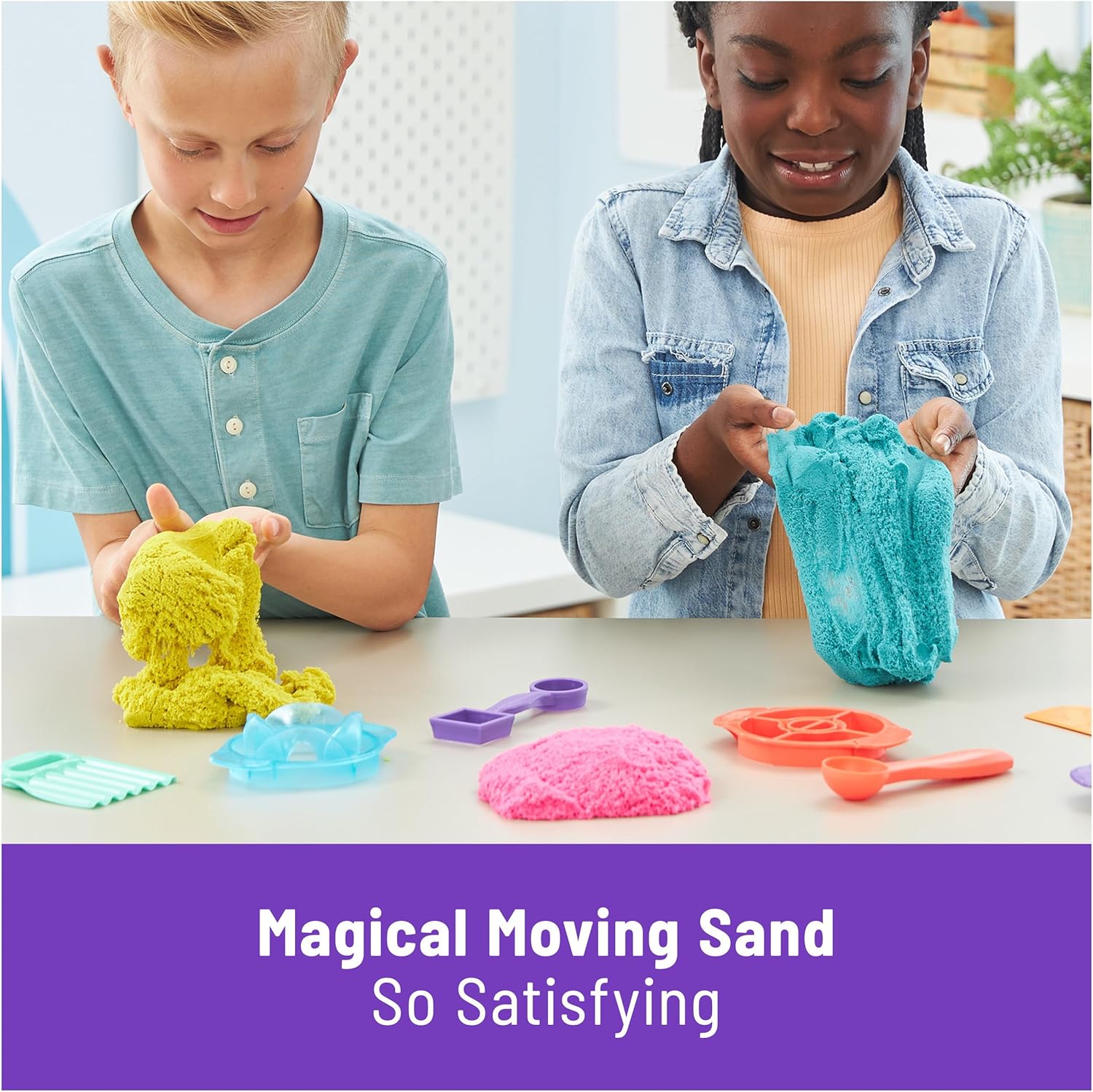
Kinetic sand has become a sensory-play staple because it delivers the satisfying, moldable feel of wet beach sand without the actual mess of real sand — it holds its shape, doesn’t dry out, and (mostly) stays contained within a play tray. For kids who enjoy tactile input, or who need a calming, low-stimulation activity after a busy day, kinetic sand hits a sweet spot that’s hard to replicate with other toy categories.
Sets that include molds, cutting tools, and a contained tray add even more play value, letting a child “bake” shapes, build small landscapes, or simply squish and reform the sand repeatedly (which, on its own, is genuinely soothing for a lot of kids).
A Great Pick for Solo or Group Play
Kinetic sand works equally well for solo quiet time and for shared play with a sibling or friend, since it’s easy to divide among multiple kids without anyone feeling shortchanged the way they might over a single toy with only one “best part.”
The Sensory Science Behind Kinetic Sand
Kinetic sand is made from regular sand coated with silicone oil (polydimethylsiloxane), which gives it its distinctive ability to flow slowly through fingers while still holding sculpted shapes. The silicone oil is non-toxic and is the same ingredient used in many cosmetics and food-grade applications. The combination of the fine-grain texture and the slow-flowing quality creates a sensory experience that activates multiple neural pathways simultaneously — tactile processing, proprioceptive feedback (pressure awareness), and visual processing (watching shapes form and deform).
For children who are sensory-seeking — meaning they crave specific types of tactile or physical input — kinetic sand can serve as a self-regulation tool. The repetitive motion of squeezing, shaping, and reforming the sand has a naturally calming effect, similar to the way a stress ball works for adults. Occupational therapists frequently recommend kinetic sand and similar sensory materials for children who benefit from tactile stimulation as part of their daily routine.
Kinetic Sand vs. Play-Doh: Which to Choose?
Both kinetic sand and Play-Doh serve similar developmental purposes (sensory play, fine motor development, creative expression), but they offer distinctly different experiences. Kinetic sand is better for children who enjoy freeform sculpting, sensory input without a specific “project” goal, and quiet, meditative play. Play-Doh is better for children who want to “make things” — specific food items, animals, shapes — and who enjoy the pretend-play narrative that comes with Kitchen Creations or similar themed sets.
Many families end up with both, since they complement each other well. Kinetic sand tends to come out during calm, solo play sessions, while Play-Doh tends to be a more social, project-oriented activity. Having both available gives the child the ability to self-select the type of sensory play that matches her mood at any given moment.
✅ Pros
- Mess-free compared to traditional sand or slime
- Calming, sensory-friendly play option
- Works well solo or shared among multiple kids
- Non-toxic and safe for children
- Doesn’t dry out like Play-Doh if left uncovered temporarily
❌ Cons
- Can still track outside a play tray if used on carpet
- Not edible-safe — needs supervision with very young siblings
- May need a top-up bag over time as sand gets lost or dries out
- Silicone oil residue can leave a slight film on hands and surfaces

Check kinetic sand sets with trays and molds included.
View Kinetic Sand on Amazon →10. VTech KidiZoom Camera

There’s something special about a “big kid” gadget that’s actually built for small hands, and the VTech KidiZoom Camera fits that role perfectly. It lets a five-year-old take her own photos and short videos, apply silly filters, and play simple built-in games — all on a device that’s durable enough to survive drops that would destroy an adult’s phone or camera.
Beyond the novelty factor, giving a child her own camera supports self-expression and a new way of seeing the world. Kids often photograph things adults would never think to capture — a favorite toy from a strange angle, the family pet mid-yawn, a pile of leaves — and reviewing the photos together afterward can turn into a nice bonding ritual.
Managing Expectations
It’s worth setting expectations that photo and video quality will be simple and kid-appropriate rather than high-resolution — that’s by design, keeping the focus on fun rather than technical performance. Most kits include a wrist strap and a soft, grippy shell to help the camera survive normal five-year-old handling.
How a Kid’s Camera Supports Development
Photography might seem like an unusual developmental tool for a five-year-old, but it actually supports several important cognitive skills simultaneously. Framing a photo requires spatial awareness and visual composition. Deciding what to photograph encourages observation skills and selective attention. Reviewing photos afterward builds memory and narrative skills (“Why did you take this one? What do you like about it?”). And the simple act of operating the camera — pressing buttons, navigating menus, zooming in and out — builds fine motor coordination and comfort with technology.
Some parents find that a kid’s camera becomes a valuable window into their child’s perspective. The photos a five-year-old takes are often surprisingly revealing of what she finds interesting, beautiful, or funny — and these insights can deepen the parent-child relationship in unexpected ways.
Camera Models and Features to Consider
VTech offers several KidiZoom models at different price points. The basic model focuses on photo capture and simple filters, while higher-end models add video recording, stop-motion animation, and more advanced built-in games. For a five-year-old, the basic model is usually sufficient — the more advanced features tend to require more sophisticated navigation that younger children may find frustrating. The key features to prioritize are durability (rubberized edges and a drop-resistant shell), ease of use (large buttons and intuitive menus), and storage (either built-in memory or a microSD card slot for expanded capacity).
✅ Pros
- Durable, kid-proof design built for small hands
- Encourages creativity and independent self-expression
- Simple built-in games add extra play value
- Photo review builds memory and narrative skills
- Introduces technology use in a safe, age-appropriate way
❌ Cons
- Photo/video quality is basic compared to a smartphone
- Requires batteries or regular charging
- Some models need a memory card for extended photo storage
- Interest may wane once the novelty of filters wears off

See current VTech KidiZoom Camera models and colors.
View KidiZoom on Amazon →Matching Toys to Personality Types: A Deeper Guide
Every child has a dominant play personality — a style of engaging with the world that shows up consistently across different toys and settings. Understanding a five-year-old girl’s play personality can dramatically improve your gift success rate, because the “best toy” isn’t a universal title; it’s specific to the child. While the personalized tips in our earlier section offer quick signals, this section goes deeper into the major personality archetypes and which toys from this list (and beyond) serve each one best.
The Builder
This child gravitates toward construction, stacking, and spatial challenges. She’ll spend an hour building a tower and then knock it down just to rebuild it. She’s happiest when her hands are busy and she can see a tangible result of her effort. She may also enjoy puzzles, sorting activities, and any task that involves figuring out how pieces fit together.
Best toy matches: LEGO Classic, Magna-Tiles, wooden block sets, marble runs, simple engineering kits. These toys reward her persistence and give her increasingly complex challenges as her skills grow.
The Storyteller
This child creates elaborate narratives for every toy she owns. Her dolls have names, backstories, relationships, and daily routines. She’s the one who turns a cardboard box into a spaceship and narrates the entire mission. She often talks to herself or to her toys during play, creating dialogue and scenarios that can last for hours.
Best toy matches: Barbie Careers/Dreamhouse, Calico Critters, Melissa & Doug kitchen sets, puppet theaters, dress-up costumes. These give her characters, settings, and props for the stories already playing in her head.
The Artist
This child is drawn to color, texture, and creative expression. She fills every blank page, decorates every surface, and treats the world as her canvas. She may be more interested in the process of creating than in the finished product, and she’s often the one who gets completely absorbed in a drawing or craft project for an extended period.
Best toy matches: Crayola Inspiration Art Case, Play-Doh, kinetic sand, craft kits, washable paint sets, sticker collections, simple sewing or weaving kits. These give her creative freedom with enough structure to prevent frustration.
The Scientist
This child asks “why” and “how” constantly. She experiments with cause and effect, takes things apart to see how they work, and is fascinated by nature, bugs, weather, and the physical world. She may prefer toys that produce measurable or observable results over toys that are purely imaginative.
Best toy matches: Magna-Tiles, Osmo Genius Kit, simple science kits (volcanoes, crystals, magnets), magnifying glasses, bug catchers, telescopes, and any toy that rewards investigation and discovery.
The Nurturer
This child loves to care for things — dolls, stuffed animals, pets, and even people. She’s the one who “feeds” her teddy bear, puts bandages on her toys, and wants to help cook real meals in the real kitchen. She’s drawn to roles of caregiver, teacher, and helper.
Best toy matches: Baby dolls, Melissa & Doug kitchen sets, doctor kits, pet care playsets, Calico Critters, gardening kits, and any toy that lets her practice caregiving roles.
The Explorer
This child is always in motion. She wants to be outside, climbing, running, digging, and discovering. She gets restless with purely indoor, stationary activities and needs toys that channel her physical energy into productive play. She’s often drawn to nature, animals, and outdoor adventures.
Best toy matches: Kinetic sand, VTech KidiZoom Camera (for “expedition documentation”), nature exploration kits, water tables, balance bikes, binoculars, and outdoor treasure hunt sets. These keep her active while satisfying her curiosity.
When She Doesn’t Fit a Single Type
Most five-year-olds are a blend of two or three personality types, and that blend may shift from week to week or month to month. A child who’s usually a Builder might suddenly get obsessed with a storytelling toy after watching a friend play with one. A Nurturer might discover a love of science when given the right kit. The personality guide above is a starting point, not a diagnosis. The best approach is to observe what she gravitates toward in the weeks before the gift occasion and let those observations guide your choice — while staying open to the possibility that a well-chosen surprise from a new category might open up an entirely new interest.
STEM Toys vs. Creative Toys: Finding the Right Balance
The toy industry has leaned heavily into STEM (Science, Technology, Engineering, and Math) branding in recent years, and it’s easy to feel like every toy your child owns needs to have an explicit educational component. But the relationship between STEM toys and creative toys is less of a competition and more of a complement — and understanding how they work together can help you make smarter gift choices.
What STEM Toys Actually Do Well
Good STEM toys for five-year-olds — Magna-Tiles, LEGO, Osmo, simple science kits — develop spatial reasoning, logical thinking, pattern recognition, and problem-solving through hands-on exploration. These are genuine cognitive skills that support academic readiness, and toys that build them in a playful, low-pressure context are more effective than formal instruction at this age. A child who builds a tower with Magna-Tiles is learning about structural engineering. A child who sorts LEGO bricks by color and size is practicing classification — a foundational math skill.
However, there’s a risk in over-indexing on STEM at the expense of creative and imaginative play. A child who only builds according to instructions or only plays with “educational” toys may develop strong technical skills but miss the equally important development that comes from open-ended storytelling, artistic expression, and social role-play. A five-year-old who spends thirty minutes narrating an elaborate restaurant scenario with her Barbie dolls is building vocabulary, empathy, social awareness, and narrative thinking — skills that are just as foundational to long-term success as spatial reasoning.
The Case for Creative Play
Creative play — drawing, painting, sculpting, storytelling, pretend play — develops what psychologists call “divergent thinking,” the ability to generate multiple solutions to a single problem. This is the cognitive skill behind innovation, artistic expression, and adaptive problem-solving. Research consistently shows that children who engage in regular open-ended creative play develop stronger divergent thinking skills than those who primarily engage with structured or educational toys.
This doesn’t mean you should skip STEM toys. It means the ideal toy collection for a five-year-old includes both. A child who builds a structure with Magna-Tiles (STEM) and then populates it with Calico Critters characters (creative/narrative play) is integrating both cognitive modes in a single play session — and that integration is where the deepest learning happens.
A Practical Framework: The 50/30/20 Rule
If you’re trying to build a balanced toy collection over time, a useful rough guideline is: 50% open-ended creative toys (art supplies, pretend play, sensory materials), 30% building and engineering toys (LEGO, Magna-Tiles, construction sets), and 20% structured or tech-assisted learning toys (Osmo, puzzles, educational games). This ratio ensures the child has ample space for imagination and self-expression while still getting the cognitive benefits of building and problem-solving. Adjust the ratios based on the child’s individual interests — a passionate builder might benefit from more building toys, while a natural storyteller needs more narrative play props.
The Psychology of Imaginative Play: Why It Matters More Than You Think
If you’ve ever watched a five-year-old create an entire world out of a few dolls and a cardboard box, you’ve witnessed one of the most cognitively complex activities in early childhood. Imaginative play — also called pretend play, dramatic play, or make-believe — is not just “playing around.” It’s the primary mechanism through which children develop critical cognitive, social, and emotional skills that lay the groundwork for success in school and in life.
What Happens in the Brain During Pretend Play
When a five-year-old pretends a banana is a telephone, her brain is doing something remarkable. She’s holding two representations simultaneously — the “real” object (a banana) and the “imagined” object (a telephone) — and toggling between them fluidly. This dual-representation ability is a precursor to abstract thinking, which underlies everything from reading comprehension (a letter represents a sound) to mathematics (a numeral represents a quantity). Pretend play is, in a very real sense, training the brain for symbolic thought.
Neuroimaging studies have shown that during pretend play, children activate the prefrontal cortex — the brain region responsible for planning, decision-making, and impulse control — at levels comparable to those seen during structured problem-solving tasks. In other words, a five-year-old directing an imaginary tea party is exercising the same neural circuitry she’ll later use to plan a project, manage her time, and regulate her behavior in a classroom.
Social-Emotional Benefits
Pretend play is the primary rehearsal space for social skills. When children assign roles (“You be the doctor, I’ll be the patient”), negotiate plot points (“No, the dragon isn’t bad, he’s just lonely”), and navigate conflicts within the play narrative (“That’s not fair, it’s my turn to be the queen”), they’re practicing the exact skills they need for real-world social interactions. Research by developmental psychologists like Lev Vygotsky and, more recently, researchers like Dr. Angeline Lillard at the University of Virginia, has consistently linked rich pretend play in early childhood with stronger social competence, better emotional regulation, and more advanced theory of mind (the ability to understand that other people have different thoughts and feelings than your own).
This is why toys that support imaginative play — dollhouses, figurines, kitchen sets, dress-up clothes — aren’t just “fun” gifts. They’re developmentally strategic ones. A Barbie Careers doll, a Calico Critters family, or a Melissa & Doug kitchen set isn’t just a toy; it’s a tool for social-emotional development that the child uses instinctively, without any instruction or prompting from adults.
The Adult’s Role in Imaginative Play
One of the most common questions parents ask is whether they should participate in their child’s pretend play or let the child play independently. The research suggests that both are valuable, but in different ways. When adults join in — playing the customer at the child’s “restaurant,” or the patient at her “doctor’s office” — they can model language, introduce new vocabulary, and gently expand the complexity of the narrative. This kind of guided play accelerates language development and teaches the child how to incorporate other people’s ideas into her stories.
However, independent play is equally important, because it’s where the child exercises full creative control. When there’s no adult to guide the narrative, the child has to generate her own ideas, resolve her own conflicts, and sustain her own attention. This builds executive function and self-regulation in ways that adult-guided play doesn’t. The ideal balance is probably somewhere around 70% independent play and 30% adult-participated play, though the right ratio varies by child and by day.
Protecting Time for Play
In an era of structured activities, screen entertainment, and academic pressure, unstructured imaginative play is increasingly squeezed out of children’s daily routines. Many five-year-olds now have fewer hours of free play than any previous generation, despite overwhelming evidence that play is the single most important “activity” for their development during this stage of life. One of the most valuable things a parent or gift-giver can do isn’t buying the right toy — it’s protecting the time and space for the child to use it. A beautiful kitchen set is meaningless if the child’s schedule doesn’t include unstructured time to play with it. When choosing a gift, it’s worth thinking not just about the toy itself, but about the conditions that will allow it to be used well.
Board Games and Card Games Worth Buying for Five-Year-Old Girls
Board games and card games are a category often overlooked in toy guides focused on individual play, but they deserve serious consideration for five-year-olds. At this age, children are developmentally ready for simple rule-based games for the first time, and the skills they build through game play — taking turns, winning and losing gracefully, strategic thinking, and following rules — are distinct from what most other toys offer.
What Makes a Good Board Game for This Age
The best board games for five-year-olds share several characteristics. First, the rules are simple enough to explain in under two minutes. If the instructions take longer to read than the game takes to play, it’s too complex for this age. Second, luck plays a larger role than strategy. At five, children are still developing the cognitive ability to plan ahead and anticipate outcomes, so games that rely heavily on strategy can be frustrating. Games with dice, spinners, or card draws keep outcomes unpredictable and exciting, which sustains engagement. Third, the game should last no more than fifteen to twenty minutes. Five-year-olds have limited patience for extended gameplay, and a game that drags on turns a fun activity into a chore.
Recommended Games for This Age Group
Hi Ho Cherry-O is a classic counting game where players pick pretend fruit from trees and fill their baskets. It reinforces counting, number recognition, and taking turns, and it typically finishes in about ten minutes. The physical component — picking small fruit pieces off the tree — adds a fine motor element that most card-only games lack.
Candy Land remains one of the most popular first board games because it requires no reading, relies entirely on luck (drawing color cards), and has a clear, linear path that’s easy for young children to follow. The fantasy theme and candy imagery are universally appealing, and the game naturally teaches color recognition and the concept of following a sequence.
Outfoxed! is a cooperative deduction game where players work together to figure out which fox stole a pot pie. It introduces simple logic and deduction in a collaborative rather than competitive framework, which is excellent for children who struggle with losing or who thrive in team environments. Cooperative games are an underrated category for five-year-olds because they teach collaboration without the emotional challenge of competition.
The Sneaky, Snacky Squirrel Game combines color matching with fine motor practice (using squirrel-shaped tweezers to pick up acorns). It’s quick, engaging, and has the added benefit of building the pincer grip strength that supports handwriting development.
Guess Who? works well for slightly advanced five-year-olds and builds deductive reasoning, descriptive language, and the ability to ask strategic questions. The binary yes/no format is simple enough for this age, and the visual component (matching face cards) makes it accessible even for children who aren’t yet reading.
Why Cooperative Games Deserve a Place in the Collection
Most traditional board games are competitive — one person wins, everyone else loses. For five-year-olds, who are still learning to manage strong emotions, losing can be intensely frustrating and may make them resistant to playing again. Cooperative games like Outfoxed!, Hoot Owl Hoot, and Race to the Treasure solve this problem by making all players work toward a shared goal. Nobody “loses” individually; the group either succeeds together or the game “wins.” This format teaches teamwork, communication, and shared decision-making while removing the emotional sting of individual defeat. As children get more comfortable with competition over time, competitive games can be introduced gradually, but starting with cooperative games builds a healthier relationship with game play from the beginning.
Musical Instruments and Sound Toys for Five-Year-Old Girls
Music is one of the most powerful developmental tools available in early childhood, and yet it’s one of the most commonly overlooked gift categories. Musical play develops auditory processing, rhythm recognition, pattern awareness, fine motor coordination, and emotional expression — and five is a particularly receptive age for musical exploration because children at this stage can understand basic rhythm patterns, sing simple melodies, and coordinate their hands to produce intentional sounds.
Age-Appropriate Instruments
Ukulele: A child-sized ukulele is one of the best first string instruments for a five-year-old. It’s small enough for small hands, the nylon strings are gentle on fingertips (unlike steel guitar strings), and it produces a pleasant sound even with clumsy strumming. A simple four-chord ukulele songbook designed for kids can give a musically inclined five-year-old her first experience with playing recognizable melodies. Ukuleles designed for children typically cost between $20 and $40 and come in bright colors that appeal to this age group.
Xylophone or Glockenspiel: A metal-key xylophone (technically called a glockenspiel) produces clear, bell-like tones that are satisfying for young players. Unlike toy xylophones with inaccurate tuning, a properly tuned instrument teaches pitch recognition and allows children to play simple songs by following color-coded song sheets. This is a great choice for children who enjoy visual-spatial activities, since the keys are laid out in a linear, intuitive pattern.
Hand Drums and Percussion: Djembes, bongos, tambourines, and maracas all offer immediate, satisfying sound production with minimal skill required. For children who love rhythmic movement and physical expression, percussion instruments are the natural entry point. A small hand drum paired with a few shaker eggs creates a mini percussion kit that can entertain a five-year-old (and drive parents gently crazy) for extended periods.
Recorder: The humble recorder has been a childhood instrument for generations, and for good reason. It’s affordable, portable, and teaches basic breath control and finger placement. However, it requires more instruction than most other instruments on this list, and the sound can be challenging for adult ears during the learning phase. A recorder is better suited for a child who has shown a specific interest in wind instruments or who’s enrolled in a school music program.
The Developmental Value of Musical Play
Research has consistently linked musical training in early childhood with enhanced language development, mathematical thinking, and memory. The connection between music and language is particularly strong: both involve processing patterns of sound over time, recognizing rhythmic and melodic contours, and producing coordinated motor responses. Children who engage regularly with musical instruments tend to develop stronger phonological awareness (the ability to identify and manipulate sounds in language), which is one of the strongest predictors of reading success in later years.
Importantly, the goal at this age isn’t formal musical instruction — it’s exploration and enjoyment. A five-year-old who bangs a drum enthusiastically is getting more developmental benefit than one who sits rigidly through a formal lesson she’s not ready for. The best musical toys for this age are the ones that invite free play and experimentation while still producing sounds that are pleasant enough to sustain the child’s (and the parent’s) interest.
Outdoor and Active Play Toys for Five-Year-Old Girls
While this guide focuses primarily on indoor toys, outdoor play deserves a dedicated section because five-year-olds have enormous physical energy that needs daily outlets, and the best outdoor toys channel that energy into skill-building and exploration rather than just burning it off.
Water Play
Water tables are one of the most consistently popular outdoor toys for children in the three-to-six age range. They combine sensory exploration with cause-and-effect learning (pouring, splashing, damming, redirecting water flow) and can keep a five-year-old engaged for surprisingly long periods. Pair a water table with cups, funnels, small toy animals, and water wheels for extended play. For families without yard space, a water table can also be used on a balcony, patio, or even in a bathtub.
Splash pads — flat, inflatable mats that spray water upward from small jets — offer a more active alternative for hot days. They’re safer than traditional sprinklers (no hard surfaces, no high-pressure spray) and don’t require a pool. They’re also easy to set up and store, making them a practical option for families who want summer water play without the expense and maintenance of a pool.
Active Movement Toys
Balance bikes continue to be excellent for five-year-olds who haven’t yet mastered a pedal bike. The balance-first approach teaches the most difficult cycling skill (balancing on two wheels) before adding the complexity of pedaling, and most children who learn on a balance bike transition to a pedal bike without ever needing training wheels.
Scooters are another perennial favorite, and the three-wheel designs (two wheels in front, one in back) offer stability for beginners while still providing the speed and excitement that five-year-olds crave. A quality scooter can last for years and works well on sidewalks, driveways, and smooth park paths.
Jump ropes are simple, affordable, and excellent for coordination development. At five, many children are just learning to coordinate the arm swing with the jump timing, so an adjustable-length rope with comfortable handles is important. Beaded jump ropes are often easier for beginners because the weight of the beads makes the rope’s arc more predictable.
Nature Exploration
For the curious, science-oriented child, outdoor exploration kits — including magnifying glasses, bug catchers, binoculars, field guides, and collection containers — transform a backyard or park into a laboratory. A five-year-old with a magnifying glass and a bug catcher will investigate the natural world with an intensity and focus that few indoor toys can match. Pairing these tools with the VTech KidiZoom Camera lets her document her discoveries and build a nature journal of photos and observations.
Gardening Kits
Children’s gardening kits — which typically include kid-sized tools, seeds, and simple plant markers — are an underappreciated gift that teaches patience, responsibility, and basic biology. A five-year-old who plants a sunflower seed and watches it grow over the summer months is learning about time, cause and effect, and the natural world in a way that no toy can replicate. Fast-growing seeds (sunflowers, beans, cherry tomatoes) are best for this age, since the payoff needs to come quickly enough to sustain interest.
Craft and DIY Kits for Hands-On Kids
For children who love making things, craft kits bridge the gap between open-ended art supplies (like the Crayola Art Case) and structured activities with a defined outcome. The best craft kits for five-year-olds offer enough structure to prevent frustration (clear steps, included materials, achievable results) while still allowing creative variation in colors, patterns, and design choices.
Jewelry-Making Kits
Simple bead-stringing kits are one of the most popular craft activities for five-year-old girls. Large wooden or plastic beads with wide holes and sturdy string or elastic cord are appropriate for this age. Beyond being fun, bead-stringing builds fine motor coordination, pattern recognition (following a color sequence), and patience. The finished product — a bracelet or necklace she made herself — gives a tangible sense of accomplishment that reinforces the value of sustained effort.
Sticker and Scratch Art
Sticker-by-number scenes, scratch art boards, and foam sticker kits offer a low-mess creative experience that’s ideal for travel, waiting rooms, or quiet afternoon activities. Scratch art — where the child uses a wooden stylus to reveal rainbow colors hidden beneath a black coating — is particularly satisfying for this age because the results are immediately dramatic and require no drawing skill. These kits work well as stocking stuffers, party favors, or small add-on gifts alongside a larger present.
Sewing and Weaving
Simple lacing cards and beginner sewing kits (with large, blunt plastic needles and pre-punched fabric) introduce the basics of stitching in a safe, age-appropriate way. For slightly more advanced five-year-olds, pot holder loom kits (using stretchy fabric loops on a small loom) produce a tangible, useful finished product and build the hand-eye coordination that supports later craft skills. These activities also tend to be calming and focused, making them good options for children who need quiet, meditative activities to balance more energetic play.
Paper Craft and Origami
Simple origami kits designed for young children use large, colored paper and basic fold patterns to create recognizable animals, flowers, and objects. The step-by-step nature of origami teaches following instructions, spatial reasoning (visualizing how a flat sheet becomes a 3D shape), and the satisfaction of transforming raw materials into something beautiful. For five-year-olds, kits that use stickers and pre-printed guides rather than complex folding instructions are most accessible and enjoyable.
Eco-Friendly and Sustainable Toy Choices
As environmental awareness grows among parents, many gift-givers are looking for toys that align with sustainability values without sacrificing play quality. The good news is that many of the best toys on this list are already among the most eco-friendly options available — and a few simple principles can guide greener toy shopping across the board.
Why Wood and Metal Beat Plastic (Sometimes)
Wooden toys like those from Melissa & Doug are made from a renewable resource, are biodegradable at end of life, and tend to last much longer than their plastic equivalents. A wooden play kitchen that survives three children over ten years has a dramatically smaller environmental footprint than a plastic one that cracks and ends up in a landfill after two years. Metal toys (like quality musical instruments and metal-key xylophones) are similarly durable and recyclable.
However, it’s worth noting that not all wooden toys are created equal. Some are made from tropical hardwoods harvested unsustainably, finished with toxic paints or varnishes, or manufactured in facilities with poor environmental practices. Looking for certifications like FSC (Forest Stewardship Council) for wood sourcing and ASTM or EN71 for safety testing helps ensure that the “eco-friendly” label is backed by real standards.
The Longevity Factor
The single most eco-friendly thing you can do with a toy is buy one that lasts long enough to be passed down, donated, or resold. Toys with strong expandability — LEGO, Magna-Tiles, Calico Critters — are inherently more sustainable because they grow with the child rather than being discarded when interest wanes. A LEGO Classic set that’s played with for five years and then passed to a younger cousin has a per-year environmental cost that’s negligible compared to a cheaply made novelty toy that’s broken or forgotten within a month.
Second-Hand and Resale Markets
Many of the toys on this list — especially LEGO, Melissa & Doug, and Calico Critters — hold their value well on the second-hand market. Buying pre-owned toys from reputable sellers is both budget-friendly and environmentally responsible. Quality building sets, wooden toys, and dollhouse accessories can be cleaned, inspected for safety, and given a second (or third) life with minimal effort. Several online platforms specialize in curated second-hand children’s toys, and local parent groups often have active buy/sell/trade communities.
Brands With Strong Sustainability Practices
Several toy brands have made sustainability a core part of their business model. PlanToys manufactures wooden toys from rubberwood (a byproduct of the latex industry) using chemical-free processes and organic pigments. Green Toys makes its products entirely from recycled plastic milk jugs, and the resulting toys are durable, dishwasher-safe, and surprisingly well-designed. Hape produces FSC-certified wooden toys with water-based paints and minimal packaging. While these brands may not always appear on “top trending” lists, they offer excellent play quality alongside environmental responsibility.
Screen Time, Digital Toys, and the Modern Toy Landscape
Few topics in modern parenting generate more anxiety than screen time. The American Academy of Pediatrics recommends limiting recreational screen time for children aged two to five to about one hour per day of high-quality programming, with co-viewing encouraged when possible. But within that framework, there’s a wide spectrum of what “screen time” can look like — and not all screen-adjacent toys are created equal.
Passive vs. Active Screen Engagement
The most important distinction in screen time isn’t the amount — it’s the quality. Passive screen engagement (watching videos, swiping through content) involves minimal cognitive effort and doesn’t build skills in any meaningful way. Active screen engagement (solving puzzles, creating digital art, manipulating physical objects in response to on-screen prompts) involves problem-solving, decision-making, and motor coordination. The Osmo Genius Kit is an example of active screen engagement — the child is physically manipulating letter tiles and number tiles, and the screen serves as an interactive feedback mechanism rather than a passive entertainment source.
The VTech KidiZoom Camera occupies an interesting middle ground. It has a screen and some built-in games (passive elements), but its primary function — taking and editing photos — is an active, creative, real-world activity that happens to use a screen as its medium. Most child development experts would categorize it more as a creative tool than as a screen-time toy.
Digital Detox Toys
“Screen-free” has become a selling point for many toy brands, and for good reason. Toys that don’t require any electricity, batteries, or screens force children to generate their own entertainment through imagination and physical manipulation. Every toy on our top ten list except the Osmo and the VTech KidiZoom is fully screen-free, which is one reason these categories consistently perform so well in real-world play settings. Children who are regularly entertained by screens may initially resist screen-free toys, but research shows that given sufficient time and space, most children will engage deeply with screen-free options once the initial “boredom” period passes — often within fifteen to twenty minutes.
Setting Healthy Toy-Media Boundaries
Rather than framing the screen-time question as an all-or-nothing proposition, many families find success with a “media diet” approach — designating certain times of day as screen-free (meals, the hour before bedtime, outdoor play time) and allowing screen-based play during other periods. This approach teaches children to self-regulate their media consumption while still enjoying the genuine benefits that some technology-enhanced toys provide. The key is ensuring that screen-free toys are readily available, visible, and accessible, so the child has attractive alternatives when screens are off-limits.
Gift-Giving Scenarios and Buyer Personas
The relationship between the gift-giver and the child shapes what makes the best gift. A parent who sees the child every day has different information and different opportunities than a grandparent who visits once a month or a family friend buying for a birthday party. This section breaks down the most common buyer scenarios and offers tailored advice for each.
For Grandparents
Grandparents often want to give something “special” — a gift that stands out from the everyday toys a parent might pick up at the store. This impulse is wonderful, but it can sometimes lead to overly ambitious gifts that don’t match the child’s current interests or abilities. The best gifts from grandparents tend to be the ones that combine thoughtfulness with practical play value. A well-chosen building set, a quality wooden kitchen accessory, or the starter set for a collectible line (like Calico Critters) gives the child something she’ll use repeatedly while also feeling like a meaningful, lasting gift. Grandparents should also consider gifting “experiences” alongside physical toys — a trip to a children’s museum, tickets to a puppet show, or a promised “date day” with grandma and grandpa can be even more memorable than a material object.
For Aunts, Uncles, and Family Friends
Extended family and friends often have less information about what the child already owns, which makes duplicate gifts a real risk. If possible, coordinate with the parents beforehand — a quick text asking “What’s she into right now?” or “Is there anything she needs?” takes thirty seconds and dramatically improves gift quality. If you can’t coordinate, stick to categories that are hard to duplicate: art supply refills, kinetic sand, Play-Doh expansion sets, or a board game are all safe bets because they add to existing collections rather than overlapping with them.
For Parents Buying for Their Own Child
Parents have the most information but sometimes the most decision fatigue. You’ve been scrolling through options for weeks, reading reviews, second-guessing yourself, and worrying about whether she’ll actually play with it or it’ll end up in the donation bin. Here’s a liberating truth: you already know what she plays with. Think about the last three times she played independently for more than twenty minutes. What was she doing? What toy was she using? The answer to that question is your best gift guide — buy something that extends or deepens the type of play she already loves, rather than trying to redirect her toward something you think she “should” like.
For Birthday Party Gifts (From Classmates’ Parents)
Birthday party gifts occupy a specific niche: they need to be age-appropriate, reasonably priced, easy to wrap, and likely to please a child you may not know well. For five-year-old girls, the safest options in this category are art kits, Play-Doh sets, simple board games, and small LEGO sets — all of which are widely enjoyed, moderately priced, and unlikely to duplicate what the child already has. Including a gift receipt is always thoughtful and gives the family the option to exchange if needed.
For Holiday Shopping (Christmas, Hanukkah, Eid)
Holiday gifts tend to carry higher expectations and larger budgets than birthday gifts. If you’re planning a “big” holiday gift, consider the anchor-plus-accessory approach: one significant item (a Magna-Tiles set, a Calico Critters starter home, a Barbie Dreamhouse) paired with one or two small complementary items (a refiller pack of Play-Doh, a small figure set, an art supply refill). This creates a generous, exciting unwrapping experience while keeping the total cost manageable. Planning ahead and buying during seasonal sales (Black Friday, end-of-year clearance) can stretch the budget significantly.
Toys That Grow With Your Child: Maximizing Long-Term Value
One of the most common regrets parents express about toy purchases is “she played with it for a week and then forgot about it.” While some novelty loss is inevitable with any toy, certain categories are specifically designed to grow with a child over years rather than weeks — and understanding why can help you invest more wisely.
What Makes a Toy “Grow” With a Child
A toy that grows with a child typically has three characteristics: expandability, adjustable complexity, and open-ended design. Expandability means new pieces, sets, or accessories can be added over time, renewing the child’s interest. LEGO, Magna-Tiles, and Calico Critters all excel here. Adjustable complexity means the toy can be used in simple ways initially and in more sophisticated ways as the child develops. A Magna-Tiles set starts with simple flat patterns on the floor and evolves into complex 3D structures as spatial reasoning improves. Open-ended design means the toy doesn’t have a single “correct” use — it supports whatever type of play the child invents, and that type of play naturally evolves as the child matures.
Investment Per Play: The Real Value Metric
A $30 toy that gets played with every day for two years costs roughly four cents per play session. A $15 toy that’s abandoned after two days costs $7.50 per session. When you think about toy costs in terms of “investment per play” rather than sticker price, the calculus shifts dramatically in favor of high-quality, expandable, open-ended toys. The ten toys on our list aren’t all the cheapest options available, but they consistently rank among the highest in actual play hours per dollar — which is the metric that matters most for both the child’s enjoyment and the family’s budget.
Planning a Toy Collection Over Time
Instead of thinking about individual gifts in isolation, it can be helpful to think about building a toy collection over two to three years. Start with one strong foundation toy from each major category — building (LEGO or Magna-Tiles), pretend play (kitchen set, dollhouse, or figurines), art (Crayola case or craft kit), sensory (kinetic sand or Play-Doh), and one “special” item (Osmo, camera, or musical instrument). Then, for subsequent gift occasions, add expansion sets, refills, or complementary items that extend what’s already in the collection. This approach avoids the accumulation of disconnected, under-used toys and creates a coherent play environment where every item enhances the value of every other item.
Common Toy-Buying Mistakes and How to Avoid Them
Even experienced gift-givers make predictable mistakes when shopping for five-year-olds. Knowing what these mistakes are can save you money, reduce disappointment, and increase the chances that your gift becomes a long-term favorite rather than a closet resident.
Mistake #1: Buying for the Age She Was, Not the Age She Is
Children develop rapidly between ages three and six, and a toy that was perfect at three may feel babyish at five. If you haven’t seen the child recently, her developmental stage may have shifted significantly since your last visit. When in doubt, err on the side of slightly older rather than slightly younger — a toy that’s a bit challenging is more engaging than one that’s boringly easy.
Mistake #2: Choosing Based on Packaging Rather Than Play Value
Toy packaging is designed to sell toys to adults, not to describe how children actually play. Flashy boxes with lots of action features, sound effects, and “as seen on TV” badges often house toys with limited play value — they do one impressive thing when you press a button, but that one thing gets old quickly. The best toys on this list often come in relatively unassuming packaging because their value is in what the child creates with them, not in what the toy does by itself.
Mistake #3: Overwhelming the Child With Too Many Gifts
A mountain of presents is exciting in the moment but counterproductive in practice. Research on consumer behavior and childhood play consistently shows that children given fewer toys play more deeply and creatively with each one. When every option is available simultaneously, the child bounces between them without fully engaging with any. One or two well-chosen gifts, presented thoughtfully, almost always produce more total play time than five or six mediocre ones.
Mistake #4: Ignoring the Mess Factor
Some toys are inherently messier than others, and what seems like a minor cleanup issue in a product description becomes a major daily hassle when Play-Doh is ground into the carpet or kinetic sand is tracked across hardwood floors. Before buying a messy toy, consider whether the household has an appropriate play space (a hard floor, a large tray, a dedicated play area) and whether the primary caregiver has the tolerance for daily cleanup. If not, a less messy alternative from the same category is a better choice.
Mistake #5: Forgetting About Storage
Building sets with hundreds of small pieces, dollhouse collections with tiny accessories, and art supplies with dozens of individual items all require storage solutions. If the toy doesn’t come with a dedicated storage container, the pieces will end up scattered, lost, or stepped on. Budgeting an extra few dollars for a clear plastic bin, a zippered pouch, or a compartmentalized organizer — and designating a specific place for the toy to live when it’s not in use — dramatically extends the life and usability of any toy.
Mistake #6: Buying a Toy You Want Rather Than One She Wants
Gift-givers sometimes project their own nostalgia, interests, or aspirations onto their choice. “I always wanted a Barbie Dreamhouse growing up” or “I think she should be interested in science” can lead to gifts that satisfy the giver more than the receiver. The best gift is the one that matches the child as she actually is right now — not who you hope she’ll become or who you were at her age. There will be time for aspirational gifts later; at five, meeting the child where she is produces the strongest results.
Mistake #7: Ignoring Safety Ratings
Age ratings on toy packaging exist for important reasons — they account for choking hazards, small parts, sharp edges, and the cognitive demands of the toy. Buying a toy rated for ages 8+ for a five-year-old isn’t ambitious; it’s potentially dangerous and likely frustrating for the child, who may not have the fine motor skills or cognitive ability to use it safely or effectively. Always check the manufacturer’s stated age range and compare it with the specific child’s developmental stage.
Making the Gift Moment Special
The unwrapping experience matters more than most people realize. A thoughtfully presented gift builds anticipation, makes the child feel valued, and sets the stage for engaged play from the moment the paper comes off. A few small investments of effort can transform a good gift into an unforgettable one.
Wrapping and Presentation Ideas
For a five-year-old, the wrapping itself can be part of the fun. Using her favorite color of wrapping paper, adding a big bow, or wrapping the gift in multiple nested boxes (a small box inside a medium box inside a large one) extends the excitement of the unwrapping process. Some parents wrap each component of a multi-part gift separately — the Magna-Tiles base set in one box, the expansion set in another, and the storage bin in a third — creating a multi-stage reveal that builds excitement progressively.
Including a Personal Note
A handwritten card explaining why you chose this specific gift — “I chose these because I know you love building things and I can’t wait to see what you create” — adds a personal dimension that the child will remember (and the parents will appreciate) long after the toy itself is in daily rotation. For a five-year-old who’s learning to read, having an adult read the card aloud makes the moment even more special.
Setting Up Before She Opens It
Some toys benefit from being pre-assembled or partially set up before the child opens them. A kitchen set that’s already built, a Magna-Tiles castle that’s already started, or an art case that’s already open and inviting removes the frustrating setup period and lets the child dive into play immediately. This is especially helpful for gifts with assembly requirements — nobody wants to spend forty minutes with an Allen wrench while a five-year-old watches impatiently.
Planning a “First Play” Session
Setting aside twenty to thirty minutes to play with the child and her new gift right after she opens it can make a significant difference in how quickly and deeply she engages with it. Your participation helps her understand how the toy works, models creative ways to use it, and communicates that this gift is something important and special. After the initial session, she’ll likely play independently — but that first shared play session sets the tone.
Toy Safety and Age-Appropriateness Tips
Every toy on this list is broadly appropriate for a five-year-old, but a few general safety habits are worth keeping in mind regardless of which gift you choose:
- Check for younger siblings in the house. Small pieces from LEGO Classic, Calico Critters, or Play-Doh sets can pose a choking hazard for toddlers who might get into an older sibling’s toys.
- Read the manufacturer’s age range, not just the marketing photos. A toy pictured with a five-year-old model isn’t automatically rated for that age — check the actual packaging or listing details.
- Rotate toys instead of leaving everything out at once. Interest often renews when a toy has been “away” for a few weeks. Our guide on how often to rotate kids’ toys covers a simple system for this.
- Clean toys regularly, especially shared or frequently mouthed items. This matters most for younger kids in the house, but it’s still good practice at five. See our guide on how to clean plastic toys safely for specifics by material type.
- Plan for storage before the toy arrives. Building sets and dollhouse collections especially benefit from a dedicated bin or shelf. Our piece on organizing toy storage in small spaces has practical, low-cost solutions.
Understanding Toy Safety Standards
In the United States, toys must comply with the Consumer Product Safety Improvement Act (CPSIA), which sets limits on lead content, phthalates, and other hazardous substances. Toys for children under 12 must also undergo third-party testing by accredited laboratories. The ASTM F963 standard provides additional safety specifications covering everything from sharp edges to small parts to battery accessibility. Reputable toy manufacturers display these certifications on their packaging, and the CPSC (Consumer Product Safety Commission) maintains a searchable database of recalled products.
In Europe, the EN71 standard covers similar ground, and the CE mark indicates compliance. For imported toys sold through online marketplaces, checking that the product displays proper safety certifications is especially important, since enforcement can be inconsistent for third-party sellers. When in doubt, buying from established brands with long track records (LEGO, Melissa & Doug, Crayola, VTech) significantly reduces the risk of purchasing a toy that doesn’t meet safety standards.
Battery Safety
Toys with battery compartments deserve special attention. The battery compartment should be secured with a screw, not just a snap-on lid, to prevent young children from accessing button batteries — which are a serious ingestion hazard. The VTech KidiZoom Camera and similar electronic toys from major brands typically have screw-secured battery compartments, but cheaper imported toys may not. Always inspect the battery compartment before giving an electronic toy to a child, and dispose of used batteries immediately in a secure waste container.
If you’re shopping for a child with sensory sensitivities, it’s also worth browsing our sensory toy gift guide, since several toys on this list (kinetic sand, Play-Doh, and magnetic tiles in particular) tend to work well for sensory-seeking kids of many different profiles.
More Gift-Giving Scenarios to Consider
Birthdays and holidays aren’t the only gift-giving moments worth planning for. If this five-year-old has siblings, our guide to the best toys for siblings to play together highlights picks (including several from this very list) that hold up well when more than one child is playing at once.
Traveling for the holidays or a family trip? Our roundups of toys for car rides and long trips and travel toys for airplane rides focus on compact, low-mess versions of many of the same categories covered here — building, art, and sensory play, just sized down for a car seat or tray table.
And if summer is approaching, don’t overlook outdoor play. Our guide to the best water table toys for the backyard is a natural next stop once the weather warms up, especially for kids who loved the sensory play elements of kinetic sand or Play-Doh indoors.
A Note on Montessori-Style and Educational Toys
Several toys on this list — LEGO, Magna-Tiles, and Osmo in particular — lean into Montessori-adjacent principles like open-ended exploration, self-correction, and hands-on learning. If that philosophy resonates with how you like to shop for toys, our article on the best age to introduce Montessori toys goes deeper into what to look for at different ages, and our guide on how to introduce STEM toys to preschoolers is a useful next read if building and problem-solving toys are a hit in your house.
It’s also worth knowing that interests shift quickly at this age, and that’s completely normal. If you’re curious about the bigger picture of how play evolves over childhood, our piece on what age kids stop playing with toys offers useful context for thinking long-term about your toy budget and collection.
Montessori Principles in Mainstream Toys
While “Montessori” has become a marketing buzzword in the toy industry, the core principles behind it are genuinely useful for evaluating toys. Montessori philosophy emphasizes real-world materials (wood, metal, fabric over plastic), child-directed activity (the child chooses what to do rather than following rigid instructions), purposeful work (activities that have a clear beginning, middle, and end), and self-correction (the design of the activity lets the child recognize and fix mistakes independently). Many of the toys on this list embody these principles without being explicitly marketed as “Montessori” — a Magna-Tiles set, for example, uses real-world materials, supports child-directed open-ended play, and allows self-correction (if a structure falls, the child can see what went wrong and rebuild differently).
When evaluating any toy through a Montessori lens, the key question is: “Does this toy give the child agency?” If the child directs the play and makes meaningful choices throughout, it aligns with Montessori values regardless of whether the box says “Montessori” on it. If the toy directs the play and the child passively watches or follows a predetermined script, it doesn’t — even if it’s marketed as educational.
Budgeting Smart: Getting the Most Play Value for Your Money
Gift budgets vary a lot from family to family, and it’s worth knowing that a higher price tag doesn’t automatically mean a better toy. Some of the most beloved items on this list — a basic kinetic sand tray, a small Play-Doh set, or a starter pack of Calico Critters — are relatively affordable, while items like a full Barbie Dreamhouse or an Osmo bundle with a dedicated tablet sit at the higher end.
A useful approach is to think in terms of “anchor plus accessory.” Pick one slightly bigger toy as the main gift, then pair it with a smaller, inexpensive add-on that complements it. A LEGO Classic set paired with a small figure pack, or a Calico Critters family paired with a furniture set, often feels more generous than a single large item, while keeping the total cost reasonable.
It’s also worth watching for seasonal price drops, especially around major shopping holidays, since many of these toy lines see meaningful discounts a few times a year. Setting a price alert or simply checking back periodically before a birthday can make a noticeably better toy affordable within the same budget.
Price Tier Breakdown
| Budget Tier | Price Range | Best Options From This List | Pairing Suggestions |
|---|---|---|---|
| Stocking Stuffer / Party Favor | Under $15 | Small Play-Doh set, kinetic sand starter, scratch art kit | Pair with a handwritten card or a small candy treat |
| Birthday Party Gift | $15 – $30 | Crayola Art Case, small LEGO Classic set, Play-Doh Kitchen Creations | Add a gift receipt and a roll of washi tape for decorating |
| Meaningful Gift | $30 – $60 | Magna-Tiles starter set, Calico Critters family + house, VTech KidiZoom Camera | Include a storage bin or a complementary small add-on |
| Major Occasion | $60 – $120 | LEGO Classic large set, Osmo Genius Kit, Melissa & Doug kitchen set | Pair with an accessory expansion or a board game |
| Premium / “Big” Gift | $120+ | Barbie Dreamhouse, full Magna-Tiles collection, comprehensive Calico Critters village | Include one small complementary toy to unwrap separately |
When to Buy Generic vs. Brand Name
Some toy categories have strong brand leaders (Magna-Tiles, LEGO) and cheaper generic alternatives. In most cases, the brand-name version is better in terms of quality, durability, and safety testing — but the generic version may be perfectly adequate, especially for a child who’s new to the category. If you’re not sure whether magnetic tiles or building bricks will be a hit, starting with a lower-cost generic set is a reasonable way to test the waters. If the child loves the category, you can invest in the premium brand for future gift occasions. If she doesn’t, you’ve saved significant money on something that would have gathered dust regardless of brand.
Personalizing the Gift to Her Specific Interests
Every child is a little different, and the best gift often comes down to paying attention to how she already plays rather than guessing from a generic list. A few quick signals can point you toward the right category:
- She rearranges furniture or organizes her room often: likely to enjoy dollhouse-style toys like Calico Critters or a Barbie Dreamhouse.
- She’s constantly drawing on any paper she can find: the Crayola Inspiration Art Case will feel like a genuine upgrade rather than “more art supplies.”
- She loves squishing, molding, or playing in mud and sand outside: Kinetic Sand or Play-Doh Kitchen Creations will likely become a fast favorite.
- She’s endlessly curious about how things fit together: LEGO or Magna-Tiles will hold her attention longer than most other categories.
- She narrates little stories for her toys already: Barbie Careers dolls or Calico Critters will feel like a natural extension of play she’s already doing.
- She asks “why” and “how” constantly: the Osmo Genius Kit, a magnifying glass kit, or a simple science experiment set will speak to her investigative nature.
- She loves being physical and active: outdoor exploration kits, a balance bike, or a dance-along activity set will channel her energy productively.
- She’s musical and loves singing or dancing: a ukulele, xylophone, or musical instrument set will tap into an existing passion.
- She’s empathetic and loves caring for others: a baby doll, doctor kit, or pet-care playset will let her practice nurturing roles.
Matching the gift to an existing interest, rather than introducing a totally new category cold, tends to produce the strongest and longest-lasting reaction — both on the day of the gift and in the weeks that follow.
The Science of Toy Rotation: Keeping Play Fresh Without Buying More
One of the most effective strategies for extending the life of any toy collection is rotation — periodically putting some toys away and bringing others back out. This simple practice combats the novelty fatigue that causes even excellent toys to gather dust, and it costs nothing beyond a few plastic bins and a bit of organizational effort.
How Toy Rotation Works
The basic system is simple. Divide the child’s toy collection into three or four groups. Put all but one group out in the play area. Every two to four weeks, swap the current group for the next one. When a “new” group appears — even though the child has played with those toys before — they feel fresh and interesting again because the child has had time to forget the specific details of how they work and what she built with them last time. It’s the same principle behind why re-reading a favorite book after a long break feels different: the gap creates renewed novelty.
Signs It’s Time to Rotate
The most reliable signal that rotation is needed is a change in how the child interacts with her toys. If she’s dumping toy bins without really playing, walking past the play area without stopping, or saying “I’m bored” despite having shelves full of options, it’s time for a rotation. These behaviors don’t mean the toys are bad or that the child needs new ones — they mean the current selection has been fully explored and needs a rest.
Practical Tips for Success
Label each storage bin with a list of what’s inside, so you can quickly identify which group to bring out next. Keep the most versatile toys (LEGO, Magna-Tiles, art supplies) in a separate “always available” category, since these open-ended staples serve as foundations for play regardless of which other toys are in rotation. And resist the urge to rotate too frequently — two to four weeks per rotation gives the child enough time to fully re-engage with each group before it goes back into storage. For a more detailed rotation system, see our guide on how often to rotate kids’ toys.
Multi-Child Households: Toy Sharing, Conflict, and Smart Solutions
When there’s more than one child in the house, toy buying gets more complicated. Age differences, competing interests, and the ever-present “she’s playing with MY toy” conflict require a more strategic approach to gift selection and toy management.
Buying Toys That Work Across Ages
Several toys on this list work beautifully for siblings of different ages. LEGO offers DUPLO for toddlers and Classic for older kids, and the two lines can be used side by side even though the pieces aren’t directly compatible. Magna-Tiles are equally engaging for a three-year-old (who will stack them flat and knock them over) and a seven-year-old (who will build complex 3D structures). Kinetic sand is universally satisfying across a wide age range. When choosing gifts for a household with multiple children, prioritizing toys with wide age appeal reduces jealousy and increases the likelihood that siblings will play together rather than fighting over separate, age-specific toys.
Managing Ownership and Sharing
A common mistake is forcing children to share everything. While sharing is an important social skill, children also benefit from having some toys that are exclusively theirs — things they can play with alone, organize their own way, and control completely. A practical approach is to designate certain communal toys (building sets, art supplies, sensory materials) as shared household resources, while allowing each child to have a personal collection of toys that are theirs alone. Birthday and holiday gifts are a natural time to reinforce personal ownership — “This was a gift just for you” — while also providing opportunities to add to the shared collection with toys that both children will enjoy.
Cooperative Toys for Siblings
Board games designed for cooperative play (like Outfoxed! or Hoot Owl Hoot) are excellent for sibling pairs because they require teamwork rather than competition. Instead of one child winning and the other losing, both children work toward a shared goal — which reduces sibling rivalry and models collaborative problem-solving. Kitchen sets and building toys also lend themselves naturally to cooperative play, since they have enough pieces and enough open-endedness to accommodate multiple children simultaneously without everyone needing the same piece at the same time.
Inclusive Play and Special Needs Considerations
Every child deserves toys that meet her where she is, and many of the toys on this list are well-suited for children with various developmental differences, sensory needs, and physical considerations. This section offers guidance for gift-givers shopping for a child with specific needs, without making assumptions about what those needs might be.
For Children With Sensory Processing Differences
Some children are sensory-seeking — they crave intense tactile, visual, or proprioceptive input — while others are sensory-avoiding and become overwhelmed by certain textures, sounds, or visual stimuli. The toys on this list span both ends of this spectrum. Kinetic sand, Play-Doh, and water play are excellent for sensory-seeking children who need tactile input to self-regulate. For sensory-avoiding children, smoother, quieter activities like Magna-Tiles (smooth plastic, silent connections), LEGO (precise, predictable snap), or the Crayola Art Case (dry media, no texture surprises) may be more comfortable. The key is to offer sensory experiences that match the child’s profile rather than pushing her toward inputs she finds distressing.
For Children With Fine Motor Challenges
Some five-year-olds have less developed fine motor control than their peers, whether due to developmental differences, physical conditions, or simply natural variation. For these children, toys with larger pieces (DUPLO over Classic LEGO, chunky wooden blocks over small figurines) provide the same types of play with less frustration. Magnetic tiles are particularly good for children with motor challenges because the magnets do most of the connecting work — there’s no need for precise alignment or significant hand strength. Art supplies with larger grips (thick crayons, jumbo markers) are also more accessible than standard-sized options.
For Children With Developmental Delays
A five-year-old with developmental delays may function at a different level across different skill areas — she might have strong verbal skills but delayed motor skills, or vice versa. Rather than buying based on chronological age alone, consider the child’s functional level in each relevant area and choose toys that provide an appropriate challenge without being frustratingly difficult. Open-ended toys like LEGO, Magna-Tiles, kinetic sand, and art supplies are especially valuable for children with developmental delays because they don’t have a “wrong way” to play — every interaction is valid, which builds confidence and intrinsic motivation.
For Children on the Autism Spectrum
Children on the autism spectrum often have highly specific interests and may prefer predictable, structured activities over open-ended ones. Some children on the spectrum gravitate strongly toward building toys (LEGO, Magna-Tiles) because the logical, spatial nature of construction aligns with their cognitive strengths. Others prefer sensory materials (kinetic sand, Play-Doh) as calming, self-regulating activities. Still others are drawn to detailed figurines and miniature worlds (Calico Critters) because the small scale and rich detail provide an immersive, focused experience. There’s no single “best toy” for autistic children, but the toys on this list offer enough variety that there’s likely a strong match for any child’s specific profile. Our sensory toy gift guide provides additional recommendations tailored specifically to children on the spectrum.
Beyond Toys: Experience Gifts and Subscription Boxes
Some of the most memorable gifts a five-year-old can receive aren’t toys at all. Experience gifts — outings, activities, memberships — create lasting memories and often provide richer developmental opportunities than even the best physical toys. For families who prefer to minimize toy accumulation, or for gift-givers who want to give something truly unique, experiences are worth serious consideration.
Experience Gift Ideas for Five-Year-Old Girls
Children’s museum membership: A year-long family membership to a children’s museum provides dozens of visits worth of hands-on, interactive learning. Most children’s museums have exhibits specifically designed for the five-year-old age range, covering science, art, construction, and imaginative play. At roughly $75–$150 for a family membership, the per-visit cost becomes negligible over a year, and many memberships include reciprocal admission to museums in other cities — useful for families who travel.
Zoo or aquarium membership: Similar to museum memberships, zoo and aquarium passes provide a year of educational outings. Many five-year-olds are deeply interested in animals, and repeated visits to see their favorite animals — watching them grow, change with the seasons, and interact with each other — provide a type of learning that no toy can replicate.
Dance, gymnastics, or art class: A term of classes in an activity the child is interested in gives her the chance to develop skills in a structured, social environment. For a child who loves to dance, a few months of ballet or creative movement class can be more meaningful than any physical gift. For a budding artist, a kids’ art workshop series provides materials, instruction, and a creative community that extends well beyond what a single art kit can offer.
Movie or theater tickets: A special outing to see a live performance (puppet show, children’s theater, or musical) is an event that many five-year-olds remember for years. The anticipation of the outing, the experience of sitting in a theater, and the shared memory afterward all contribute to a gift that transcends the material.
Subscription Boxes for Ongoing Surprises
Subscription boxes deliver curated activities, materials, or projects to the door on a monthly basis, providing the excitement of a new gift every month without the gift-giver needing to shop repeatedly. For five-year-old girls, several subscription services stand out. KiwiCo’s “Kiwi Crate” line delivers monthly STEM and art projects with all materials included, designed for the four-to-eight age range. Little Passports sends geography-themed packages that introduce children to different countries and cultures through stories, stickers, and activities. And Pipsticks delivers a monthly sticker subscription that, for a sticker-loving five-year-old, might be the most exciting mail she’s ever received.
Subscription boxes typically cost between $15 and $30 per month, depending on the service and the subscription length. They’re an excellent option for grandparents or long-distance relatives who want to maintain a regular connection with a child throughout the year, rather than concentrating all gift-giving into a single holiday or birthday.
Year-Round Toy Shopping Strategy
Smart toy shopping isn’t just about picking the right product — it’s about timing your purchases to maximize value and minimize last-minute stress. A year-round shopping strategy ensures you’re always prepared for gift occasions while spending less than you would with panicked, last-minute purchases.
The Best Times to Buy
Black Friday and Cyber Monday (late November): This is consistently the deepest discount period for toys. Major retailers discount popular toy brands by 20–40%, and online deals often include bundled sets or bonus accessories. If you know which toys you’ll need for upcoming holidays and birthdays, buying during this window can save significant money.
Post-holiday clearance (late December through January): Retailers need to clear holiday inventory, and toys that didn’t sell during the holiday rush often get marked down 30–50%. This is an excellent time to stock up on gifts for upcoming spring and summer birthdays.
Amazon Prime Day (typically July): Amazon’s annual sale event includes substantial toy discounts, especially on Amazon-exclusive and Amazon-basics products. LEGO, Magna-Tiles, and Crayola sets are frequently featured.
Back-to-school season (August through September): As retailers transition to school supplies, many toy brands see modest price reductions, especially on educational and art-related products.
Building a Gift Closet
A “gift closet” is simply a designated storage space where you keep purchased-but-not-yet-given gifts. When you see a great deal on a toy you know will make a good gift for someone in your life, buy it and store it. Over time, you’ll accumulate a collection of gifts at sale prices, so when a birthday party invitation arrives or a holiday approaches, you’re already prepared. This approach works especially well for common gift items like small LEGO sets, Play-Doh kits, art cases, and board games — items that make excellent gifts for almost any five-year-old girl regardless of her specific interests.
Price Tracking Tools
Several free browser extensions and apps (CamelCamelCamel, Honey, Keepa) track Amazon price history and can alert you when a product drops to its lowest price. For higher-ticket items like the Osmo Genius Kit, a full Magna-Tiles set, or a Barbie Dreamhouse, knowing the historical price range helps you distinguish a genuine sale from a modest discount dressed up as a deal. The price difference between a product’s highest and lowest point over a year can be 20–40%, so patience and tracking genuinely pay off.
Expert Insights and Research on Play and Toy Selection
The recommendations in this guide aren’t just based on popularity and reviews — they’re informed by decades of developmental research on how children play, learn, and grow. Here are some key findings from the research that guided our toy selection and evaluation.
Open-Ended Play Produces Better Outcomes Than Structured Play
A landmark 2012 study published in the journal Pediatrics found that children who engaged in more open-ended, child-directed play showed greater improvements in executive function (planning, impulse control, cognitive flexibility) than children who participated primarily in adult-directed structured activities. This finding has been replicated across multiple subsequent studies and has significant implications for toy selection: toys that allow the child to determine how to play (LEGO, Magna-Tiles, art supplies, pretend play sets) tend to produce better developmental outcomes than toys that prescribe a specific play pattern (electronics with predetermined responses, highly themed sets with only one build option).
Pretend Play Correlates With Academic Readiness
Research by developmental psychologists Adele Diamond and Kathleen Lee at the University of British Columbia demonstrated that children who participated in a curriculum emphasizing pretend play showed significantly greater improvements in self-regulation and academic readiness compared to children in a traditional academic-readiness curriculum. The pretend-play group outperformed the academic group on measures of executive function, impulse control, and — perhaps surprisingly — early literacy and numeracy. This supports the idea that the best “educational” toys for five-year-olds are often the ones that don’t look educational at all — they look like dolls, kitchen sets, and blocks.
Material Quality Affects Play Duration
An observational study conducted in preschool settings found that children played longer and more creatively with higher-quality materials than with cheaper alternatives. Specifically, children spent more time building with strong, precisely-fitting blocks than with loose, poorly-molded ones, and they produced more complex structures when the materials allowed for precision. This aligns with the common parent observation that quality toys (LEGO over generic bricks, Melissa & Doug over dollar-store equivalents) tend to hold attention longer — the materials themselves support deeper engagement because they reward effort with better results.
The “Novelty Effect” and How to Use It
Research on toy novelty consistently shows that new toys receive the most attention in the first three to five days, after which engagement drops significantly — unless the toy supports deep, evolving play. The “novelty effect” isn’t a problem to be solved; it’s a feature to be leveraged. Introducing a new toy (or reintroducing a rotated-out toy) during a period when the child is between activities or has recently exhausted other options maximizes the novelty boost and gives the toy the best possible chance of becoming a long-term favorite. Timing your gift to coincide with a natural “boredom window” (after a vacation, during a school break, or during a period of bad weather) can make the same toy feel much more exciting than it would during a period when the child is already deeply engaged with other activities.
Social Play Develops Faster Than Solo Play
Studies of play patterns in five-year-olds show that children who regularly engage in social play (playing with siblings, friends, or parents) develop more advanced narrative skills, vocabulary, and social understanding than children who primarily play alone. This doesn’t mean solo play is bad — it builds independence, self-regulation, and focused attention. But the most powerful developmental play often happens in social contexts, which is why toys that naturally invite cooperative play (kitchen sets, board games, building projects with shared goals) are particularly valuable at this age. When choosing a gift, considering how many people can play with it at once is a useful secondary criterion.
Frequently Asked Questions
What is the single best gift toy for a 5-year-old girl?
There isn’t one universal “best” toy, since it depends heavily on her specific interests, but LEGO Classic/DUPLO and Magna-Tiles both tend to have the broadest appeal because they’re open-ended, durable, and enjoyable for a wide range of personality types — from quiet, focused builders to more social, imaginative players. If forced to pick one, a LEGO Classic medium creative box is probably the safest all-around choice because it supports building, sorting, imaginative play, and fine motor development in a single package that never gets old.
How much should I expect to spend on a good toy for this age?
Most of the toys on this list fall into a moderate price range, with starter sets typically costing less than premium electronics or large playsets. Larger items like a Barbie Dreamhouse or a full Calico Critters collection will cost more upfront but tend to offer more expandable, long-term play value. A realistic budget for a meaningful birthday gift is $20–$50, while a major holiday gift might be $40–$120. For party gifts from classmates’ parents, $15–$25 is typical and appropriate.
Are building toys like LEGO or Magna-Tiles good for girls specifically?
Building toys aren’t gendered in terms of developmental benefit — spatial reasoning, fine motor skills, and creative problem-solving matter for every child. Many five-year-old girls are enthusiastic, skilled builders, and building toys consistently rank among the most requested gifts across genders at this age. If the child shows interest in building, a building toy will be a hit regardless of the gendered marketing on the box. If she doesn’t show natural interest in building, other categories on this list may be stronger choices.
Is the Osmo Genius Starter Kit worth it if my child already has tablet games?
Yes, for most families, because Osmo’s gameplay is fundamentally different from typical tablet apps — it requires physical manipulation of real objects rather than just tapping a screen, which many parents feel is a healthier, more active way to use tablet time. The fact that it covers multiple skill areas (math, spelling, spatial reasoning, drawing) in a single kit also adds value, since it replaces the need for multiple separate apps. The main caveat is that you need a compatible tablet, so if the family doesn’t already own one, the combined cost of tablet plus Osmo may not be justified compared to screen-free alternatives.
How messy is kinetic sand or Play-Doh compared to regular play sand?
Both are significantly less messy than traditional sand or standard modeling dough, since kinetic sand holds together and doesn’t dry out, and Play-Doh sets typically include trays or mats to contain crumbs and stray pieces. Some cleanup is still normal, especially on carpeted floors. A good rule of thumb: kinetic sand should be used on a hard surface (table, tray, or hard floor) rather than carpet, and Play-Doh should always be used with a placemat or tray underneath. Both clean up easily from hard surfaces with a quick wipe.
What toys are best for a five-year-old who loves pretend play?
The Melissa & Doug wooden kitchen set, Barbie Dreamhouse or Careers dolls, and Calico Critters family sets are the strongest picks on this list for pretend and narrative play, since each one supports storytelling, role assignment, and imaginative scenario-building. For the best pretend play experience, consider combining two or more — for example, a kitchen set paired with a Calico Critters family gives the child characters AND a setting, which is all she needs to create elaborate, extended narratives.
Should I buy a toy with lots of small pieces if there’s a toddler in the house?
It’s worth extra caution with toy sets like LEGO Classic, Calico Critters, or Play-Doh accessories if a toddler under three is also in the home, since small pieces are a choking hazard. Consider larger-format alternatives like LEGO DUPLO, or plan for the toy to be used in a space the toddler can’t access unsupervised. A baby gate across a playroom door, or a designated “big kid table” that’s off-limits to the toddler, can allow the five-year-old to enjoy small-piece toys safely without restricting her play.
How many toys should I buy for one gift occasion?
One or two well-chosen toys generally outperform a large pile of smaller items, both in terms of play value and in how memorable the gift feels. If budget allows for more, consider pairing a “big” gift (like a Dreamhouse or Magna-Tiles set) with a smaller, low-cost add-on like an art supply refill or a Calico Critters accessory pack. The anchor-plus-accessory approach creates a sense of generosity while maintaining focus and preventing the overwhelm that comes with too many simultaneous new items.
Do these toys support learning, or are they mostly just fun?
Most toys on this list support at least one developmental skill even though they’re primarily fun-first — for example, Magna-Tiles build spatial reasoning, art sets build fine motor control, and Osmo directly targets early literacy and math. The best gifts for this age balance genuine enjoyment with quiet skill-building. Research consistently shows that children learn more effectively through play they enjoy than through instruction they endure, so “fun” and “educational” aren’t opposing categories — they’re the same thing at this age.
What if she outgrows the toy quickly?
Toys with strong expandability — LEGO, Magna-Tiles, and Calico Critters especially — are designed to grow with a child, since new sets and accessories can be added over time rather than replacing the whole toy. This is one of the best ways to protect your investment against a child’s fast-changing interests. For toys without expandability (like kinetic sand or Play-Doh), accepting that some level of novelty loss is natural — and that it’s okay to rotate toys in and out of active play — removes the pressure to find a toy that holds interest forever.
Are wooden toys better than plastic ones at this age?
Wooden toys tend to be more durable and often feel more satisfying to handle, but plastic toys (like Magna-Tiles or LEGO) aren’t inherently worse — the right material really depends on the specific toy’s design and purpose rather than the material alone. A well-designed plastic toy (like Magna-Tiles) can offer play value that no wooden equivalent provides, while a well-designed wooden toy (like a Melissa & Doug kitchen set) offers a tactile experience that plastic can’t match. Choosing based on play quality rather than material ideology produces better outcomes.
How do I know if a toy is truly age-appropriate for five years old?
Check the manufacturer’s stated age range on the packaging or product listing rather than relying on marketing images, and consider your own child’s specific skill level, since some five-year-olds are ready for slightly more advanced toys while others do better with simpler options. The CPSC and ASTM guidelines that inform manufacturer age ratings account for both safety (choking hazards, sharp edges) and developmental appropriateness (cognitive complexity, fine motor demands). A toy rated “ages 5+” has been determined to be safe for that age — but a toy rated “ages 6+” may contain components or complexity that aren’t appropriate, even if the child seems advanced.
What are the best educational toys for 5-year-old girls specifically?
The term “educational” can mean many things, but if you’re looking for toys that build academic readiness skills, the strongest picks from this list are: Osmo Genius Starter Kit (early literacy and math), LEGO and Magna-Tiles (spatial reasoning and engineering concepts), Crayola Art Case (fine motor control that supports handwriting), and Melissa & Doug kitchen sets (vocabulary, sequencing, and social skills). Board games like Candy Land and Hi Ho Cherry-O also build counting, color recognition, and turn-taking. However, it’s worth remembering that at age five, the most educational activity is often open-ended play — a child directing her own pretend scenario is building executive function, creativity, and social understanding simultaneously.
Are there good STEM toys for 5-year-old girls?
Several toys on this list qualify as STEM toys even if they’re not explicitly marketed that way. Magna-Tiles introduce engineering and spatial reasoning. LEGO sets teach structural concepts and problem-solving. The Osmo Genius Kit covers math and logic. Simple science kits (volcanoes, magnets, crystals) provide hands-on experimentation. The key for this age is keeping STEM exploration playful and low-pressure — formal STEM instruction isn’t developmentally appropriate for most five-year-olds, but playful STEM exploration absolutely is.
What’s a good gift for a 5-year-old girl who has everything?
For the child who already has a well-stocked toy collection, consider gifts that extend or complement what she already has: expansion sets for her existing LEGO, Magna-Tiles, or Calico Critters collection; a new color set of Play-Doh or kinetic sand; a high-quality craft kit she hasn’t tried before; or an experience gift (museum membership, class enrollment, special outing) that creates memories rather than adding to the toy pile. Subscription boxes are also excellent for children who “have everything” because they deliver novelty on a regular schedule without requiring the gift-giver to compete with the child’s existing collection.
How do I choose between similar toys, like Magna-Tiles vs. LEGO?
Magna-Tiles and LEGO are both building toys, but they offer different play experiences. Magna-Tiles are better for children who want instant gratification — the magnetic connections mean you can build something impressive within minutes, with minimal frustration. They’re also better for younger builders and for creating large, architectural structures. LEGO is better for children who enjoy precision, detail, and following instructions — the smaller pieces allow for more complex, intricate builds, and the themed sets offer narrative scaffolding that Magna-Tiles lack. If the child is more of a “big picture” builder, Magna-Tiles. If she’s more of a “details and precision” builder, LEGO. If you’re not sure, Magna-Tiles are usually the safer first purchase because the learning curve is gentler.
What are the best toys for developing fine motor skills in 5-year-old girls?
The toys on this list that most directly develop fine motor skills are: LEGO Classic (snapping small bricks), Crayola Art Case (gripping crayons, markers, and pencils), Play-Doh (squeezing, rolling, shaping), Calico Critters (manipulating tiny furniture and accessories), bead-stringing craft kits (threading small beads), and the VTech KidiZoom Camera (pressing small buttons, navigating menus). Play-Doh and kinetic sand are particularly good for building hand strength, which is distinct from fine motor precision — both are needed for successful handwriting, and both benefit from regular practice through play.
Can 5-year-old boys enjoy these same toys?
Absolutely. Every toy on this list is appropriate and enjoyable for children of any gender. Building toys, art supplies, sensory materials, cameras, and kitchen sets don’t have inherent gender preferences — those are cultural assumptions, not developmental requirements. If you’re shopping for a five-year-old boy, the same personality-matching and interest-matching strategies described in this guide apply exactly as they do for girls. The title of this guide focuses on girls because that’s the specific search query it addresses, but the developmental science and toy recommendations are universal.
How long should a quality toy last?
A well-made toy from a reputable brand should last at minimum two to three years of active play, and many of the toys on this list last significantly longer. LEGO bricks are famously durable — families regularly pass sets down through three or more children over a decade or more. Melissa & Doug wooden toys typically last five to ten years with normal use. Magna-Tiles can crack if mistreated but generally survive several years of daily building. The main lifespan limitation for most toys isn’t structural failure; it’s loss of small pieces, which is why investing in a storage system alongside the toy itself extends its functional lifespan considerably.
Are there any toys I should avoid for this age?
Generally, avoid toys that do all the playing for the child (electronic toys with predetermined responses that the child just watches), toys with excessive small parts and no organization system (a recipe for frustration and lost pieces), and toys significantly above the manufacturer’s recommended age range (which may pose safety hazards and will likely be too complex to enjoy). Also be cautious with heavily branded, media-tied toys that are primarily designed to sell a franchise rather than provide genuine play value — these often have limited replayability once the media hype fades.
Final Verdict: Which Toy Should You Choose?
If she loves building and creating, start with LEGO Classic/DUPLO or a Magna-Tiles set. If she’s drawn to pretend play and storytelling, the Melissa & Doug kitchen, Barbie Dreamhouse, or Calico Critters family set will likely be the bigger hit. For sensory-driven kids, Play-Doh Kitchen Creations or a Kinetic Sand set are excellent low-stress options, while the Osmo Genius Starter Kit and VTech KidiZoom Camera round things out nicely for tech-curious, gadget-loving personalities.
Whichever toy you choose, the common thread across every pick on this list is the same: they all hand creative control back to the child, rather than doing the imagining for her. That’s ultimately what makes a toy last in rotation well beyond the first exciting unboxing.
Remember: the best gift isn’t the most expensive one or the trendiest one. It’s the one that matches who she is right now, invites her to create something only she could imagine, and holds up through months of daily play. Trust your observations of her interests, choose with confidence, and enjoy watching her light up when she tears off the wrapping paper.
Shop All Picks on Amazon →As an Amazon Associate, this site earns from qualifying purchases. Product prices and availability are accurate as of the date of publication and are subject to change. All recommendations are based on independent research and publicly available product information. The content in this guide is intended for informational purposes only and does not constitute professional developmental or medical advice. Always consider the individual child’s needs, abilities, and interests when selecting toys, and consult with a pediatrician or developmental specialist if you have concerns about a child’s development.


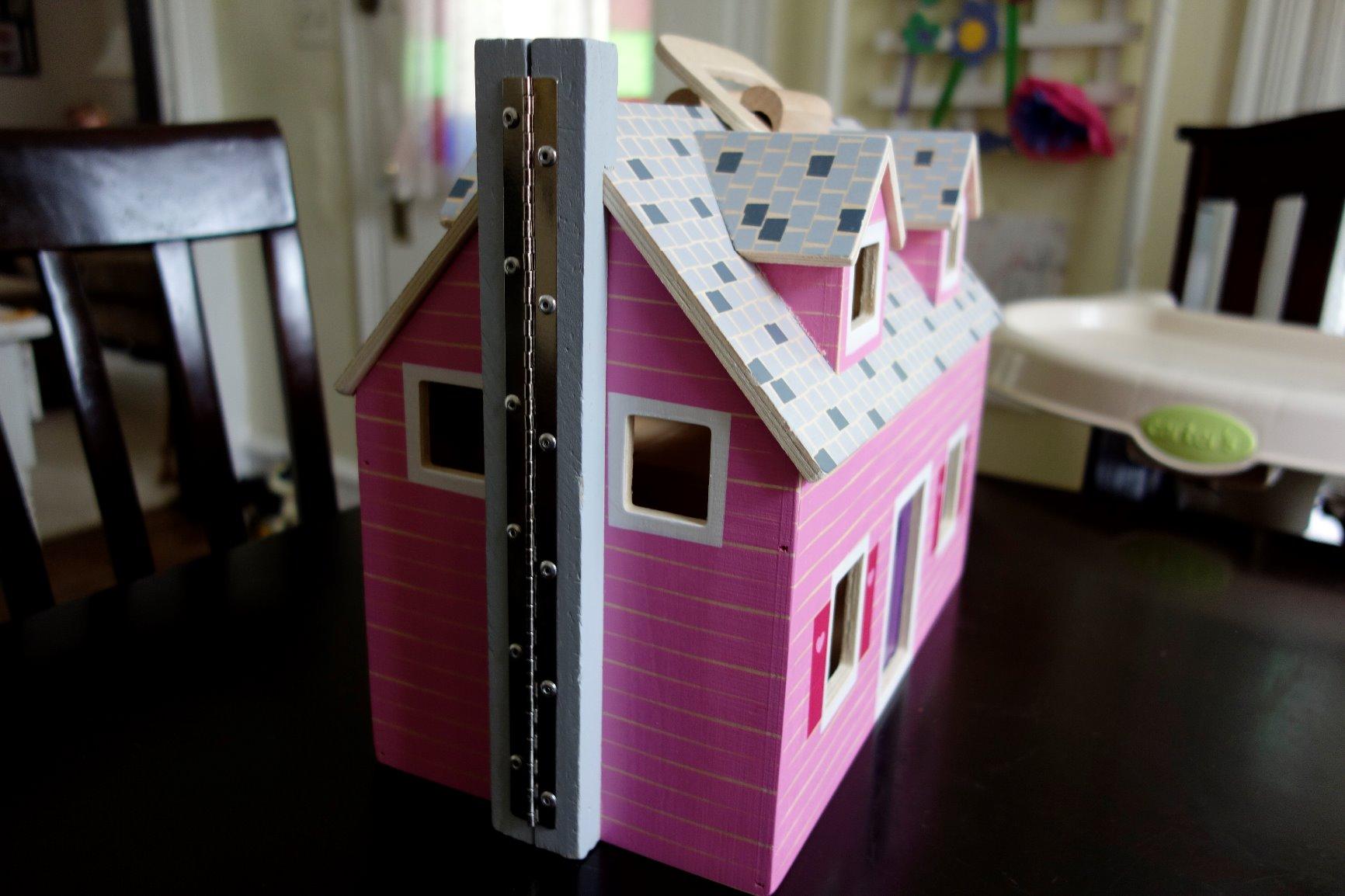

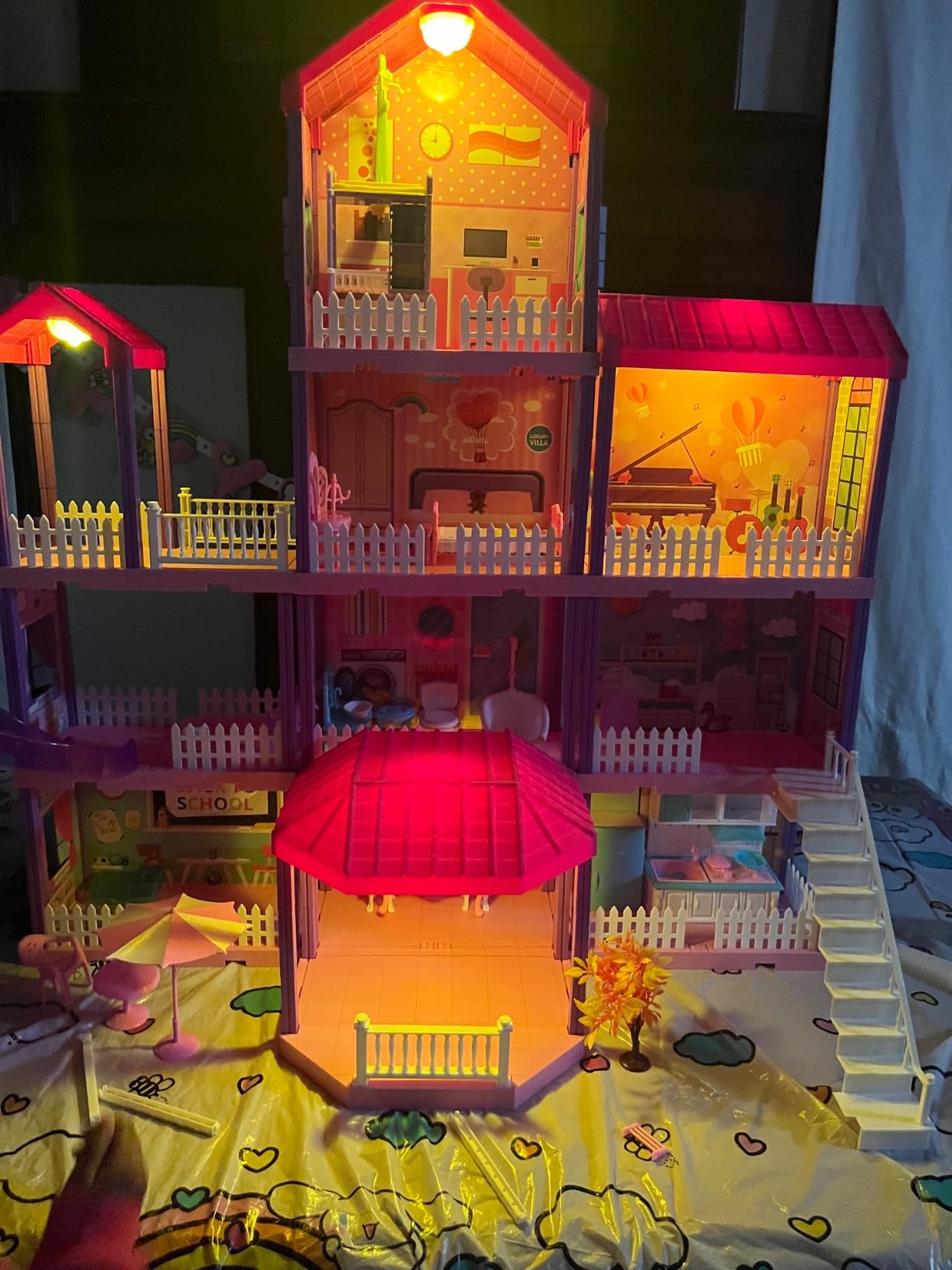


Pingback: What Are Quiet Time Toys? Parent's Complete Guide
Pingback: What Toys Have Button Batteries? Parent Safety Guide