7 Best Toys for Car Rides & Long Trips: The Ultimate Buying Guide
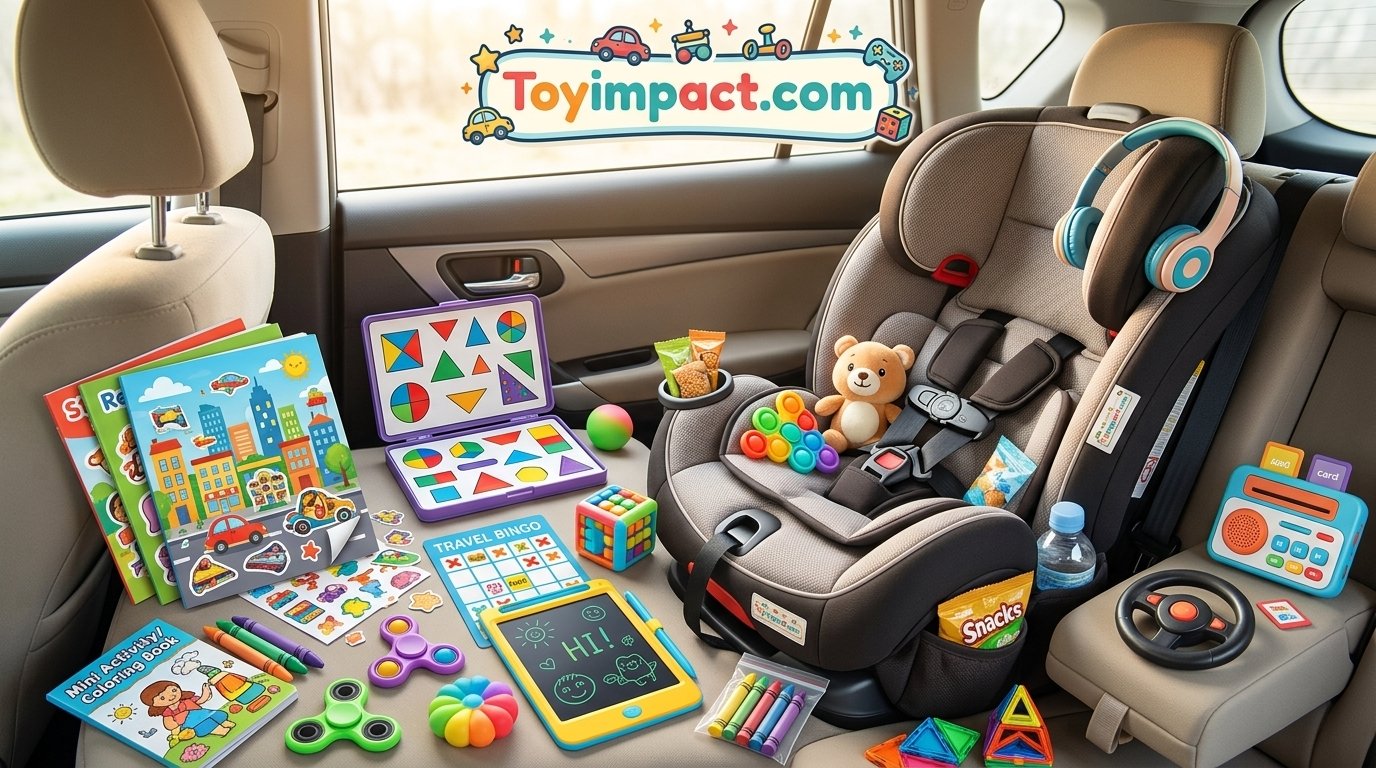
Anyone who has survived a six-hour road trip with a bored, wriggling toddler in the back seat knows the truth: the difference between a peaceful drive and a meltdown-filled nightmare often comes down to what’s in the seat pocket. The right toys don’t just pass the time — they keep tiny hands busy, protect your upholstery, and honestly save your sanity somewhere around hour three. Below, we’ve rounded up seven road-trip-tested toys that consistently earn praise from parents for holding attention, resisting drops and bumps, and not turning your back seat into a graveyard of tiny broken pieces.
This guide goes well beyond a simple list. We cover the developmental science behind why certain toys work better in confined spaces, how to build a complete travel entertainment strategy by age, DIY options when you forget to pack anything, sensory-friendly picks for neurodivergent travelers, the real-world pros and cons of screen-based versus screen-free entertainment, and dozens of practical tips gathered from families who log serious highway miles every year. Whether you’re planning a two-hour drive to grandma’s house or a cross-country adventure with multiple kids in the back seat, this guide is designed to be the only resource you need to read before you pack the car.
Why the Right Travel Toy Actually Matters
Long car rides ask a lot of small children: sit still, stay buckled, entertain yourself, and do it all without a proper place to run around. Screens can help in short bursts, but most parents find that a mix of tactile, hands-on toys keeps kids engaged far longer and avoids the post-trip meltdown that comes from too much passive scrolling. The best travel toys share a few traits — they’re compact, they don’t have pieces that vanish into the seat cracks, they’re quiet enough not to drive the driver crazy, and they’re genuinely engaging rather than a five-minute novelty.
There’s also a developmental dimension that’s easy to overlook. When children sit in a car seat for hours, they’re missing out on the gross motor movement, sensory exploration, and social interaction that normally fills their day. Travel toys that involve problem-solving, fine motor manipulation, creativity, or cooperative play don’t just prevent boredom — they help bridge that developmental gap. A child who spends three hours building with magnetic tiles or working through an interactive book is using cognitive pathways that would otherwise go dormant during passive screen time. That matters more than most people realize, especially for younger children whose brains are in the thick of rapid neural development.
The stakes are also practical. A child who’s genuinely engaged with a toy is a child who isn’t wiggling out of their car seat straps, isn’t screaming for snacks every eight minutes, and isn’t kicking the back of the driver’s seat. For the driver, that translates directly into safety — fewer distractions, fewer glances in the rearview mirror, and fewer emergency pull-offs to deal with a crisis in the back seat. The investment in a handful of well-chosen travel toys pays for itself in reduced stress on the very first long drive.
If you’re building out a full toy rotation at home too, it’s worth pairing your travel picks with a broader strategy — this guide on how often to rotate kids’ toys pairs nicely with car-trip planning, since a fresh “new to them” toy works especially well as a surprise for the second leg of a long drive.
What Makes a Great Travel Toy — The Five Pillars
After testing dozens of options across hundreds of miles of family road trips, we’ve identified five non-negotiable qualities that separate genuinely useful travel toys from ones that end up forgotten on the floor of the back seat:
- Containment: The toy and all its components must be self-contained or easily containable. Loose pieces, rolling parts, and detachable components are the enemy of car play. The best travel toys fold into themselves, have magnetic or attached pieces, or come in a dedicated carrying case that doubles as a play surface.
- Engagement duration: A toy that holds attention for five minutes at home might hold it for two minutes in a car, where the novelty factor is competing with the restlessness of being strapped down. Look for toys with open-ended play patterns — building, creating, exploring — rather than single-purpose toys with a predictable outcome.
- Appropriate challenge level: Too easy and the child gets bored immediately. Too hard and they get frustrated and give up. The sweet spot is a toy that’s slightly above the child’s current skill level — challenging enough to require focus but not so challenging that they need constant adult help.
- Low noise: This one gets overlooked until you’re three hours into a drive and a toy starts playing the same jingle for the forty-seventh time. Volume controls are essential, and silent toys are even better. The driver needs to focus, and repetitive noise from the back seat is a genuine safety concern on long drives.
- Durability: Car travel is rough on toys. They get dropped, stepped on, sat on, thrown, and squeezed between seats. Cheap plastic toys with thin walls and delicate hinges rarely survive a single road trip. Invest in toys made from solid materials with robust construction — they’ll pay for themselves by lasting through many trips instead of ending up in the trash after one.
1. Melissa & Doug Magnetic Travel Games

This one solves the single biggest problem with travel board games: pieces sliding everywhere the second the car hits a bump or takes a turn. The magnetic board and pieces click into place and stay there, which means checkers, tic-tac-toe, and similar games are actually playable at 65 mph on a bumpy highway. The compact folding case fits easily into a door pocket or backseat organizer, and because it folds flat, it doesn’t compete for space with snacks and water bottles.
It’s a strong pick for siblings traveling together, since it naturally encourages two kids to interact instead of retreating into separate screens. If you’re outfitting a car for more than one kid, this pairs well with ideas from our best toys for siblings to play together roundup.
Why Magnetic Games Outperform Regular Board Games in the Car
The physics of car play are fundamentally different from play at a kitchen table. At home, gravity and a flat surface do most of the work keeping game pieces in place. In a car, you’re dealing with constant micro-movements — vibrations from the road, sudden braking, acceleration from on-ramps, and the occasional sharp turn that sends everything sliding. A regular board game becomes an exercise in frustration within minutes because pieces migrate across the board or fall off entirely.
Magnetic games solve this by creating a holding force between each piece and the board surface. The Melissa & Doug version uses strong enough magnets that pieces stay put during normal driving conditions but are still easy enough for small fingers to pick up and reposition. This balance is important — magnets that are too strong become frustrating for younger kids who lack the finger strength to manipulate them, while magnets that are too weak defeat the purpose entirely.
Game Variations That Keep Things Fresh
Most sets include at least two or three different games — typically checkers, tic-tac-toe, and sometimes backgammon or a simple strategy game. But parents have found creative ways to extend the life of these sets well beyond the included games. Here are some that work particularly well:
- Color sorting: Younger kids (3-4) who aren’t ready for the actual game rules can simply sort the magnetic pieces by color or create patterns on the board.
- Storytelling with pieces: Use the pieces as characters in an improvised story — “the red circle is a rabbit and the black square is a house.” This works especially well with siblings taking turns adding to the story.
- Maze creation: Arrange pieces as walls and try to navigate a finger from one corner to the other without touching any pieces.
- Math practice: For early elementary kids, use the pieces as counting manipulatives for simple addition and subtraction problems.
- Speed challenges: Time each other on how quickly you can arrange all pieces in a specific pattern, then beat the record.
What to Look for When Buying
Not all magnetic travel games are created equal. Here are the features that matter most:
- Magnet strength: Test this if you can — the piece should stay on the board when the board is tilted at a 45-degree angle but not so strong that a 4-year-old struggles to move it.
- Board surface quality: Cheap boards have a thin laminate that peels after a few months of folding and unfolding. Look for boards with a solid surface that won’t deteriorate.
- Hinge quality: The folding mechanism takes a beating in travel. Weak hinges crack or become loose quickly.
- Piece size: Pieces should be large enough not to be a choking hazard for younger siblings who might be in the car but too small to play — generally anything over 1.5 inches in diameter is considered safe for children over 3.
- Included games: More variety means more longevity. Sets with 3+ games offer better value than single-game sets.
Pros
- Pieces stay put thanks to magnets
- Folds flat and compact for storage
- Encourages sibling interaction
- Durable board holds up to repeated folding
- Multiple game variations extend play value
- No batteries or charging required
- Works across a wide age range with creative adaptation
Cons
- Best suited to kids old enough to understand the games (4+)
- Small magnetic pieces are a choking hazard for toddlers
- Board can be slightly small for bigger hands
- Magnets can weaken over time with heavy use

Keep the back seat drama-free with a game that never slides off the board.
Check Price on Amazon2. Osmo Genius Starter Kit

Osmo takes the tablet — which most parents already keep in the car anyway — and turns it into something more than passive video watching. Using a small mirror attachment and physical letter tiles, number pieces, or drawing tools, kids interact with real objects while the app responds on screen. It blurs the line between “educational” and “actually fun,” which is exactly what you want on hour four of a road trip when patience is thin on both ends of the back seat.
Because it requires a compatible tablet, it’s worth checking device compatibility before buying. It shines for early elementary kids working on letters, spelling, and early math, and it holds attention noticeably longer than a typical game app because the physical pieces make it feel more like play than screen time.
How Osmo Bridges the Physical-Digital Gap
What makes Osmo different from a regular tablet game is the physical interaction layer. Instead of swiping and tapping — which is passive and repetitive — kids manipulate real objects that the tablet’s camera reads and responds to. When a child places letter tiles on the table to spell a word, the tablet recognizes those tiles and animates the result on screen. When they draw on the included sketchpad, their drawing appears digitally in real time. This kind of hybrid interaction activates both fine motor skills and cognitive processing simultaneously, which is why it holds attention so much longer than purely digital alternatives.
For car use specifically, the main consideration is the need for a flat surface to place the reflector and pieces on. A lap desk or car seat activity tray solves this problem nicely, and we cover those options in detail in the Car Seat Accessories section below.
Game Packs and What They Cover
The Genius Starter Kit includes several game types that target different skills:
- Tangram: Spatial reasoning and geometry — kids arrange physical shapes to match silhouettes on screen. This is one of the more engaging games for car use because the pieces are relatively large and easy to handle.
- Words: Spelling and vocabulary — kids place letter tiles to guess or spell words shown as images on screen. Works well for kids aged 5-8 who are building literacy skills.
- Numbers: Early math — kids use number tiles and dot tiles to solve math problems. The physical manipulation of numbers makes abstract math concepts more concrete for young learners.
- Masterpiece: Drawing and creativity — the app breaks down any image into simple lines and guides kids through drawing it step by step. This is the quietest of the Osmo games and requires the least space, making it ideal for car use.
- Newton: Physics and problem-solving — kids draw lines on paper to redirect falling balls into targets. Creative and open-ended, this one can keep kids busy for surprisingly long stretches.
Practical Tips for Car Use
- Pre-download all game content before leaving home — Osmo games work offline once installed, so you won’t need cellular data on the road.
- Keep the reflector attachment in a dedicated small pouch so it doesn’t get lost in seat cracks.
- For younger kids, start with Masterpiece (drawing) since it has the lowest learning curve and requires the least reading ability.
- Set the tablet’s brightness to auto-adjust — constant bright screen in a dim car can cause eye strain on long drives.
- Use a tablet stand or case that props the screen at the right angle for the reflector to work properly on a lap surface.
Pros
- Combines screen time with hands-on manipulation
- Multiple games included (letters, numbers, drawing)
- Holds attention far longer than passive apps
- Works offline — no data needed on the road
- Adapts to different skill levels
Cons
- Requires an iPad or compatible tablet, sold separately
- Small pieces need a dedicated pouch to avoid loss
- Needs a flat surface for the reflector to work
- Initial setup can be fiddly for younger kids
Parents introducing screen-adjacent learning tools early often ask about timing — our piece on the best age to introduce Montessori-style toys covers similar reasoning for hands-on learning tools.

Turn tablet time into hands-on learning your kids will actually ask for.
Check Price on Amazon3. Crayola Color Wonder Travel Kit

Color Wonder markers are the closest thing to a foolproof car activity: the ink only shows up on the special paper, meaning it won’t stain seats, clothes, hands, or the family dog if things get chaotic. The travel version condenses everything into a small carrying case with a hard surface to draw against, so kids don’t need a table or their knees as a desk.
It’s a reliable pick for younger kids who love coloring but whose aim with a regular marker can’t yet be trusted around cloth upholstery.
The Science Behind Mess-Free Markers
Color Wonder technology works through a chemical reaction between the marker ink and a coating on the special paper. The markers themselves contain a clear, colorless solvent that activates invisible dye molecules pre-loaded into the paper’s surface. When the solvent contacts the paper, it dissolves the dye in that exact spot, producing color. On any other surface — fabric, skin, plastic, leather — the solvent simply evaporates without leaving a visible mark because there’s no dye in the solvent itself.
This is genuinely clever chemistry, and it’s what makes the product work as advertised. The trade-off is that you must use the special paper — regular paper won’t produce any color, and the special paper can’t be used with regular markers either. It’s a closed system, which means you’ll need to buy refill paper once the included pages run out.
Maximizing the Travel Kit for Long Drives
The standard travel kit comes with a limited number of coloring pages, which might not be enough for a full day of driving. Here’s how experienced road-trippers extend the kit’s usefulness:
- Buy refill packs in advance: Color Wonder refill paper comes in themed packs (Disney, animals, vehicles) and is significantly cheaper than buying a whole new kit. Stock up before the trip.
- Create your own pages: Older kids can use the blank Color Wonder paper to create freehand drawings instead of coloring pre-printed images. This extends play time dramatically.
- Rotate the marker colors: Kids often fixate on one or two colors. Gently encouraging them to use all the colors in the set makes each page more visually interesting and extends engagement.
- Use the case as a portfolio: The carrying case can hold completed pages, giving kids a sense of accomplishment and a “gallery” to show grandparents when they arrive.
- Pair with storytelling: Ask kids to draw a scene from a story they’re making up, or to draw what they see out the window. This adds a creative narrative layer to the coloring activity.
Pros
- Truly mess-free — ink won’t mark seats or clothing
- Compact case includes a hard drawing surface
- Simple enough for toddlers to use independently
- Refill paper is widely available and affordable
- No charging or batteries needed
- Works for a wide age range (3-8)
Cons
- Requires special Color Wonder paper to work
- Markers can dry out if caps aren’t replaced properly
- Limited number of pages in the initial kit
- Older kids may find the coloring pages too simple

Give younger kids a coloring outlet with zero risk to the upholstery.
Check Price on Amazon4. Melissa & Doug Water Wow! Reusable Coloring Pads

These pads use a water-filled pen to reveal hidden colors on special paper, and once the page dries out, the picture disappears and can be “colored” again. It’s essentially an infinitely reusable activity that needs nothing but water — no ink, no mess, no refills to pack. For toddlers and preschoolers who aren’t quite ready for markers or complex games, this hits a sweet spot of engagement and simplicity.
Because there’s genuinely no mess involved, it’s one of the safer bets for very young travelers, and it pairs naturally with other early sensory-friendly picks in our sensory toy gift guide.
How Water Wow! Pads Actually Work
The technology is beautifully simple. Each page contains water-activated ink that’s been pre-applied to the page surface and then covered with a white coating. When the water pen touches the page, the water dissolves the white coating in that spot, revealing the colored ink underneath. As the water evaporates — typically within 5 to 15 minutes depending on humidity and temperature — the white coating reforms, and the picture “disappears,” ready to be revealed again.
This reusability is the product’s greatest strength for travel. Unlike a coloring book that has a finite number of pages, a Water Wow! pad is theoretically infinite. A child can color the same page dozens of times during a single long trip, and the brief waiting period while the page dries creates a natural cycle of anticipation that actually adds to the engagement rather than detracting from it.
Tips for Car Use
- Fill the pen at home: The water pen has a small reservoir that can leak if overfilled. Fill it to about three-quarters capacity before leaving, and keep a small towel or wipe nearby for the inevitable drips.
- Bring multiple pads: While individual pages are reusable, having 2-3 different themed pads (animals, letters, vehicles) gives kids variety when they tire of the same images.
- Watch for “water painting” fatigue: Some kids lose interest in Water Wow! faster than others because the color reveal is less vivid than traditional markers. This is normal — it’s best suited for kids aged 2-5 who are less particular about color intensity.
- Temperature matters: In very cold cars, the water can take much longer to evaporate, extending the reveal time. In hot cars with the heater blasting, pages dry quickly. Neither is a problem, but it’s worth knowing.

An endlessly reusable activity that needs nothing but a splash of water.
Check Price on Amazon5. Buckle Toy “Busy Board”

This plush board is covered in the kind of buckles, zippers, snaps, and laces that toddlers are endlessly fascinated by — the same fine-motor skills they’re practicing when they try (and fail) to unbuckle their own car seat straps. It attaches directly to a car seat or stroller with a strap, so it can’t be tossed onto the floor and forgotten.
It’s especially popular for kids in the 1–3 age range who are in a “figuring out how things work” phase, and it doubles as a genuinely useful fine motor skills tool outside the car too.
The Developmental Value of Buckle Toys
Occupational therapists frequently recommend buckle boards and busy books for toddlers because they target several developmental skills simultaneously:
- Fine motor coordination: The pinching, gripping, and twisting motions required to operate buckles and zippers build the same hand muscles that children will later use for writing, drawing, and using scissors.
- Bilateral coordination: Many fasteners require both hands working together — one to hold the base and one to manipulate the clasp. This bilateral coordination is a foundational skill for tasks like buttoning shirts, tying shoes, and using a fork and knife.
- Cognitive sequencing: Figuring out the correct order of operations to open a complex fastener — “first I push this, then I pull that” — builds executive function skills that transfer to academic learning.
- Problem-solving persistence: Toddlers who work through the frustration of a tricky clasp are building resilience and persistence, qualities that serve them well throughout childhood.
- Sensory exploration: Different textures, sounds (clicking buckles, crinkling fabric), and resistance levels provide rich sensory input that supports sensory processing development.
The Car Seat Strap Connection
There’s a practical reason busy boards are particularly popular among parents of toddlers who ride in car seats: kids in the 1-3 age range are developmentally driven to manipulate buckles and straps, and the most readily available buckle in their world is the one on their car seat harness. Giving them a dedicated toy that satisfies this urge significantly reduces the likelihood that they’ll work on unfastening their own safety harness during the drive. It’s not a substitute for proper car seat strap checking by parents, but it does redirect the behavior in a productive direction.

Satisfy the buckle-and-zipper obsession without them escaping their own straps.
Check Price on Amazon6. LeapFrog LeapStart Interactive Learning Book

The LeapStart system pairs an audio pen with interactive books, so tapping a picture or word triggers sounds, questions, or mini-games — no screen required. For preschool and early elementary kids, it feels like a game but quietly reinforces letters, phonics, and early reading skills. Because it’s book-based rather than video-based, most parents feel comfortable letting kids use it for longer stretches than a tablet.
It’s a strong complement to STEM-focused travel activities too — see our guide on how to introduce STEM toys to preschoolers for related ideas.
How the LeapStart System Works
The LeapStart stylus contains a small infrared camera that reads invisible dots printed on each page of the interactive books. When a child taps a specific spot on the page, the stylus reads the dot pattern, identifies the location, and plays the corresponding audio — a word pronunciation, a question, a sound effect, or a mini-game prompt. The system is remarkably responsive; there’s virtually no delay between tapping and audio playback, which keeps kids in the flow of the activity.
Each book is organized into levels, so a child can progress from simpler activities (matching pictures to words) to more complex ones (solving word problems, answering comprehension questions). This built-in progression system is one of the key reasons the LeapStart holds attention better than static activity books — there’s always a next challenge, and the child controls the pace.
Choosing the Right Books for Car Travel
LeapStart books come in different subjects and difficulty levels. For car travel, consider these factors:
- Audio volume: All LeapStart books produce sound, which means other people in the car will hear it. The stylus has a volume control, and using headphones (kid-safe volume-limited ones) solves the noise issue entirely for long drives.
- Subject engagement: Kids engage more with subjects they’re already interested in. A child who loves animals will spend much longer on a veterinary-themed book than on a math-focused one, regardless of skill level.
- Page count: Thicker books with more pages naturally last longer during a long drive. Look for the “Deluxe” or expanded versions when available.
- Replayability: Books with randomized questions or multiple difficulty settings offer more replay value than books with fixed content that kids memorize quickly.

Screen-free learning that still feels like a game to early readers.
Check Price on Amazon7. License Plate Bingo Game

Sometimes the simplest option wins. A laminated card listing license plates from different states turns “are we there yet” boredom into an actual game the whole family can play, since it gets kids looking out the window instead of down at a screen. It costs next to nothing, never needs batteries, and works for a surprisingly wide age range — even adults get competitive trying to spot a rare plate first.
It’s a great low-cost addition to a bigger travel toy bag, and works especially well alongside quieter solo activities from earlier in this list for when energy levels shift during a long drive. For more low-cost travel-specific ideas, see our dedicated best travel toys for airplane guide, since many of the same picks work for cars too.
Making License Plate Bingo More Engaging
The basic version — checking off states as you spot them — is fine, but experienced road-trip families have developed variations that keep the game interesting over many hours:
- Point system: Assign different point values to different states based on how far away they are from your current location. Alaska and Hawaii plates get 50 points, neighboring states get 5 points. This adds a strategic element.
- Plate poker: When you spot a plate, describe it to the other players without showing them. If they don’t believe you, you have to prove it. Adds a bluffing element that older kids love.
- Plate stories: For each unusual plate spotted, make up a story about why that car is so far from home. “That Alaska plate is probably a family driving back from delivering a sled dog to their cousin in Florida.” Creative and hilarious with the right group.
- Bingo blackout challenge: Try to spot all 50 states on a single long road trip. This becomes a multi-day family quest on extended vacations and creates genuine excitement when a rare state finally appears.
- Canadian provinces bonus: If you’re driving near the border, add Canadian provinces and territories for bonus points. There are 13 of them, and spotting Nunavut is basically the travel game equivalent of finding a four-leaf clover.
Geographic Learning Opportunity
License plate bingo is one of the few travel games that sneaks in genuine geographic education without feeling like a lesson. Kids naturally learn the shapes, abbreviations, and locations of states as they scan plates and check them off on the map. Parents can enhance this by having a US map handy and having kids point to where each spotted state is located. Over the course of a long road trip, kids can develop surprisingly strong geographic knowledge just from this one simple game.

A no-battery, no-mess classic that gets the whole car playing together.
Check Price on AmazonComparison Table: Which Travel Toy Fits Your Trip?
| Toy | Best Age | Mess Level | Best For |
|---|---|---|---|
| Melissa & Doug Magnetic Travel Games | 4+ | None | Sibling play, group games |
| Osmo Genius Starter Kit | 5+ | None | Interactive screen-based learning |
| Crayola Color Wonder Travel Kit | 3+ | None (mess-free ink) | Coloring without stains |
| Melissa & Doug Water Wow! Pads | 2+ | Minimal (water only) | Toddlers, reusable activity |
| Buckle Toy Busy Board | 1–3 | None | Fine motor skills, car seat attachment |
| LeapFrog LeapStart Book | 3–7 | None | Screen-free early reading |
| License Plate Bingo | 5+ (whole family) | None | Group engagement, window-watching |
The Developmental Science Behind Travel Play
Understanding why certain toys work better than others in a car isn’t just about convenience — it’s rooted in how children’s brains process stimulation, manage boredom, and develop skills during periods of physical constraint. This section unpacks the research so you can make more informed choices about what goes in the seat pocket.
How Children Process Boredom Differently Than Adults
Adults generally have the cognitive tools to manage boredom internally — we can daydream, plan, reflect, or simply zone out without distress. Young children, particularly those under age 6, lack this capacity. Their prefrontal cortex — the brain region responsible for self-regulation, planning, and internal entertainment — is still developing. When a young child says “I’m bored” in the car, they’re not being difficult; they’re accurately reporting that they’ve run out of internal resources to manage the lack of stimulation.
This is why the solution to car boredom isn’t to tell kids to “just look out the window” (though that has its place, as we’ll discuss with license plate games). It’s to provide external stimulation that engages their developing brain in a structured way. The best travel toys act as scaffolding for the self-regulation skills kids haven’t yet built — they provide a framework for focused attention that the child can’t yet generate on their own.
The Attention Span Equation
A commonly cited rule of thumb in child development is that a child’s sustained attention span is roughly 2-3 minutes per year of age. So a 2-year-old might focus on a single activity for 4-6 minutes, while a 5-year-old might manage 10-15 minutes. These numbers drop further in stimulating environments (like a car with siblings, window distractions, and the general restlessness of being strapped down) and increase in calm, focused environments.
What this means practically: no single toy will hold a young child’s attention for an entire long car ride, regardless of how brilliant the toy is. The strategy isn’t to find one magic toy — it’s to build a rotation of 4-6 different activity types, each aligned with the child’s developmental stage, and to introduce them at intervals before the child reaches full boredom with the current activity. This rotation strategy is the single most effective approach to car entertainment, and it’s why most of our recommendations come in groups rather than as standalone solutions.
Fine Motor Development in Confined Spaces
Car seats restrict large body movements, which means children’s physical energy tends to concentrate in their hands and fingers. This makes fine motor activities particularly well-suited to car play — kids naturally want to manipulate, twist, turn, and build with their hands because those are the only movements available to them. Toys that involve buckling, zipping, building, drawing, or manipulating small objects channel this pent-up physical energy productively.
Pediatric occupational therapists note that car rides can actually be excellent opportunities for fine motor skill development precisely because the child is physically still. Without the option to run, jump, and climb, children can sustain fine motor activities for longer than they typically would at home, where the temptation of gross motor play constantly pulls them away. A child who works on a buckle board for 20 uninterrupted minutes in the car is getting more focused fine motor practice than they might get in an hour of play at home where they’re constantly switching between activities.
Social-Emotional Learning in Shared Spaces
When siblings share a back seat, the confined space creates both challenges and opportunities for social-emotional development. The challenges are obvious — shared space leads to conflicts over territory, noise, and toy access. But the opportunities are equally significant: kids in a shared back seat must practice turn-taking, negotiation, compromise, and cooperative play in a way that’s simply not required when they’re in separate rooms at home.
Games designed for two players — like magnetic checkers or collaborative license plate scanning — naturally scaffold these social skills. Parents can enhance this by occasionally initiating structured turn-taking (“Okay, it’s Maya’s turn to pick the next activity”) rather than letting every interaction become a negotiation. Over the course of a long road trip, siblings who share activities and take turns often report feeling closer at the end of the drive than at the beginning, which is one of the underrated benefits of family road trips.
The Role of Novelty in Sustained Engagement
Neuroscience research consistently shows that novelty activates the brain’s reward system, releasing dopamine and increasing motivation to explore. For travel toys, this has a critical implication: a toy that’s been sitting in the child’s room for months will generate less engagement in the car than a toy that’s brand new or hasn’t been seen in a while. This is why toy rotation — specifically reserving certain toys as “car-only” or “trip-only” — is such an effective strategy.
The ideal approach is to have a dedicated bag of travel toys that stays in the closet between trips. When a road trip approaches, the bag comes out, and the toys feel fresh and exciting again. Some parents even wrap individual toys in tissue paper to create an “unwrapping” moment at rest stops or during the second half of a long drive, which triggers a dopamine spike and resets attention span beautifully.
Age-by-Age Deep Dive: What Works and Why
Children’s capabilities, interests, and attention spans change dramatically from one year to the next during early childhood. A toy that mesmerizes a 15-month-old will bore a 4-year-old in seconds, and a game that entertains a 7-year-old will frustrate a 3-year-old. This section breaks down the ideal travel toy profile for each age range in detail.
Babies Under 12 Months: Sensory Exploration
Babies in this age range are primarily interested in cause-and-effect relationships and sensory exploration — they want to shake things, bang things, put things in their mouths, and watch things move. For car travel, their needs are actually relatively simple because they sleep for a significant portion of most drives. Key toy characteristics for this age:
- High contrast patterns: Black-and-white or bold primary colors capture infant attention more effectively than pastels or muted tones.
- Sound variation: Rattles, crinkle toys, and squeakers that produce different sounds when manipulated keep babies exploring longer than silent toys.
- Texture variety: Soft, smooth, bumpy, and fuzzy surfaces in a single toy provide rich tactile input that sustains infant engagement.
- Attachability: At this age, everything goes on the floor. Toys with clips, loops, or tethers that attach to the car seat are essential.
- Safety first: No small parts, no detachable pieces, no strings longer than 6 inches. Everything must be safe for mouthing.
The buckle board and Water Wow! pads from our main list aren’t suitable for this age group. Instead, look for dedicated infant car seat toys — soft books with crinkle pages, textured teething rings that attach to the seat, and simple cause-and-effect toys with large buttons that produce sounds or movements.
12-18 Months: The Mouthing Phase Transitions
This is a transitional age where babies are becoming toddlers but still explore heavily through mouthing. They’re beginning to develop intentional grasp-and-release, simple stacking, and basic cause-and-effect understanding. Travel toys for this age should bridge the gap between infant sensory toys and toddler activity toys:
- Large, soft stacking cups that nest inside each other (compact and safe)
- Simple pop-up toys with large buttons or switches
- Textured balls that are easy to grip but too large to be a choking hazard
- Board books with thick pages that are easy for tiny fingers to turn
- Soft dolls or figures that can be squeezed and manipulated
At this age, don’t expect any single toy to hold attention for more than 3-5 minutes. The strategy is sheer volume — bring many different options and rotate frequently. A gallon-sized ziplock bag of varied small toys is your best friend.
18 Months – 2 Years: Emerging Independence
This is when the buckle board becomes relevant. Toddlers at this age are driven by two powerful motivations: the desire to do things independently (“Me do it!”) and fascination with how things work. They’re developing the pincer grasp, beginning to understand simple sequences, and starting to engage in pretend play. The ideal travel toy for this age:
- Buckle and zipper toys — directly satisfy the “how does this work” drive
- Water Wow! pads — the water pen is easy to grip and the color reveal is magical at this age
- Large-piece puzzles (2-4 pieces) with knobbed handles that are easy to manipulate
- Play-Doh or modeling clay (with a mat or tray to contain the mess)
- Simple shape sorters designed for travel (with attached pieces)
2-3 Years: The Golden Age of Travel Toys
Two to three is arguably the sweet spot for most of the travel toys on our list. Children at this age have developed sufficient fine motor skills to manipulate markers, water pens, and simple game pieces, but they still find these activities genuinely fascinating rather than babyish. They’re also beginning to engage in more sustained play — 10-15 minutes with a single activity is realistic for a well-chosen toy.
The full range of options for this age group includes:
- Color Wonder travel kits — mess-free coloring that won’t damage the car
- Water Wow! pads — endlessly reusable and completely mess-free
- Buckle boards — still engaging at this age, with more complex fasteners
- Large sticker books (reusable stickers are ideal)
- Simple matching and sorting games
- Interactive sound books with buttons
- Magnetic fishing games with a simple rod
3-5 Years: Expanding Capabilities
Preschoolers can handle more complex activities and are developing the cognitive skills for rule-based games, creative projects, and early literacy activities. This is where the LeapStart system, magnetic travel games, and Color Wonder kits really shine. Children in this range can also start participating in family games like simplified versions of license plate bingo.
Key additions for this age group:
- Wiki Stix (bendable wax sticks): These colorful, wax-coated sticks can be bent, twisted, and pressed together to create shapes, letters, and figures. They stick to most smooth surfaces without leaving residue, making them ideal for car windows and tray tables.
- Magnetic dress-up dolls: Flat magnetic figures with interchangeable outfits that stick to a magnetic background. Compact, mess-free, and highly engaging for creative play.
- Simple card games: Go Fish, Old Maid, and similar games with large, sturdy cards work well on a lap tray. Kids at this age are developing the cognitive skills to understand simple game rules.
- Lacing cards: Sturdy cards with pre-punched holes and a thick lace for threading. Builds fine motor precision and can keep a focused child busy for 15-20 minutes.
- Scratch art paper: Special black-coated paper that reveals rainbow colors when scratched with a wooden stylus. Mess-free and produces dramatic, satisfying results that kids love.
5-8 Years: Strategy and Creativity
Early elementary kids can handle more complex games, longer reading, and multi-step creative projects. Their attention spans have lengthened enough (15-25 minutes) that a well-chosen activity can genuinely sustain them for a meaningful portion of a long drive. This is also the age where kids start developing preferences — a child who loves drawing will happily spend an hour with art supplies, while a child who loves logic will gravitate toward puzzle books.
Best options for this age range:
- Magnetic chess and strategy games: The magnetic travel games from our list work beautifully at this age, with actual strategic thinking emerging.
- Activity and puzzle books: Mazes, word searches, crosswords, spot-the-difference, and sudoku-style puzzles in age-appropriate formats.
- Drawing and sketching supplies: A quality sketch pad with colored pencils (not markers — they dry out in hot cars) provides open-ended creative engagement.
- Comic book creation kits: Blank comic panel templates with instruction on drawing basic characters. Kids create their own comic stories during the drive.
- Magic trick kits: Travel-sized magic trick sets with instruction cards. Kids practice tricks during the drive and perform them at rest stops or at the destination.
- Origami paper and instruction cards: Simple origami projects with pre-cut paper and step-by-step illustrated instructions. Creates tangible results that kids are proud of.
- Travel journal kits: A small notebook with prompts (“Draw what you see out the window,” “Write three things you’re excited about at our destination”) and basic art supplies.
8+ Years: Approaching the Transition
By age 8, many children are transitioning from toys to other forms of entertainment — books, music, audiobooks, handheld gaming devices, and conversation. Our piece on what age kids stop playing with toys explores this transition in detail. For car travel, older kids often prefer:
- Chapter books and graphic novels
- Audiobooks or podcasts played through headphones
- Handheld gaming devices (Nintendo Switch, etc.)
- Sketching or journaling
- Card games and tabletop games with more complex rules
- Conversation, storytelling, and word games with the family
The key insight for parents of older kids: don’t stop offering options just because they’re “too old for toys.” The right activity — even if it’s not technically a toy — still matters for preventing restlessness on long drives.
Screen-Free vs Screen-Assisted Travel Toys: An Honest Comparison
The screen time debate is one of the most contentious topics in modern parenting, and it intensifies during travel when the temptation to hand a child a tablet is strongest. This section offers a balanced, evidence-based comparison to help you make the choice that’s right for your family.
The Case for Screen-Free Travel Toys
Screen-free toys offer several advantages in the car environment:
- No battery anxiety: A magnetic game or coloring kit works indefinitely without needing to be charged. On a long drive, this reliability is genuinely valuable — there’s nothing worse than a tablet dying at hour three of a six-hour drive with no charging cable in sight.
- No motion sickness: Looking at a screen while the car is moving can trigger nausea in children who are susceptible to motion sickness. The inner ear detects motion that the eyes don’t register when focused on a static screen, creating a sensory mismatch that causes discomfort. Physical toys don’t have this problem because the child’s eyes are looking at their hands or the toy, which moves with them.
- Richer sensory engagement: Physical toys engage touch, proprioception (awareness of hand position and movement), and sometimes smell and hearing in ways that screens can’t replicate. This multi-sensory engagement creates stronger neural pathways and deeper learning.
- Social interaction: Screen-free toys are more likely to facilitate sibling interaction, parental conversation, and cooperative play. A tablet tends to isolate the user; a magnetic game or drawing activity can be shared.
- No content concerns: Physical toys don’t serve ads, don’t autoplay videos, and don’t expose children to age-inappropriate content. What you put in the child’s hands is exactly what they’ll engage with.
The Case for Screen-Assisted Travel Toys
Screens aren’t inherently bad, and in the specific context of long car travel, they offer real advantages:
- Unmatched engagement duration: For better or worse, screens hold children’s attention longer than almost any physical toy. On a 10-hour drive, this matters.
- Adaptive difficulty: Apps and interactive systems like Osmo can adjust difficulty in real-time based on the child’s performance, keeping them in the optimal challenge zone.
- Variety without volume: A single tablet can hold hundreds of games, books, movies, and activities. The equivalent variety in physical toys would fill a suitcase.
- Audio-visual storytelling: Audiobooks, podcasts, and educational videos provide narrative engagement that physical toys can’t match. A child listening to a story through headphones is engaged, calm, and quiet — which has real value for the driver.
- Hybrid options exist: Products like Osmo bridge the gap by combining physical manipulation with digital feedback, offering the engagement of a screen with the sensory richness of physical play.
The Recommended Approach: Strategic Blending
Most child development experts and experienced road-trip families converge on the same recommendation: use a combination of screen-free and screen-assisted activities, with screen-free options as the default and screens as a strategic reserve for the hardest parts of the drive.
A practical rotation might look like this for a 6-hour drive with a 4-year-old:
- Hour 1 (departure excitement): License plate bingo and looking out the window. Kids are naturally alert and interested at the start of a trip.
- Hour 2 (settling in): Coloring kit or Water Wow! pads. Hands-on, quiet, easy to manage independently.
- Hour 3 (lunch stop): Break from the car. Run around, eat, use the bathroom. No toys needed.
- Hour 4 (post-lunch slump): This is where screens earn their keep. A movie, an audiobook, or an Osmo session gets kids through the drowsy, cranky period after lunch.
- Hour 5 (re-engagement): Magnetic games or interactive book. The child has had a screen break and is ready for hands-on play again.
- Hour 6 (home stretch): Family conversation, “I Spy,” or music. The excitement of nearing the destination carries the final stretch.
This blended approach respects both the developmental value of screen-free play and the practical reality that screens are powerful tools for managing the hardest moments of a long drive.
DIY & Homemade Travel Toys: 15 Ideas You Can Make Tonight
Sometimes you realize at 10 PM the night before a road trip that you forgot to buy travel toys. Or sometimes you just prefer a hands-on, budget-friendly approach. Either way, these DIY travel toy ideas use common household materials and can be assembled in 30 minutes or less.
1. Pipe Cleaner Sculpture Kit
Bundle 20-30 pipe cleaners in various colors into a ziplock bag. Kids bend, twist, and connect them to create figures, shapes, letters, and abstract sculptures. Pipe cleaners are lightweight, completely silent, produce zero mess, and can be reshaped and reused endlessly. Add a few googly eyes and small pom-poms for extra creative potential (store in a separate small bag).
2. Magnetic Fishing Game
Cut fish shapes from colored cardboard and attach a small magnet to each one using tape or glue. Create a fishing “rod” by tying a string to a stick (a pencil works) and attaching a magnet to the other end. The child “fishes” by lowering the rod magnet to the fish magnets. Store everything in a large ziplock bag. This builds hand-eye coordination and provides the satisfying “catch” feedback loop that keeps kids coming back.
3. I-Spy Bottle
Fill a clear plastic bottle (a clean water bottle works) with rice or dried beans, then hide 15-20 small objects inside — a button, a paperclip, a bead, a small toy, a coin, a tiny figurine. Seal the lid with hot glue or strong tape. Kids shake and rotate the bottle to find all the hidden objects. Create a checklist card with pictures of each item so they can mark them off as they find them. This is a classic occupational therapy tool that builds visual scanning skills and sustained attention.
4. Clothespin Color Match
Color the tips of wooden clothespins with markers or paint in various colors. Create a cardboard strip with color swatches painted in the same colors. Kids clip each clothespin to its matching color swatch. This builds fine motor strength (clothespins require significant pinch force) and color recognition simultaneously.
5. Popsicle Stick Puzzles
Line up 8-10 popsicle sticks side by side and tape them together on one side. Draw or glue a picture across the sticks, then remove the tape and shuffle the sticks. Kids reassemble the sticks in the correct order to reveal the complete picture. Store in a rubber band or small bag. For multiple puzzles, use different colored tape on the back of each set so pieces don’t get mixed up.
6. Felt Board Stories
Cut a piece of felt into a rectangle (about 12×18 inches) and attach it to a piece of cardboard. Cut out felt shapes — people, animals, houses, trees, cars, clouds — that naturally stick to the felt background. Kids create scenes and stories by arranging the shapes on the board. Because felt clings to felt without adhesive, pieces stay put during car movement. Store shapes in a ziplock bag attached to the back of the board.
7. Rubber Band Geoboard
Push thumbtacks or small nails into a square of cork board or thick cardboard in a grid pattern (about 4×4 or 5×5). Provide a bag of rubber bands in various sizes. Kids stretch the bands around the tacks to create shapes, letters, and patterns. This is a staple of math education that builds spatial reasoning and fine motor skills. Ensure the tacks are firmly embedded and cover the back with a piece of felt or cardboard for safety.
8. Lacing Cards from Cardboard
Cut sturdy cardboard into simple shapes (star, heart, circle, animal outline) and punch holes around the edges using a single-hole punch. Provide shoelaces or thick yarn with a taped end for lacing. Kids thread the lace through the holes, building fine motor precision and hand-eye coordination. Laminate the cardboard shapes with clear packing tape for durability.
9. Travel Tic-Tac-Toe
Draw a tic-tac-toe grid on a piece of felt and provide two sets of small felt shapes (circles and X-shapes, or two different colored buttons). The felt-on-felt contact prevents pieces from sliding during car movement. This is the budget version of the magnetic travel game from our main list and works surprisingly well for quick games between siblings.
10. Paper Bag Puppets
Stuff a few small paper lunch bags into a ziplock bag along with markers, pre-cut felt shapes for eyes and mouths, and glue sticks. Kids create puppets on the bags and then put on puppet shows for siblings or parents. This combines art creation with imaginative play and storytelling — a powerful combination for sustained engagement.
11. Button Snake
Thread a large button onto a piece of ribbon or string and knot one end. Cut felt into squares, triangles, and circles, and cut a buttonhole-sized slit in each one. Kids thread the felt pieces onto the ribbon by pushing the button through each slit. This builds fine motor dexterity and can keep a toddler busy for 15-20 minutes. It’s also a classic Montessori activity that occupational therapists recommend.
12. Sensory Bags
Fill a heavy-duty ziplock bag with hair gel, glitter, small beads, or food coloring. Add small plastic figurines or foam letters. Seal the bag with strong tape along all edges. Kids push, squish, and manipulate the bag to find hidden objects and create swirling color patterns. Tape the bag to a lap tray or clipboard for stability. This provides rich tactile and visual sensory input with zero mess.
13. Story Stones
Collect smooth, flat stones (river rocks work best) and paint or draw simple images on them — a house, a person, a tree, a car, a sun, a moon, an animal. Place all stones in a small drawstring bag. Kids pull out stones one at a time and create a story incorporating each image as they draw it. This is a powerful creative writing and storytelling exercise disguised as a game, and it works beautifully across a wide age range.
14. Bead Sorting Kit
Provide a compartmentalized container (a pill organizer or tackle box) with beads of various colors, shapes, and sizes. Kids sort the beads into the compartments by color, shape, or size. This is a quiet, focused activity that builds classification skills and fine motor precision. For younger kids, use larger beads to avoid choking hazards.
15. Window Gel Clings (Homemade)
Mix white glue with food coloring and pour the mixture into silicone molds (ice cube trays work). Let them dry for 24-48 hours until they’re firm but flexible. These homemade gel clings stick to car windows just like store-bought ones, and kids can create new shapes each time. They’re reusable, mess-free, and provide the same window-sticking fun as commercial versions at a fraction of the cost.
Sensory-Friendly Travel Toys for Neurodivergent Kids
Children with autism, ADHD, sensory processing disorder, or other neurodivergent profiles have unique needs during car travel that most standard travel toy guides don’t address. The car environment itself is a sensory challenge — engine vibrations, road noise, visual motion through windows, confined space, and the pressure of seat belt straps all contribute to a high-stimulation environment that can quickly become overwhelming.
Understanding Sensory Needs in the Car
Neurodivergent children typically fall into one of two sensory profiles (and many have a mix of both):
- Sensory-seeking: These children crave additional sensory input. They fidget constantly, seek out textures, need movement, and can become dysregulated without sufficient stimulation. For these kids, travel toys should provide rich sensory feedback — textured surfaces, resistance-based fidgets, vibrating toys, and weighted objects.
- Sensory-avoidant: These children are overwhelmed by sensory input that others barely notice. Road noise, visual motion through windows, the feel of certain fabrics, and strong smells can trigger distress. For these kids, the strategy is to reduce sensory load — noise-canceling headphones, window shades, smooth-textured toys, and calming activities.
For deeper guidance on sensory-friendly toy selection, our sensory toy gift guide covers this topic in detail with specific product recommendations.
Best Sensory Travel Toys by Type
Tactile/Touch-Based
- Fidget spinners and cubes: Small, handheld devices with buttons, switches, dials, and spinning elements. They provide repetitive tactile and proprioceptive input that helps many children self-regulate. Choose quiet versions for car use — clicky buttons can be soothing for the child but annoying for the driver.
- Therapy putty: Specially formulated silicone putty that comes in different resistance levels (extra soft to extra firm). Kids pull, stretch, squeeze, and mold it, receiving deep pressure input through their hands. It doesn’t dry out like Play-Doh and won’t stick to car upholstery.
- Textured sensory balls: Small balls with bumps, ridges, or spikes that provide tactile stimulation when squeezed or rolled between the palms. Choose balls that are easy to grip and don’t bounce (a bouncing ball in a car is a recipe for driver distraction).
- Velcro strips: Surprisingly satisfying for sensory seekers. Attach adhesive-backed Velcro strips (soft side) to a clipboard or the inside of a seat back. Kids run their fingers over the texture repeatedly. Add the hook side in patches for variety.
Visual/Calm-Based
- Liquid motion timers: Sealed tubes containing two colors of viscous liquid that slowly separate and merge when flipped. Mesmerizing and calming, these provide visual sensory input without requiring any active engagement — perfect for children who need to decompress.
- Color-changing light toys: Small LED toys that cycle through colors slowly. These provide calming visual stimulation, especially useful during evening or nighttime driving when the car interior is dark.
- Glitter jars: A sealed jar filled with water, glitter glue, and loose glitter. When shaken, the glitter swirls and slowly settles. Children watch the settling process as a calming visual exercise. Many therapists use these as “calm down” tools.
Vestibular/Proprioceptive
- Weighted lap pads: Small, weighted pads (typically 2-5 pounds depending on the child’s size) that drape over the child’s lap in the car seat. The deep pressure input has a calming, organizing effect on the nervous system — similar to the therapeutic benefit of a weighted blanket. Ensure the weight is appropriate for the child (generally 10% of body weight plus 1 pound as a maximum guideline).
- Resistance band for legs: A loop of elastic band stretched around the car seat legs gives the child something to push and pull against with their feet, providing proprioceptive input without requiring them to move their upper body. This is a common occupational therapy adaptation for fidgety kids in seated positions.
- Chewelry (chewable jewelry): Necklaces, bracelets, and pencil toppers made from food-grade silicone that children can safely chew on. Chewing provides calming proprioceptive input through the jaw, which helps many neurodivergent children self-regulate. These are widely recommended by occupational therapists for children who chew on clothing, pencils, or other inappropriate items.
Auditory
- Noise-canceling headphones: Not a toy per se, but possibly the single most impactful sensory tool for car travel. Children who are sensitive to road noise, engine sounds, or sibling noise can use noise-canceling headphones to control their auditory environment. Pair with calming music, audiobooks, or white noise.
- Sound machines: Small, portable white noise machines that clip to the car seat. The consistent, predictable sound masks road noise and creates a calming auditory environment.
Car Seat Accessories & Activity Trays That Transform Back Seat Play
The right accessories can dramatically expand what’s possible for back seat play. A flat surface to work on, organized storage for toys and supplies, and proper positioning for activities — these infrastructure elements are often more important than the toys themselves.
Car Seat Activity Trays
A car seat activity tray is essentially a flat, rigid surface that attaches to the car seat’s armrests or the child’s lap, creating a stable workspace for coloring, building, playing with small pieces, and using tablet-based activities like Osmo. Without a tray, most of these activities are either impossible (pieces roll off laps) or extremely frustrating (coloring on a curved, soft surface).
What to look for in a good activity tray:
- Stability: The tray should stay in place during normal driving without shifting or tipping. Look for trays with raised edges that prevent items from sliding off, and attachment mechanisms that work with your specific car seat model.
- Size: Large enough to accommodate a standard coloring book or tablet but small enough that the child can still reach around it to access side pockets and cup holders.
- Surface quality: A smooth, easy-to-clean surface is essential. Some trays have textured surfaces that look nice but make it harder to color or write smoothly.
- Storage integration: The best trays have built-in cup holders, pencil holders, or small compartments for crayons and markers. This reduces the “where did my blue crayon go?” factor dramatically.
- Foldability: For storage between trips, a tray that folds flat is much more practical than a rigid one-piece design.
Backseat Organizers
A hanging backseat organizer that attaches to the back of the front seat headrest provides accessible, visible storage for toys, snacks, books, and supplies. For travel toy management, this is almost essential because it gives every item a specific “home” — kids can see all their options, choose what they want, and put it back when they’re done.
Key features for travel toy organizers:
- Clear pockets: Transparent or mesh pockets let kids see what’s inside without rummaging.
- Varied pocket sizes: Mix of small pockets (for crayons, figurines) and large pockets (for books, coloring pads).
- Secure attachment: Heavy-duty straps that don’t slide down the seat back during the drive.
- Easy to clean: Wipe-clean fabric that can handle spilled juice boxes and cracker crumbs.
Lap Desks for Older Kids
For children who’ve outgrown the attached activity tray, a portable lap desk provides a flat surface on their lap. Look for lightweight models with a cushioned bottom (for comfort) and a hard, flat top (for writing and drawing). Some lap desks include built-in storage compartments, tablet stands, and even LED lights for evening reading.
Window Shades and Sun Protection
This isn’t a toy, but it directly affects how well toys work in the car. Direct sunlight streaming through side windows can make it impossible to see a tablet screen, can overheat small children, and can create glare on activity surfaces. Static-cling window shades that block UV light while still allowing the child to see outside are a worthwhile investment for any family that does significant car travel.
Suction Cup & Window Toys: Using the Glass as a Play Surface
Car windows represent a large, untapped play surface that most parents overlook. Suction cup toys and window-based activities turn the glass into a vertical play area that’s at the perfect eye level for car-seat-bound kids, doesn’t require any lap space, and provides a change of visual focus that can help with motion sickness (looking at a nearby stationary object in the car can reduce nausea compared to looking at a screen or book).
Types of Window Toys
- Suction cup building sets: Interlocking pieces with suction cups that stick to windows and each other. Kids build structures, patterns, and figures vertically on the glass. These are particularly engaging because the vertical orientation is novel — kids don’t usually build “up” on a wall.
- Window gel clings: Commercial gel clings in seasonal themes (animals, vehicles, holiday shapes) that stick to windows through static and slight adhesion. Kids arrange and rearrange them to create scenes. They’re reusable, mess-free, and silent.
- Window markers and crayons: Special markers designed to write on and wipe off glass surfaces. Kids can draw directly on the window and then erase with a cloth. This is endlessly entertaining for kids who love drawing but have been told (correctly) not to draw on walls at home. The glass surface provides a novel canvas that feels slightly forbidden in the best way.
- Suction cup sensory toys: Textured silicone toys with suction cups that stick to windows. Kids press, pull, and manipulate them, getting tactile stimulation while the toy stays anchored to the glass.
DIY Window Activities
- Contact paper art: Apply clear contact paper (sticky side out) to the window using painter’s tape around the edges. Provide tissue paper squares, feathers, confetti, and small fabric scraps. Kids press the materials onto the sticky surface to create a “stained glass” collage. The contact paper holds everything in place, and the light shining through the colored materials creates beautiful effects.
- Dry-erase marker drawing: Any dry-erase marker will write on and wipe off glass. Provide a small cloth for erasing and let kids draw whatever they want. Some families create ongoing “window art galleries” where kids add to the drawing throughout the trip.
- Tape resist art: Apply strips of painter’s tape to the window in patterns or shapes. Kids color over the tape with dry-erase markers, then peel the tape off to reveal the clean glass underneath in a design pattern. The tape-peeling step is particularly satisfying for kids who love the tactile feedback of removing things.
Fidget Toys for Car Rides: Small Tools, Big Impact
Fidget toys have exploded in popularity in recent years, and for good reason — they provide the repetitive, focused hand activity that many children (and adults) need to maintain calm attention. In a car, where the body is restrained but the mind craves stimulation, fidgets fill a critical gap.
Why Fidgets Work So Well in Cars
The neuroscience behind fidgeting is well-established: repetitive, low-demand motor activity occupies just enough of the brain’s motor cortex to prevent it from seeking higher-stimulation activities (like bouncing, climbing, or pestering siblings). In psychology, this is called “optimal arousal theory” — the brain seeks a sweet spot of stimulation, and fidgets help maintain that sweet spot when the environment (like a car seat) can’t provide it naturally.
For children with ADHD, fidgets are especially valuable. Research from the University of California found that children with ADHD who were allowed to fidget performed better on cognitive tasks than those who were required to sit still. The fidgeting wasn’t a distraction — it was a self-regulation tool that helped them focus. In the car, this means a child with a fidget toy may actually be calmer and more focused than a child without one.
Best Fidget Types for Car Use
Quiet Fidgets (Best for the Car)
- Fidget spinners: The classic. Silent, pocket-sized, and endlessly spinning. Choose a quality bearing for longer spin times — cheap bearings wobble and stop quickly, which is frustrating.
- Pop-its (silicone bubble wrap): Silicone mats with rows of poppable bubbles that can be pushed in from either side. Completely silent, tactile, and endlessly reusable. Available in every shape and theme imaginable.
- Magnetic putty: Putty infused with iron filings that responds to an included magnet. Kids can pull the putty toward the magnet, make it “eat” small metal objects, and sculpt it into shapes that hold their form due to the magnetic particles. Mesmerizing and quiet.
- Infinity cubes: Small hinged cubes that fold and unfold infinitely in different directions. The repetitive folding motion is satisfying and completely silent.
- Tangle toys: Interconnected curved pieces that can be twisted, turned, and manipulated endlessly. They’re nearly silent and fit easily in a small hand.
- Marble mesh tubes: A marble enclosed in a fabric mesh tube. Kids push the marble back and forth through the tube, feeling the resistance and texture of the mesh against their fingers. Silent and mesmerizing.
Noisier Fidgets (Use with Caution in Cars)
- Clicky keychains: Mechanical switch-based fidgets that produce satisfying clicks. Great for sensory seekers but potentially annoying for the driver. Best used with headphones or when the driver has high noise tolerance.
- Snapper chains: Magnetic chain links that snap together with a quiet clicking sound. Less obtrusive than full clicky switches but still audible.
Fidget Management Tips
- Attach fidgets to a lanyard or clip that connects to the car seat so they don’t fall on the floor.
- Have a small dedicated “fidget pouch” in the seat pocket so kids can choose from multiple options.
- Rotate fidgets between trips — the novelty factor matters. A fidget that’s been sitting in the toy box for two months will generate more engagement than one the child plays with daily.
- Don’t be afraid to try fidgets yourself. Modeling calm fidgeting can normalize the behavior for kids who might otherwise feel self-conscious about using one.
Reusable Sticker Books: The Unsung Hero of Car Travel
Reusable sticker books deserve their own section because they occupy a unique niche in the travel toy ecosystem — they’re quiet, mess-free, infinitely replayable, require no batteries, work across a wide age range, and take up almost no space. If there’s a single “always pack this” travel toy for kids aged 2-7, a good reusable sticker book is arguably it.
How Reusable Stickers Work
Unlike regular stickers that are designed to stick permanently, reusable stickers use a low-tack adhesive (similar to Post-it notes) that allows them to be peeled off and repositioned many times without losing their stickiness. They’re typically made from vinyl or a similar flexible material that’s durable enough to withstand hundreds of peel-and-stick cycles. The accompanying backgrounds or scenes provide a canvas for imaginative play.
Why They’re Perfect for Cars
- Zero mess: No ink, no water, no crumbs, no residue on surfaces.
- Silent: Completely noiseless activity that won’t distract the driver.
- Self-contained: Everything stays in the book — no loose pieces to lose in seat cracks.
- Open-ended: Kids can create different scenes every time, fostering creativity and storytelling.
- Wide age range: A 2-year-old will enjoy peeling and sticking randomly; a 6-year-old will create detailed, themed scenes with narrative elements.
- Fine motor development: Peeling small stickers from the backing requires precise finger control, building dexterity with every sticker.
Top Reusable Sticker Brands and Themes
- Melissa & Doug Puffy Sticker Activity Sets: Thick, 3D-effect stickers on themed background scenes. The puffy texture adds a tactile dimension that flat stickers don’t offer.
- Usborne Sticker Books: Wide range of themes (animals, space, fairy tales, vehicles) with high-quality illustrations and large sticker counts. Some Usborne books have over 300 reusable stickers.
- Create-a-Scene sticker pads: Multiple background scenes in a single pad, with sticker sheets that correspond to each scene. Kids mix and match stickers across scenes for creative combinations.
- Dover Little Activity Books: Budget-friendly options with themed reusable sticker pages. Great for stocking up before a long trip.
Tips for Maximizing Sticker Book Engagement
- Don’t hand over the whole book at once. Pull out one scene and one sticker sheet at a time to create a sense of progression and discovery.
- Create storytelling prompts: “Can you make up a story about what’s happening in this scene?” or “What do you think the animals are saying to each other?”
- For siblings, give each child their own book rather than sharing. Sticker disputes in a confined car space are not worth the headache.
- When stickers lose their stickiness (which happens after 50+ cycles), a quick rinse with water and air dry restores the adhesive on most vinyl stickers.
- Store the book flat or slightly open — bending or folding the pages can crack the stickers and reduce their reusability.
Audio Entertainment for Car Rides: Stories, Music, and Podcasts
Not every form of car entertainment needs to occupy a child’s hands or eyes. Audio content — audiobooks, music, storytelling podcasts, and interactive audio games — engages the imagination while leaving hands free for fidgeting, drawing, or gazing out the window. For families trying to reduce screen time, audio entertainment is a powerful alternative that many parents underutilize.
Audiobooks by Age
Ages 2-4: Short Stories and Sing-Alongs
Young children have limited attention for narrative audio, so short stories (5-15 minutes each) work best. Look for audiobooks with sound effects, music, and multiple narrators — these production elements hold young attention much better than a single narrator reading text. Popular options include Curious George collections, Berenstain Bears, and Sandra Boynton read-along sets. Pair with the physical book if available so the child can follow along visually.
Ages 4-7: Chapter Books and Adventure Series
This is the golden age for audiobooks because children can follow sustained narratives but can’t yet read chapter books independently. A well-narrated audiobook can hold a child’s attention for hours. Standout series include Magic Tree House, Junie B. Jones, Ramona Quimby, and Diary of a Wimpy Kid. The key is choosing stories that are slightly above the child’s independent reading level — they’ll understand the plot while building vocabulary and listening comprehension.
Ages 7+: Complex Narratives and Full-Cast Productions
Older children can handle longer, more complex stories with multiple characters and subplots. Full-cast audio productions (with different voice actors for different characters, sound effects, and music) are particularly engaging. Harry Potter (narrated by Jim Dale), Percy Jackson, Wings of Fire, and The Chronicles of Narnia are perennial favorites. Many families find that audiobooks during road trips create shared family memories — everyone hears the same story and can discuss it together.
Podcasts for Kids
The kids’ podcast landscape has matured significantly, with many high-quality options available for free:
- Story Pirates: Stories written by kids, performed by professional comedians and musicians. Wildly creative and genuinely funny for both kids and adults.
- Wow in the World: Science and technology podcast for curious kids. Each episode explores a fascinating topic with humor and enthusiasm.
- But Why: A Podcast for Curious Kids: Real kids submit questions, and the show finds experts to answer them. Topics range from “Why is the sky blue?” to “How do volcanoes work?”
- Circle Round: Folktales from around the world, beautifully narrated with original music. Each episode is 15-25 minutes, perfect for a leg of the drive.
- Smash Boom Best: A debate show where two things are pitted against each other (pizza vs. tacos, cats vs. dogs) and debaters make arguments for each side. Kids vote at the end. Educational and entertaining.
Music Strategies for Car Rides
Music is the most accessible audio entertainment, but it requires some strategy to avoid driving everyone in the car insane with repetition:
- Create a road trip playlist before you leave that includes a mix of kids’ songs, family favorites, and “cool” music that appeals to a range of ages. Aim for 3-4 hours of music for a long drive.
- Use music as a transition tool between activities. Playing upbeat music when switching from one toy to another creates a positive energy shift and helps reset the mood.
- Introduce “music appreciation” games for older kids: guess the decade a song was released, identify the instruments being played, or rate each song on a 1-10 scale (kids love having opinions).
- Car karaoke is surprisingly effective for breaking tension on long drives. When everyone’s getting cranky at hour four, putting on a well-known sing-along song and encouraging everyone to belt it out can genuinely shift the mood.
- Consider the driver’s sanity. Kids’ music on repeat for 6 hours is a form of psychological warfare. Ensure the playlist includes plenty of songs that adults can tolerate too, and be willing to take “adult music” breaks.
Audio Equipment Recommendations
- Kid-safe headphones: Volume-limited headphones (typically capped at 85dB) protect young ears during extended listening. Over-ear designs are more comfortable for long wear than earbuds for most children.
- Y-splitters: A simple headphone splitter allows two kids to listen to the same audiobook or music from one device. This is invaluable for siblings who want shared entertainment.
- Bluetooth FM transmitters: If your car lacks Bluetooth, an FM transmitter lets you play audio from a phone through the car speakers. Useful for family-wide listening during audiobook sessions.
Travel Journaling for Kids: Building Memories and Writing Skills
A travel journal transforms a child from a passive passenger into an active observer and documenter of the journey. It’s part writing exercise, part art project, part memory book, and part boredom buster — and it creates a tangible keepsake that the child will treasure long after the trip is over.
Getting Started
You don’t need anything fancy — a simple composition notebook works. But creating a small “journal kit” makes the activity feel special and increases buy-in from kids who might otherwise resist writing:
- A dedicated notebook (lined for writers, blank for drawers, or a mix of both)
- Colored pencils (not markers — they dry out in hot cars and can bleed through pages)
- A glue stick for attaching ticket stubs, brochures, and other flat souvenirs
- Washi tape or stickers for decorating pages
- A pencil pouch attached to the notebook to keep everything together
Journal Prompts for Different Ages
Ages 4-6 (Pre-Writers and Early Writers)
- Draw a picture of what you see out the window right now
- Draw your favorite thing you ate today
- Draw the funniest thing that happened in the car today
- Draw a map of where we went (it won’t be accurate, and that’s the charm)
- Glue in a leaf or ticket stub and draw something to go with it
Ages 6-9 (Emerging Writers)
- Write 3 things you saw today that you’ve never seen before
- Write a letter to a friend about the trip so far
- Rate each meal today on a 1-5 star scale and explain your rating
- Write about the best and worst part of today
- Describe a person you met or saw today — what did they look like? What were they doing?
- Write directions for how to get from our hotel to the nearest ice cream shop
- Make a list of 10 things you want to remember about this trip
Ages 9+ (Confident Writers)
- Write a “review” of the trip so far as if you were a travel writer
- Write a short story inspired by something you saw today
- Compare this trip to a previous trip — what’s different? What’s the same?
- Write about a moment today when you felt really happy, really bored, or really surprised
- Create a “top 10” list (top 10 songs we listened to, top 10 snacks, top 10 road signs)
- Interview a family member about their favorite road trip memory and write it up
Benefits Beyond Boredom Prevention
Travel journaling builds a surprising number of skills simultaneously:
- Observation: Children who journal become more attentive to their surroundings because they’re actively looking for things to record.
- Writing fluency: Regular writing practice, even in short bursts, builds the muscle memory and confidence that leads to better writing in school.
- Emotional processing: Journaling gives children a private space to process the complex emotions that travel can bring — excitement, anxiety, homesickness, frustration, and joy.
- Memory formation: The act of writing about an experience strengthens the neural pathways that encode that memory. Children who journal about trips remember them more vividly years later.
- Self-expression: A travel journal is entirely the child’s own — they choose what to include, how to illustrate it, and what to emphasize. This autonomy is empowering, especially for children who don’t get many opportunities for self-directed creative work.
Managing Car Sickness: When Toys Aren’t Enough
Car sickness affects an estimated 50% of children at some point during childhood, and it can turn a well-planned road trip into a miserable experience. Understanding the causes and having strategies ready can make the difference between a minor inconvenience and a trip-ending crisis.
Why Kids Get Carsick
Motion sickness occurs when there’s a mismatch between what the eyes see, what the inner ear senses, and what the body feels. In a car, the inner ear detects motion (acceleration, braking, turning), but if the child is focused on a stationary object inside the car (a book, a screen, a toy), the eyes report that the body is still. This sensory conflict triggers nausea, dizziness, and sometimes vomiting.
Children are more susceptible than adults because their vestibular systems (the inner ear structures that sense motion) are still developing. Most children outgrow car sickness by age 12, but for those who don’t, it can be a lifelong challenge.
Toy and Activity Choices That Reduce Car Sickness
The type of activity a child does in the car directly affects their likelihood of getting carsick:
Lower Risk Activities
- Looking out the window: This is the single best prevention strategy because it aligns visual and vestibular input — the eyes see motion that matches what the inner ear detects. License plate bingo and window-watching activities are ideal for susceptible children.
- Audio entertainment: Audiobooks, music, and podcasts engage the mind without requiring visual focus on a nearby object. For carsick-prone children, audio entertainment should be the primary activity.
- Fidget toys: Hand-based activities that don’t require looking down (fidget spinners, putty, textured balls) are safe because the child’s eyes can remain focused on the road or horizon.
- Sleeping: Not a toy, but the most effective carsickness prevention there is. Plan long drives around nap times when possible.
Higher Risk Activities
- Reading: Books, magazines, and e-readers are the most common carsickness triggers because they require sustained focus on a close, stationary object while the body is in motion.
- Screen time: Tablets and phones carry the same risk as reading, potentially worse because the bright screen and engaging content can cause children to focus even more intensely.
- Small-detail activities: Coloring within tiny lines, detailed sticker placement, or any activity that requires intense close-up visual focus can trigger symptoms.
Practical Prevention Strategies
- Position matters: Children who sit in the middle of the back seat (where they can see out the front windshield) tend to experience less motion sickness than those sitting behind opaque seat backs. If your seating arrangement allows it, position susceptible children where they have the best forward visibility.
- Fresh air: Crack a window to provide fresh air circulation. The combination of cool air and the natural scent of outside air helps reduce nausea.
- Frequent stops: For children prone to carsickness, plan stops every 1-1.5 hours rather than pushing through to longer intervals. Even a 5-minute break where the child gets out and walks around can reset their vestibular system.
- Light meals: Avoid heavy, greasy meals before driving. Light, bland snacks (crackers, pretzels, apple slices) are less likely to trigger nausea than rich or spicy foods.
- Ginger: Ginger has mild anti-nausea properties and is safe for children over 2. Ginger snaps, ginger ale (real ginger, not just flavoring), and crystallized ginger are all easy to pack in the car.
- Acupressure bands: Sea-Bands and similar acupressure wristbands apply pressure to the Nei-Kuan point on the inner wrist, which some studies suggest reduces nausea. They’re inexpensive, have no side effects, and work for some (though not all) children.
- Horizon focus: Teach susceptible children to look at the horizon through the front windshield during moments of nausea. This simple technique aligns visual and vestibular input and can provide rapid relief.
Multi-Kid Car Strategies: Keeping Peace in the Back Seat
Traveling with one child is challenging. Traveling with two or more is an exercise in conflict management, resource allocation, and diplomacy that would impress the United Nations. The confined space, competing preferences, and enforced proximity create a perfect storm for sibling conflict — but with the right strategies, it can also create some of the best bonding experiences of childhood.
The Core Principle: Separate But Equal
The most effective strategy for multi-kid car travel is to give each child their own clearly defined space, their own set of toys, and their own activities. Sharing is a wonderful value to teach, but the car is not the place to practice it. When kids are confined, tired, and cranky, the last thing they need is a negotiation over who gets the blue crayon. Here’s how to implement this:
- Individual toy bags: Give each child their own bag of toys, clearly labeled with their name. Include some identical items (same sticker book, same coloring kit) and some different items (one gets magnetic games, the other gets Water Wow!) to reduce comparison conflicts while acknowledging individual preferences.
- Physical barriers: A pool noodle, rolled-up towel, or dedicated car seat divider placed between seats creates a visual and physical boundary that reduces the “they’re touching my side” conflicts that escalate quickly in confined spaces.
- Equal access to shared resources: If the family is listening to an audiobook or music through the car speakers, everyone hears the same thing. If using individual devices, make sure volume levels are controlled so one child’s content doesn’t intrude on another’s experience.
Managing Different Age Ranges
When siblings span a significant age range (e.g., a 2-year-old and a 6-year-old), finding shared activities is especially challenging. Here are strategies that work:
- Involve the older child as a helper: Give the older child a “helper” role — they can read to the younger child, help them with their sticker book, or teach them a simple game. This gives the older child a sense of responsibility and purpose while keeping both children engaged.
- Choose activities with multiple complexity levels: Magnetic games can be played as tic-tac-toe (simple, for the younger child) or checkers (complex, for the older). Sticker books can be used for random sticking (toddler) or creative scene-building (older child).
- Stagger activity timing: When the toddler naps (which they often do in the car), that’s the older child’s chance for more complex activities that require concentration — puzzle books, drawing, or Osmo.
- Don’t force sharing: If the 2-year-old will destroy the 6-year-old’s magnetic game, don’t insist they play together. Separate activities with periodic cooperative breaks work better than forced togetherness.
Conflict Prevention Strategies
- Pre-trip briefing: Before the trip, have a brief family meeting where you set expectations: “We’re going to be in the car for a long time. Everyone gets their own toys. If you want something your sibling has, you ask politely and accept ‘no’ as an answer. If there’s a problem, tell a parent instead of arguing.”
- Timer-based sharing: If both kids want the same shared item, use a phone timer for turns. “Maya gets 10 minutes, then it’s Jake’s turn for 10 minutes.” The timer removes the parent from the role of arbitrator — the timer decides, not mom or dad.
- Cooperative activities: Periodically introduce activities that require teamwork — a family game of license plate bingo, a collaborative story where each person adds one sentence, or a “spot the next red car” contest. These shared moments break up the isolation of individual play.
- Positive reinforcement: When siblings cooperate, share, or play nicely together, acknowledge it explicitly: “I noticed you let your brother pick the song — that was really kind.” Positive reinforcement for cooperative behavior is more effective than punishment for conflict.
Travel Toy Storage Solutions: Organization That Survives the Road
A well-organized car isn’t just aesthetically pleasing — it directly impacts how long children stay engaged with their toys. When kids can see all their options, reach them independently, and put them away without help, they spend more time playing and less time asking parents to retrieve dropped items from under seats.
The Hanging Backseat Organizer
This is the single most impactful storage investment for family car travel. A fabric organizer that hangs from the back of the front seat headrest, with multiple pockets of varying sizes, gives every toy and supply a visible, accessible home. Look for organizers with clear or mesh pockets so kids can see contents without digging, and ensure the organizer has a rigid or semi-rigid structure so it doesn’t collapse when pockets are empty.
The Seat Gap Filler
Those infuriating gaps between the car seat and the center console (or between seats) are where toys go to die. Foam gap fillers — essentially long, flexible foam tubes that wedge into the gap — eliminate this black hole entirely. They’re inexpensive, easy to install, and save you from countless “I dropped it” episodes during long drives.
Individual Activity Kits
Pre-package individual activities into self-contained kits using small bags, pencil cases, or bento boxes. Each kit should contain everything needed for that activity — the coloring pad AND the markers, the sticker book AND the stickers, the puzzle AND all the pieces. This eliminates the “I have the coloring book but I can’t find the red crayon” problem and makes activity rotation seamless: finish one kit, put it back, pull out the next one.
The “Treasure Bag” Strategy
Designate one small bag as the “treasure bag” — a collection of small, novel items (a new pack of stickers, a small figurine, a packet of temporary tattoos, a mystery grab bag from the dollar store) that gets revealed at strategic moments during the trip. When a child is losing interest in all their options, the treasure bag provides a novelty injection that resets their engagement. Timing the reveals (at the halfway point, after a rest stop, during a particularly boring stretch of highway) adds an element of anticipation that itself keeps kids engaged.
Post-Trip Organization
When you arrive home, resist the urge to dump everything out of the car. Instead, bring the entire organizer inside, go through it with your kids, and restock for the next trip. Throw out dried-out markers, replace used sticker pages, recharge electronic devices, and put everything back in its designated pocket. This 15-minute ritual ensures the car is always ready for the next spontaneous adventure.
For broader toy organization strategies at home, our guide on how to organize toy storage in small spaces covers systems that work well for travel toy storage too.
Eco-Friendly Travel Toys: Sustainable Options for Conscious Families
As families become more environmentally conscious, the demand for sustainable, non-plastic, and ethically made travel toys has grown significantly. The good news is that many of the best travel toy options are inherently eco-friendly — reusable activities that don’t require disposable refills, wooden toys that last for years, and DIY options that repurpose household materials.
What Makes a Travel Toy Eco-Friendly?
- Reusability: The most sustainable toy is one that can be used hundreds of times. Water Wow! pads, magnetic games, and reusable sticker books all score highly because they don’t generate waste with each use.
- Material sourcing: Wooden toys, organic cotton plush toys, and products made from recycled materials have a lower environmental footprint than virgin plastic alternatives.
- Durability: A toy that lasts 5 years is more sustainable than a cheap alternative that breaks after 5 trips, even if the durable toy costs more upfront.
- Packaging: Minimal, recyclable packaging is a bonus. Excessive plastic blister packs and styrofoam inserts are an environmental negative that many parents factor into purchasing decisions.
- End-of-life: Can the toy be recycled, composted, or passed on to another child? Toys made from a single material (all wood, all metal) are easier to recycle than multi-material products with electronic components.
Specific Eco-Friendly Travel Toy Recommendations
- Wooden magnetic games: Several manufacturers make magnetic travel games with wooden boards and pieces instead of plastic. They tend to be more durable and more aesthetically pleasing, though slightly heavier.
- Beeswax crayons and recycled paper sketch pads: For drawing activities, beeswax crayons are non-toxic, made from renewable materials, and produce beautiful, rich colors. Pair with a sketch pad made from recycled paper.
- Organic cotton busy boards: Some small manufacturers make busy boards from organic cotton fabric with wooden buttons, snaps, and buckles. These are plastic-free, washable, and biodegradable at end of life.
- Fabric sticker books: Some newer reusable sticker products use fabric stickers on fabric backgrounds instead of vinyl on paper. These are more durable, washable, and don’t rely on petroleum-based adhesives.
- Natural material sensory toys: Wooden fidgets, cork balls, stone collections, and pine cone sorting kits use natural materials that are both tactile and sustainable.
The DIY Advantage
Many of the DIY travel toys from our earlier section are inherently eco-friendly because they repurpose materials that would otherwise be discarded — cardboard boxes become puzzles, fabric scraps become felt board pieces, and old containers become sensory bottles. Teaching kids to make their own toys from recycled materials also builds an environmental mindset that extends far beyond the car.
Toy Safety in Moving Vehicles: What Parents Need to Know
The car environment introduces safety considerations for toys that don’t exist at home. A toy that’s perfectly safe on a living room floor can become a projectile in a sudden stop, a choking hazard when a child is unsupervised in a rear-facing seat, or a distraction for the driver. This section covers the safety factors specific to in-car toy use.
Projectile Risk
In a sudden stop or collision, any unsecured object in the car becomes a projectile. A toy that weighs 1 pound in a 30 mph collision exerts roughly 30 pounds of force. For this reason:
- Avoid hard, heavy toys that aren’t secured to the seat or child. Hardcover books, wooden blocks, and metal toys can cause injury in sudden stops.
- Soft, lightweight toys are inherently safer in the car. Plush busy boards, foam puzzles, and lightweight plastic toys are better choices than solid wood or metal alternatives.
- Store heavy items (books, tablets in cases, large toy sets) in footwells or secured compartments rather than on laps or on seats where they can become airborne.
Choking Hazards
When a parent is driving, they cannot supervise a rear-facing infant or young toddler as closely as they would at home. Small toy parts that would be noticed and removed during supervised home play can go undetected in a car seat. Follow these guidelines:
- For children under 3, only use toys with no small parts. If a toy or any of its components can fit through a toilet paper roll, it’s a choking hazard.
- Magnetic toys should only be used by children old enough to understand they shouldn’t put pieces in their mouth (generally 4+). Swallowed magnets can cause serious internal injuries.
- Check toys before the trip for loose parts, cracked plastic, or components that have become detached through wear and tear.
- If using a mirror to see a rear-facing child, ensure the mirror itself is securely attached and shatterproof.
Strangulation Risk
Strings, cords, lanyards, and ribbons attached to toys can pose a strangulation risk, particularly for infants and young toddlers in rear-facing seats where the child’s neck is near the seat back. Guidelines:
- Keep all strings and cords under 6 inches in length.
- Never attach a toy to a car seat with a long cord or strap that could loop around the child’s neck.
- If using a toy tether (which is recommended to prevent dropping), use a purpose-made toy tether with a breakaway feature rather than a homemade string or ribbon.
- Remove any necklaces, scarves, or drawstrings from the child’s clothing before buckling them in.
Driver Distraction
Toys that require significant parental involvement — “Mom, look at this!” or “Dad, I need help!” — are legitimate safety concerns because they draw the driver’s attention away from the road. Choose toys that children can operate independently for their age and skill level. If a toy requires adult assembly, setup, or troubleshooting, do it before the car starts moving or during a rest stop, not while driving.
Chemical Safety
Young children explore with their mouths, and even older kids will occasionally chew on a pen cap or bite a toy in frustration. Ensure all travel toys are:
- Non-toxic and BPA-free
- Lead-free (especially important for imported toys and older hand-me-downs)
- Painted with child-safe, water-based paints or dyes
- Compliant with relevant safety standards (ASTM F963 in the US, EN 71 in Europe)
Seasonal Road Trip Considerations: Adapting Your Toy Strategy
The time of year significantly affects which travel toys work best and what additional considerations come into play. A summer road trip through the desert and a winter drive through the mountains present very different challenges for the toys (and children) in the back seat.
Summer Road Trips
- Heat damage: Crayons melt, markers dry out, Play-Doh deforms, and electronic devices can overheat in hot cars. Store heat-sensitive items in an insulated bag or cooler, and never leave them in a parked car in direct sunlight.
- Window glare: Bright summer sun makes tablet screens nearly impossible to see. Invest in anti-glare screen protectors and position tablets away from direct sunlight.
- Hydration integration: Thirsty kids are cranky kids. Keep a spill-proof water bottle accessible to each child. Some parents freeze water bottles the night before so they serve as both ice packs and drinks as they melt during the drive.
- Air conditioning effects: Cold air blowing directly on children can make them uncomfortable and less interested in activities. Adjust vents so air circulates without blowing directly on the back seat.
- Summer-specific activities: Color Wonder markers work well in summer because they don’t dry out as quickly in air-conditioned cars. Water Wow! pads dry faster in summer heat, which actually makes them more engaging because kids don’t have to wait as long for the picture to disappear and re-color.
Winter Road Trips
- Battery drain: Cold temperatures reduce battery life significantly. Tablets and electronic toys that last 8 hours at room temperature might only last 4-5 hours in a cold car. Keep devices warm with blankets or insulated cases and bring car chargers as backup.
- Bulky clothing: Winter coats and snowsuits make car seats less safe (the padding compresses in a crash, creating slack in the harness). The safest approach is to buckle the child in without their coat and then drape the coat over them like a blanket. This also means there’s less room for lap activities, making window toys and audio entertainment more valuable in winter.
- Early darkness: Winter days are shorter, meaning more driving in the dark. Activities that don’t require seeing — audio entertainment, fidgets, and conversation — become essential after sunset. A small clip-on reading light can extend the usability of visual activities during twilight hours.
- Condensation: Temperature differences between the warm car interior and cold windows create condensation on glass surfaces. This makes window-based activities (gel clings, window markers) less effective because the moisture prevents stickers from adhering and causes markers to smear.
Rainy Day Driving
Rain creates unique challenges — the rhythmic sound of rain on the roof can be either soothing (encouraging naps) or anxiety-inducing for weather-sensitive children. Visibility decreases, which means the driver needs to focus more and appreciate back-seat peace even more. On rainy drives, prioritize quiet, calming activities over exciting, stimulating ones. Audiobooks with calm narration, gentle music, and quiet fidget activities align better with the rainy-day mood than energetic games or action-packed screen content.
International & Long-Distance Travel: Beyond Domestic Road Trips
The strategies in this guide apply primarily to domestic car travel, but many families also face long-distance travel challenges involving planes, trains, and international road trips. Here’s how to adapt your travel toy strategy for different modes and contexts.
Flying vs Driving: Different Toy Requirements
Airplane travel introduces several constraints that don’t apply to car travel:
- Security restrictions: Scissors, sharp objects, and liquids over 3.4oz can’t go through TSA security. Pack art supplies accordingly — crayons and colored pencils are fine, but scissors and glue sticks need to go in checked luggage.
- Limited space: Airplane tray tables are smaller than car seat activity trays. Choose compact activities that fit in a small space.
- Noise sensitivity: You’re sharing space with hundreds of other passengers. Loud toys will earn you glares from fellow travelers. Audio entertainment through headphones is fine; electronic toys with speakers are not.
- Take-off and landing: During these phases, all items must be stowed. Have a plan for transitioning kids from active play to hands-free entertainment (audiobooks, music) during these periods.
- Longer duration: International flights can be 8-14 hours. You need significantly more entertainment variety than for a 6-hour car ride.
Essential Travel Toys for Airplanes
Many of our car travel recommendations also work on planes, with some adjustments:
- Water Wow! pads — perfect for planes because they’re mess-free and reusable
- Reusable sticker books — compact and silent
- Magnetic travel games — the magnetic pieces stay put during turbulence
- Wikki Stix — bendable wax sticks that can be shaped into anything and stick to tray tables
- Color Wonder kits — mess-free coloring at 35,000 feet
- Audio entertainment through headphones — audiobooks and music for the entire flight
For more airplane-specific recommendations, see our dedicated best travel toys for airplane guide.
International Road Trips
Driving in a foreign country introduces unique entertainment opportunities that domestic trips don’t offer:
- New license plates: The license plate bingo game becomes infinitely more interesting when the plates look completely different from what kids are used to.
- Different landscapes: Travel journals become more valuable when everything outside the window is novel and worth recording.
- Language games: If driving through areas with signs in a different language, turn it into a game: who can spot and correctly pronounce the most foreign words?
- Currency collection: Give kids a small collection of local coins and bills to examine and sort during the drive. The different sizes, colors, and images provide sensory and educational engagement.
Road Trip Snack Strategies: Fueling the Fun Without the Mess
Snacks aren’t toys, but they’re an inseparable part of the car entertainment ecosystem. A well-timed snack can reset a child’s mood, bridge the gap between activities, and provide 15-20 minutes of engaged eating that serves as a “rest period” for both the child and the parent managing activities. But poorly chosen snacks can create a back seat disaster that makes the post-trip cleanup miserable.
The Ideal Car Snack Profile
The best car snacks share these characteristics:
- Low crumble factor: Crackers, chips, and dry cereal produce crumbs that embed themselves in every crevice of the car seat. Choose snacks that don’t crumble easily — grapes (halved for young children), cheese cubes, dried fruit, pretzel sticks, and granola bars that hold together well.
- Low stickiness: Honey, caramel, jam, and chocolate create sticky residue on hands, faces, car seats, and toy surfaces. If offering sticky snacks, pair with wet wipes and accept that cleanup will be needed.
- Slow consumption rate: Snacks that take time to eat (edamame in the shell, sunflower seeds for older kids, string cheese that has to be peeled) provide longer engagement than snacks that disappear in two bites (a handful of goldfish crackers).
- Low spill risk: Open cups of juice, yogurt pouches with weak seals, and milk boxes with flimsy straws are spill disasters waiting to happen. Use spill-proof containers for all beverages, and choose solid snacks over liquid ones when possible.
- Nutritional value: A child running on sugar and artificial colors will have energy spikes and crashes that make car behavior worse, not better. Prioritize protein-rich snacks (cheese, nuts for older kids, hard-boiled eggs) and complex carbohydrates (whole grain crackers, oat bars) that provide sustained energy.
Snack Timing Strategy
Rather than letting kids graze continuously (which creates constant crumb generation and reduces hunger for actual meals), time snacks strategically:
- Activity transition snack: When switching from one toy to another, offer a brief snack break. This creates a natural pause in the activity rotation and gives the child a moment of passive engagement (eating) between active engagement (playing).
- Pre-emptive feeding: Don’t wait until a child says “I’m hungry” — by then, they’re already cranky and their blood sugar is dropping. Offer snacks at regular intervals (every 1.5-2 hours) before hunger sets in.
- Rest stop meals: Use planned rest stops for actual meals rather than eating full meals in the car. Getting out of the car to eat provides a physical break, and eating at a table is both safer and less messy than eating in a car seat.
Essential Snack Kit Contents
- Spill-proof snack cups with silicone lids (for younger kids)
- Small reusable containers with snap-lock lids (for older kids)
- Insulated snack bag with ice packs for perishable items
- Wet wipes (at least one pack per 2 hours of driving)
- A small trash bag hung from the seat pocket for wrappers and peels
- Paper towels for unexpected spills
Once you’re home and unpacking the car, it’s worth revisiting how to clean plastic toys safely for anything that picked up crumbs or sticky fingerprints along the way.
Rest Stop Activities: Making the Most of Breaks
Rest stops aren’t just bathroom breaks — they’re essential physical and mental reset points that make the next leg of the drive significantly more manageable. The way you spend 15-20 minutes at a rest stop can determine whether the next 2 hours in the car are peaceful or miserable.
The Rest Stop Priority List
- Bathroom: Obviously first. Even if kids say they don’t need to go, make everyone try. A child who needs a bathroom break 30 minutes after a rest stop is a scheduling nightmare.
- Physical movement: This is the most important and most overlooked rest stop activity. Children who’ve been strapped in a car seat for 2 hours need to move. Run, jump, skip, do jumping jacks, play tag around a picnic table — any movement that uses large muscle groups. Even 10 minutes of vigorous physical play resets the body’s need for gross motor movement and makes the return to a confined car seat much more tolerable.
- Snack: Refuel with a healthy snack. Refer to the snack strategies section above for guidance on what to pack.
- Toy swap: This is the perfect time to rotate toys. Pull out the “new” activity for the next leg of the drive and put away anything that’s losing its appeal. The novelty of a fresh toy, combined with the post-exercise energy reset, creates optimal conditions for sustained engagement in the next driving stretch.
- Connection: Use rest stop time for unstructured family interaction — talking, laughing, exploring the rest stop area. These moments of genuine connection recharge both children and parents emotionally.
Rest Stop Games
If you have extra time at a rest stop (or if it’s a particularly nice one with green space), these quick games are worth adding to the rotation:
- Simon Says: Burns energy quickly and requires no equipment. Great for 3-8 year olds.
- Red Light, Green Light: Can be played in a small grassy area. Gets kids sprinting and stopping, which is excellent for burning off pent-up energy.
- I Spy (physical version): Instead of looking for things in the car, look for things at the rest stop — “I spy something that’s red and round” (a trash can, a sign, a flower).
- Rock collecting: Let kids pick up one interesting rock or natural object at each rest stop. By the end of the trip, they’ll have a collection that tells the story of the journey. (Check that collecting is allowed at the specific location.)
- Stretching routine: Create a simple family stretching routine that you do at every stop — touch toes, reach for the sky, twist left and right, shake out hands and feet. Making it a consistent ritual gives kids something to look forward to at each stop.
Building a Travel Toy Library: The Long-Term Strategy
Rather than buying new toys for every trip, experienced road-trip families build a permanent “travel toy library” — a curated collection that grows over time and gets rotated strategically. This approach saves money, reduces waste, and creates the novelty effect that keeps kids engaged trip after trip.
Step 1: Start with the Essentials
Build your initial collection with the highest-impact items for your children’s current ages. Refer to the age-specific recommendations in our deep dive section above. A good starting kit for a family with a 3-year-old and a 6-year-old might include:
- Water Wow! pads (toddler) + Magnetic travel games (older child)
- Color Wonder travel kit (shared, with individual marker sets)
- One fidget toy per child
- Reusable sticker books (one per child)
- License plate bingo cards (family activity)
Step 2: Add One New Item Per Trip
Before each road trip, add one new item to the collection. This could be a new themed sticker book, a different puzzle, a new audiobook, or a seasonal item. The single new addition creates a novelty injection that makes the entire collection feel fresh again. Over the course of a year with 6-8 trips, you’ll have built a substantial library without any single trip requiring a large purchase.
Step 3: Rotate Actively
After each trip, put about half the collection into storage. On the next trip, swap the stored items back in and store the ones from the previous trip. Kids forget about stored toys surprisingly quickly — a toy that was played with every trip three months ago will feel brand new when it reappears. This rotation strategy is the same principle behind the toy rotation advice in our how often to rotate kids’ toys guide, applied specifically to travel.
Step 4: Age Up Gradually
As children grow, gradually replace age-inappropriate items with more complex ones. The buckle board that was essential at age 2 becomes less interesting at age 4 — swap it for a magnetic game. The Water Wow! pad that was perfect at age 3 becomes babyish at age 6 — swap it for a travel journal kit. This gradual evolution keeps the library aligned with the child’s developmental stage without requiring a complete overhaul.
Step 5: Create Trip Traditions
Over time, your travel toy library becomes intertwined with family memories. The magnetic chess set that your kids played on the drive to the beach house. The audiobook that accompanied the drive to grandma’s. The license plate bingo card from the cross-country trip. These associations add emotional value to the toys and create traditions that children remember and look forward to. Some families even photograph their travel toy setups at the beginning of each trip, creating a visual record of how the collection (and the children) have evolved over the years.
10 Common Mistakes Parents Make with Travel Toys
Even well-intentioned parents make predictable errors when packing and managing car entertainment. Here are the ten most common mistakes, based on conversations with hundreds of road-trip families, and how to avoid them.
Mistake 1: Packing Everything at Once
The temptation to bring every toy in the house “just in case” is strong, but it backfires in two ways. First, an overwhelming number of options paradoxically makes kids less engaged with any single item — this is the “paradox of choice” in action. Second, a car stuffed with toys becomes chaotic and impossible to manage. Instead, pack a curated selection of 4-6 activity types and keep the rest in reserve at home.
Mistake 2: Introducing All Toys at Departure
If you give kids all their options at the start of the drive, you’ve used up your best ammunition early. By hour three, they’ll have cycled through everything and be bored. Instead, introduce toys gradually — one new activity every 60-90 minutes — so the novelty factor stretches across the entire drive.
Mistake 3: Bringing Toys with Many Small Pieces
A LEGO set that’s engaging at a kitchen table becomes a disaster in a car. Pieces fall into seat cracks, get stepped on, and disappear into the void between seats. Choose activities with minimal, attached, or large pieces for car use.
Mistake 4: Ignoring the Noise Factor
That musical toy that’s cute at home becomes torture after 30 minutes of the same melody on repeat in an enclosed car. Test every toy’s noise level before packing it, and prioritize toys with volume controls or silent operation.
Mistake 5: Forgetting About the Second Half of the Drive
Most parents plan entertainment for the first half of the drive and assume kids will sleep for the second half. This works sometimes, but when kids don’t sleep, parents find themselves scrambling for entertainment with no remaining options. Always save at least two fresh activities for the final third of the drive.
Mistake 6: Not Involving Kids in the Selection
Letting kids choose a few items for their own travel bag increases their buy-in and engagement. A child who picked the sticker book is more likely to use it than a child who was handed it without input. Give them a choice between 3-4 pre-approved options for each slot in their bag.
Mistake 7: Skipping the Rest Stop Toy Swap
Rest stops are the perfect opportunity to rotate toys, but many parents focus exclusively on bathroom breaks and snacks, forgetting to refresh the entertainment options. Make the toy swap a standard part of every rest stop routine.
Mistake 8: Relying on a Single Activity Type
Packing only coloring supplies or only screen-based entertainment leaves you vulnerable when the child tires of that specific format. A mix of activity types (creative, problem-solving, sensory, narrative, and social) provides natural variety that sustains engagement much longer than any single type.
Mistake 9: Not Pre-Charging Electronics
Tablets, LeapStart pens, and other electronic toys that are dead on departure are just dead weight. Charge everything the night before and bring car chargers as backup. A dead tablet at hour two of a six-hour drive is a preventable crisis.
Mistake 10: Forgetting Toys for the Return Trip
The return trip is often harder than the outbound trip because kids are tired, the novelty of travel has worn off, and everyone just wants to be home. If you’re bringing the same toys back, put half of them away at the destination so they feel “new” for the drive home. Or better yet, pick up a small, inexpensive new toy at your destination as a surprise for the return journey.
The Psychology of Boredom: Why “Are We There Yet?” Is Actually Important
Every parent dreads hearing “are we there yet?” repeated at five-minute intervals, but boredom itself isn’t the enemy. Understanding what boredom actually is — and what it does in a child’s developing brain — can change how you approach car entertainment entirely.
What Boredom Really Is
Boredom is a signal that the brain’s current level of stimulation is below its optimal threshold. It’s not a character flaw or a sign of ingratitude — it’s a neurological alarm that says “I need more input.” In children, this signal is louder and more distressing than in adults because children have fewer internal coping mechanisms to manage it.
Importantly, the brain’s optimal stimulation threshold varies by individual. Some children (particularly those with ADHD) have a much higher threshold, meaning they need more stimulation to feel engaged. These are the kids who get bored faster, fidget more, and need more dynamic activities. Other children have a lower threshold and are perfectly content with simpler, quieter activities. Neither is “better” — they’re just different neurological profiles that require different approaches to entertainment.
The Productive Boredom Window
Research from the University of Central Lancashire found that periods of mild boredom — not overwhelming, distressing boredom, but gentle, manageable under-stimulation — actually boost creativity. When the brain isn’t fully occupied, it enters a “default mode” of processing that generates new ideas, makes unexpected connections, and solves problems that the focused mind couldn’t crack.
For car travel, this suggests that a brief period of “nothing to do” between activities isn’t necessarily bad. A child who gazes out the window for 10 minutes between toys might be processing the trip, imagining scenarios, or simply resting their brain in a way that prepares them for deeper engagement with the next activity. The mistake isn’t allowing brief boredom — it’s allowing boredom to escalate to the point of distress, which is when meltdowns happen.
Rescue vs Prevention
The most effective approach to car boredom is proactive rather than reactive. Instead of waiting for a child to announce “I’m bored” (which means they’re already distressed), anticipate the boredom cycle and introduce new activities before the current one loses its appeal. The 2-3 minute rule (attention span in minutes equals roughly 2-3x the child’s age) gives you a rough timeline for when to start preparing the next activity.
When boredom does escalate to distress — crying, whining, or behavioral acting out — the solution isn’t necessarily a new toy. Sometimes the child needs a break from stimulation entirely: a few minutes of quiet, a hug, a change of position, or a brief conversation about something completely unrelated to the car. Not every moment of difficulty requires an entertainment solution.
Expert Tips from Occupational Therapists & Educators
We consulted with pediatric occupational therapists and early childhood educators to gather professional insights on car travel with children. Their perspectives add a developmental lens that complements the practical parent experience in the rest of this guide.
From a Pediatric Occupational Therapist
- Build hand strength through travel play: Squeeze toys, clothespin activities, therapy putty, and resistance-based fidgets all build the hand strength that children need for writing. Car travel provides uninterrupted time for this kind of focused fine motor work.
- Don’t underestimate the power of proprioceptive input: Children who are constantly wiggling and restless in their car seats often need deep pressure input, not more stimulation. Weighted lap pads, tight squeezes (ask the child to squeeze their hands together as hard as they can for 10 seconds, then release), and chewelry all provide calming proprioceptive input.
- Alternate between active and passive activities: An ideal activity rotation alternates between activities that require active engagement (building, drawing, solving puzzles) and activities that allow passive reception (listening to audiobooks, watching out the window, resting). This back-and-forth prevents cognitive fatigue.
From an Early Childhood Educator
- Narrate the journey: Especially for younger children, narrating what you see and where you’re going builds vocabulary, spatial awareness, and a sense of the world beyond their immediate environment. “We’re driving through the mountains now. See those tall trees? They’re called evergreens because they stay green all year long.”
- Ask open-ended questions: Instead of “Are you bored?” (which invites a “yes” and no further engagement), try “What do you think that building over there is used for?” or “If you could build the perfect rest stop, what would it have?” Open-ended questions stimulate thinking and conversation.
- Model curiosity: Children learn how to be interested in things by watching adults be interested. If you’re genuinely curious about the landscape, the architecture, or the history of the areas you’re driving through, your children will absorb that curiosity.
- Respect the child’s pace: Some children process information slowly and prefer to observe quietly before engaging. Don’t interpret quiet observation as boredom — it may be deep processing that’s happening internally even though it looks like nothing from the outside.
From a Family Therapist
- Build in “connection windows”: Between activities, create brief moments of genuine family interaction — a round of “Two Truths and a Lie,” a family discussion about the destination, or simply asking each person “What’s one thing you’re looking forward to today?” These moments of connection are what children remember years later, not the specific toys they played with.
- Accept imperfection: No road trip goes perfectly. There will be meltdowns, arguments, spilled snacks, and moments when every toy seems boring. Accepting this reality in advance reduces parental stress, which in turn creates a calmer atmosphere in the car.
- Use conflict as teaching moments: When siblings argue over toys or space, resist the urge to simply solve the problem for them. Instead, guide them toward their own resolution: “It sounds like you both want to use the sticker book. What do you think would be fair?” These micro-negotiations build conflict resolution skills that serve children throughout their lives.
Family Car Games Beyond License Plate Bingo: 20 Games for the Road
While our list focuses on physical toys, some of the best car entertainment requires nothing at all — just imagination, a willing family, and the open road. Here are 20 car games organized by type, all of which work without any equipment or preparation.
Observation Games
- I Spy: The classic. “I spy with my little eye something that is [color].” Works for all ages, endlessly replayable.
- Alphabet Game: Find each letter of the alphabet on road signs, billboards, and license plates in order from A to Z. First person to find Z wins.
- Color Car Count: Each person chooses a car color and counts how many they spot in a 10-minute window. Highest count wins.
- Road Sign Scavenger Hunt: Create a list of road signs to spot (stop sign, speed limit, mile marker, exit sign, construction zone). First to spot all of them wins.
- Billboard Bingo: Spot specific types of billboards — restaurant, lawyer, hospital, car dealership. Adapt the categories to your route.
Word Games
- 20 Questions: One person thinks of something, and others ask yes-or-no questions to guess what it is. Limit to 20 questions for the challenge.
- Word Association: One person says a word, the next person says the first word they think of, and so on. The fun comes from the unexpected connections.
- Story Round-Robin: Each person adds one sentence to a collaborative story. The results are often hilarious and completely unpredictable.
- Rhyme Time: One person says a word, and the next person must say a word that rhymes. Continue until someone can’t think of a rhyme (or until all rhymes are exhausted).
- Would You Rather: Pose dilemmas: “Would you rather be able to fly or be invisible?” Great conversation starters for all ages.
Thinking Games
- Name That Tune: Hum or tap the rhythm of a song. Others guess the song. Works with any music the family knows.
- Categories: Choose a category (animals, foods, countries) and take turns naming items in that category. If you can’t think of one, you’re out.
- Math Challenge: For older kids, use license plate numbers as the starting point. “The plate says 472 — what’s 4 times 7 times 2?”
- Anagram Challenge: Take a word from a road sign and see how many smaller words you can make from its letters.
- Geography Chain: Name a country, city, or state. The next person must name one that starts with the last letter of the previous one. (Texas → South Dakota → Alaska → Alabama…)
Silly Games
- Fortunately/Unfortunately: Take turns building a story, alternating between “Fortunately…” and “Unfortunately…” sentences. “Unfortunately, the dragon ate all the pizza. Fortunately, he left the ice cream.”
- Ghost: Players take turns adding letters to a growing word fragment, trying not to complete a word. The player who completes a word gets a letter (G-H-O-S-T). Five letters and you’re out.
- Animal Game: One person secretly picks an animal and gives one clue (“It has four legs”). Others ask yes-or-no questions to narrow it down.
- Silly Voices Radio: Pretend you’re radio DJs or news anchors and “broadcast” about what you see outside. The sillier the voice, the better.
- The Minister’s Cat: Take turns describing “the minister’s cat” with successive letters of the alphabet. “The minister’s cat is an adorable cat, a brave cat, a clever cat…” First person who can’t think of an adjective is out.
The Emergency Entertainment Kit: When All Else Fails
Sometimes, despite your best planning, every toy is boring, every game is lame, and every child in the car has reached their limit. This is when the emergency entertainment kit saves the day. It’s a small, sealed bag of ultra-novel items that only comes out in genuine crisis moments — the nuclear option of car entertainment.
What Goes in the Emergency Kit
- A brand-new, never-seen-before toy: Something small and immediately engaging. A mystery mini figure, a new pack of special stickers, a small construction set. The absolute novelty factor is what makes this work.
- Special treats: A candy or snack that the child never gets at home. The sugar isn’t the point (okay, it’s partly the point) — the novelty and the “special occasion” framing are what reset the mood.
- A surprise activity: A scratch-off card, a temporary tattoo set, a small craft kit, or a mystery bag with a clue-based activity inside.
- A “letter from home”: For the return leg of a trip, a letter or small package from a grandparent, friend, or family member waiting at the destination. The emotional connection provides engagement that no physical toy can match.
- A new audiobook or podcast episode: Pre-downloaded and ready to play. Something the child has been wanting to hear. Queue it up and let the story do the work.
When to Deploy the Emergency Kit
The emergency kit should only come out when multiple signs of genuine distress converge — not just “I’m bored” but sustained crying, escalated sibling conflict, or visible parental overwhelm. If you deploy the kit too early (when a simple activity rotation would have worked), you lose the power of the nuclear option. If you deploy it too late (when a full meltdown is already in progress), the novelty factor may not be enough to override the emotional state. The sweet spot is the moment you sense a tipping point — when the mood is clearly deteriorating but hasn’t yet collapsed entirely.
The Restocking Ritual
After every trip, restock the emergency kit with new items. The kit must always contain things the children haven’t seen before for it to work. Keep the restocked kit sealed in a bag in the trunk or closet, invisible to children, so it maintains its mystery and novelty for the next trip.
Travel Toys as Gifts: The Present That Keeps on Giving
Travel toys make excellent gifts for children because they’re practical, they provide ongoing value (unlike a toy that’s used once and forgotten), and they signal to the family that you’re thinking about their adventures. Whether you’re shopping for a birthday, holiday, or just-because occasion, here’s how to choose travel toys as gifts that parents and children will genuinely appreciate.
Best Travel Toy Gifts by Occasion
Birthday Gifts ($15-30 range)
- A complete travel activity kit: Water Wow! pads + Color Wonder kit + reusable stickers. Package them together in a small drawstring bag or pencil case as a “road trip adventure kit.”
- A quality magnetic travel game set with multiple games included.
- A LeapFrog LeapStart book with the audio pen (if the family already has the base system).
- A travel journal kit with a nice notebook, colored pencils, and stickers.
Holiday Gifts ($10-25 range)
- A stocking-stuffer assortment of small travel items: a fidget toy, a pack of reusable stickers, a small Water Wow! pad, and a pack of crayons.
- A car bingo set paired with a road trip snack box.
- A subscription to a kids’ audiobook service (Audible, Pinna) — the gift of entertainment that lasts all year.
“Just Because” Gifts ($5-15 range)
- A single Water Wow! pad or Color Wonder refill pack — small, inexpensive, and immediately useful.
- A new fidget toy to add to the child’s collection.
- A set of Wikki Stix — creative, portable, and unusual enough to feel special.
Tips for Gifting Travel Toys
- Consider the child’s age carefully: A travel toy that’s too young feels patronizing, and one that’s too old will be frustrating. When in doubt, check the age recommendation on the packaging or ask the parents.
- Include a note: “For your next road trip adventure!” gives the gift context and makes it feel intentional rather than random.
- Pair with a consumable: Travel toys paired with a special snack or a small travel accessory (a fun luggage tag, a travel pillow) create a themed gift that feels more complete.
- Think about siblings: If the child has siblings, consider gifts that can be shared or buy multiples. A travel game for one child and nothing for the other creates the exact conflict you’re trying to prevent.
How to Choose the Right Travel Toy
Not every toy that’s great at home translates well to the back seat. A few practical filters make the decision easier:
Consider the Mess Factor First
Anything with loose ink, paint, or small crumbly pieces becomes a liability the moment the car hits a pothole. Mess-free formats like Color Wonder or Water Wow! remove this risk entirely.
Think About Piece Count
Toys with many small, loose pieces are the number one cause of “I dropped it and it rolled under the seat” frustration. Magnetic or attached-piece designs solve this directly.
Match the Noise Level to the Driver’s Tolerance
Anything with sound effects should ideally have a volume control or mute option — a driver navigating traffic doesn’t need a toy blaring at full volume for three hours straight.
Factor In Trip Length
For short 30–60 minute drives, a single engaging toy is usually enough. For multi-hour road trips, rotating two or three different toy types (one quiet solo activity, one interactive game, one screen-based option) keeps things fresh far longer than any single item can on its own.
If you’re building out a broader toy collection at home and want to keep costs down, our best toys under $20 for toddlers guide has several budget-friendly options that also travel well.
Additional Selection Criteria
Beyond the four core factors above, consider these additional criteria when evaluating specific products:
- Weight: Lighter toys are easier for children to hold on their laps and less dangerous as projectiles in sudden stops.
- Cleanup ease: Can the toy be wiped down quickly with a wet wipe? If it requires soap and water or disassembly to clean, it’s less practical for travel.
- Refill availability: For consumable activities (stickers, coloring pages, markers), check that refill packs are readily available and affordable before committing to a system.
- Cross-context usability: The best travel toys also work at restaurants, waiting rooms, and other confined spaces. Prioritize toys that have value beyond the car.
- Child’s interests: A dinosaur-themed activity book will outperform a generic one for a child who loves dinosaurs, regardless of other quality factors. Match themes to interests whenever possible.
Best Picks by Age Group
| Age Range | Top Recommendation | Why It Works |
|---|---|---|
| 1–2 years | Buckle Toy Busy Board | Fine motor focus, attaches securely so it can’t be dropped |
| 2–3 years | Water Wow! Pads | Simple, mess-free, endlessly reusable |
| 3–5 years | Color Wonder Travel Kit | Creative outlet without any risk of stains |
| 4–7 years | Magnetic Travel Games | Introduces strategy and sibling interaction |
| 5–8 years | LeapStart Interactive Book | Builds reading skills without a screen |
| 6+ / whole family | License Plate Bingo | Group activity that works across ages |
For a boy-specific angle on educational picks in this age range, check our best educational toys for 3-year-old boys guide, and for girls closer to kindergarten age, see best gift toys for 5-year-old girls.
Road Trip Packing Tips That Actually Help
- Use a hanging backseat organizer with individual pockets so each toy has its own “home” and doesn’t get lost in seat cracks.
- Pack a rotation, not everything at once. Introducing a “new” toy every hour or two resets a child’s attention span far better than dumping all the options in their lap at once.
- Keep a small wipe-clean pouch for anything with even minimal mess potential, just in case.
- Pre-charge anything electronic the night before, and bring a car charger as backup.
- Do a “seat crack check” at rest stops — small magnetic pieces and buckle toy parts are easy to lose in seat gaps.
- Label everything. If you have multiple kids, use different colored bags, stickers, or initials to identify whose toys are whose. This prevents “that’s mine!” conflicts before they start.
- Bring a small flashlight or clip-on light for evening and night driving. Kids can still use quiet activities (fidgets, audio entertainment) during dark stretches, but visual activities like coloring and stickers need light.
- Pack a spare set of crayons or markers because the one color a child most wants will inevitably be the one that rolls under the seat.
- Use resealable bags for everything. Gallon-sized ziplock bags organize individual activities, contain mess, and protect against spills from water bottles or juice boxes.
- Put the emergency entertainment kit in the trunk, not in the back seat. If kids can see it, they’ll demand it immediately, and you’ll lose the strategic advantage of the surprise factor.
Once you’re home and unpacking the car, it’s worth revisiting how to organize toy storage in small spaces so travel toys have a proper home between trips, and how to clean plastic toys safely for anything that picked up crumbs or sticky fingerprints along the way.
What to Pack Alongside Toys
Toys are only part of the equation. A well-stocked door pocket also benefits from snacks that don’t crumble everywhere, a spill-proof water bottle, a small trash bag for wrappers, and a spare change of clothes for younger kids. None of this replaces engaging toys, but it does reduce the number of unplanned stops — which, on a long trip, is often just as valuable as the toys themselves.
Here’s a comprehensive non-toy packing list that complements your toy selection:
- Spill-proof water bottles — one per child, within easy reach
- Snack containers with snap-lock lids and a variety of snacks in portions
- Wet wipes — at least two packs for a full-day drive
- Paper towels or napkins — for larger spills and messes
- Small trash bags — hung from the seat pocket for wrappers and waste
- A change of clothes per child — in a plastic bag, accessible but out of the way
- A blanket or travel pillow — for nap time and temperature regulation
- Car sickness supplies — plastic bags, ginger candy, wet wipes, and a change of clothes
- A first aid kit — bandages, antiseptic wipes, children’s pain reliever, and any prescription medications
- Phone chargers — both a car charger and a portable battery pack
- A printed map or atlas — as backup for when GPS fails (and as a boredom-busting activity for map-loving kids)
As kids get a little older, the “right toy” question shifts entirely — our piece on what age kids stop playing with toys is a useful read if you’re planning ahead for tweens who may prefer books, music, or handheld games on future trips.
Frequently Asked Questions
What age is best for travel toys in the car?
Most travel toys are designed for ages 1 through 8, with different formats suited to different stages — buckle and sensory toys for toddlers, mess-free coloring for preschoolers, and interactive games or books for early elementary kids. The “best” age depends on the specific toy type, but every age from 1 to 12 has viable travel toy options. Babies under 12 months benefit from sensory toys attached to the car seat, while children over 8 often transition to books, audiobooks, and handheld gaming as their primary entertainment.
How many toys should I pack for a long road trip?
A rotation of three to five toys covering different activity types (quiet solo play, interactive/electronic, and group games) tends to work better than packing one single toy, no matter how engaging it seems at first. For a full-day drive (6+ hours), aim for 4-6 distinct activity types plus an emergency entertainment kit held in reserve. For shorter drives (1-2 hours), one or two activities are sufficient. The key is variety of type rather than quantity — three different coloring books will generate less engagement than one coloring book, one sticker book, and one magnetic game.
Are screen-based toys like Osmo okay for car trips?
Many parents find hybrid screen toys, which combine a tablet with physical pieces, strike a good balance since they involve more active engagement than passive video watching. The American Academy of Pediatrics recommends limiting screen time for children ages 2-5 to one hour per day of high-quality programming, and for children 6+, establishing consistent limits. For car travel, the practical approach is to use screens strategically — as part of a rotation that includes screen-free activities — rather than as the sole entertainment source for the entire drive. Consider also that children prone to motion sickness may experience more nausea when looking at screens during car movement.
How do I stop small toy pieces from getting lost in the car?
Toys with magnetic pieces, attached parts, or all-in-one cases (like a folding travel game) are far less likely to end up lost in seat cracks than toys with many loose, separate pieces. Additionally, installing foam seat gap fillers between the car seat and center console eliminates the most common “black hole” where items disappear. Using a lap tray or activity surface gives pieces a defined play area, and conducting a quick “seat crack check” at every rest stop catches anything that did manage to slip through.
What’s the best mess-free option for younger kids?
Water-based reusable pads and mess-free marker kits are generally the safest choices, since they don’t rely on ink or paint that could stain seats or clothing. Water Wow! pads (which use only water) are the most truly mess-free option — there’s literally nothing that can stain, spill, or mark any surface. Color Wonder markers are a close second, as the ink is chemically designed to be invisible on all surfaces except the special paper. For the youngest travelers (under 2), textured sensory toys and soft busy boards are the safest all-around choices since they involve no liquid of any kind.
Do buckle and zipper toys really help toddlers?
Yes — toys that mimic buckles, zippers, and snaps help toddlers practice fine motor skills, and they can also reduce a toddler’s fixation on trying to undo their actual car seat straps. Occupational therapists frequently recommend busy boards as a tool for developing bilateral coordination (using both hands together), pincer grasp strength, and cognitive sequencing (figuring out the correct order of operations for complex fasteners). These skills transfer directly to self-care tasks like dressing, which makes busy boards both a travel toy and a developmental tool with lasting value.
Is a license plate game actually engaging for kids?
It works especially well for a wider age range and as a family activity, since it gets everyone looking out the window and interacting rather than each child being isolated with a separate toy. The competitive element — who spots a rare state first — creates excitement that sustains engagement over many hours. Variations like point systems, storytelling challenges, and blackout challenges add complexity for older kids. It’s also one of the few activities that genuinely engages adults and children together, making it a rare true family game for the car.
How long will these toys typically hold a child’s attention?
This varies by child and toy type, but interactive and game-based options generally hold attention longer than single-purpose toys, especially when rotated periodically throughout a long trip. As a rough guideline: toddlers (1-3) will engage with a single toy for 5-10 minutes, preschoolers (3-5) for 10-20 minutes, and early elementary kids (5-8) for 15-30 minutes. These numbers increase when the activity involves social interaction (playing with a sibling) or has a built-in progression system (interactive books, game levels). The rotation strategy — introducing new activities before the current one loses appeal — is more important than the inherent engagement quality of any single toy.
Are magnetic travel games safe for younger children?
Magnetic pieces can pose a choking hazard for very young children, so these games are generally better suited to kids around age 4 and up who no longer put small objects in their mouths. If two or more magnets are swallowed, they can attract each other through intestinal walls, causing serious internal injuries that may require surgery. Always supervise young children around magnetic toys, store them out of reach of toddlers, and check magnetic toys regularly for damage that might expose loose magnets. When used appropriately with children over 4, magnetic travel games are perfectly safe and highly effective.
Can these toys double as everyday toys, not just for car trips?
Most of the picks on this list, including the buckle board, coloring kits, and interactive books, work just as well at home, making them practical purchases beyond a single trip. In fact, some parents deliberately use these toys at home between trips to keep them familiar but not overused — the child knows how to play with them (no learning curve in the car) but hasn’t played with them recently enough to be bored (novelty factor is maintained). Restaurants, doctor’s waiting rooms, airplane flights, and any other confined-space situation where a child needs quiet entertainment also benefit from the same toys.
What should I do if my child loses interest mid-trip?
Swapping to a different toy type — for example, moving from a quiet coloring activity to an interactive game — often re-engages attention better than continuing with the same toy for the whole trip. If all toys have been exhausted, switch to non-toy activities: audio entertainment, family conversation games, or a rest stop with physical play. Sometimes the best solution is to acknowledge the boredom honestly: “I know it’s hard being in the car for so long. We’re going to stop in about 30 minutes and you can run around.” Having a concrete time reference helps children manage the wait.
Do I need a backseat organizer for these toys?
While not strictly necessary, a hanging organizer with individual pockets makes it much easier for kids to reach toys independently and helps prevent pieces from getting lost. The organizer essentially creates a “menu” of available activities that children can browse and choose from without parental assistance. This independence is particularly valuable for the driver — if the child can select and retrieve their own toys, the parent doesn’t need to reach into the back seat while driving, which is both a convenience and a safety improvement.
How do I manage different aged children’s needs in one car?
The key is to give each child their own set of age-appropriate activities while also including shared family activities that work across ages. Individual toy bags prevent conflicts over specific items, and a physical divider (pool noodle or towel) between seats reduces territorial disputes. Periodically introduce cooperative activities (license plate bingo, family storytelling, music) that bring the family together between individual play sessions. For significant age gaps, involve the older child as a helper who assists the younger child with their activities — this gives the older child a sense of responsibility while keeping both children engaged.
What travel toys work best for kids with sensory sensitivities?
Children with sensory sensitivities — whether they’re sensory-seeking or sensory-avoidant — benefit from toys that match their specific profile. Sensory seekers do well with textured fidgets, resistance-based putty, chewable jewelry, and weighted lap pads. Sensory-avoidant children benefit from noise-canceling headphones, smooth-textured toys, calming visual items (liquid timers, glitter jars), and reduced stimulation activities. The key is to observe what sensory input your specific child seeks out or avoids, and choose travel toys accordingly. Our sensory-friendly section above provides detailed recommendations for different sensory profiles.
Should I let my kids use screens for the entire road trip?
While extended screen use won’t cause lasting harm on occasion, most child development experts recommend balancing screen time with other types of activities during long drives. Continuous screen use can lead to post-screen irritability (sometimes called “screen hangover”), reduced appetite for non-screen activities, and increased motion sickness in susceptible children. A blended approach — using screens for part of the drive and physical toys, audio entertainment, and family interaction for the rest — tends to produce the best overall experience for both children and parents. Treat screens as one tool in the toolkit, not the only tool.
How early should I start packing travel toys before a trip?
Ideally, start thinking about your travel toy strategy a week before the trip. This gives you time to charge electronics, buy any new items you want to add, rotate stored toys back into the active collection, and organize everything into bags. The night before the trip, do a final check: charge all devices, fill the water pens, restock markers and crayons, and load everything into the car. Rushing the morning of departure and throwing random toys into a bag typically results in a poorly curated selection that doesn’t serve anyone well.
What’s the single most important thing to remember about car travel with kids?
Flexibility. No matter how perfectly you plan, things will go sideways. Toys will break, kids will reject the activities you carefully selected, someone will get carsick, and the GPS will take you on a detour that adds two hours to the drive. The families who enjoy road trips most aren’t the ones with the perfect toy bag — they’re the ones who can adapt when the plan falls apart, laugh when things go wrong, and find entertainment in the unexpected. The toys are tools, not guarantees. Bring them, use them, and be ready to improvise when needed.
Final Thoughts
There’s no single “perfect” toy for every road trip, but a smart mix of mess-free, engaging, and low-piece-count options will get you through far more miles with far less stress than winging it with whatever’s lying around the house. Start with one or two picks from this list, add a rotation as your trip gets longer, and keep a wipe-clean pouch nearby just in case. The best road trips aren’t the ones where everything goes perfectly — they’re the ones where families look back and laugh about the chaos. Pack smart, stay flexible, and enjoy the ride.
Browse Top Travel Toys on Amazon





Pingback: What Are Creative Toys? Guide to Imagination Play