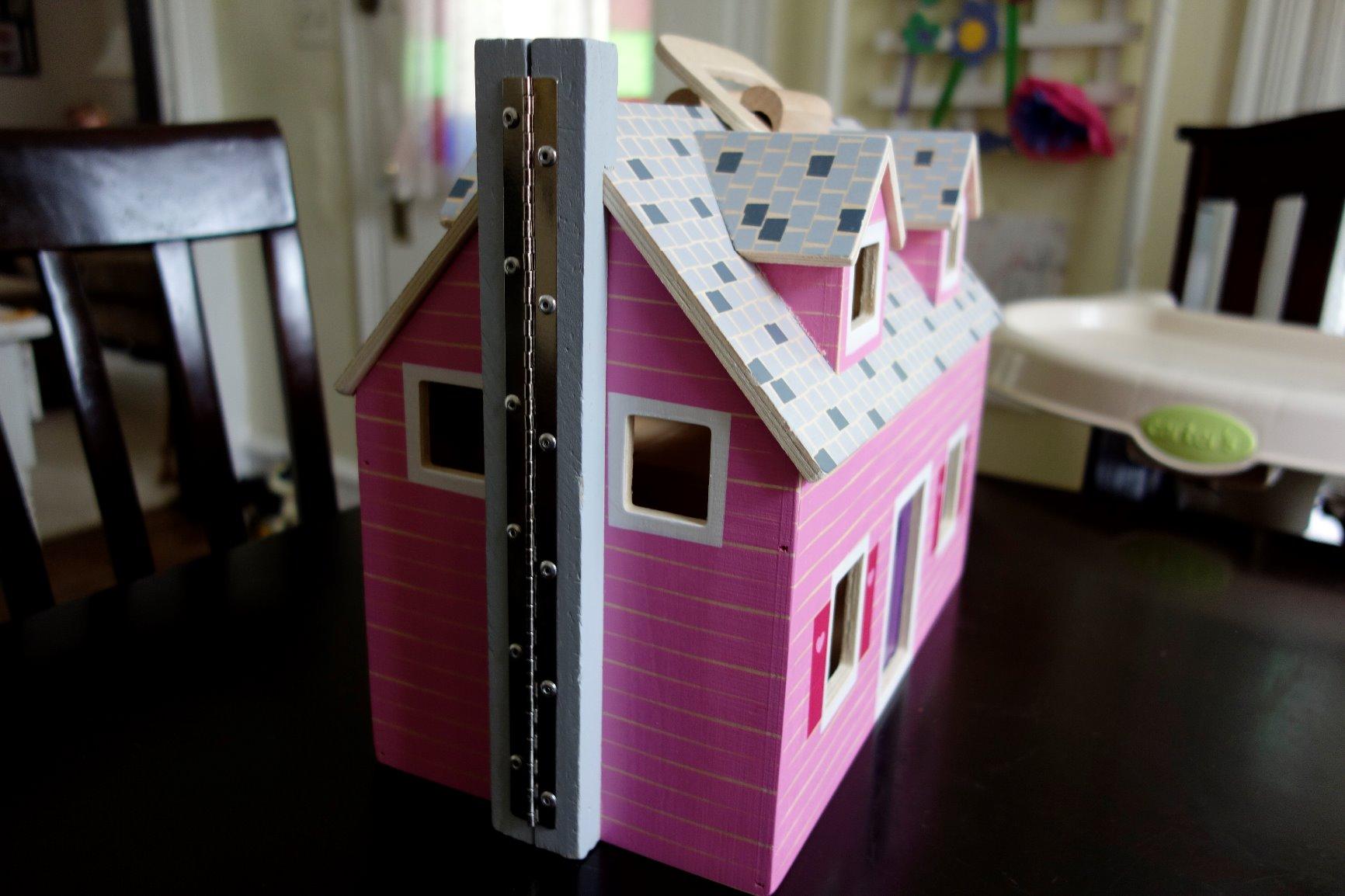
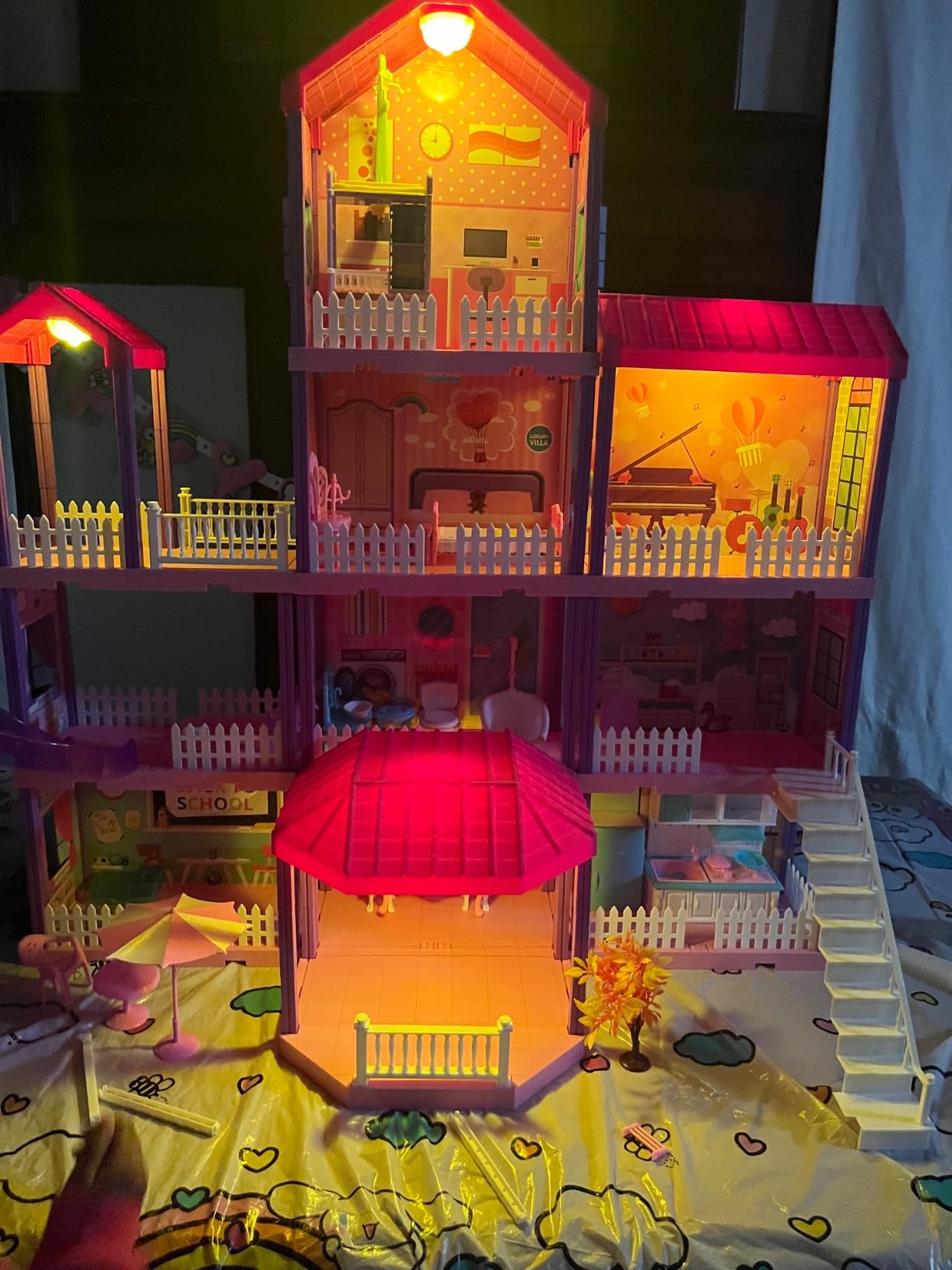
How Often Should You Rotate Kids’ Toys? A Complete Age-by-Age Guide
If your playroom looks like a toy explosion but your child still says “I’m bored,” the fix probably isn’t more toys — it’s a smarter rotation schedule. Here’s exactly how often to swap things out, by age, personality, and play style.
01What Toy Rotation Actually Means
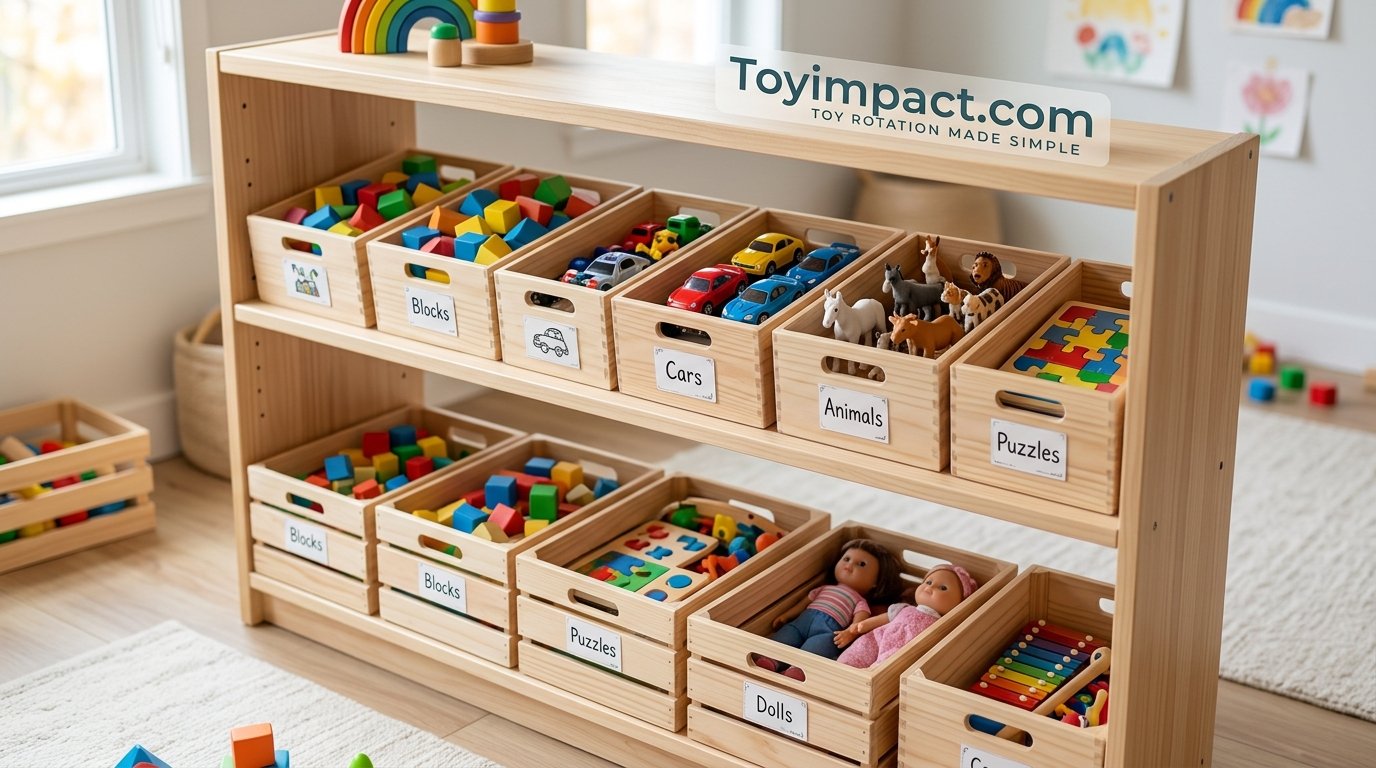
Toy rotation is the simple practice of keeping only a portion of your child’s toys accessible at any given time, while the rest wait in storage until it’s their turn to come back out. Instead of dumping every toy your child owns into one overflowing bin, you divide the collection into smaller groups and swap them on a schedule that matches your child’s age and attention span.
It sounds almost too simple to matter, but the effect on a child’s play is dramatic. When there are fewer options in front of them, kids actually engage more deeply with each toy instead of skimming across the surface of a giant pile and getting overwhelmed. This is closely tied to why so many parents lean on Montessori-style play environments, where a curated, uncluttered shelf is treated as part of the learning tool itself, not just a storage decision.
Rotation isn’t about owning fewer toys — plenty of families with large collections rotate successfully. It’s about controlling how many of those toys are visible and reachable on any given day, which is a completely different lever than simply buying less or purging more.

Recommended on Amazon
Stackable Clear Storage Bins with Lids
A rotation system lives or dies by good bins. Clear, stackable, labeled bins make swapping toys a five-minute job instead of a weekend project.
Check Price on Amazon02The Quick Answer: How Often to Rotate
If you only take one number away from this guide, make it this: most families do best rotating toys every one to two weeks. That window is long enough for a toy to feel genuinely “gone” and short enough that a child’s interest hasn’t cooled entirely by the time it reappears.
That said, the right cadence depends heavily on age, temperament, and how many toys are already out. A one-year-old exploring cause-and-effect toys benefits from a faster rotation, sometimes every four to seven days, because their attention spans are shorter and novelty wears off quickly. A six-year-old deep into an elaborate LEGO build or dollhouse world might need three to four weeks before that toy has truly run its course.
Rather than treating this as a rigid calendar event, think of rotation as a responsive system. Watch your child’s engagement, not the clock. If a toy comes back out of storage and gets five minutes of attention before being ignored, you probably left it out too long the first time, or it wasn’t distinctive enough from the toys sitting beside it.
03The Science Behind Rotation and Attention
There’s real psychology behind why toy rotation works, and it isn’t just tidiness dressed up as parenting advice. Researchers who study children’s play have repeatedly found that reducing the number of toys available at once increases the length and complexity of play sessions. In studies comparing toddlers given four toys versus sixteen, the smaller group played longer with each item and demonstrated more creative, varied use of it.
This connects to a broader concept called “habituation,” where the brain gradually tunes out a stimulus that no longer changes or surprises it. A toy that’s been sitting in the same spot for months becomes background noise, visually and cognitively. Removing it for a few weeks essentially resets that habituation, so when it returns, the brain treats it as novel again, complete with a small dopamine-driven curiosity boost.
Fewer Choices, Deeper Focus
Too much choice is genuinely taxing for a developing brain. Decision fatigue isn’t just an adult workplace buzzword; young children experience a version of it too, and an overflowing toy bin is a decision-fatigue machine. When a toddler is confronted with forty options, they often default to the fastest, simplest interaction — dump, scatter, move on — rather than settling into focused, imaginative play.
Rotation Supports Independent Play
Parents chasing longer stretches of independent play consistently report that rotation helps more than buying new toys. A smaller, well-curated selection gives children fewer places to get overstimulated and more room to actually direct their own play narrative, which is a skill that compounds over time.
The Novelty Curve, Explained Simply
Picture a graph with “interest” on one axis and “time since last seen” on the other. Interest in a toy starts high, drops off fast during the first few days of exposure, then flattens into a long, low plateau. Rotation works by interrupting that plateau before it fully bottoms out and giving the brain enough of a gap to reset. Wait too long between rotations and you lose the efficiency of the system, since a toy left out for months eventually becomes so familiar that even removing it barely registers when it returns. Rotate too fast, on the other hand, and children never get the chance to reach mastery, which is its own kind of frustration.
Mastery Before Novelty
It’s worth noting that novelty isn’t the only thing driving engaged play. Children also need enough repeated exposure to a toy to actually master how it works, whether that’s stacking rings in the right order or figuring out how gears mesh together. This is why very young children often need a slightly longer initial exposure window the first time a new toy is introduced, before it enters a normal, faster rotation cycle. Give a brand-new toy at least a few solid days of uninterrupted access before folding it into the rotation schedule.
04Age-by-Age Rotation Schedule
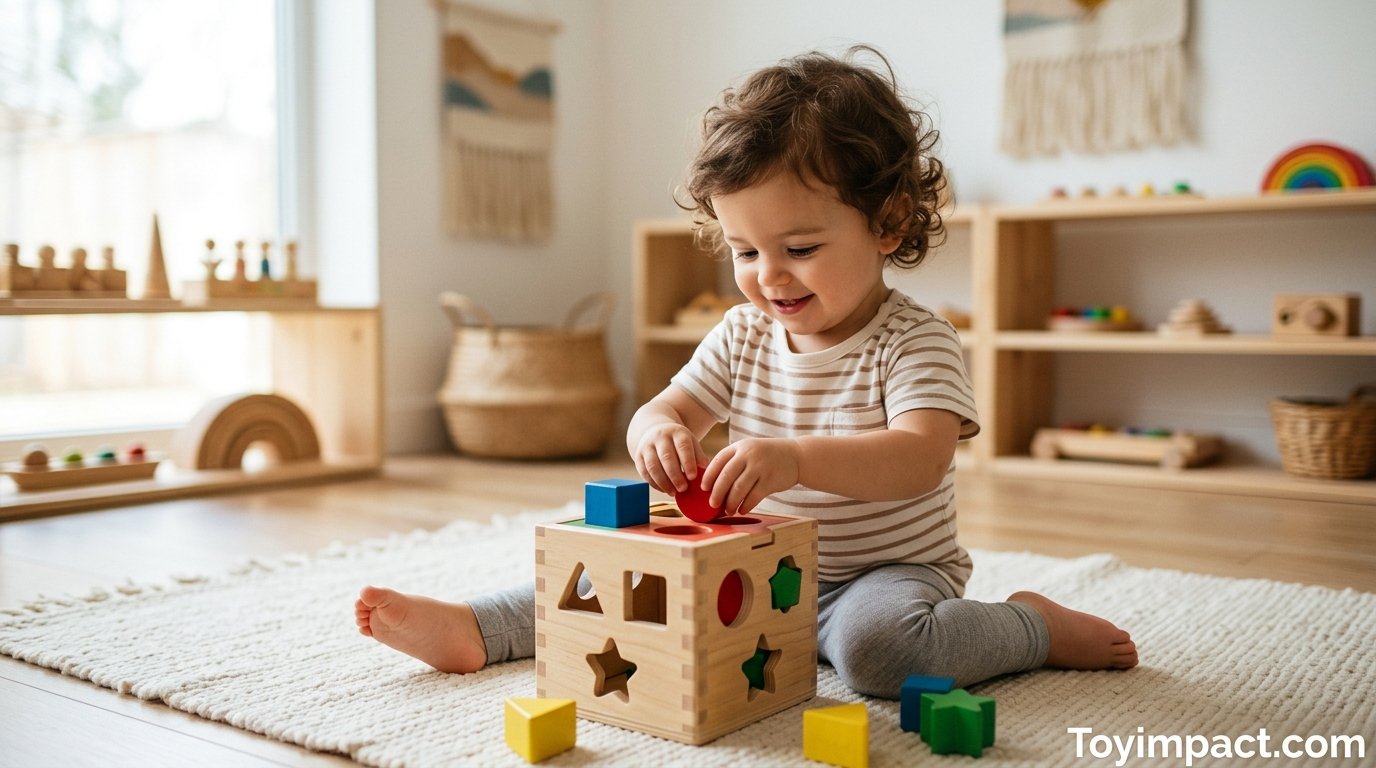
There’s no single universal rotation number, because a nine-month-old and a nine-year-old are working with completely different attention spans, motor skills, and play goals. Use the table below as a starting framework, then adjust based on your own child’s cues.
| Age Range | Suggested Rotation Frequency | Toys Out at Once | Why |
|---|---|---|---|
| 0–12 months | Every 3–5 days | 3–5 toys | Very short attention spans; novelty matters more than complexity |
| 1–2 years | Every 1–2 weeks | 5–8 toys | Cause-and-effect exploration wears off quickly once mastered |
| 3–4 years | Every 2–3 weeks | 8–12 toys | Imaginative and pretend play needs slightly longer runway |
| 5–7 years | Every 3–4 weeks | 10–15 toys | Complex builds and games take longer to feel “finished” |
| 8+ years | Every 4–6 weeks, or seasonally | Varies by hobby | Interests shift toward collections, hobbies, and long-term projects |
For toddlers specifically, pairing a tight rotation with age-appropriate educational toys tends to produce the biggest jump in engaged play time, since the toys themselves are already designed with a shorter mastery curve in mind.
Why the Ranges Overlap
You’ll notice the age brackets above aren’t rigid cutoffs, and that’s intentional. Developmental pace varies enormously between individual children, and a toy category that bores a fast-developing eighteen-month-old might still fascinate a more cautious twenty-two-month-old. Use the age ranges as a rough starting point in your first month of running a rotation system, then let your own observations override the chart entirely once you have a few cycles of data on how your specific child responds.
Adjusting for Developmental Leaps
Big developmental jumps — learning to walk, starting to talk in sentences, beginning to read — tend to temporarily scramble whatever rotation rhythm you’ve settled into. During these windows, children often lose interest in toys tied to the skill they’ve just outgrown and become almost obsessively focused on toys that support the new skill. It’s normal, and even useful, to run a shorter, more responsive rotation cycle during these transitional stretches rather than sticking rigidly to the standard schedule.

Recommended on Amazon
Open-Ended Wooden Toy Set
Open-ended toys hold interest across more rotation cycles because kids reinvent how they’re used every time they reappear.
Check Price on Amazon057 Signs Your Child Needs a Rotation
If you’re unsure whether it’s time to swap the shelf, watch for these signals rather than sticking to a rigid calendar.
- Toys are touched but immediately dropped. Your child picks something up, glances at it, and puts it right back down without engaging.
- “I’m bored” happens surrounded by toys. This is the clearest sign of choice overload rather than a genuine lack of options.
- Play sessions have gotten shorter. If focused play used to last twenty minutes and now taps out at three, novelty has worn thin.
- The playroom floor is constantly a scattered mess. Too many toys out at once often shows up as chaotic, undirected dumping rather than organized play.
- Your child gravitates to the same two or three toys. Everything else has essentially become invisible background clutter.
- Tantrums spike during cleanup. An overwhelming number of toys makes tidy-up feel impossible, which triggers resistance.
- You can’t remember the last time a certain toy was played with. If you can’t recall, your child probably can’t either — it’s ready to be swapped back in.
06Building a Rotation System That Sticks
The families who keep rotation going long-term almost always have one thing in common: they’ve made the system low-effort enough that it survives busy weeks. Here’s a framework that holds up in real life, not just in theory. The goal isn’t a picture-perfect, color-coded organization project — it’s a repeatable five-minute habit that quietly keeps working in the background of an already busy household.
Step 1: Sort Everything Into Categories
Group toys by type — building, pretend play, sensory, puzzles, vehicles — rather than by size or brand. This makes it easy to ensure each rotation set has a healthy mix rather than five puzzles and nothing else.
Step 2: Build 3–4 Complete Sets
Divide sorted toys into a handful of “sets,” each with a similar mix of categories. A good set usually includes one building toy, one pretend-play item, one puzzle or sorting toy, and one open-ended toy like blocks or art supplies.
Step 3: Store Out-of-Rotation Toys Somewhere Inconvenient (On Purpose)
A closet, garage shelf, or under-bed bin works well. The toys shouldn’t be so accessible that your child can just go grab the “hidden” ones whenever they want — that defeats the entire purpose.
Step 4: Label Bins Clearly
A quick label — “Set A,” “Set B,” or even a rough date — saves you from having to remember what’s already been cycled through recently.
Step 5: Rotate on a Loose Schedule, Not a Rigid One
Pick a day that already exists in your routine, like Sunday evenings or the first of the month, and treat rotation as a five-minute swap rather than a full reorganization every time.
If your play space is tight, this system pairs especially well with the ideas in our guide on organizing toy storage in small spaces, which covers vertical storage and multi-use furniture that make rotation physically easier to maintain.

Recommended on Amazon
Labeled Fabric Toy Bins (Set of 6)
Soft-sided bins with removable label cards make it easy to build multiple rotation sets without a big storage overhaul.
Check Price on Amazon07What to Rotate vs. What to Leave Out
Not every toy belongs in the rotation pool. Some items function better as permanent fixtures, while others are ideal rotation candidates precisely because their novelty fades fast.
Great Rotation Candidates
- Puzzles and shape sorters
- Themed pretend-play sets (kitchen, doctor kit, tool bench)
- Vehicles and figurines
- Sensory bins and tactile toys
- Seasonal or themed toys
Better Left Out Permanently
- Open-ended building blocks or LEGO
- Art and craft supplies
- A favorite comfort toy or “lovey”
- Books (rotate separately from toys)
- Active/gross motor equipment
Open-ended materials like blocks, art supplies, and dress-up items tend to be reinvented constantly, so they resist the boredom curve that makes rotation necessary in the first place. Comfort items should almost never enter a rotation cycle, since removing them can genuinely distress a young child in a way that has nothing to do with novelty-seeking.
A Simple Test for Any Toy
When you’re unsure which category a specific toy falls into, ask one question: does this toy get used differently every time, or does it have a fixed “solved” state? A shape sorter has a solved state — once a child knows which shape goes where, the challenge is largely finished, which makes it a strong rotation candidate. A bin of loose parts or a set of blocks has no solved state, since the same pieces support an almost unlimited number of different builds, which is exactly why open-ended toys hold up so well outside the rotation system.
| Toy Type | Rotate? | Typical Time to Boredom |
|---|---|---|
| Shape sorters & stacking toys | Yes | 1–2 weeks |
| Pretend-play kitchen or doctor sets | Yes | 2–3 weeks |
| Building blocks / LEGO | No — keep out | Rarely fades |
| Art & craft supplies | No — restock instead | N/A |
| Puzzles | Yes | 1–3 weeks |
| Comfort toy / lovey | Never | N/A |
08Matching Rotation to Play Style
Two children of the exact same age can need very different rotation cadences depending on how they naturally play.
The Explorer
Moves quickly from toy to toy, curious about everything but rarely settling in for long. Explorers usually do best with faster rotation and smaller sets, since a large shelf just becomes another thing to skim past.
The Builder
Gets deeply absorbed in one project across multiple days. Builders need longer rotation windows and should have their in-progress project explicitly excluded from any swap until it’s finished.
The Repeater
Wants to play the same game or scenario over and over. Repeaters benefit from rotation the most, because it’s often the only thing that reliably introduces enough novelty to break a repetitive loop that’s started to feel stale for everyone, including the parent.
Kids on the sensory-seeking or sensory-avoiding spectrum often respond particularly well to a thoughtfully staged rotation; our sensory toy gift guide is a useful companion resource if you’re building rotation sets around that profile specifically.
The Social Player
Some children mostly play toys as a backdrop for social interaction, whether with siblings, parents, or friends. For these kids, the specific toy matters less than whether it supports a shared activity. Rotation still helps by keeping the social play options fresh, but the swap cadence can be looser since engagement is being driven by the people involved rather than the object itself.
Blending Play Styles
Most children aren’t a pure single type — a Builder in the morning might turn into an Explorer by afternoon once energy dips. Rather than trying to perfectly categorize your child, use these profiles as a diagnostic tool when a rotation cycle isn’t landing well. If a swap consistently falls flat, ask which style best describes what happened, and adjust either the pacing or the toy selection accordingly next time.
09Common Rotation Mistakes
- Rotating too many toys at once. Swapping the entire shelf every time removes the sense of continuity that makes rotation feel manageable rather than jarring.
- Ignoring your child’s actual reaction. A calendar reminder shouldn’t override clear signals that a toy is still being actively used.
- Ambushing the swap. Some children, especially anxious or routine-sensitive kids, do better when they know a rotation is coming rather than discovering an empty shelf out of nowhere.
- Storing “out” toys somewhere too visible. If a child can see the bin through a glass cabinet, the out-of-sight effect that makes rotation work is largely lost.
- Never actually finishing the loop. Toys that go into storage and never come back defeat the purpose — that’s decluttering, not rotation.
- Overcomplicating the system. Elaborate spreadsheets and labeled calendars often collapse under real life. Simple beats sophisticated here.
- Treating rotation as a punishment. Some parents unintentionally frame a swap as consequence for a messy playroom rather than a neutral, ongoing routine. Kids pick up on that framing quickly, and it can turn a helpful system into a source of anxiety.
- Forgetting to rotate art and creative supplies separately. Crayons, paper, and craft kits don’t follow the same novelty curve as toys and usually do better restocked rather than rotated on a fixed schedule.
- Letting the “out of rotation” pile become a dumping ground. Without periodic sorting, the storage side of a rotation system can balloon into its own cluttered mess that’s just as overwhelming as the original shelf.
Most of these mistakes share a common thread: they turn a light, flexible habit into a rigid obligation. The moment rotation starts to feel like a chore that has to be defended or perfectly executed, it stops being sustainable, so it’s worth revisiting your system every few months and cutting anything that’s added friction without adding value.
10Storage & Decluttering Tips
Rotation naturally surfaces toys your child has outgrown or lost interest in permanently, which makes it a great built-in decluttering checkpoint. Every time a bin comes out of storage, ask a quick question: did this toy get played with at all last cycle? If the honest answer is no across two consecutive rotations, it’s a strong candidate to donate rather than store again.
For the toys staying in the system, invest in storage that supports quick swaps rather than fighting you every time. Clear bins let you glance at contents without opening anything, stackable designs save floor space, and uniform sizing makes shelving far less chaotic. If hygiene is a concern between rotation cycles, our guide on cleaning plastic toys safely is worth bookmarking, since a rotation swap is the perfect natural checkpoint for a quick wipe-down before storage.
Matching Storage to Your Space
The physical layout of your home has a real impact on whether a rotation system survives past the first month. In a small apartment, a rolling cart or an under-bed set of flat bins tends to work far better than a dedicated closet shelf, since it keeps the “out of rotation” toys close enough to swap easily without needing to carve out an entire storage room. In a larger home with a playroom or garage, labeled shelving with uniform bins is worth the upfront investment, since it lets you see the whole system at a glance and plan swaps around the calendar rather than digging through mismatched containers.
How Long to Keep a Toy Before Donating
A reasonable benchmark is two full rotation cycles. If a toy goes untouched across two separate appearances on the shelf, spaced weeks apart, it’s very unlikely that a third appearance will suddenly change that pattern. At that point, donating, passing it along to a younger cousin, or reselling it frees up both physical space and the mental overhead of managing a system that’s carrying dead weight.

Recommended on Amazon
Rolling Storage Cart with Bins
A mobile cart lets you tuck an entire rotation set into a closet without unpacking individual toys, which cuts swap time dramatically.
Check Price on Amazon11Rotation for Siblings & Multiple Kids
Rotation gets more complicated once you’re managing toys for two or more children with different ages and interests, but a few adjustments make it manageable.
- Rotate by child, not by household. A toddler and a seven-year-old need completely different cadences, so keep separate sets even if they share shelf space.
- Build a shared “together” bin. Toys designed for cooperative play, like building sets or board games, can stay out longer since siblings naturally refresh how they’re used together.
- Get older kids involved in the swap. Children over five or six can often help choose which toys go into storage, which builds ownership and reduces resistance to the change.
If sibling squabbles over toys are a recurring issue, our roundup of toys designed for siblings to play together can help you choose rotation items that reduce competition rather than fuel it.
Handling Age-Gap Households
When siblings are several years apart, the biggest risk isn’t scheduling — it’s cross-contamination of age-inappropriate pieces. Small building blocks or figurines meant for an older child’s rotation set can end up on the floor of a room shared with a baby or young toddler. If your household spans a wide age gap, it’s worth keeping younger and older rotation sets in physically separate zones, not just separate labeled bins, so a swap for one child doesn’t accidentally introduce a choking hazard into a shared space.
Avoiding “It’s Not Fair” Moments
Kids are quick to notice when a sibling’s rotation set looks more exciting than their own, even when the sets are objectively balanced. Rotating on the same day for all children in the house, even if the toys themselves are completely different, tends to reduce this friction significantly, since nobody feels like they’re missing out on a swap that’s happening for someone else.
12Rotation for Sensory & Special Needs
For children with sensory processing differences, autism, or ADHD, rotation can be an especially powerful tool — but it needs a gentler, more predictable approach than a neurotypical rotation schedule.
- Announce changes ahead of time. A visual schedule or simple verbal heads-up prevents the swap from feeling like an unexpected disruption.
- Keep regulation tools out of rotation entirely. Fidgets, weighted items, or specific calming toys should be treated like comfort objects, always available.
- Rotate slower, not faster. Predictability often matters more than novelty for kids who rely on routine, so err toward longer cycles.
- Watch for sensory-specific fatigue. A toy might be “boring” not because of general novelty loss, but because its specific sensory input has been fully explored.
Building rotation sets around genuinely calming, engaging options makes this easier from the start — the picks in our sensory toy gift guide are a solid foundation to rotate from.
Using Visual Supports
A laminated card or simple picture schedule showing “this week’s toys” can make the rotation concept far more concrete for children who process visual information more easily than verbal explanations. Taping a small photo of each rotating bin to the outside of the storage container also helps a child locate a specific toy independently once it’s back in the closet, which supports autonomy rather than requiring an adult to dig through storage on request.
When Not to Rotate at All
For some children, particularly those in the middle of a difficult transition, illness, or a period of heightened anxiety, pausing rotation entirely for a few weeks is the right call. Predictability during a hard stretch is worth more than the developmental benefits of novelty, and the system will still be there to pick back up once things settle.
13Seasonal & Holiday Adjustments
Rotation schedules shouldn’t stay static year-round. A few seasonal tweaks keep the system relevant to how your family is actually living.
Post-Holiday Surges
After birthdays or holidays, most households get a sudden influx of new toys. Resist the urge to add everything to the shelf at once — fold new items into the existing rotation gradually instead, retiring an older toy for every new one introduced.
Travel Season
Rotation logic applies beautifully to travel: pack a tiny, curated “travel rotation” rather than a full toy bag. Our guide to toys for long car rides and picks for airplane travel both lean on the same rotation principle — fewer, well-chosen options beat an overstuffed bag every time.
Summer & Outdoor Shifts
Warmer months are a natural cue to rotate indoor toys out in favor of outdoor and water-based play. If backyard time is part of your routine, our water table toy guide pairs well with a seasonal rotation swap.

Recommended on Amazon
Compact Travel Activity Case
A small, zippered activity case is the easiest way to run a mini rotation system on the go without overpacking.
Check Price on Amazon14Building Rotation Sets Without Overspending
A common misconception is that toy rotation requires buying a large new collection to have enough variety. In practice, the opposite is true — rotation is one of the best ways to make an existing collection feel bigger than it is, since the same twenty toys can feel like sixty when they’re staged in smaller, well-timed groups.
If you do want to fill small gaps in a rotation set, it’s worth being deliberate rather than impulsive. Budget-friendly, well-designed options tend to outperform expensive toys that do only one thing; our list of toys under twenty dollars for toddlers is a good starting point for rounding out a rotation set without blowing the budget, and thinking in terms of “what’s the age of the child stopping playing with toys altogether” — covered in our piece on when kids typically stop playing with toys — can help you avoid overinvesting in a stage that’s about to pass.
For preschoolers specifically, rotation pairs naturally with a gradual introduction to more structured learning toys. If you’re building that transition, our guide on introducing STEM toys to preschoolers outlines a similar staged approach — start small, watch engagement, then expand.
15Using Rotation to Plan Future Toy Gifts
One underrated benefit of running a consistent rotation system is that it turns you into a much sharper toy shopper. Once you can see, cycle after cycle, which categories your child gravitates toward and which ones sit untouched, gift planning stops being a guessing game.
Before a birthday or holiday, review your most recent two or three rotation cycles. Which bin came back out and got immediate, sustained attention? That category is worth investing in further. Which bin barely got touched twice in a row? Skip buying more of that type, regardless of how popular it looked online. If you’re shopping for a specific milestone birthday, our gift guide for five-year-old girls is built around exactly this kind of engagement-first thinking rather than trend-chasing.
16Frequently Asked Questions
How often should you rotate kids’ toys on average?
Most families land on a one-to-two-week cycle for toddlers and preschoolers, stretching to three or four weeks for older children working on more complex play or builds. Adjust based on how engaged your child actually is with what’s currently out, not a fixed calendar.
Is toy rotation actually backed by research, or is it just a parenting trend?
It’s grounded in real developmental psychology. Studies on toddlers given fewer toys at once consistently show longer, more creative play sessions compared to children given a large pile of options, which lines up with what rotation is designed to achieve.
How many toys should be out at once?
As a general guideline, five to eight toys for toddlers and ten to fifteen for school-age children tends to hit the sweet spot between variety and manageable choice. The right number is also shaped by how much shelf or floor space you realistically have.
Should I rotate books along with toys?
Books can absolutely be rotated, but usually on a separate, slightly longer schedule than toys, since rereading a favorite book has different developmental value than replaying with a toy that’s lost its novelty.
What if my child asks for a toy that’s currently in storage?
Bring it out. Rotation is meant to be flexible, not a punishment or a locked vault. If a child specifically requests something, honoring that request reinforces trust in the system rather than undermining it.
Does toy rotation work for babies under one year old?
Yes, and it’s often where the effect is most visible. Infants habituate to visual and tactile stimuli quickly, so even a short three-to-five-day rotation of simple sensory toys can noticeably extend independent play time on a play mat.
Can toy rotation help with a messy playroom?
Indirectly, yes. Fewer toys out at once means less to pick up, shorter cleanup times, and less overwhelm during tidy-up — which tends to reduce the resistance and meltdowns that often accompany cleaning a packed playroom.
Should older kids’ toys be rotated the same way as toddlers’?
Not exactly the same way. Older kids benefit more from seasonal or interest-based rotation tied to hobbies and collections rather than a strict weekly swap, since their attention spans and project lengths are longer.
What’s the best way to store toys that are out of rotation?
Opaque or out-of-sight storage works best — a closet, garage shelving, or under-bed bins. Storing rotated toys somewhere your child can see through, like open glass shelving, weakens the novelty effect when they return.
Will my child be upset that toys keep disappearing?
Most children adjust quickly once they learn the toys always come back. For anxious or routine-sensitive kids, giving a quick heads-up before a swap and keeping comfort items permanently out helps the transition go smoothly.
The Bottom Line on Toy Rotation
There’s no single magic number that works for every child, but a one-to-two-week rotation is a reliable starting point for most toddlers and preschoolers, stretching out as kids get older and their projects get more involved. The real goal isn’t hitting a schedule perfectly — it’s watching how your child actually engages with what’s in front of them and letting that guide when the next swap happens.
Start small: pick one shelf, split your child’s current toys into two or three sets, and swap them out next weekend. You’ll likely notice longer, more focused play within the first cycle or two.
Shop Toy Rotation Storage Essentials