What Is Pretend Play — And Why It Deserves a Place in Every Home
Before we rank and review the best pretend play toys on the market, let us take a moment to understand what makes this category of play so uniquely powerful in a child’s life.
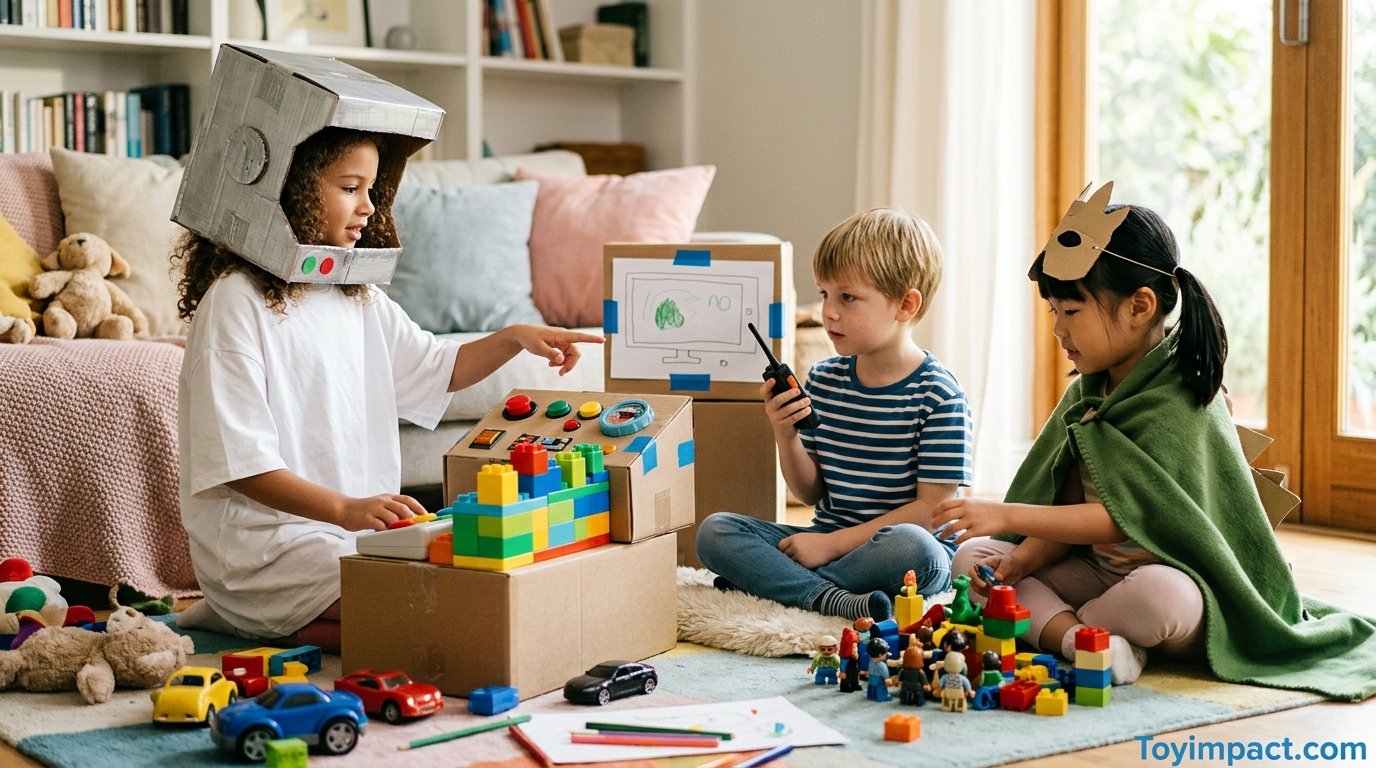
There is a particular kind of magic that happens when a child picks up a wooden spoon, holds it to their ear, and begins chattering into it as though it were a telephone. Or when a toddler carefully arranges plastic cupcakes on a tray and announces, with absolute seriousness, that dinner is served. In those moments, something far more significant than mere entertainment is unfolding. The child is constructing a parallel world—one governed by their own rules, populated by their own characters, and shaped entirely by their imagination.
Pretend play, also called dramatic play or imaginative play, refers to any activity in which a child assigns symbolic meaning to objects, actions, or roles. It is the toddler feeding a teddy bear with an empty cup. It is the four-year-old setting up a grocery store on the living room floor and charging you twelve dollars for an apple. It is the preschooler putting on a firefighter hat and declaring that the couch is on fire and everyone needs to evacuate immediately. None of it is real. All of it is deeply, profoundly important.
What separates pretend play from other forms of play—building with blocks, solving puzzles, riding ride-on toys—is its open-ended nature. There is no correct answer, no single way to complete the task, no winner. The child is free to experiment, test hypotheses, explore social dynamics, and process emotions in a sandbox of pure possibility. This freedom is precisely what makes pretend play such a fertile ground for learning.
Parents sometimes dismiss pretend play toys as frivolous. A plastic vacuum cleaner does not teach the alphabet. A wooden pizza set does not drill math facts. But the research tells a different story. Studies in developmental psychology have consistently shown that children who engage regularly in rich pretend play demonstrate stronger language skills, greater emotional regulation, more sophisticated social reasoning, and even improved academic readiness when they enter school. The play itself is the learning mechanism—and the right toys are the keys that unlock it.
The ten toys we review in this guide represent some of the best pretend play options available today. They span a range of categories—from kitchen and cooking sets to cleaning tools, animal playsets, and licensed character figures—and they are designed for children at different ages and stages. Whether you are shopping for a first birthday gift or looking for something to re-engage an older preschooler who has outgrown simpler toys, there is something here for every family.
Throughout this guide, we will examine each toy in detail: what it includes, how it is built, what developmental skills it supports, and where it falls short. We will also provide comparison tables, buying guidance, and answers to the questions parents ask most frequently. The goal is simple—to help you make an informed choice that results in more meaningful play and fewer toys gathering dust in the closet.

Explore Top Pretend Play Toys on Amazon
Browse bestsellers, read thousands of parent reviews, and find the perfect imaginative toy for your child.
Shop Pretend Play on AmazonThe Developmental Power of Imaginative Play
Pretend play is not just fun. It is one of the most productive activities a young child can engage in, touching every domain of development from language to emotional intelligence.
Cognitive Development
When a child decides that a cardboard box is a spaceship, they are engaging in what psychologists call symbolic representation—the ability to let one thing stand for another. This is the same mental operation that underlies reading (letters stand for sounds), mathematics (numerals stand for quantities), and abstract reasoning. Every time a child pretends, they are exercising and strengthening this foundational cognitive capacity.
Pretend play also demands what researchers refer to as “narrative thinking.” When a child acts out a scenario—perhaps the ice cream shop is open and customers are lining up—they must construct a storyline with a beginning, middle, and end. They must decide what happens next, anticipate consequences, and adjust the narrative when something does not go as planned. This kind of sequential, cause-and-effect reasoning is a direct precursor to the thinking skills children will need in school and beyond.
For parents interested in nurturing early cognitive skills, integrating STEM toys alongside pretend play creates a powerful combination. The creativity of imaginative play complements the logic-driven exploration that STEM toys provide, and children often blend the two naturally—building a bridge out of blocks and then pretending cars need to cross it.
Social and Emotional Development
Pretend play is one of the few activities where young children regularly practice perspective-taking—the ability to see a situation from another person’s point of view. When a child plays “doctor,” they must imagine how a patient feels. When they play “shopkeeper,” they must respond to a customer’s wants. These role assignments require the child to step outside their own experience and inhabit someone else’s, which is the very foundation of empathy.
There is also strong evidence that pretend play helps children process difficult emotions. A child who is nervous about a visit to the doctor may work through that anxiety by acting out the scenario with stuffed animals. The play gives them a sense of control over a situation that otherwise feels overwhelming. This is not escapism—it is genuine emotional regulation at work.
Families with more than one child will find that pretend play toys are especially valuable for siblings learning to play together. Shared pretend scenarios require negotiation (“You be the customer and I’ll be the chef”), collaboration (“Let’s build a restaurant”), and conflict resolution (“We can take turns being the shopkeeper”). These are life skills that no worksheet can teach.
Language and Communication
Children who engage in pretend play tend to develop richer vocabularies and more complex sentence structures. The reason is straightforward: pretend play puts children in situations where they need words they do not ordinarily use. A child running a pizza shop must learn terms like “toppings,” “order,” “delivery,” and “receipt.” A child playing veterinarian must use words like “stethoscope,” “temperature,” and “medicine.” The play provides a natural, low-pressure context for vocabulary acquisition.
Perhaps even more importantly, pretend play encourages children to use language instrumentally—to communicate needs, describe plans, explain decisions, and persuade others. These are communicative functions that go far beyond labeling objects or answering questions, and they are essential for the kind of language proficiency that predicts later academic success.
Physical and Motor Skills
Many pretend play toys involve fine motor tasks that build hand strength and coordination. Scooping pretend ice cream, attaching velcro toppings to a pizza, sweeping with a child-sized broom, or snapping pieces together all require precise hand movements that strengthen the same muscles children will later use for writing, cutting with scissors, and buttoning clothes. For children who could benefit from targeted motor development, sensory toys can complement pretend play beautifully by adding tactile and proprioceptive input to the experience.
Role-play toys that involve physical movement—like a pretend vacuum cleaner or a cleaning set—also contribute to gross motor development. Children engaging with these toys are bending, reaching, pushing, pulling, and coordinating their whole body in ways that support balance, spatial awareness, and core strength. This is precisely the kind of hands-on learning that educational toys for three-year-olds are designed to provide.

Find Age-Appropriate Pretend Play Toys
Discover toys matched to your child’s developmental stage with verified parent ratings.
Browse by Age on AmazonHow to Choose the Best Pretend Play Toy for Your Child’s Age and Stage
Not all pretend play toys are created equal, and not every toy suits every age. Here is what to consider as you shop.
Ages 1–2: Simple Role Play and Exploration
At this age, children are just beginning to understand symbolic play. They benefit from toys that are simple, durable, and easy to manipulate. Think chunky figurines, soft animals, and basic household items in miniature. The play at this stage tends to be imitative—the child copies what they see adults doing (talking on a phone, stirring a pot, feeding a baby). Toys should support this imitation without overwhelming the child with too many pieces or complex assemblies. Parents often wonder what age kids stop playing with toys, and the truth is that the pretend play phase typically peaks between ages two and six, though its foundations are laid much earlier.
At this stage, a toy like the Fisher-Price Little People Forest Friends Carry Case is ideal—it offers simple animal figures in a portable case, with no small parts and no complicated setup. The child can pick up a figure, name it, move it around, and put it away. That is more than enough for a one-year-old’s developing brain.
Ages 2–3: Expanding Narratives
Toddlers in this range begin to connect actions into sequences. They do not just stir a pot—they stir it, then pretend to taste, then serve it to someone. This is the golden window for introducing kitchen-themed play sets, cleaning toys, and simple figure playsets. Toys with a clear “script” (cooking, cleaning, feeding animals) help children practice these narrative sequences while still leaving room for improvisation.
The best age to introduce more structured play sets falls right around two, when children have the motor skills to manipulate pieces and the cognitive capacity to assign meaning to their actions. A pretend cleaning set or a simple play food set with large, easy-to-handle pieces works beautifully at this stage.
Ages 3–5: Rich Dramatic Play
Preschoolers are the masters of pretend play. They create elaborate scenarios with multiple characters, invented dialogue, and complex plot lines. This is the age where detailed play sets—ice cream counters, pizza shops, animal farms with interactive features—truly shine. Children at this age can handle more pieces, appreciate more realistic designs, and engage with toys that offer multiple ways to play.
This is also the age when children begin to play cooperatively with peers, and pretend play toys become vehicles for social learning. Sets with multiple roles (customer and shopkeeper, farmer and animal caretaker) naturally invite shared play and the negotiation skills that come with it. Many parents also find this is an excellent time to rotate toys regularly to maintain interest and prevent play sets from becoming background furniture.
Ages 5–7: Sophisticated Make-Believe
Older children still benefit from pretend play, though their preferences evolve. They may gravitate toward licensed character sets (like Disney-themed playsets) or toys that combine pretend play with more complex construction or problem-solving. At this age, children are also better at using play to explore real-world concepts—running a business, caring for pets, managing a household—which makes realistic role-play toys especially appealing. For children approaching the upper end of this range, parents sometimes explore STEM toys to complement the imaginative play with more analytical challenges.
Key Factors to Consider When Shopping
| Factor | Why It Matters | What to Look For |
|---|---|---|
| Age Appropriateness | Too-complex toys frustrate; too-simple ones bore | Manufacturer age range + your child’s current interests |
| Material Quality | Pretend play toys get heavy daily use | Solid wood, BPA-free plastic, sturdy joints |
| Piece Count | More pieces mean more play options but also more to lose | Enough for variety, with storage solution included |
| Open-Endedness | Toys with one way to play get abandoned quickly | Multiple configurations, roles, or scenarios possible |
| Safety | Small parts, sharp edges, and toxic finishes are real risks | ASTM/CPSC certified, non-toxic finishes, no choking hazards |
| Storage & Portability | Pieces that scatter across the house drive parents crazy | Included storage case, compact design, easy cleanup |
One factor that does not always get enough attention is how well a pretend play toy fits into your child’s existing world of interests. A child who is obsessed with animals will get far more mileage out of a farm playset than a cooking set, regardless of what the reviews say. Pay attention to what your child gravitates toward during free play, and let that guide your selection. If you are also looking for high-quality wooden toys to round out the collection, many of the Melissa & Doug sets reviewed below pair beautifully with open-ended wooden blocks and building toys.

Shop Montessori & Pretend Play on Amazon
Find beautifully crafted, developmentally appropriate toys rated by thousands of parents.
See Top Picks on AmazonMelissa & Doug Dust, Sweep & Mop 6-Piece Set — Full Review
A bestseller that turns household chores into irresistible play. This cleaning set has earned its place in millions of playrooms for good reason.
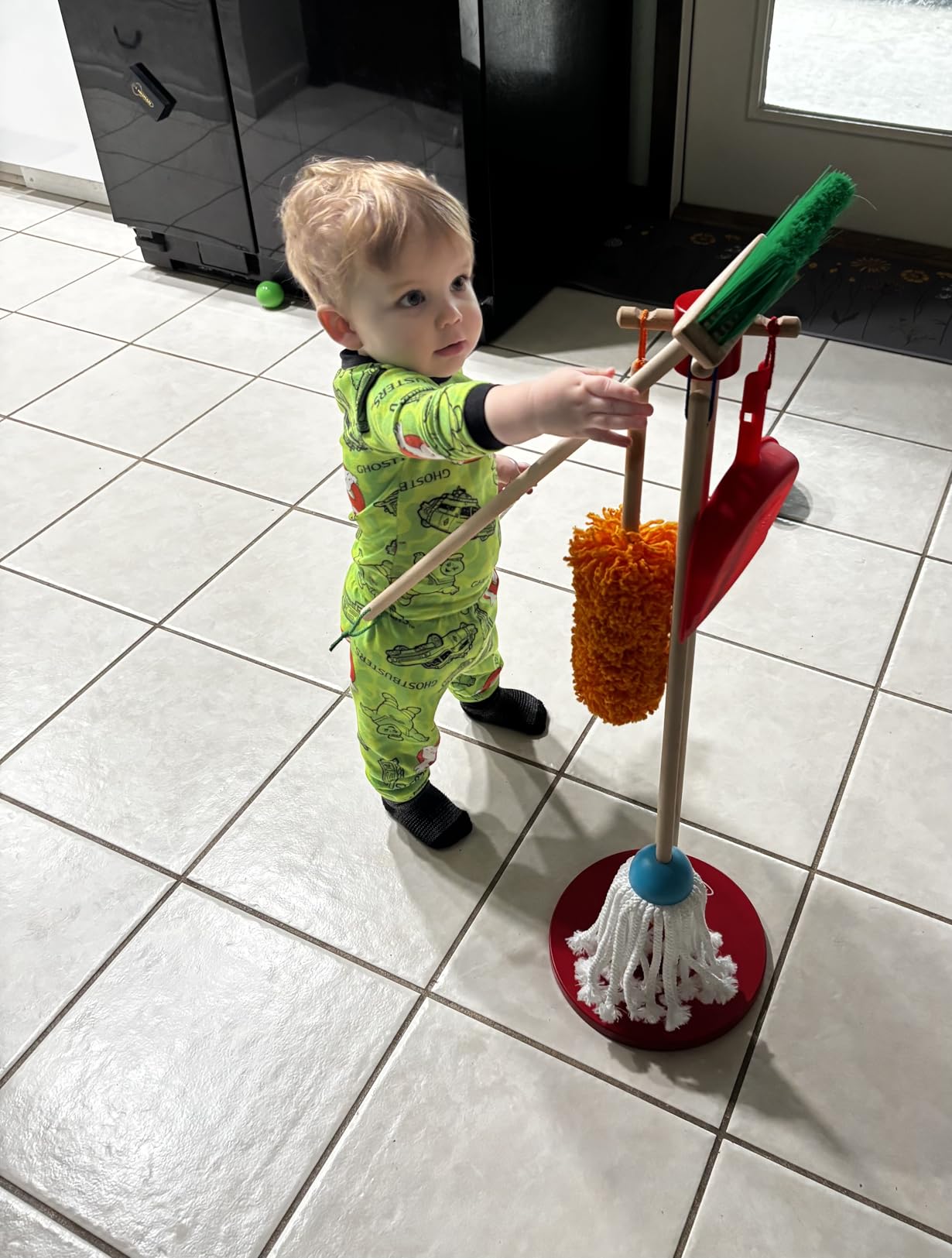
If there is one pretend play toy that consistently surprises parents with how much use it gets, this is the one. The Melissa & Doug Dust, Sweep & Mop set includes six realistic cleaning tools: a broom, mop, dustpan, brush, and a duster, all sized perfectly for small hands. Each piece is built from solid wood and sturdy plastic, and they all actually function—the broom sweeps, the mop has absorbent strands, the dustpan opens and closes. This is not flimsy plastic that will crack after a week. It is built to withstand the enthusiastic (and sometimes rough) handling that toddlers and preschoolers bring to everything they touch.
What makes this set particularly brilliant from a developmental standpoint is that it taps into one of the most powerful drivers of pretend play in young children: the desire to imitate adults. Toddlers watch their parents clean every single day. They see the sweeping, the mopping, the dusting. And they want to do it too. This set gives them a way to participate in that world authentically, with tools that are not just scaled-down versions of the real thing but are genuinely functional. The child is not just pretending to sweep—they are actually sweeping (even if the results are imperfect). This distinction matters because it provides the child with a sense of real competence and contribution.
What’s Included
- Wooden-handled broom with natural bristles
- Wooden-handled mop with absorbent cotton strands
- Handheld brush and dustpan set
- Duster with soft fibers
- Storage stand that keeps all pieces organized and upright
Developmental Benefits
The cleaning set supports gross motor development through whole-body movements like sweeping and mopping, which involve bilateral coordination (using both sides of the body together), core stability, and arm strength. Fine motor skills come into play with the smaller tools—gripping the brush, maneuvering the dustpan, and coordinating the duster in tight spaces. Beyond the physical, this set is a masterclass in responsibility and contribution. Children who play with cleaning sets often begin to develop a sense of ownership over their environment. “I swept the floor!” is not just a cute declaration—it is a child claiming agency over their world.
The set also excels at cooperative play. Siblings or friends can divide the tools and work together to “clean” a room, assigning roles and negotiating who gets which tool. This kind of parallel, collaborative activity is a developmental sweet spot for children in the three-to-five age range. It is the kind of toy that pairs naturally with affordable toddler toys to create a rich, multi-faceted play environment without breaking the bank.
Pros
- Exceptionally durable wooden construction
- Tools actually function, adding realism to play
- Included storage stand prevents pieces from scattering
- Taps into children’s natural desire to imitate adults
- Supports both gross and fine motor development
- Encourages cooperative and parallel play
Cons
- Mop head can unravel with heavy use over time
- Storage stand requires assembly and can wobble on uneven floors
- Dustpan is small and less effective for actual cleanup
- Some pieces may be slightly long for children under three
Who Is This Best For?
This set is ideal for children ages three to six who love to mimic household activities. It is especially effective for families trying to build chore routines, as the toy provides a bridge between “playing at cleaning” and actually contributing to household tasks. If your child frequently reaches for your broom or mop, this is the toy that will make their day. Parents looking to keep their toys clean and hygienic will appreciate that the wooden and cotton components of this set are easy to wipe down and do not trap moisture the way some plastic toys do.

Melissa & Doug Dust, Sweep & Mop 6-Piece Set
The #1 bestselling pretend cleaning set. Durable, functional, and endlessly engaging for toddlers and preschoolers.
Check Price on AmazonMelissa & Doug Slice and Bake Cookies Wooden Play Food Set — Full Review
A wooden baking set that lets children slice, decorate, and serve pretend cookies—with a satisfying velcro “cut” that kids cannot get enough of.
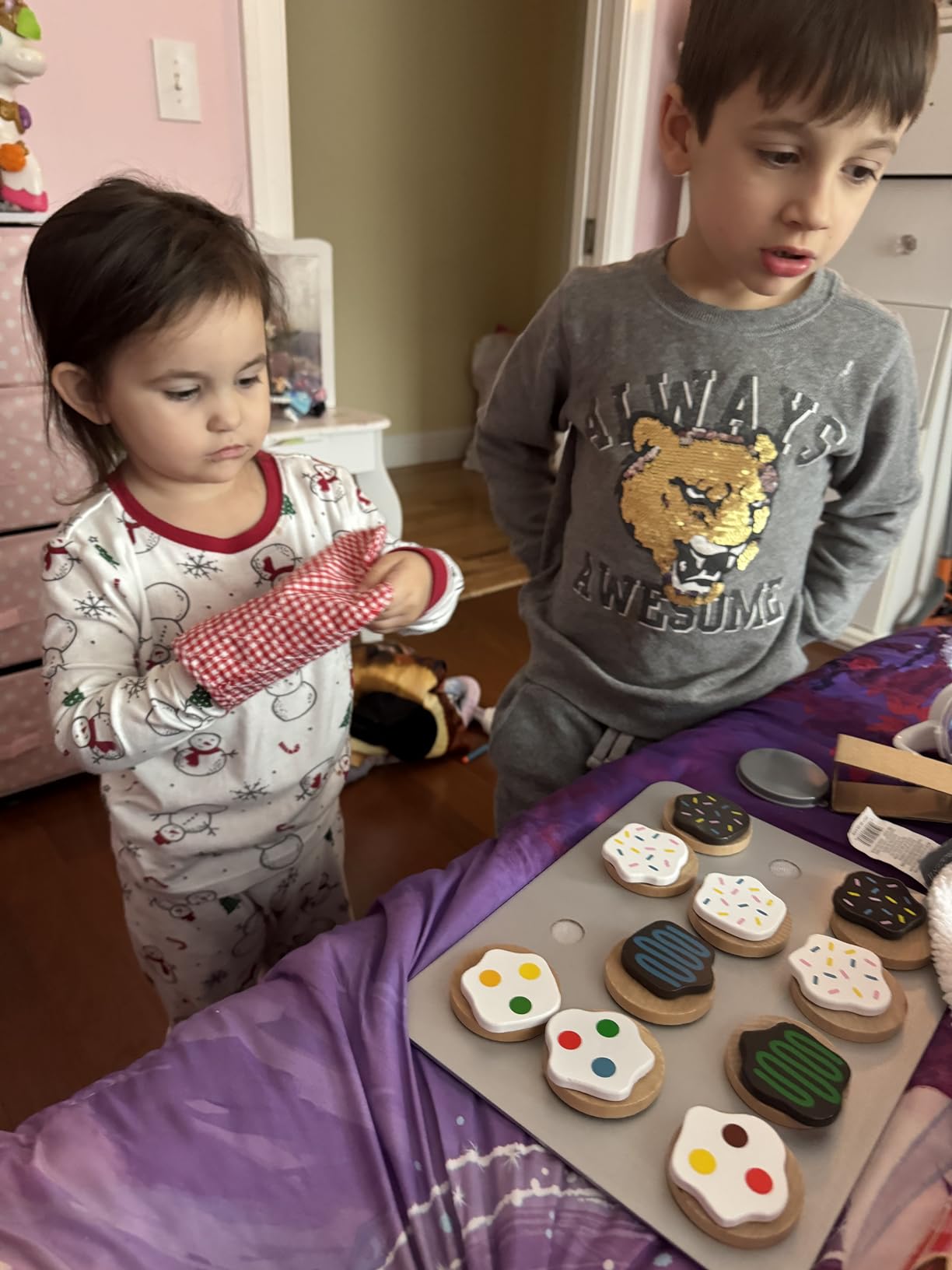
Few things capture a child’s imagination quite like baking. The process is theatrical—mixing, rolling, cutting, decorating—and the result is something you can share with the people you love. The Melissa & Doug Slice and Bake Cookies set captures all of that drama in a compact, beautifully crafted wooden toy that has remained one of the most popular pretend play food sets on the market for years.
The set comes with twelve cookie dough shapes connected by velcro, a wooden baking sheet, a toy knife for slicing, and a collection of decorative toppings (icing, sprinkles, and candy pieces) that attach to the cookie surfaces via velcro. The child rolls out the dough log, slices through the velcro connections with the knife (producing a satisfying separation that children find deeply gratifying), places the cookies on the baking sheet, decorates them with toppings, and then “bakes” them in an imaginary oven before serving them to family members, stuffed animals, or anyone else in the vicinity.
What’s Included
- 12 sliceable cookie shapes with velcro connections
- Wooden cookie dough log for rolling and slicing
- Toy wooden knife (rounded edges, child-safe)
- Decorative toppings: icing, sprinkles, and candy pieces
- Metal baking sheet for “oven” play
- Frosting spatula for spreading
What Makes It Special
The genius of this set lies in the slicing mechanic. The velcro connections between cookie pieces create just enough resistance to feel satisfying without being frustrating. A two-and-a-half-year-old can do it. A five-year-old finds it fun. The act of slicing also teaches the child about cause and effect in a very tangible way—you apply pressure, the cookie separates, and now you have two pieces instead of one. It is a simple lesson, but at this age, simple lessons that involve physical sensation are the ones that stick.
The decorating component adds another layer of creative expression. Children must decide which toppings to use, how many to apply, and how to arrange them. These are micro-decisions that exercise the child’s aesthetic judgment and planning skills. A child who carefully places three candy pieces on each cookie in a symmetrical pattern is demonstrating spatial reasoning. A child who piles on every topping at once is demonstrating exuberance. Both are valid forms of play.
The quality of the wood and paint is consistent with Melissa & Doug’s broader reputation. The pieces are smooth, the colors are vibrant without being garish, and the finishes are non-toxic. The metal baking sheet is a particularly nice touch—it adds a layer of realism that purely wooden sets sometimes lack. If you are building a collection of the best wooden toys, this set is a natural addition.
Pros
- Satisfying velcro slicing mechanic that children love
- Beautifully painted, durable wooden construction
- Encourages creative expression through decorating
- Metal baking sheet adds realistic kitchen feel
- Compatible with other Melissa & Doug kitchen sets
- Compact enough for easy storage
Cons
- Small topping pieces can be lost easily
- Velcro on cookies may wear down over time with heavy use
- Cookie dough log is somewhat small for very enthusiastic rollers
- No included container for loose toppings
Best Paired With
This cookie set works beautifully alongside a play kitchen or other Melissa & Doug food sets. Children love to integrate it into larger restaurant or bakery scenarios, where the cookies become part of a menu alongside pizza, ice cream, and other offerings. The set is also compact enough to bring along on trips or to grandparents’ houses, making it a versatile option for families who need portable entertainment that does not involve a screen.

Melissa & Doug Slice and Bake Cookies Wooden Play Food Set
Velcro slicing action, decorating fun, and a metal baking sheet — a kitchen play essential.
Check Price on AmazonMelissa & Doug Wooden Scoop & Serve Ice Cream Counter — Full Review
Twenty-eight pieces of ice cream shop perfection. This is the set that turns your living room into the neighborhood’s favorite dessert destination.
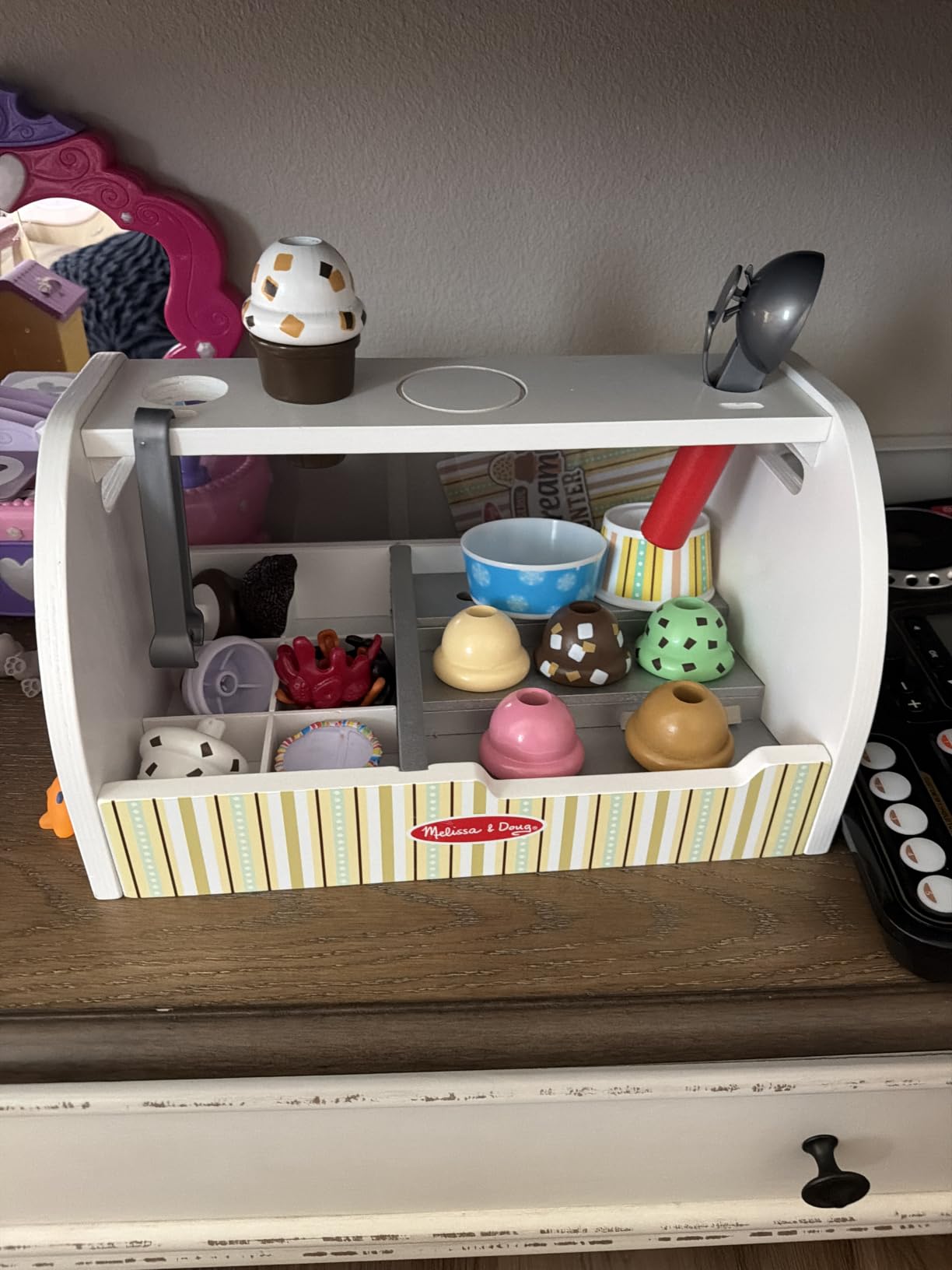
If the cookie set is a delightful appetizer, the Scoop & Serve Ice Cream Counter is a full-course meal of pretend play. With twenty-eight pieces—including eight flavors of ice cream, six toppings, cones, cups, scoops, and a wooden counter with a built-in menu board—this set provides everything a child needs to run a fully operational ice cream shop from the comfort of the playroom.
The centerpiece of the set is the wooden counter itself, which features a display case with slots for the ice cream scoops, a serving window, and a menu board where children can (theoretically) write their offerings. The scoops of ice cream attach to the cones via magnets, which is a clever design choice that creates a satisfying “snap” when the scoop clicks into place on the cone. The magnets are strong enough to hold the scoop securely during “delivery” but weak enough that a child can easily remove it for flavor switching.
What’s Included
- Wooden counter with display case and menu board
- 8 magnetic ice cream scoops in assorted flavors
- Ice cream scooper with realistic lifting mechanism
- 4 cones and 2 cups for serving
- Wooden toppings: sprinkles, chocolate chips, and more
- Menu card with pictures and prices
- Topping containers with removable lids
Why Children Are Obsessed With It
Ice cream is universally beloved by children, and this set leverages that enthusiasm perfectly. But the real reason this toy stands out is the level of role complexity it supports. A child running an ice cream shop must take orders (“What flavor would you like?”), make decisions (“We have chocolate, strawberry, and mint”), execute a multi-step process (scoop, place on cone, add toppings, serve), and handle a transaction (“That will be two dollars, please”). This is executive functioning in action—planning, sequencing, working memory, and cognitive flexibility—disguised as a game about dessert.
The social dimension is equally rich. When two or more children play together, the ice cream shop becomes a stage for complex social negotiation. Who is the shopkeeper? Who are the customers? What are the prices? What happens when someone orders a flavor that has “run out”? These interactions build the social reasoning and communication skills that children will need in school, on the playground, and throughout their lives. The magnetic scoop mechanism also provides a subtle sensory reward that keeps children engaged—the click of the magnet is satisfying in a way that pure wood or plastic alone would not be.
Pros
- Magnetic scoop mechanism is satisfying and durable
- 28 pieces provide rich, varied play scenarios
- Realistic counter design encourages role assignment
- Supports advanced social play and executive functioning
- High-quality wooden construction with vibrant finishes
- Menu board adds literacy and numeracy dimensions
Cons
- Counter requires more space than simpler play sets
- Small topping pieces can be lost or become choking hazards for children under three
- Menu board does not actually allow writing (it is a printed card)
- Higher price point than basic play food sets
“My daughter has had this set for over a year and still plays with it almost every day. She has created an entire ice cream shop world with hours, rules, and a loyalty card system. I have never seen a toy hold her attention this long.” — Verified Amazon Reviewer
Ideal Play Scenarios
The ice cream counter works beautifully in a dedicated play kitchen area, but it does not require one. Children can set it up on a coffee table, a low shelf, or even the floor. The counter design is self-contained, which means it can be placed against a wall and “opened for business” at a moment’s notice. It also pairs wonderfully with a toy cash register and play money for an extended commerce-themed play session that blends imagination with early math skills. For families who enjoy outdoor play, this set can even be brought outside on a warm day for an “outdoor ice cream stand” experience (just bring it in afterward to protect the wood).

Melissa & Doug Wooden Scoop & Serve Ice Cream Counter
28-piece ice cream shop with magnetic scoops, wooden counter, and menu board. Hours of imaginative play.
Check Price on AmazonMelissa & Doug Wooden Pizza Party Play Set — Full Review
Thirty-six self-stick toppings and a sliceable pizza make this one of the most replayable kitchen play sets on the market.

Pizza is the great unifier of childhood cuisine, and this set captures its communal spirit perfectly. The Melissa & Doug Pizza Party set includes a large wooden pizza that divides into eight slices (connected by velcro, naturally), a cardboard pizza box for “delivery” play, and thirty-six self-stick toppings that children can arrange and rearrange to create their ideal pie. There is also a pizza cutter, a server, and a “Build Your Own Pizza” order form that children can use to take custom orders.
Where the Slice and Bake Cookies set focuses on a sequential process (roll, slice, bake, decorate), the Pizza Party set is more about customization and social play. Each child can create a different pizza with different toppings, which naturally leads to conversations about preferences, opinions, and compromise. “I want pepperoni.” “I want mushrooms.” “Okay, let’s do half and half.” These are the negotiations of daily life, practiced in miniature.
What’s Included
- Wooden pizza that separates into 8 slices via velcro
- 36 self-stick toppings (pepperoni, mushrooms, olives, peppers, and more)
- Wooden pizza cutter and server
- Cardboard pizza delivery box
- Order form pad for taking custom orders
- Spreader for sauce application
Why It Works
The order form is an unexpectedly brilliant addition. It introduces early literacy and numeracy in a natural context—children can “write down” what toppings each customer wants (even if the writing is just scribbles, the intent is there), and they can count how many slices are needed. For older preschoolers, the form becomes a prompt for more structured play: “How many slices do you need for four people?” The delivery box adds a whole new dimension of play, transforming the set from a simple cooking toy into a complete food-service experience. The child is not just making pizza—they are operating a business.
The thirty-six topping pieces are generously sized and have self-stick backing that adheres reliably to the pizza surface without being difficult to remove. This is a crucial design detail—toppings that fall off frustrate children, while toppings that are too hard to remove slow down the play. Melissa & Doug has found the right balance here. The toppings stay on during “cooking” and “delivery” but come off easily when the child wants to start a new order.
Pros
- 36 toppings offer enormous customization variety
- Order form adds literacy and math practice
- Delivery box extends play scenarios beyond the kitchen
- Velcro slicing is satisfying and repeatable
- Highly social toy that naturally invites group play
- Durable wooden construction with vibrant, non-toxic finishes
Cons
- Cardboard delivery box will wear out over time
- Small toppings can be misplaced easily
- Order form pads will eventually run out (though blank paper works fine)
- Pizza slices are somewhat large for very small hands
Building a Pretend Kitchen Collection
For families building out a complete pretend kitchen setup, the Pizza Party set pairs beautifully with the Slice and Bake Cookies and the Scoop & Serve Ice Cream Counter. Together, these three sets create a comprehensive play kitchen ecosystem where a child can run a full restaurant—appetizer (cookies), main course (pizza), and dessert (ice cream). The combination is more than the sum of its parts because it allows children to construct extended narratives that span an entire “dining experience.” This kind of long-form play is especially valuable for children in the four-to-six range who are developing more sophisticated storytelling abilities.

Melissa & Doug Wooden Pizza Party Play Set
36 toppings, a delivery box, and an order form. The ultimate pretend pizza experience.
Check Price on AmazonPotato Head Pet-Tato Tots — Full Review
An Amazon-exclusive twist on a classic toy line. Thirty-one pet-themed pieces and a rolling carry case make this a portable pretend play powerhouse.

The Potato Head franchise has been a staple of childhood play for generations, and the Pet-Tato Tots line brings a fresh, animal-themed twist that is perfectly calibrated for the toddler and preschool crowd. This Amazon-exclusive set includes a potato body (sized smaller than the classic Potato Head, making it more manageable for small hands) and thirty-one mix-and-match pieces that let children create their own pet characters—ears, tails, paws, wings, noses, and accessories in a rainbow of colors.
The set also comes with a rolling carry case shaped like a pet carrier, which serves dual purpose: it stores all the pieces when play is done, and it becomes a prop during play as children “transport” their creations from room to room. This is a subtle but important design choice. The carry case transforms the toy from a stationary activity into a mobile adventure. The child is not just building a character—they are taking that character on a journey.
What’s Included
- 1 potato body (smaller, toddler-friendly size)
- 31 mix-and-match pet-themed pieces (ears, tails, paws, wings, hats, glasses)
- Rolling carry case / pet carrier
- Multiple animal character possibilities
What Sets It Apart
The mix-and-match nature of Potato Head toys is what makes them perennial favorites. There is no single “correct” configuration—every combination produces a valid (and usually hilarious) character. This open-endedness is the hallmark of great pretend play design. A child might build a dog with cat ears and a bird’s tail, give it sunglasses and a top hat, and then invent an elaborate backstory for this magnificent creature. The lack of rules is the whole point.
For parents concerned about developmental value, the act of selecting and inserting pieces exercises fine motor skills, spatial reasoning (which hole does this piece fit into?), and creative decision-making. Younger toddlers (around two years old) will enjoy the simple cause-and-effect of pushing pieces into holes and pulling them out again. Older preschoolers will use the same pieces to create characters with distinct personalities, names, and life stories. The toy scales with the child, which is one reason it has remained popular across so many years.
The rolling carry case is a particular win for families who travel or who frequently bring toys to restaurants, waiting rooms, or grandparents’ houses. Everything packs into the case, which rolls along behind the child like a piece of luggage. It is a toy and a storage solution in one, and it teaches children the responsibility of keeping their belongings together. For families who spend time in the car, this pairs nicely with other great toys for long car rides.
Pros
- 31 pieces offer enormous creative combinations
- Smaller body size is perfect for toddler hands
- Rolling carry case stores everything and doubles as a play prop
- No “wrong” way to build — every creation is valid
- Encourages humor, creativity, and storytelling
- Portable design is great for travel and on-the-go play
Cons
- Small pieces may be lost if carry case is not used consistently
- Some pieces may be tight for very young toddlers to insert
- Amazon-exclusive availability limits where you can purchase
- Less structured than kitchen or cleaning sets — some children need more guidance
Best For
This set is ideal for children ages two to five who enjoy building, creating, and storytelling. It is especially well-suited for children who love animals and for families who need a portable, all-in-one toy that does not require a lot of space. It also makes an excellent gift—the novelty of the pet theme and the fun carry case make it feel special right out of the box. If you are shopping for a gift for a five-year-old girl or a toddler of any gender, this set is a crowd-pleaser.
Potato Head Pet-Tato Tots — Amazon Exclusive
31 pet-themed pieces in a rolling carry case. Mix, match, and create hilarious animal characters.
Check Price on AmazonFisher-Price Little People Caring for Animals Farm Playset — Full Review
An interactive farm playset with Smart Stages technology that adapts to your child’s developmental level. This is animal play with real educational depth.

Farm playsets are among the most enduringly popular toys in the pretend play category, and Fisher-Price’s Little People Caring for Animals Farm is the one that sets the standard. This is not just a static barn with a few plastic animals. It is an interactive playset with Smart Stages technology that offers different songs, sounds, and phrases depending on the child’s age and developmental stage. Place a figure on the activation point and the barn responds with animal sounds, fun facts, or simple songs that teach colors, numbers, and animal names.
The set includes the barn itself (which opens up for full interior play), a farmer figure, four animal figures (cow, horse, chicken, and pig), and various play pieces like hay bales and feeding troughs. The barn has multiple interactive features—a silo that makes sounds when figures are placed inside, a hay loft that drops hay when a lever is pulled, and doors that open and close. Each feature is designed to teach cause and effect: pull the lever, hay falls. Open the door, the animal comes out. Press the button, music plays.
What’s Included
- Interactive barn playset with Smart Stages technology
- 1 farmer figure
- 4 animal figures (cow, horse, chicken, pig)
- Hay bales, feeding trough, and play accessories
- Multiple activation points for sounds and songs
- 3 Smart Stages levels that grow with your child
Smart Stages: What It Means in Practice
The Smart Stages feature is Fisher-Price’s signature technology, and it genuinely adds value to the play experience. At Level 1 (designed for ages one and up), the barn plays simple sounds and songs when activated—animal noises, short melodies, and basic words like “cow” and “hello.” At Level 2 (aimed at ages two and up), the content becomes more interactive, with prompts that encourage the child to respond (“Can you find the horse?”) and songs that teach colors and counting. At Level 3 (ages three and up), the content becomes more narrative, with short stories and more complex songs that support imaginative play.
This adaptability means the toy remains relevant for two to three years of active play, which is a significantly longer lifespan than most single-stage toys. A child who receives this farm at their first birthday will still be finding new content at age three or four. That longevity makes the price point much more justifiable than it might initially seem.
The developmental benefits of animal play are well documented. Children who play with animal figures develop empathy and caregiving skills as they “feed,” “brush,” and “take care of” their animals. They learn about different species, habitats, and the concept of responsibility. The farmer figure adds a human dimension, allowing children to play out the relationship between caretaker and animals—a dynamic that supports both narrative thinking and social-emotional learning. For parents exploring Montessori-style toys, this farm set bridges the gap between structured, purposeful play and open-ended imagination.
Pros
- Smart Stages adapts content to child’s age over 2–3 years
- Multiple interactive features with sounds, songs, and prompts
- Durable Little People figures are sized for toddler hands
- Open barn design supports both interior and exterior play
- Teaches animal names, sounds, colors, and counting
- Excellent for developing empathy and nurturing behavior
Cons
- Requires batteries (not included)
- Electronic features may overwhelm children who prefer quiet play
- Barn is large and requires dedicated storage space
- Sound effects can become repetitive for adults in the room
Why Little People Figures Work So Well
Fisher-Price’s Little People figures deserve special recognition. They are chunky, easy to grip, and impossible to swallow—which means they are safe for the youngest toddlers while still being engaging for older preschoolers. Their simple, friendly faces are designed to be universally appealing, and their proportions are just right for small hands to hold, carry, and place in vehicles, buildings, and playsets. The Caring for Animals Farm is one of many Little People sets, and families who invest in the ecosystem find that figures and vehicles from different sets often work together, creating a sprawling, interconnected play world.
Fisher-Price Little People Caring for Animals Farm
Smart Stages technology, interactive sounds, and lovable animal figures. A farm that grows with your child.
Check Price on AmazonFisher-Price Little People Disney Moana & Maui’s Canoe — Full Review
Licensed character play meets Little People durability. For children who want to bring their favorite movie scenes to life, this canoe set delivers.

There is a reason licensed character toys are so popular: children who are deeply attached to a character from a movie or show bring an entire narrative world to the toy before they even open the box. A child who loves Moana does not need to be taught how to play with this canoe. They already know the story. They already have the dialogue memorized. The toy becomes a stage for reenacting beloved scenes and, gradually, for creating entirely new adventures that extend beyond the movie’s plot.
The Moana & Maui’s Canoe set includes Little People figures of Moana and Maui, a canoe that really rocks on its base (simulating waves), and a few play accessories that reference the film—like a sail and a “heart of Te Fiti” element. The figures are, as always with Little People, chunky, durable, and perfectly sized for toddler hands. The canoe itself is large enough for dramatic play but compact enough to fit on a shelf or in a toy bin.
What’s Included
- Little People Moana figure
- Little People Maui figure
- Rocking canoe with sail
- Film-themed play accessories
- Easy-open design for interior play
The Value of Character Play
Licensed character toys sometimes get dismissed as marketing-driven impulse purchases, but they serve a genuine developmental purpose. Children use characters they know and love as vehicles for processing emotions, practicing social scenarios, and exploring themes of bravery, friendship, and identity. A child playing with Moana and Maui is not just rewatching a movie in toy form—they are engaging with the story’s themes of courage, self-discovery, and perseverance in a hands-on, embodied way.
The rocking canoe mechanic adds a physical play dimension that keeps the toy engaging beyond pure narrative play. Children enjoy making the canoe “sail” across imaginary oceans, which involves rocking motions that exercise fine motor control and bilateral coordination. The gentle rocking also has a soothing, rhythmic quality that some children find calming—similar to the appeal of rocking horses or bouncy toys.
One of the standout aspects of this set is how it bridges the gap between toddler and preschool play. A one-year-old will simply enjoy holding the figures and rocking the boat. A three-year-old will reenact entire scenes from the movie, complete with dialogue and sound effects. A five-year-old will create new adventures, invent new characters, and build elaborate ocean worlds using other toys as scenery. The toy does not limit the play—the child’s imagination does the limiting, and children have remarkably generous imaginations.
Pros
- Beloved characters provide instant engagement
- Rocking canoe adds physical play dimension
- Durable Little People figures built for heavy use
- Works for a wide age range (1–5 years)
- Encourages narrative reenactment and creative extension
- Compact enough for easy storage and travel
Cons
- Limited number of figures (only Moana and Maui included)
- Accessories are minimal compared to larger playsets
- Interest may wane if child’s attachment to the movie fades
- Rocking mechanism may not engage children who prefer interactive electronics
Pairing with Other Little People Sets
The real strength of the Little People ecosystem reveals itself when you combine sets. The Moana figures can visit the Caring for Animals Farm, ride in other Little People vehicles, or be integrated into custom scenarios involving figures from multiple sets. This interoperability extends the life and value of each individual set significantly. Parents who invest in two or three Little People sets often find that their children create sprawling, interconnected play worlds that occupy them for years. The Moana canoe is an excellent entry point into this ecosystem, especially for Disney-loving families.
Fisher-Price Little People Disney Moana & Maui’s Canoe
Rocking canoe, beloved Disney characters, and open-ended ocean adventures for ages 1–5.
Check Price on AmazonCasdon Dyson Cordless Vacuum, JOYIN Play Food Cutting Set & Fisher-Price Forest Friends — Reviews
Three distinct toys that round out our list—each serving a different need, budget, and age range.
Casdon Dyson Cordless Vacuum (Officially Licensed)
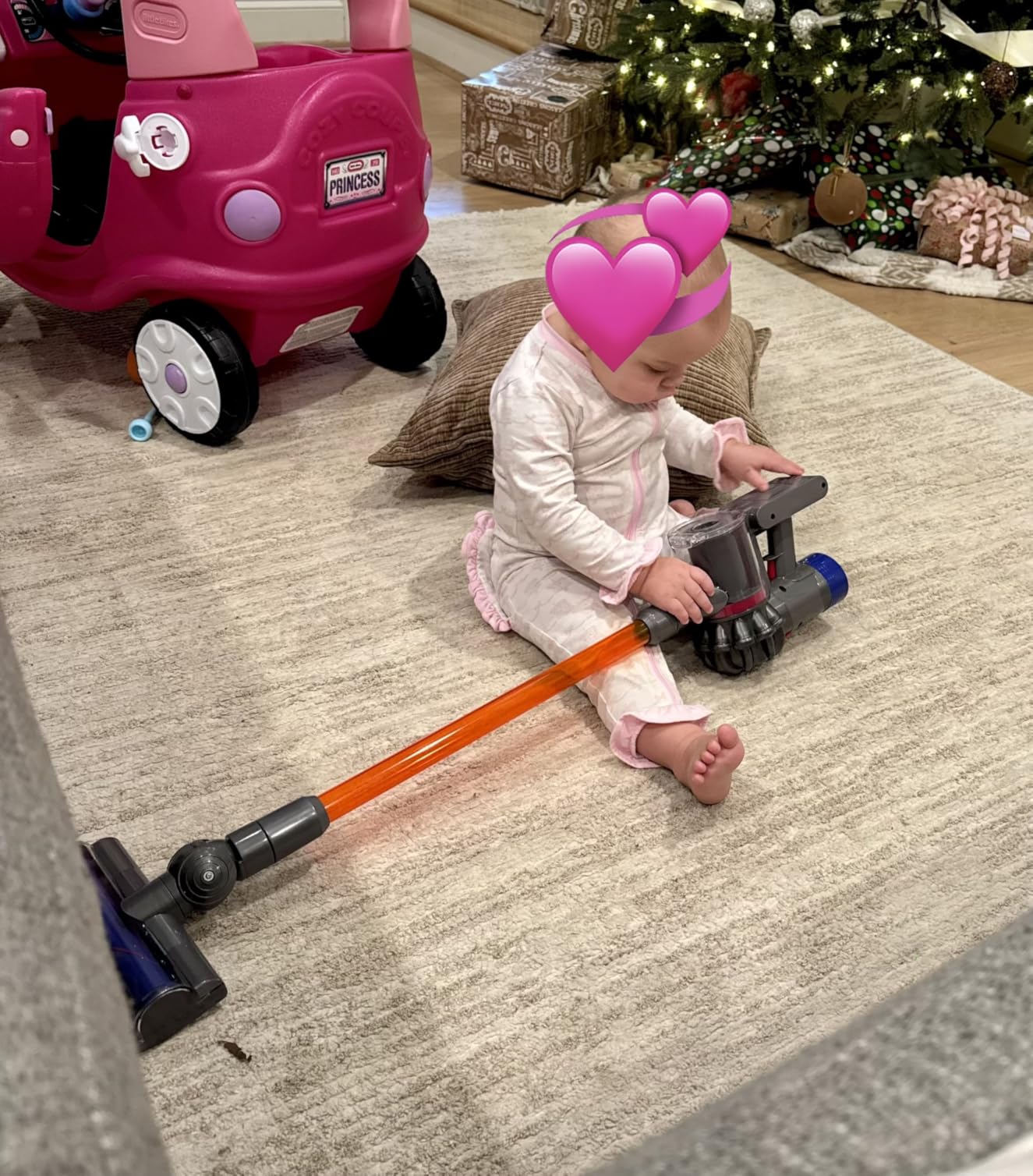
There is an entire trend in the toy world that can be summed up in two words: “mini-me.” Children want to use the same appliances, tools, and gadgets their parents use. They want a phone that looks like yours, a car that looks like yours, and—yes—a vacuum cleaner that looks like yours. The Casdon Dyson Cordless Vacuum capitalizes on this desire with a toy that is officially licensed by Dyson and designed to be as visually faithful to the real thing as possible.
This is not a flat piece of plastic with a sticker that says “vacuum.” It is a detailed replica with a cyclone mechanism that actually spins when the child pushes the vacuum along the floor, a detachable handheld unit, and realistic sound effects. The suction is simulated (it does not actually pick up dirt), but the visual and auditory feedback creates an immersive experience that satisfies children who want their play to feel “real.”
Developmentally, this toy serves a similar purpose to the Melissa & Doug cleaning set—it supports role play, gross motor activity, and the desire to contribute to household tasks—but it targets a slightly different child. The Casdon Dyson appeals to children who are drawn to realism and precision. They do not just want to pretend to vacuum; they want the vacuum to look and sound like the real one. For these children, the visual fidelity of the Dyson replica matters enormously. The fact that it is based on a premium brand adds to the “grown-up” appeal.
Pros
- Incredibly realistic Dyson-licensed design
- Spinning cyclone mechanism provides visual feedback
- Detachable handheld unit adds play variety
- Encourages physical activity and role play
- Strong “mini-me” appeal for children who mimic parents
Cons
- Requires batteries for sound effects and cyclone
- Does not actually pick up debris (purely visual play)
- Somewhat fragile compared to simpler wooden cleaning toys
- Higher price point than basic cleaning sets

Casdon Dyson on Amazon
Shop on AmazonJOYIN Play Food Cutting Set
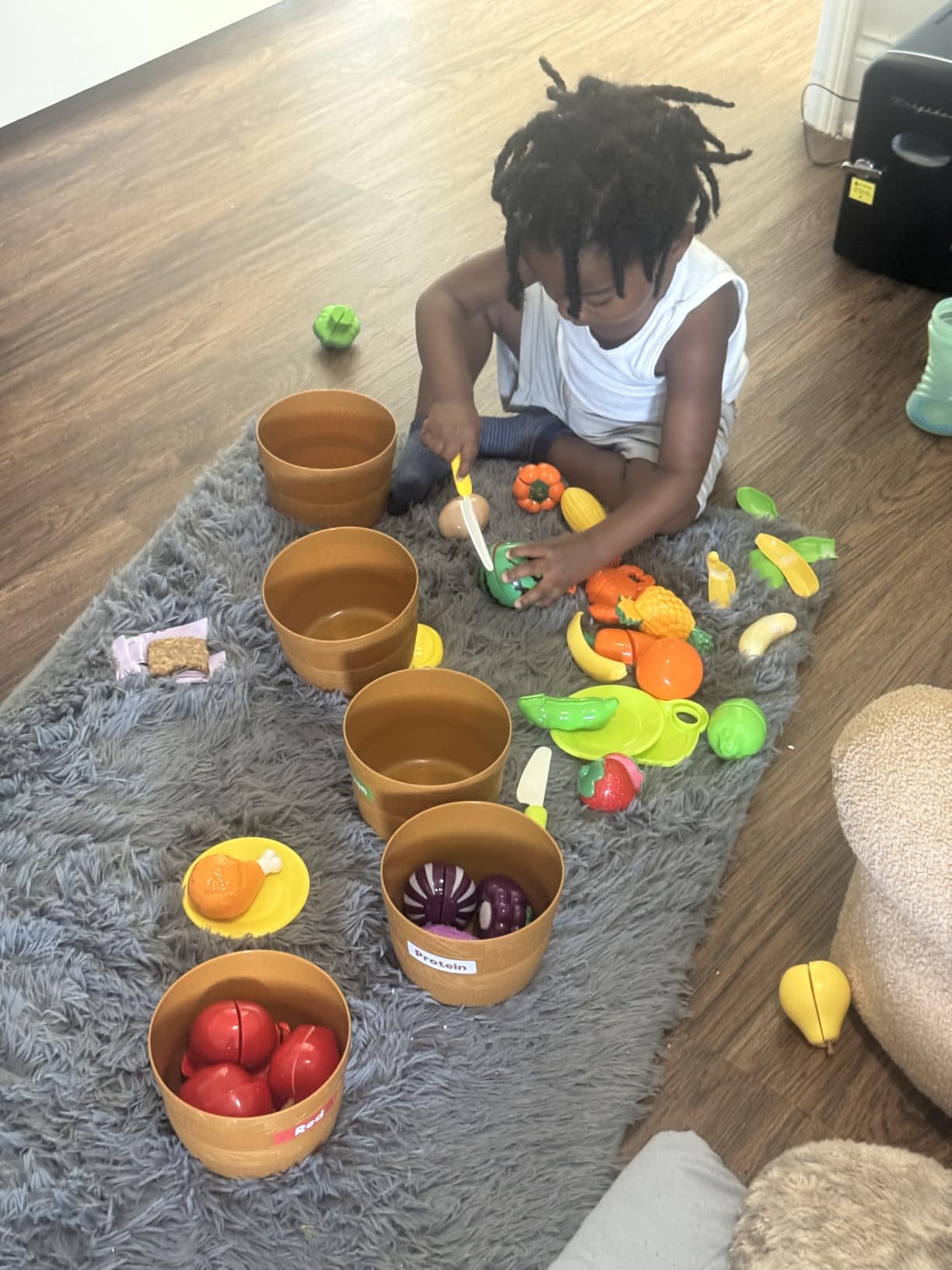
Not every pretend play toy needs to be a premium wooden set with a hefty price tag. The JOYIN Play Food Cutting Set proves that you can get genuinely engaging, developmentally rich pretend play for a fraction of the cost of designer brands. This set includes a variety of colorful plastic fruits, vegetables, and other food items that connect with velcro and can be sliced apart with the included toy knife. Each food piece is painted in a bright, distinct color, and the set also comes with a color-sorting component that adds an educational twist.
The slicing mechanic is the same satisfying velcro action found in more expensive sets, but the JOYIN version adds the dimension of color matching and sorting. Children can group foods by color, count items in each group, and practice naming colors while they play. This dual-purpose design—pretend play plus early learning—is exactly what makes budget-friendly toys worth considering. The materials are plastic rather than wood, which means they are lighter, easier to clean, and less likely to cause damage if thrown (which, with toddlers, is not an unlikely scenario).
This is an excellent choice for families building a play kitchen on a budget, for daycare centers that need multiple sets, or for grandparents who want to keep a play food set at their house without investing in premium brands. It also pairs well with other affordable toddler toys to create a full play experience without overspending. Parents who need guidance on safely cleaning plastic toys will find that these pieces are easy to wipe down or wash with soap and water.
Pros
- Extremely affordable price point
- Color sorting adds educational dimension
- Bright, engaging colors that attract young children
- Velcro slicing is satisfying for toddlers
- Easy to clean plastic material
- Large piece count for varied play
Cons
- Plastic construction is less durable than wood
- Paint may chip with heavy use over time
- Less visual refinement than premium brands
- Velcro may weaken faster than higher-quality alternatives

JOYIN Play Food Cutting Set with Color Sorting
Shop on AmazonFisher-Price Little People Forest Friends Carry Case Playset
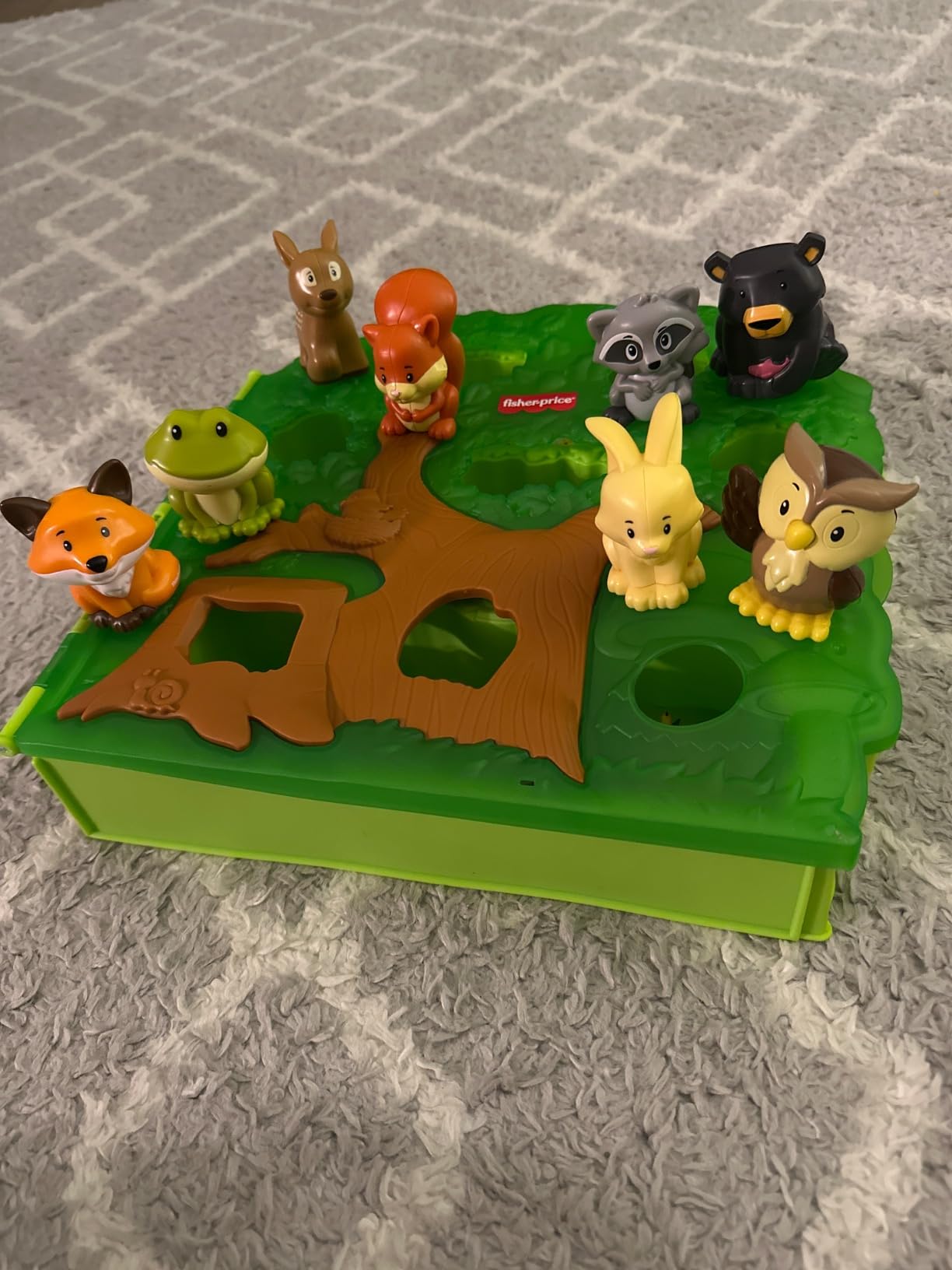
Sometimes the best toy is the simplest one. The Fisher-Price Little People Forest Friends Carry Case set is a collection of adorable woodland animal figures—foxes, raccoons, owls, bears, and rabbits—housed in a portable carry case that opens up to reveal a miniature forest scene. There are no electronic features, no batteries required, and no complicated setup. Just figures, a case, and a child’s imagination.
This set is designed with the youngest pretend players in mind. The figures are chunky, smooth, and sized to be gripped by tiny hands without any risk of choking. The carry case doubles as a play environment, with a printed forest background and small “rooms” where figures can be placed. The child picks up a figure, names it, makes it walk or talk, and puts it back in the case when they are done. The simplicity is the point.
For children aged one to two, this set provides an ideal introduction to the concept of pretend play. The child does not need to understand complex narratives or manage multiple pieces. They just need to connect with one figure at a time—hold it, move it, give it a voice. This low-pressure entry point builds the confidence and interest that will eventually lead to more elaborate play with larger, more complex sets. For families also considering when to introduce more structured toys, Forest Friends represents the perfect first step—simple enough for a one-year-old, engaging enough for a three-year-old.
Pros
- Perfect first pretend play toy for ages 1–2
- Chunky, safe figures with no choking hazards
- Carry case stores everything and doubles as play environment
- No batteries or setup required
- Adorable woodland theme appeals universally
- Lightweight and portable for on-the-go play
Cons
- Limited play complexity for children over four
- Small number of figures compared to larger playsets
- Carry case is somewhat flimsy
- No interactive or electronic features for children who prefer them

Forest Friends on Amazon
Three versatile pretend play toys at different price points. Find the one that fits your family.
Shop All Three on AmazonThe Complete Comparison Table & Final Verdict
All ten toys, side by side. Use this table to find the perfect match for your child’s age, interests, and your budget.
| Toy | Age Range | Material | Pieces | Best For | Price Tier |
|---|---|---|---|---|---|
| M&D Dust, Sweep & Mop | 3–6 | Wood/Plastic | 6 | Role play, gross motor | $$ |
| M&D Slice & Bake Cookies | 3–6 | Wood/Metal | ~25 | Fine motor, creativity | $$ |
| M&D Ice Cream Counter | 3–6 | Wood | 28 | Social play, executive function | $$ |
| M&D Pizza Party | 3–6 | Wood/Cardboard | ~45 | Social play, early math | $$$$ |
| Pet-Tato Tots | 2–5 | Plastic | 31 | Creativity, portability | $$ |
| LP Caring for Animals Farm | 1–5 | Plastic/Electronic | ~10 | Animal play, language | $$ |
| LP Moana & Maui’s Canoe | 1–5 | Plastic | ~5 | Character/narrative play | $ |
| Casdon Dyson Vacuum | 3–6 | Plastic/Electronic | 1 | Role play, gross motor | $$ |
| JOYIN Cutting Set | 2–5 | Plastic | ~20 | Budget, color sorting | $ |
| LP Forest Friends | 1–4 | Plastic | ~8 | First pretend toy, portability | $ |
Our Top Picks by Category
Best Overall Pretend Play Toy
Melissa & Doug Wooden Scoop & Serve Ice Cream Counter. With twenty-eight pieces, a realistic counter design, magnetic scoops, and a menu board, this set offers the richest, most versatile play experience of any toy on the list. It supports the widest range of developmental skills—from fine motor and social reasoning to early literacy and executive functioning—and it holds children’s attention for years rather than weeks. It is the one we would recommend if you could only buy one pretend play toy.
Best Budget Option
JOYIN Play Food Cutting Set. For families who want engaging pretend play without a significant investment, the JOYIN set delivers solid construction, satisfying velcro slicing, and an added color-sorting educational component at a price point that makes it easy to purchase alongside other toys. It pairs well with other affordable toys for toddlers.
Best for Youngest Children (Ages 1–2)
Fisher-Price Little People Forest Friends Carry Case. Safe, simple, and portable, this is the perfect entry point into the world of pretend play. The chunky figures are sized for the youngest hands, and the carry case makes cleanup and travel easy. It is also the ideal companion for long car rides when you need a compact, quiet toy.
Best for Social Play
Melissa & Doug Wooden Pizza Party Play Set. The order form, delivery box, and multi-slice sharing design make this the most naturally social toy on the list. It is the one most likely to draw multiple children into cooperative play, and it teaches negotiation, turn-taking, and collaborative storytelling in a way that feels effortless.
Best Licensed Character Toy
Fisher-Price Little People Disney Moana & Maui’s Canoe. For children with a deep attachment to the Moana franchise, this set provides the perfect bridge between screen time and hands-on play. The rocking canoe mechanic adds physical engagement, and the open-ended nature of the figures allows for both scene reenactment and original storytelling.
Best for Realistic Role Play
Casdon Dyson Cordless Vacuum. If your child is the type who wants their toy to look exactly like the real thing, nothing beats this officially licensed Dyson replica. The spinning cyclone, detachable handheld unit, and realistic proportions create a level of immersion that generic toy vacuums simply cannot match.
Building a Balanced Pretend Play Collection
Rather than buying all ten toys at once (which would be overwhelming for any child), consider building a collection strategically over time. A good approach is to start with one toy from each major category: one kitchen/cooking set, one cleaning/household set, one character/figure set, and one open-ended creative set. This gives your child a diverse range of play scenarios without overwhelming them with choices.
As your child grows, you can add sets that match their evolving interests and abilities. A three-year-old who has mastered the Forest Friends figures might be ready for the more complex Caring for Animals Farm. A four-year-old who has exhausted the play possibilities of a single kitchen set might be thrilled to add pizza and ice cream to their culinary repertoire. The key is to follow the child’s lead and add complexity gradually. And remember—you can always rotate toys in and out to keep things fresh. A toy that has been in the closet for three months will feel brand new when it reappears.

Build Your Child’s Pretend Play Collection
Shop all ten top-rated pretend play toys with verified reviews and fast shipping.
Shop the Full Collection on AmazonFrequently Asked Questions About Pretend Play Toys
Answers to the questions parents ask most when shopping for pretend play toys.
What age should I introduce pretend play toys?
Children begin engaging in simple pretend play around twelve to eighteen months old. At this age, they may pretend to drink from an empty cup or talk on a toy phone. You can introduce basic pretend play toys—like chunky animal figures or simple household items—as early as one year. More complex sets with multiple pieces are best suited for children ages three and up. For guidance on age-appropriate introductions, see our article on the best age to introduce Montessori-style toys, which follows similar developmental timelines.
Are wooden pretend play toys better than plastic ones?
Neither material is inherently better. Wooden toys tend to be more durable, more aesthetically pleasing, and more satisfying to hold. They also tend to last longer and can be passed down to younger siblings. Plastic toys, on the other hand, are lighter, easier to clean, and often less expensive. Electronic features (like sounds and songs) are typically only available in plastic toys. The best choice depends on your priorities. If you value durability and aesthetics, high-quality wooden toys from brands like Melissa & Doug are excellent. If you value affordability and easy maintenance, plastic sets from Fisher-Price or JOYIN are perfectly fine.
How many pretend play toys does my child need?
Research on toy quantity suggests that children play more deeply and creatively when they have fewer options. Having four to six high-quality pretend play sets is more beneficial than having twenty mediocre ones. The key is variety across categories (cooking, cleaning, animals, characters) rather than quantity within a single category. Many families find that rotating toys in and out every few weeks maintains novelty without requiring constant new purchases.
Can pretend play toys help with speech development?
Absolutely. Pretend play is one of the most effective natural contexts for language development. When children engage in role play, they use vocabulary they would not otherwise encounter, practice conversational turn-taking, and experiment with different speech patterns and tones. A child running an ice cream shop uses words like “scoop,” “sprinkles,” and “here you go.” A child playing veterinarian uses words like “stethoscope,” “medicine,” and “Does this hurt?” This contextual vocabulary acquisition is far more effective than flashcards or apps because it is embedded in meaningful, motivated activity.
Are pretend play toys safe for toddlers who still mouth objects?
Safety depends on the specific toy and the child’s age. For toddlers who still mouth objects (typically under age two), choose toys with large, chunky pieces that cannot be swallowed. Little People figures, for example, are specifically designed to be too large for a child’s airway. Avoid sets with small toppings, beads, or detachable pieces until the mouthing phase has passed. Always check the manufacturer’s age recommendation and look for ASTM or CPSC safety certifications. For more on toy maintenance and safety, see our guide on how to clean plastic toys safely.
How do I clean pretend play toys?
Cleaning methods depend on the material. Plastic toys can be washed with warm soapy water or wiped with disinfectant wipes (make sure they are non-toxic and rinse afterward). Wooden toys should be wiped with a damp cloth and mild soap—avoid soaking wood, as it can warp or crack. Fabric components (like mop heads) can usually be hand-washed or machine-washed on a gentle cycle. Electronic components should never be submerged—use a damp cloth only. Our detailed guide on safely cleaning plastic toys covers every material type in depth.
What is the difference between Montessori toys and pretend play toys?
Montessori toys are designed around the principle of “real-world” learning—they use real materials, realistic proportions, and purposeful activities (like pouring water or threading beads). Pretend play toys, by contrast, encourage symbolic and imaginative thinking—an empty cup becomes a phone, a block becomes a sandwich. There is significant overlap: many pretend play toys (like the Melissa & Doug kitchen sets) are designed with Montessori-influenced realism, while many Montessori activities involve elements of role play. The best approach is to offer both. For more on this topic, see our article on when to introduce Montessori toys.
Can siblings of different ages play with the same pretend play toys?
Yes, and this is one of the great strengths of pretend play toys. A two-year-old and a five-year-old can play with the same ice cream counter—the younger child scoops and serves, while the older child takes orders, calculates prices, and manages the shop. The older child naturally takes on a teaching role (“What flavor do you want? Say ‘chocolate’”), which benefits both siblings. Pretend play toys are among the best toys for siblings to play together precisely because they are flexible enough to accommodate different developmental levels within the same scenario.
Do boys and girls play with the same pretend play toys?
Research consistently shows that all children benefit from all types of pretend play, regardless of gender. Boys and girls alike enjoy cooking sets, cleaning toys, animal playsets, and character figures. Marketing sometimes targets these toys differently, but the developmental benefits are universal. A boy who plays with a kitchen set is developing the same fine motor skills, social reasoning, and vocabulary as a girl who plays with the same set. The best approach is to offer a wide range of toys and let the child’s individual interests guide their play choices.
How do I encourage my child to use pretend play toys?
The most effective strategy is to model the play yourself. Sit down with your child, pick up a figure, and start a simple scenario: “Oh no, the bear is hungry! What should we feed him?” Children learn by watching, and seeing you engage in pretend play gives them permission and inspiration to do the same. You can also set up the play environment before the child sees it—arrange the ice cream counter as if it is “open for business,” with scoops displayed and the menu visible. A compelling setup draws children in naturally. Over time, as the child internalizes the play patterns, they will begin initiating play on their own.
Are expensive pretend play toys worth the investment?
It depends on the toy. A well-made wooden set like the Melissa & Doug Ice Cream Counter will last through multiple children and years of daily use, making the per-play cost negligible. A cheaply made toy that breaks after two weeks is no bargain at any price. The best approach is to invest in high-quality sets for core play scenarios (kitchen, cleaning, animals) and supplement with affordable options like the JOYIN cutting set or Little People figures for variety. You can find excellent options at every price point on our toys under $20 list.
Can pretend play toys replace screen time?
Pretend play toys offer a qualitatively different kind of engagement than screens. Screen time is passive—the child watches something happen. Pretend play is active—the child makes things happen. The child in pretend play is the director, the actor, the scriptwriter, and the audience, all at once. While screens are not inherently harmful in moderation, pretend play develops skills—creative thinking, emotional regulation, social negotiation, physical coordination—that passive screen consumption simply does not. Replacing even thirty minutes of daily screen time with active pretend play can have a meaningful positive impact on a child’s development. For travel situations where screens are often the default, compact pretend play toys provide a screen-free alternative that keeps children engaged.

Ready to Spark Your Child’s Imagination?
Browse Amazon’s top-rated pretend play toys, read real parent reviews, and find your perfect match.
Shop Now on AmazonFinal Thoughts: The Best Toy Is the One They Actually Play With
After reviewing all ten toys in detail, one thing is clear: the “best” pretend play toy is not the one with the highest price tag, the most pieces, or the fanciest packaging. It is the one that aligns with your child’s current interests, matches their developmental stage, and invites them into a world of their own making.
A child who loves animals will get more out of the Forest Friends set than the most elaborate kitchen counter. A child who is obsessed with cooking will spend more time with the pizza set than with any character playset, no matter how beloved the character. The toys on this list are all excellent—but their excellence is only realized when they meet the right child at the right time.
Our advice is to start with one or two sets that match your child’s current passions, watch how they play, and build from there. Pay attention to the scenarios they invent, the roles they assign, and the stories they tell. These are windows into your child’s mind—and the toys you choose are the lenses that focus those windows into clarity.
Pretend play is not a luxury. It is not a distraction from “real” learning. It is the way young children make sense of their world, practice the skills they will need in life, and experience the pure, unbridled joy of creation. Every cup of imaginary tea, every plastic pizza served to a stuffed bear, every broom pushed across the kitchen floor is a small act of world-building. And the children who build those worlds are building themselves in the process.