What Are Creative Toys? A Complete Guide to Toys That Spark Imagination
From building blocks and art supplies to costume boxes and cardboard tubes, creative toys give kids room to invent, experiment, and make something that is entirely their own. Here is what they are, why they matter, and how to pick the right ones.
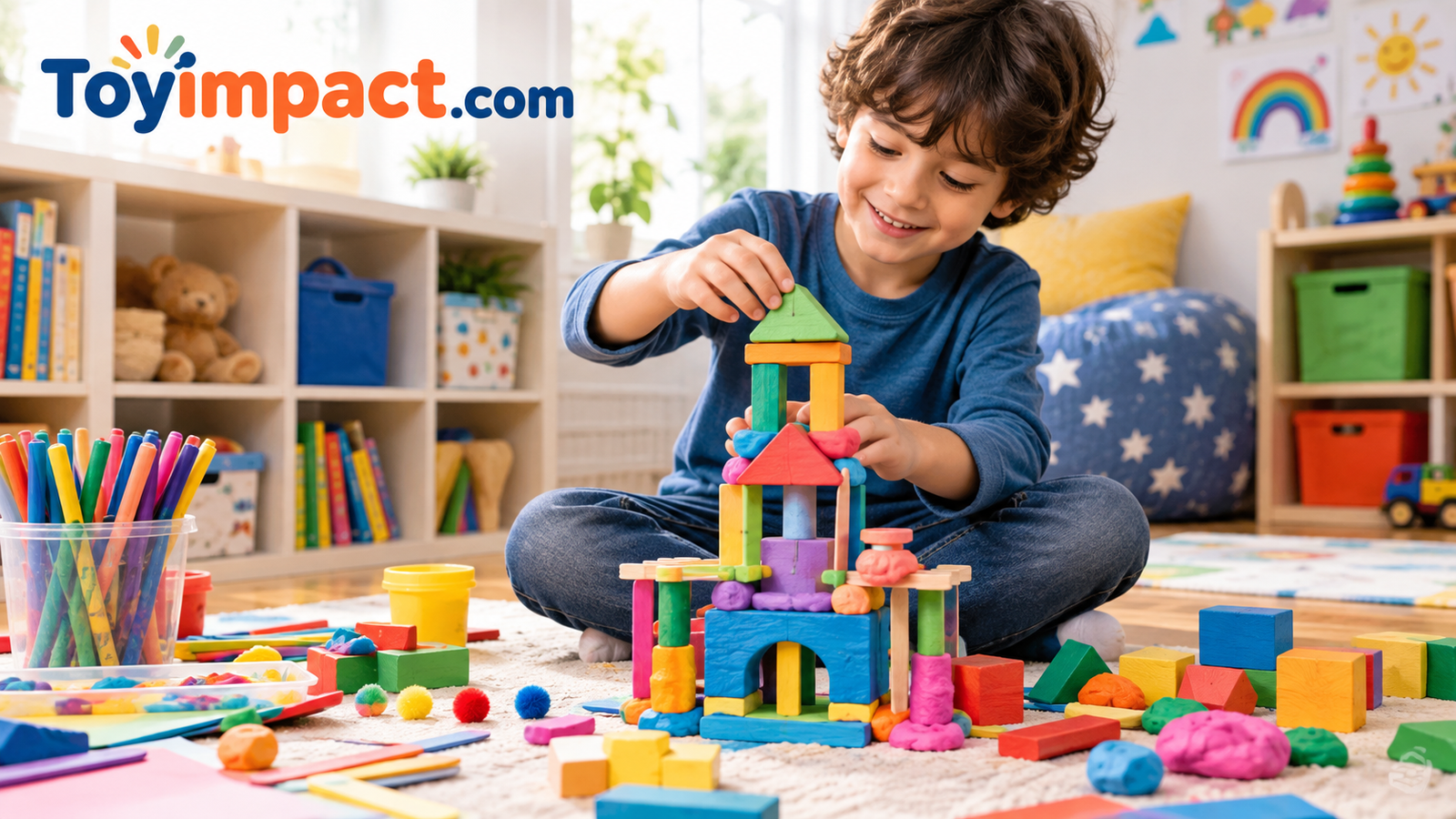
Quick answer: Creative toys are toys that let a child decide what to make, imagine, or pretend rather than telling them what to do. Blocks, clay, paint, dress-up clothes, and loose parts are classic examples. They have no single “right” result, which is exactly why they build imagination, problem-solving, and confidence.
Walk into any toy aisle and you will notice two very different kinds of playthings. Some do one thing, loudly, every time you press the same button. Others sit quietly and wait for a child to decide what they will become. A set of wooden blocks can be a castle on Monday, a grocery store on Tuesday, and a bridge for toy dinosaurs on Wednesday. That second kind is what most people mean when they ask what creative toys are.
If you have ever watched a toddler ignore an expensive gadget in favor of the box it came in, you already understand the idea. Children are natural inventors, and the best toys simply give that instinct something to work with. In this guide, we will look at what qualifies as a creative toy, why child development experts care so much about them, the main categories worth knowing, and how to choose well for every age and budget without filling your home with clutter.
Whether you are a parent, grandparent, teacher, or gift-giver trying to figure out where to start, you will come away with a clear picture and practical ideas. If you want a broader shortlist along the way, our roundup of the best toys is a handy companion, and you can always browse more guides on Toy Impact.
What Are Creative Toys?
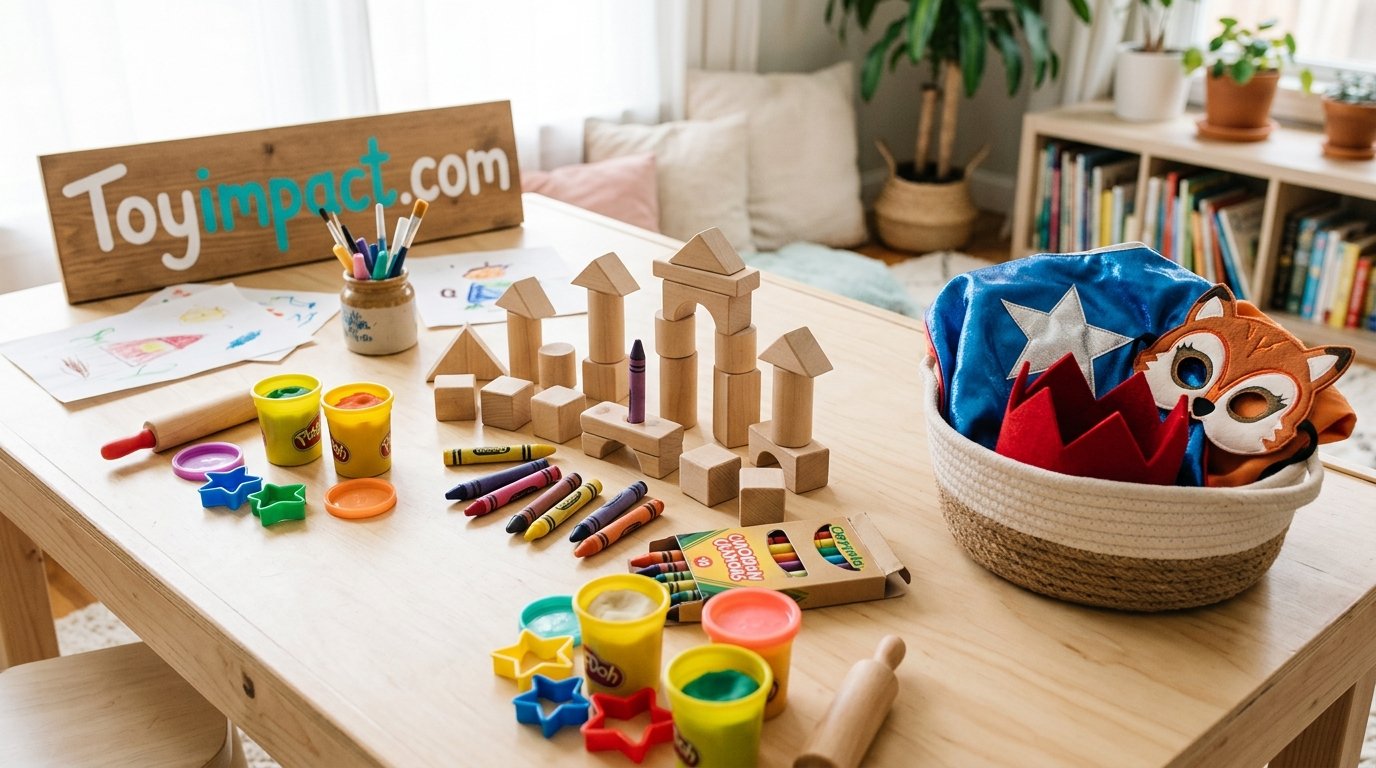
Creative toys are playthings designed to encourage imagination, self-expression, and original thinking. Instead of prescribing a fixed outcome, they hand the child a set of possibilities. The child supplies the story, the design, the rules, or the finished product. That is the defining trait: the child does most of the creative work, not the toy.
Toy designers often describe this as the difference between “closed” and “open” play. A closed toy, like a simple shape-sorter or a battery-powered character that recites phrases, has a single intended use. An open toy, like a bucket of interlocking bricks or a pile of scarves, has hundreds. Neither type is bad. Closed toys teach specific skills, and many are wonderful. But when people say “creative toys,” they are almost always talking about the open end of that spectrum.
The Core Traits of a Creative Toy
- Open-ended: It can be used in many different ways, with no single correct outcome.
- Child-led: The child decides what happens next, not a screen or a set of instructions.
- Reusable: It keeps its appeal as the child grows, because the child’s ideas grow with them.
- Sensory-rich: It invites touching, stacking, squishing, drawing, or moving.
- Low-pressure: There is no way to “fail,” so kids feel safe experimenting.
What Creative Toys Are Not
It helps to be clear about what does not count. A toy is not creative simply because it is colorful or marketed with the word “imagination” on the box. A kit that produces one identical craft when you follow the steps is really a following-directions activity, which has value but is a different skill. Likewise, a toy that does the pretending for the child, such as a talking doll that scripts every sentence, leaves less room for the child’s own voice. The test is simple: after ten minutes, is the child making decisions, or just watching and pressing?
Creative toys also overlap heavily with other categories. Many STEM toys are creative because they let kids design and test their own solutions, and many wooden toys are creative because their simplicity leaves room for imagination. The categories are less like separate boxes and more like overlapping circles.
Browse highly rated open-ended toys kids return to again and again.
Why Creative Play Matters for Child Development
Creative play is not a luxury or a way to keep kids busy. Pediatric and early-childhood organizations consistently describe play as a primary way children learn, and imaginative, self-directed play is a big part of that picture. Here is what is actually happening when a child sits down with a pile of blocks or a pot of paint.
Problem-Solving and Flexible Thinking
Every creative project is a small puzzle. The tower keeps falling, so the child widens the base. The paper roll is too short to be a telescope, so it becomes a microphone instead. Kids who regularly face these tiny, self-chosen problems get practice adapting when their first idea does not work, a skill that transfers to school, friendships, and eventually work.
Language and Storytelling
Pretend play is a language workout. Children narrate what characters are doing, negotiate roles with siblings, and invent dialogue. A child running a “bakery” is practicing vocabulary, sequencing, and social scripts all at once. Toys that support storytelling, such as figurines, costumes, and play kitchens, are especially powerful here.
Fine and Gross Motor Skills
Squeezing dough, gripping a crayon, snapping bricks together, and cutting paper strengthen the small muscles of the hands and fingers that later support handwriting. Larger creative activities like building a fort or painting on a big sheet on the floor build core strength and coordination. If motor development is a priority, our guide to motor skill toys goes deeper.
Emotional Expression and Confidence
Young children often cannot explain big feelings, but they can draw them, act them out with figures, or build something that represents them. Creative toys give emotions somewhere to go. Finishing something, even a lopsided clay creature, also produces a real sense of pride, and that feeling of “I made this” is a quiet builder of self-esteem.
Focus and Independent Play
Because creative play is self-directed, children tend to sustain attention longer than they do with toys that entertain passively. Over time, that supports independent play, which parents often find a welcome side effect. For calmer, self-directed options, see our list of quiet time toys.
Good to know: You do not need a large collection. Researchers and educators frequently observe that children play more deeply with fewer, more flexible toys than with an overflowing toy box.
Creativity and the Wider World
It is tempting to think of creativity as something only artists need, but inventiveness matters everywhere. Teachers, engineers, nurses, and entrepreneurs all rely on the ability to look at a familiar situation and see a new option. Childhood play is where that muscle first gets exercised. A child who has spent years turning boxes into boats and blocks into bridges learns, without being told, that the world is something you can shape rather than simply receive.
Creative play also gives children a healthy relationship with mistakes. When a painting does not turn out as planned, they can simply start a new page. When a clay animal collapses, they roll the clay back into a ball. Those small, low-stakes restarts teach persistence and resilience in a way no worksheet can.
Find blocks, clay, and art sets that support motor skills and imagination.
The Main Types of Creative Toys
“Creative toys” is a wide umbrella, so it is useful to break it into families. Most creative toys fall into one of six groups, and most children enjoy a mix. The table below gives you a quick overview before we look at each category in detail.
| Category | Examples | Main Skills | Typical Ages |
|---|---|---|---|
| Building & construction | Blocks, bricks, magnetic tiles, planks | Spatial reasoning, planning, engineering | 1 to 12+ |
| Art & craft | Crayons, paint, clay, collage supplies | Self-expression, fine motor, color sense | 1 to 12+ |
| Pretend play | Play kitchens, costumes, dollhouses, puppets | Language, empathy, storytelling | 2 to 8 |
| Open-ended & loose parts | Scarves, wooden discs, cardboard, natural items | Imagination, flexible thinking | 1 to 10 |
| Music & movement | Shakers, xylophones, dance ribbons | Rhythm, coordination, mood expression | 1 to 8 |
| Sensory & messy play | Play dough, kinetic sand, water tables | Sensory processing, experimentation | 1 to 7 |
These groups blur together in real life. A child might build a castle from blocks (construction), populate it with figures (pretend play), and then paint a flag for the tower (art). That kind of blending is a sign the toys are doing their job. The next several sections walk through each category and what to look for.
How the Categories Work Together
Think of the six families as ingredients rather than separate meals. Building toys supply structure, art materials supply color and detail, pretend-play props supply story, and loose parts fill every gap in between. Sensory and musical toys add texture and rhythm. A child with access to a few items from each group can invent almost any game imaginable, which is why a modest, varied collection often beats a large one made of a single type.
It also helps to think about energy. Some creative toys are calm and focused, like drawing or small-scale building, while others are loud and physical, like dancing with scarves or building a giant cushion fort. Having options for both moods means there is always something suited to the moment, whether the house needs a quiet afternoon or a burst of movement on a rainy day.
Variety is the secret. Explore starter sets across categories.
Building and Construction Toys
Building toys are probably the most recognized creative toys in the world, and for good reason. Blocks, bricks, magnetic tiles, and wooden planks all let children turn a pile of parts into something with a shape, a purpose, and often a story.
Why They Work So Well
Construction play teaches balance, symmetry, cause and effect, and basic physics without a single lecture. A child who builds a tall tower and watches it wobble is learning about center of gravity the hands-on way. Bigger projects also involve planning: choosing pieces, imagining the finished structure, and adjusting as things go wrong.
Popular Types to Consider
- Classic wooden blocks: Durable, quiet, and endlessly reusable. A great first set for toddlers and a long-term favorite.
- Magnetic tiles: Easy for small hands to connect, and excellent for building large, colorful structures quickly.
- Interlocking bricks: Offer fine detail and advanced designs for older kids, who often follow their own blueprints.
- Large cardboard or foam blocks: Perfect for building forts and walk-in structures.
Younger children who are just starting out will also enjoy simpler stacking toys, which introduce the same ideas of balance and sequencing in a friendlier form.
✅ Pros
- Grow with the child for years
- Build spatial and math thinking
- Encourage cooperative play
- Often very durable
❌ Cons
- Small pieces can be a hazard for toddlers
- Larger sets can be an upfront investment
- Pieces get scattered without a storage plan
Building toys also pair naturally with STEM toys and puzzle play. If you are curious about mind-stretching options, take a look at these puzzle toys too.
Check out top-rated blocks, magnetic tiles, and brick sets.
Art and Craft Supplies
Art materials are creative toys in their purest form. A blank sheet of paper and a box of crayons contain no instructions at all, and that is the point. Drawing, painting, sculpting, and collage give children a direct line from the picture in their head to something they can hold.
Materials Worth Having
- Crayons, chunky pencils, and washable markers: The everyday essentials, ideal for toddlers through school age.
- Washable paints and big brushes: Finger paint for little ones, watercolors and poster paint for older kids.
- Modeling clay and play dough: Wonderful for hand strength and 3D thinking. Kids can squish, roll, cut, and start over endlessly.
- Collage supplies: Paper scraps, safe glue, fabric pieces, and stickers turn “junk” into art.
- Craft basics: Child-safe scissors, pipe cleaners, pom-poms, and beads for fine motor practice.
Process Over Product
One helpful mindset shift is to value the process of making over the finished result. When adults praise the effort (“You mixed so many colors!”) rather than judging how realistic the drawing looks, children stay willing to experiment. Try asking “Tell me about your picture” instead of “What is it?” You will often hear a wonderful story.
Kits vs. Loose Supplies
Craft kits can be a lot of fun and are great for rainy afternoons, especially for kids who like clear steps. Still, for maximum creativity, a basket of loose supplies usually wins. A kit gives a child one outcome; a basket gives a hundred. Many families find a mix works best: a kit for a special activity, plus an ever-available art station for free creating.
Budget tip: Art supplies are one of the most affordable creative categories, and you can find plenty of options in our guide to the best toys under $20 for toddlers.
Washable paints, clay, and craft sets for every age.
Pretend Play and Role-Play Toys
Pretend play is where imagination gets a stage. When a child puts on a cape, stirs a pot in a toy kitchen, or tucks a doll into bed, they are exploring roles, rehearsing real-world situations, and making sense of the adult world around them.
Best Toys for Imaginative Role-Play
- Play kitchens and food sets: Cooking, serving, and shopping scenarios teach sequencing and social skills.
- Dress-up clothes and costumes: Hats, capes, and simple accessories are more flexible than full themed outfits.
- Doctor, tool, and shop kits: Help kids practice empathy, vocabulary, and real-life routines.
- Puppets and stuffed animals: Give shy children a voice through a character.
- Dollhouses and playsets with figures: Support elaborate, long-running storylines.
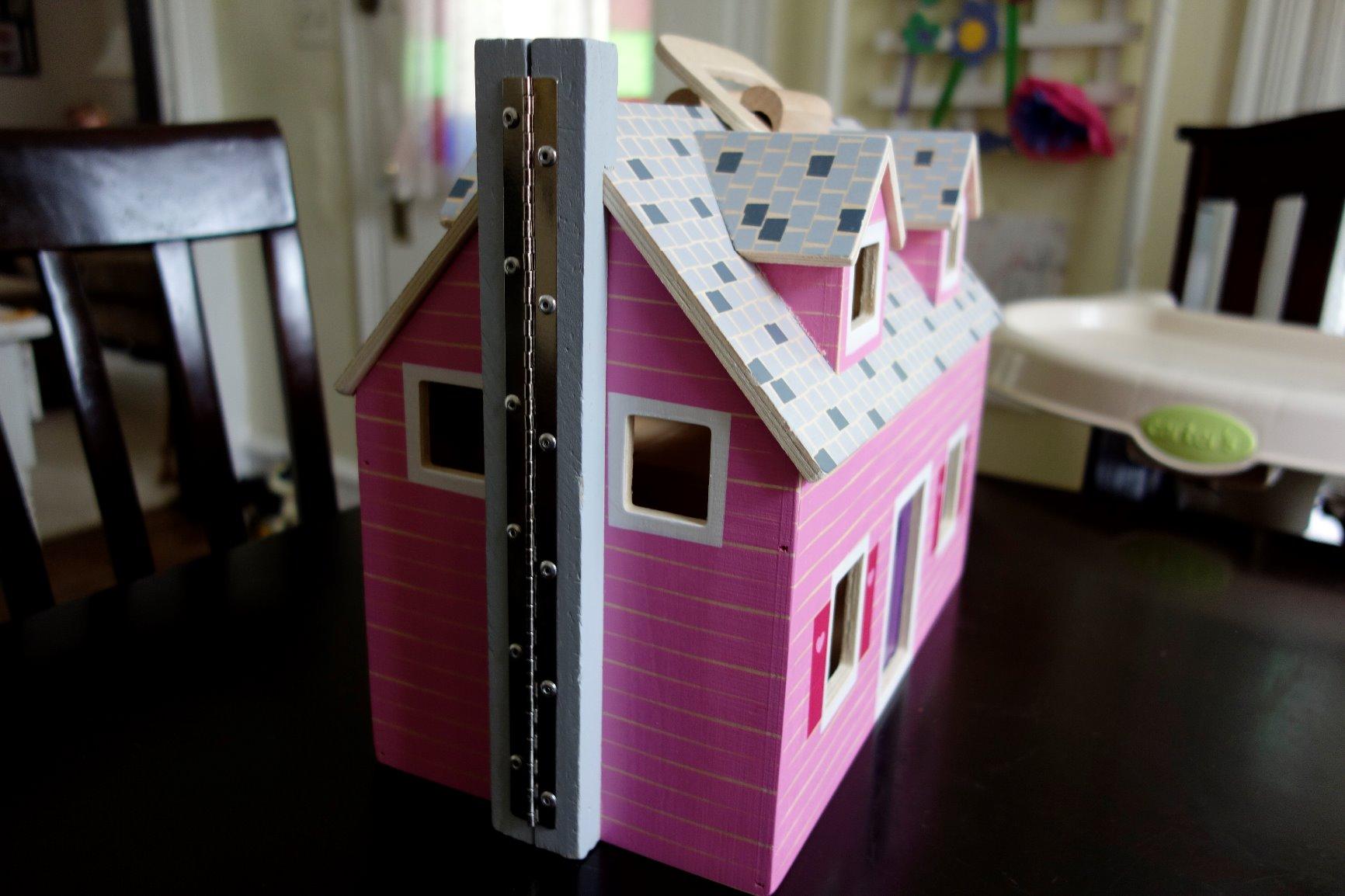
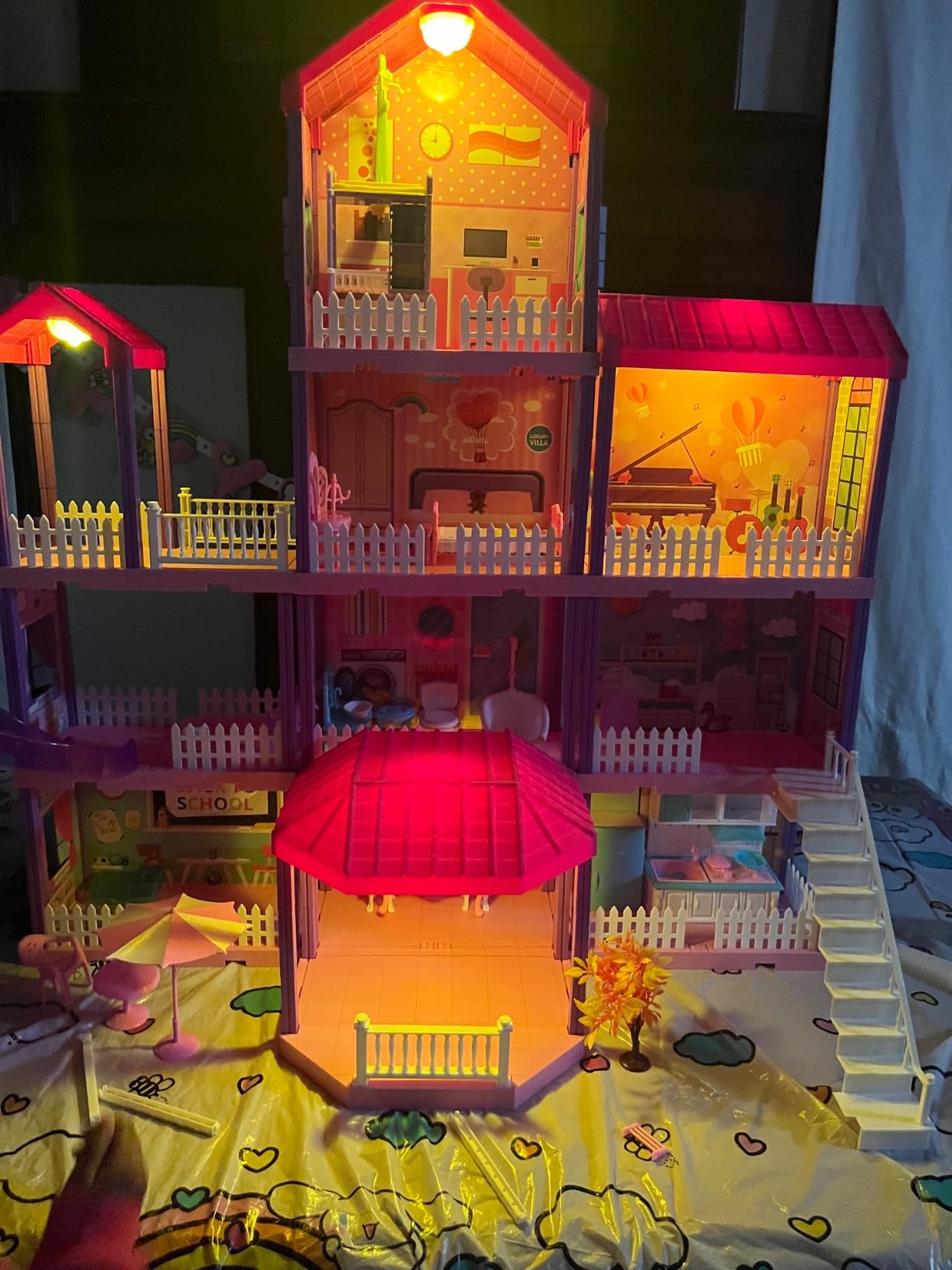
For a deeper dive, our list of the best pretend play toys covers standout options, and if your child loves miniature worlds, the best dollhouses roundup is worth a look.
Simple Beats Scripted
The most powerful pretend-play props tend to be the least specific. A plain fabric square can be a cape, a blanket for a doll, a river, or a picnic cloth. A fully branded costume, by contrast, tends to suggest one character. Both have a place, but plain, flexible items give the imagination more to do. If you are shopping for a child at a particular stage, the gift ideas for a 5-year-old girl guide includes several pretend-play favorites.
✅ Pros
- Builds language and social skills
- Helps children process feelings
- Great for group and sibling play
❌ Cons
- Play kitchens and playsets take up space
- Lots of small accessories to keep track of
Costumes, kitchens, puppets, and more for endless stories.
Open-Ended and Loose Parts Toys
If building toys and art supplies are the headliners, loose parts are the secret weapon. Loose parts are collections of movable, non-prescriptive materials that children can combine, sort, carry, and transform. The term comes from early-childhood education, where teachers noticed that children engage more inventively when the environment includes materials with no fixed purpose.
What Counts as Loose Parts?
- Wooden discs, rings, and rainbow stackers
- Fabric scarves and felt pieces
- Cardboard boxes, tubes, and offcuts
- Natural items such as pinecones, smooth stones, and shells (with adult supervision)
- Buttons, lids, and large beads (for children past the mouthing stage)
The Power of the Cardboard Box
The famous cardboard box is not just a cliche. A large box can be a spaceship, a puppet theater, a race car, or a hideout, and because a child can decorate, cut, and rebuild it, the box becomes truly theirs. Free, recyclable, and endlessly adaptable, it may be the best creative “toy” there is.
Montessori and Waldorf Connections
Both Montessori and Waldorf approaches favor simple, natural, open-ended materials. If that style appeals to you, you may want to read about the best age to introduce Montessori toys. Many of those toys, like wooden rainbows and simple blocks, are creative toys by any definition.
Getting Started with Loose Parts
You do not need a special kit. Start with a basket of five or six different materials, such as fabric squares, wooden blocks, cardboard tubes, and a handful of smooth stones, and let your child explore. Notice what they gravitate toward and add gradually. Sort materials by texture or color in shallow trays to make the collection look inviting, and avoid over-explaining. Say something like “I wonder what you could make with these,” and then step back.
Younger siblings and mixed-age groups do especially well with loose parts, since each child can use them at their own level. A toddler might simply carry and stack, while an older child builds an elaborate village around the same materials. Always supervise, remove anything that is a choking risk for the youngest child, and check natural items for cleanliness before they come indoors.
Wooden rainbows, loose parts sets, and play silks.
Music, Movement, and Sensory Creative Toys
Creativity is not only visual. Sound, rhythm, touch, and movement are all forms of self-expression, and toys that support them are just as valuable as blocks and crayons.
Music and Movement
Simple instruments such as shakers, drums, xylophones, and rhythm sticks let children explore sound and pattern freely. The key is choosing real, simple instruments over toys that play pre-recorded songs at the press of a button. When a child creates the rhythm, they are composing, even if it sounds like joyful noise. Dance scarves, ribbons, and a bit of open floor add movement to the mix.
Sensory and Messy Play
Play dough, kinetic sand, water play, and sensory bins invite children to explore textures and experiment with cause and effect. Pouring, scooping, and molding are all forms of creative experimentation. Outdoor sensory play can be especially fun, and the best water table toys for the backyard guide shows how to bring that indoors-and-out fun to your yard.
Sensory-friendly creative play can also be a wonderful fit for children who need extra calming input. Our sensory toy gift guide outlines thoughtful choices for autistic children and their families.
Mess-management tip: Lay down a washable mat or old sheet, keep wipes nearby, and set a simple “stay on the mat” rule. Messy play is much easier to say yes to when cleanup is easy.
Kid-friendly instruments and sensory play sets.
Creative Toys by Age Group
The best creative toy is one that matches a child’s stage. A toy that is too advanced frustrates; one that is too simple gets ignored. Use the table as a general guide, remembering that every child develops at their own pace and that safety labels always come first.
| Age | What They Are Ready For | Good Creative Toy Ideas |
|---|---|---|
| 1 to 2 years | Exploring textures, banging, stacking, scribbling | Large soft blocks, stacking cups, chunky crayons, simple shakers, board books |
| 2 to 3 years | Early pretend play, simple building, finger painting | Wooden blocks, play dough, dress-up hats, toy kitchens, washable paint |
| 3 to 5 years | Elaborate stories, drawing shapes, cooperative play | Magnetic tiles, puppets, dollhouses, craft supplies, costume boxes |
| 6 to 8 years | Planning projects, following and bending instructions | Interlocking bricks, sewing or bead kits, clay sculpting, simple electronics kits |
| 9 to 12 years | Complex builds, design thinking, hobbies | Advanced construction sets, drawing supplies, model kits, coding or maker kits |
Toddlers and Preschoolers
For the youngest children, the goal is sensory exploration and cause and effect. Big, safe, simple items shine here. If your toddler’s budget is tight, our list of toys under $20 proves creative play does not have to be expensive. Preschoolers, meanwhile, are ready for more structure, and a guide like educational toys for a 3-year-old boy can help you find toys that mix learning with imagination.
School-Age Kids
Older children crave challenge and ownership. They want to make something impressive and finish it properly. Construction sets, art portfolios, and maker kits suit this age. Parents often worry that kids will outgrow toys, and it is a fair question: see what age kids stop playing with toys for a reassuring look at how play evolves rather than disappears.
Find age-appropriate creative toys for every stage.
How to Choose the Right Creative Toys
With so many options, a few simple filters make shopping much easier. Ask yourself the questions below before you buy.
Five Questions to Ask Before You Buy
- How many ways can it be used? The more, the better. If you can think of only one, it is probably not very open-ended.
- Who does the work: the toy or the child? Favor toys that need the child’s ideas to come alive.
- Will it still be interesting in a year? Toys that scale in difficulty have the longest life.
- Is it safe and well-made? Check age labels, materials, and small parts.
- Does it fit your space and lifestyle? A giant playset is no bargain if it has nowhere to live.
Following Your Child’s Interests
The most reliable guide is the child. A dinosaur-obsessed kid may love modeling clay for building fossils, while an animal lover may thrive with puppets. Build on what already excites them, and they will engage far more deeply than with a toy chosen only because it is “educational.” Siblings can add complexity: for shared play, see our guide to toys for siblings.
Creative vs. Structured Toys: Do You Need Both?
| Feature | Creative (Open-Ended) Toys | Structured Toys |
|---|---|---|
| Outcome | Decided by the child | Predetermined |
| Best for | Imagination, flexible thinking | Specific skills, rules, and goals |
| Lifespan | Often years | Depends on the challenge level |
| Parent involvement | Low to optional | Sometimes needed to explain |
| Examples | Blocks, clay, costumes | Board games, shape sorters |
In short, a healthy toy collection is not all one or the other. Structured toys teach rules and specific skills, while creative toys teach kids to invent their own. If you are building a well-rounded collection, our overall best toys list is a good place to start.
Popular, well-reviewed creative starter sets are a safe bet.
Making the Most of Creative Toys at Home
Buying the right toys is only half the job. How you set them up, store them, and talk about them makes a big difference in how much they get used.
Create an Inviting Play Space
A low shelf with a few toys visible and reachable invites children to start playing on their own. Display fewer items with space around them rather than piling everything into one deep bin. A small table for art, a rug for building, and a corner for dress-up can turn any room into a creative zone. If space is tight, see our tips on organizing toy storage in small spaces.
Rotate to Keep Things Fresh
Toy rotation means keeping only part of the collection out and swapping items every couple of weeks. It reduces clutter and makes old toys feel new again. Learn how to do it in our guide on how often to rotate kids’ toys. It also helps with a common complaint: kids who lose interest quickly. Our explainer on why kids get bored of toys so fast goes into the reasons and solutions.
Play Alongside, Then Step Back
Sit with your child for a few minutes, follow their lead, and ask open questions like “What happens next?” Then let them take over. Too much adult direction can turn creative play into a performance for the grown-up. The goal is to be a curious audience, not the director.
Introduce STEM Ideas Naturally
Creative toys are a lovely gateway to science and engineering. A block tower becomes a lesson in stability; mixing paints becomes color theory. If you want to encourage that thinking early, see how to introduce STEM toys to preschoolers without turning play into homework.
Keep Toys Clean
Creative play is hands-on, and that means germs and grime. Regular cleaning keeps toys safe and long-lasting. Here is a simple approach to cleaning plastic toys safely, and wooden and fabric items usually need gentler methods, so always check manufacturer guidelines.
Toy bins, shelves, and craft caddies keep creativity tidy.
Safety, Budget, and Common Mistakes
Safety First
Creative toys often involve small parts, art materials, and messy substances, so safety deserves attention. Look for age grading on packaging and follow it. Keep small pieces such as beads, buttons, and small bricks away from children who still put things in their mouths, and choose non-toxic, washable art supplies. Supervise activities involving scissors, glue, and water, and check toys regularly for cracks or loose parts. When in doubt, check current recalls and safety guidance from your country’s consumer product safety agency.
Smart Budgeting
You do not need to spend much. The most valuable creative toys, like blocks, paper, crayons, and boxes, are often the cheapest. A good rule is to invest in one or two high-quality, long-lasting sets (such as quality blocks) and fill in the rest with inexpensive supplies. Thrift stores, hand-me-downs, and household recyclables can supply plenty.
Common Mistakes to Avoid
❌ Mistakes
- Buying too many toys at once
- Choosing toys that do all the work
- Correcting or “fixing” a child’s creations
- Ignoring the child’s own interests
- Skipping storage planning
✅ Better Habits
- Start small and add slowly
- Pick flexible, open-ended items
- Praise effort and ideas
- Follow what excites your child
- Give each toy a home
Finally, remember that creative play does not always have to be at home. On the go, portable options keep imaginations busy: browse these ideas for car rides and long trips if you often travel with kids.
Explore kid-safe art supplies and durable toys.
Frequently Asked Questions About Creative Toys
What are creative toys in simple terms?
Creative toys are toys that let children decide how to play. They have no single correct use, so kids supply their own ideas, stories, and designs. Blocks, clay, crayons, dress-up clothes, and cardboard boxes are common examples.
What are examples of creative toys?
Popular examples include wooden and magnetic building blocks, interlocking bricks, play dough, paints and crayons, costumes, puppets, dollhouses, simple musical instruments, and loose parts like scarves and wooden discs. Even a large cardboard box qualifies.
Why are creative toys important for child development?
They support problem-solving, language, fine motor skills, emotional expression, and independent focus. Because children make their own choices during play, they practice flexible thinking and build confidence in their own ideas.
What is the difference between creative toys and educational toys?
Educational toys are usually built around a specific skill, such as counting or letter recognition. Creative toys are open-ended and focus on imagination and self-expression. The two often overlap, and many of the best toys do both.
Are creative toys the same as STEM toys?
Not exactly, but they overlap. Many STEM toys, like building sets and engineering kits, are creative because children design their own solutions. Not every creative toy is STEM-focused, though, and not every STEM toy is open-ended.
At what age can children start using creative toys?
Babies can start with simple, safe items like soft blocks, rattles, and textured toys. From around age one, toddlers can explore chunky crayons and stacking toys, and creative play continues to evolve through the school years and beyond.
Do creative toys have to be expensive?
No. Some of the best creative materials, such as paper, crayons, cardboard boxes, and homemade dough, cost very little. A few quality items like a good set of blocks can be worth the investment, but most creative play needs simple materials.
How many creative toys does a child really need?
Fewer than most people think. A small, well-chosen collection covering building, art, and pretend play is usually enough. Rotating toys in and out of use keeps the collection feeling fresh without buying more.
Are electronic toys ever creative?
Some can be. Toys that let children program, compose, or design their own outcomes can support creativity. Toys that simply play sounds or scripts on a button press generally do not, since the toy is doing most of the work.
How can I encourage my child to play more creatively?
Offer open-ended materials, set up an inviting play space, limit screen time, and give children unhurried time to play. Ask open questions, follow their lead, and praise effort and ideas rather than perfection.
Are creative toys good for kids who get bored easily?
Yes, often. Open-ended toys change as the child’s ideas change, so they rarely feel “finished.” Rotating them and adding a few new loose parts can renew interest quickly.
What are the safest creative toys for toddlers?
Look for large, non-toxic, age-labeled items with no small removable parts, such as big soft blocks, chunky crayons, and fabric scarves. Always supervise, and check toys regularly for wear or damage.
Conclusion: Give Imagination Something to Work With
So, what are creative toys? They are the blocks, paints, costumes, cardboard boxes, and loose parts that hand the creative controls to the child. They do not tell kids what to do; they invite them to decide. That simple difference is why they help build problem-solving, language, motor skills, and confidence, and why children keep coming back to them long after the flashier gadgets have been forgotten.
You do not need a room full of toys to get started. Choose a few flexible, age-appropriate items across building, art, and pretend play, give your child time and space to explore, and resist the urge to direct the show. Rotate what is out, keep things clean and safe, and follow your child’s interests. The results are often surprising, and always delightful to watch.
Ready to build your child’s creative toolkit? Start with one or two open-ended favorites and watch what happens.
Explore top-rated open-ended toys, art sets, and building kits.