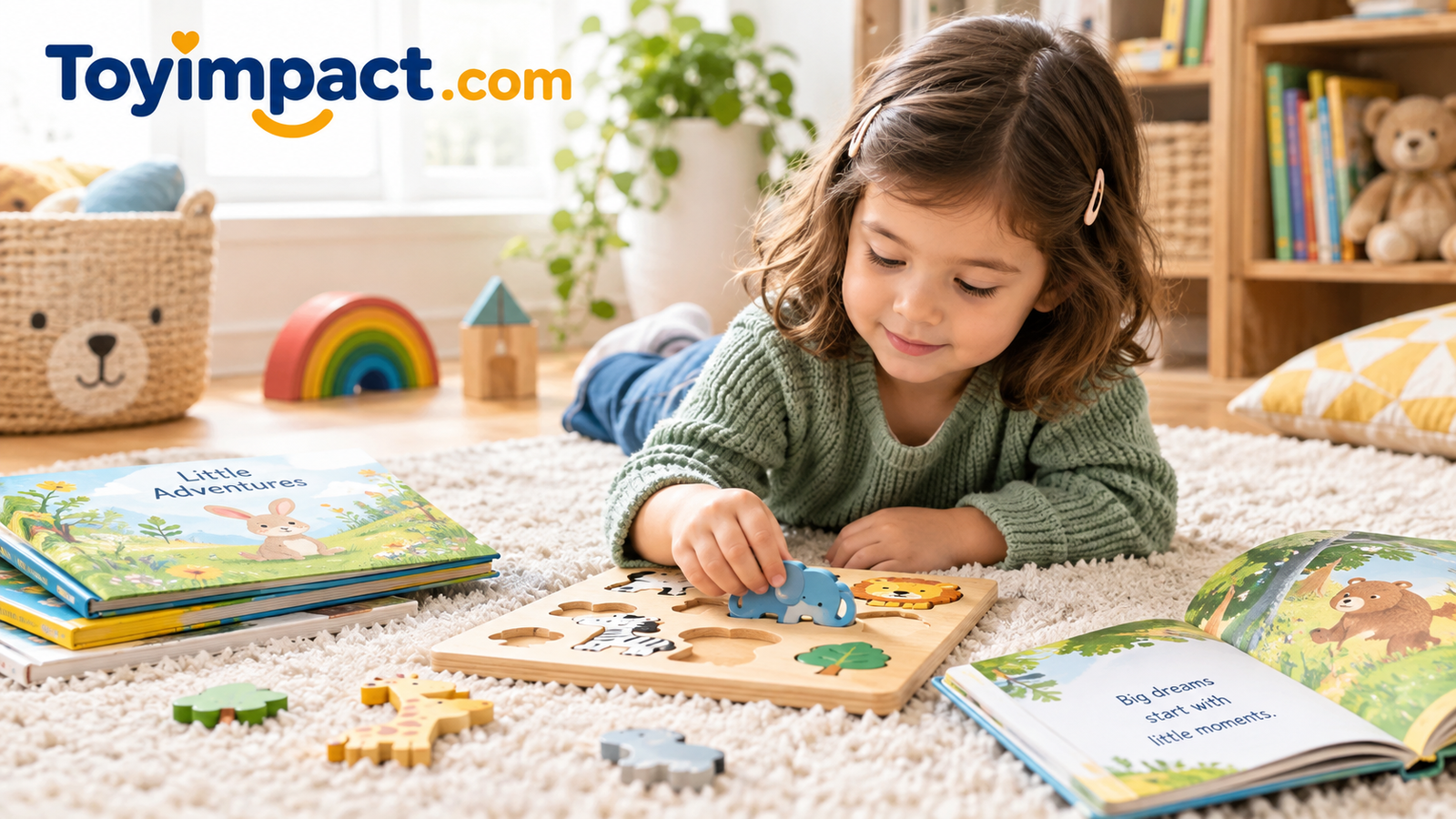
What Are Quiet Time Toys? A Parent’s Complete Guide to Calm, Independent Play
Quiet time toys give children something absorbing to do on their own, without screens, noise, or constant help. Here is what they are, why they work, and how to choose and use them well.
Quick answer: Quiet time toys are calm, low-noise, screen-free toys that hold a child’s attention during independent play. Think busy books, puzzles, lacing beads, building blocks, drawing kits, and sensory bins. They help children learn to settle, focus, and entertain themselves.
Every parent knows the moment. You need twenty minutes to cook dinner, take a work call, or simply sit down with a hot cup of tea, and your child has run out of ideas. Quiet time toys are the answer many families land on, and once you understand what they are, you can build a routine that gives everyone a little breathing room.
What Are Quiet Time Toys?
Quiet time toys are playthings designed, or simply well suited, for calm and focused play. They do not rely on flashing lights, loud sound effects, or batteries to hold attention. Instead, the child does the work: fitting a puzzle piece into place, threading a bead onto a string, peeling a sticker off a page, or arranging small figures into a scene of their own invention.
The phrase comes from the daily rhythm many households follow. Quiet time is a set period, often after lunch or in the late afternoon, when children play alone in a calm way. For toddlers who have dropped their nap, it is often a replacement for sleep. For older children, it is a chance to wind down, recharge, and enjoy their own company. The toys that fill that period are what parents mean when they say “quiet time toys.”
A category defined by how a toy is used
There is no official list of quiet time toys. A set of wooden blocks is a loud, crashing toy when a child knocks a tower over again and again, yet it becomes a quiet toy when the child carefully builds a bridge for a toy car. What matters is whether the toy invites steady, self-directed attention.
Most quiet time toys share a few traits:
- Open-ended or self-correcting. The child can work through them without an adult explaining every step.
- Low noise. Fewer clatters, beeps, and songs means a calmer room.
- Hands-on. Touching, sorting, stacking, drawing, and threading keep small hands busy.
- Contained. The play fits on a lap tray, mat, or small table, which keeps the mess manageable.
- Repeatable. A good quiet toy can be returned to many times, often in slightly different ways.
What quiet time toys are not
They are not a punishment or a “time-out” corner, and they are not a way to park a child in front of something passive. They are also not necessarily silent. A child humming to herself while she sorts colored bears is playing quietly, and that is exactly the goal. The aim is calm, not complete stillness.
If you are curious how quiet play fits into the bigger picture of childhood, our piece on what age kids stop playing with toys shows how play changes shape as children grow, rather than simply ending.
Browse popular quiet time toysSee what other parents are choosing on Amazon.
Shop Quiet Time ToysWhy Quiet Play Matters for Children
Calm, independent play can look unproductive from the outside. A child sitting with a puzzle for fifteen minutes is not producing anything you can hang on the fridge. Yet a great deal is happening beneath the surface, and educators have long recognized the value of unhurried, self-directed play.
Attention and focus
Sustained attention is a skill, and like most skills it grows with practice. Every time a child stays with a task, such as finishing a lacing card or completing a floor puzzle, she stretches her ability to concentrate a little further. Quiet time toys give children low-pressure chances to do exactly that, without a screen doing the attention-holding for them.
Self-regulation
Children who are given regular quiet periods learn what it feels like to settle their own bodies. They notice when they are getting frustrated with a stubborn piece, take a breath, and try again. That small loop of frustration, pause, and retry is the seed of emotional regulation, and it is hard to teach through words alone.
Independence and confidence
When a child solves a problem without help, something important clicks: I can do this myself. Independent play builds confidence in a way that praise from an adult cannot fully replicate. It also gives children ownership over their own time and ideas.
Fine motor and thinking skills
Most quiet time toys are hands-on. Pinching, threading, buttoning, and placing small pieces strengthen the muscles and coordination children need later for writing, dressing, and using tools. If that is a priority in your home, take a look at our guide to motor skill toys for more ideas.
A break for parents, too
Let’s be honest: quiet time is good for adults as well. A predictable window of calm helps parents reset, finish tasks, and return to their children with more patience. That is not selfish. It is part of running a sustainable household.
Start with a few hands-on favoritesSimple, screen-free options for independent play.
Find Independent Play ToysQuiet Time vs. Screen Time vs. Free Play
Parents often lump every type of solo activity together, but these three modes of play feel and work very differently. Understanding the differences helps you decide when quiet time toys are the right tool.
| Feature | Quiet time play | Screen time | Active free play |
|---|---|---|---|
| Energy level | Calm and settled | Passive, often overstimulating | High and physical |
| Who drives the activity | The child | The device | The child |
| Skills practiced | Focus, fine motor, problem solving | Varies; often limited hands-on skills | Gross motor, social skills |
| Mess and noise | Low | Low | Often high |
| Adult involvement | Minimal after setup | Minimal | Sometimes needed |
| Wind-down effect | Usually calming | Can make settling harder | Energizing |
None of these modes is “bad.” A healthy day includes some of each. The point of quiet time toys is that they give you a screen-free option that still keeps a child engaged, so the quiet period does not automatically become screen time by default.
If your child seems to lose interest in toys quickly, that is worth understanding before you buy more. Our article on why kids get bored of toys so fast explains common causes and what to do about them.
Swap a screen for something hands-onPuzzles, lacing sets, and activity books for calm moments.
Shop Hands-On ActivitiesWhat Makes a Toy Work for Quiet Time?
Not every toy earns a place in the quiet time basket. A talking robot or a toy drum kit might be wonderful in the living room at four in the afternoon, but they will not help anyone relax. Here are the qualities worth looking for.
It holds attention without doing the work
The best quiet toys are “active” for the child and “passive” for the toy. The toy provides a challenge or a canvas, and the child provides the effort. A jigsaw puzzle is a perfect example. It sits there patiently until a small person decides what to do with it.
It is age-appropriate, and slightly stretching
Too easy and a child is done in thirty seconds. Too hard and frustration takes over. Aim for toys a child can mostly do alone, with a little challenge to keep it interesting. As a rule of thumb, if your child needs your help every few minutes, the toy is likely one level too advanced for independent play.
It has many ways to play
Open-ended toys such as blocks, magnetic tiles, and loose parts last far longer than single-purpose ones. A child can build, sort, count, and pretend with the same set, which keeps it fresh across months rather than days.
It is easy to set up and clean up
If starting an activity takes ten minutes of your time, it defeats the purpose. Look for toys that live in a single container, have limited pieces, and can be packed away in a minute or two.
It is durable and safe
Quiet time often means you are in another room, so safety matters even more. Choose toys with no small parts for children under three, avoid loose cords for unsupervised play, and check that materials are sturdy enough to survive enthusiastic use. Natural materials are popular here, and our overview of the best wooden toys is a good place to start if you like that look and feel.
Signs a toy suits quiet time
- Little or no sound
- Child can start without help
- Contained pieces and small footprint
- Open-ended or self-correcting
- Works for repeated play
Signs a toy is a poor fit
- Loud, flashing, or battery-driven
- Requires an adult to run the game
- Hundreds of tiny loose pieces
- Single use, quickly boring
- Messy setup that needs supervision
Open-ended toys that lastBlocks, tiles, and loose-parts sets for repeat play.
Shop Open-Ended ToysMain Types of Quiet Time Toys
Quiet time toys fall into a handful of broad families. Most children have a favorite or two, but offering a mix helps you discover what keeps your child absorbed.
Busy books and activity boards
Felt books, sticker scenes, and activity boards pack many small tasks into one portable object. Children can zip, snap, button, match, and peel. Because the tasks are varied, a single busy book can carry a child through a whole quiet period.
Puzzles and matching games
From chunky knob puzzles for toddlers to jigsaws for school-age children, puzzles are the classic quiet toy. They are self-correcting, meaning the pieces only fit one way, so children get instant feedback without needing an adult to tell them they are right. Explore more in our guide to the best puzzle toys.
Building and construction sets
Blocks, magnetic tiles, and interlocking bricks let children invent their own structures. They encourage spatial thinking and patience, and they are wonderfully open-ended. If you want a science-flavored spin, see how STEM toys combine building with early engineering ideas.
Stacking and sorting toys
Nesting cups, rings, and sorting shapes are perfect for the youngest children. They teach size, order, and cause and effect. Curious about these? Read our explainer on what stacking toys are and how they support development.
Art and craft supplies
Crayons, watercolor pads, modeling dough, and reusable sticker sets are quiet by nature. They offer a creative outlet and are easy to keep in a small caddy for grab-and-go use.
Sensory and fidget-style toys
Sensory bins, textured balls, and squishy items give hands something soothing to do. We cover these in more detail below.
Books and picture cards
A stack of picture books is arguably the original quiet time toy. Even pre-readers enjoy flipping pages, spotting familiar objects, and telling themselves the story.
| Toy type | Best for | Noise level | Mess level |
|---|---|---|---|
| Busy books | Toddlers to early school age | Very low | Very low |
| Puzzles | All ages, sized to ability | Very low | Low |
| Building sets | Toddlers and up | Low to moderate | Low |
| Stacking and sorting | Babies and toddlers | Low | Low |
| Art supplies | Preschool and up | Very low | Moderate |
| Sensory bins | Toddlers and up | Very low | Moderate to high |
| Picture books | All ages | Very low | Very low |
Try a busy book or puzzle setTwo of the easiest ways to start quiet time.
Shop Busy BooksChoosing Quiet Time Toys by Age
What works for a two-year-old will bore a seven-year-old, and what works for a seven-year-old could be unsafe for a toddler. Matching toys to a child’s stage keeps quiet time realistic.
Babies and young toddlers (under two)
At this age, quiet play is short and closely supervised, often just five to ten minutes at a time. Look for soft books, nesting cups, textured balls, and simple stacking rings. Everything should be large enough to be safe if it goes into a mouth.
Toddlers (two to three)
Toddlers are ready for chunky puzzles, large lacing beads, shape sorters, and first stickers. Attention spans grow, but they still need toys they can finish quickly. If you are shopping on a tight budget, our list of the best toys under $20 for toddlers has affordable ideas that work well for calm play.
Preschoolers (three to five)
Now the options widen. Jigsaws with more pieces, magnetic building sets, simple matching games, drawing kits, and pretend play sets all work. This is also a great age to introduce hands-on learning; for a starting point, see our tips on introducing STEM toys to preschoolers and our picks of educational toys for three-year-olds.
Early school age (six and up)
Older children enjoy detailed puzzles, craft kits, chapter books, model building, and logic games. Quiet time may shrink from a required nap replacement to a chosen wind-down period, and children often appreciate having a say in what goes into their basket.
| Age | Typical quiet play length | Good options |
|---|---|---|
| Under 2 | 5–10 minutes | Soft books, nesting cups, textured balls |
| 2–3 years | 10–20 minutes | Chunky puzzles, lacing beads, sorting toys |
| 3–5 years | 20–40 minutes | Jigsaws, magnetic tiles, drawing kits, pretend play |
| 6+ years | 30–60 minutes | Craft kits, logic games, chapter books, models |
These ranges are only rough guides. Every child is different, and a busy day, a growth spurt, or a new sibling can shorten attention overnight. If your child prefers structured, hands-on learning, you may also like our article on the best age to introduce Montessori toys.
Find toys sized for your child’s ageFilter by age range to keep play safe and satisfying.
Shop by AgeSensory and Calming Toys for Quiet Time
Some children settle best when their hands have something soothing to touch. Sensory toys offer texture, resistance, and gentle movement, and they can be especially helpful during the tricky stretch between high energy and rest.
What sensory quiet toys look like
- Sensory bins filled with rice, kinetic sand, or water beads, with scoops and small containers.
- Squishy and textured toys that feel pleasant to squeeze and roll.
- Fidget-style tools such as pop-it boards and bead mazes.
- Sensory bottles with slowly falling glitter or beads that children can watch.
- Weighted lap toys that provide a calming, grounded feeling.
When sensory toys really help
Many children who are sensitive to noise, touch, or busy environments find that predictable sensory play helps them regulate. Families of children with sensory processing differences or autism often lean on these toys, and our sensory toys gift guide looks closely at options that suit a range of preferences. Every child’s needs are unique, so it is worth observing what your own child finds soothing rather than assuming.
A word on mess
Sensory bins can be gloriously messy. Set them on a large tray, an old bed sheet, or a low-sided plastic tub, and keep a small brush and dustpan nearby. A bin that is easy to contain is far more likely to become a regular part of quiet time. Outdoors, a shady corner and a shallow tub can turn into a calm water play station, and our guide to water table toys for the backyard may spark ideas for warm-weather quiet play.
Supervision note: Small sensory fillers such as beads, dried beans, and water beads can be a choking hazard for young children. Choose fillers that match your child’s age, and stay within earshot for unsupervised play.
Calming sensory picksSensory bins, tactile toys, and fidget-friendly favorites.
Shop Sensory ToysPuzzles, Building Sets, and Motor Skill Play
If sensory toys are the soothing side of quiet time, puzzles and building sets are the thinking side. They ask a child to plan, test, adjust, and try again, and they do it in near silence.
Why puzzles are quiet time superstars
A puzzle has a clear goal and built-in feedback. The child does not need an adult to say whether a piece is right, because it either fits or it does not. That autonomy is exactly what makes puzzles so good for independent play. Start with a number of pieces your child can finish with a little effort, then step up gradually. A puzzle mat or tray helps keep pieces together and makes cleanup faster.
Building sets and open-ended construction
Magnetic tiles, wooden blocks, and interlocking bricks reward patience. Children experiment with balance, symmetry, and structure, often narrating their designs aloud in a low voice. Because there is no single correct outcome, these sets grow with the child. A four-year-old builds a simple tower, while a seven-year-old builds a bridge with supports.
Families interested in science-flavored building can explore our roundup of the best STEM toys for ideas that blend construction with early problem solving.
Lacing, threading, and fine motor toys
Threading beads, lacing cards, and pegboards build the small hand muscles that support later writing. These toys are gentle, satisfying, and easy to pack into a small pouch. They also make excellent travel companions, which brings us to a useful side benefit: many quiet toys move easily from home to car to airplane. If you are planning a journey, see our picks for the best toys for car rides and the best travel toys for airplanes.
Pros of puzzles and building toys
- Quiet and self-correcting
- Build focus and spatial thinking
- Long-lasting and often resellable
- Easy to scale up in difficulty
Things to watch for
- Small pieces can get lost
- Frustration if too advanced
- Sets need a dedicated play space
- Younger siblings may grab pieces
Puzzles and building sets to exploreAge-graded options for calm, focused play.
Shop Puzzles & BuildersCreative and Pretend Play in Quiet Moments
Quiet does not have to mean quiet-minded. Some of the richest quiet time play happens entirely in a child’s imagination, with a few simple props.
Small-world and pretend play
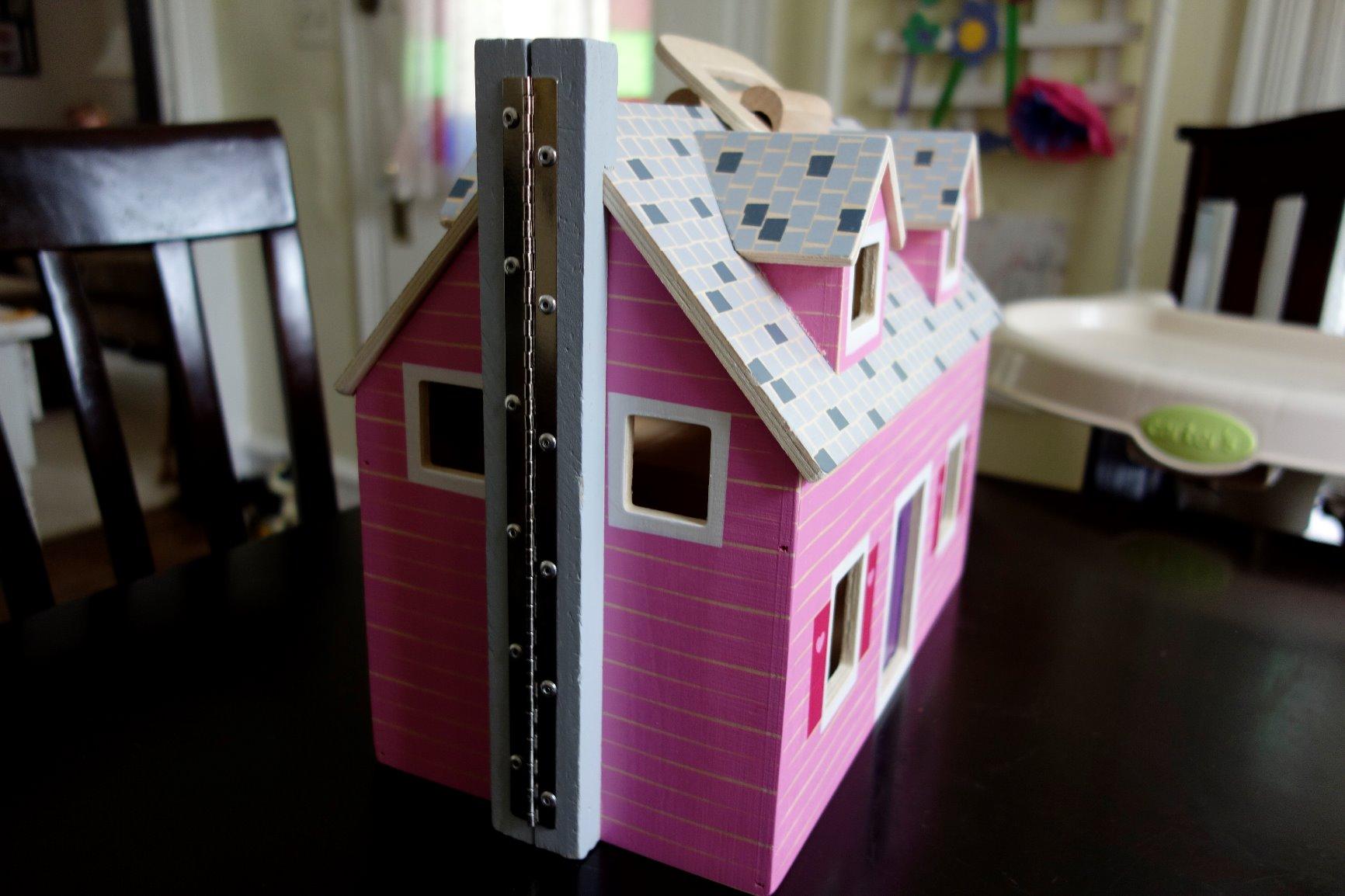
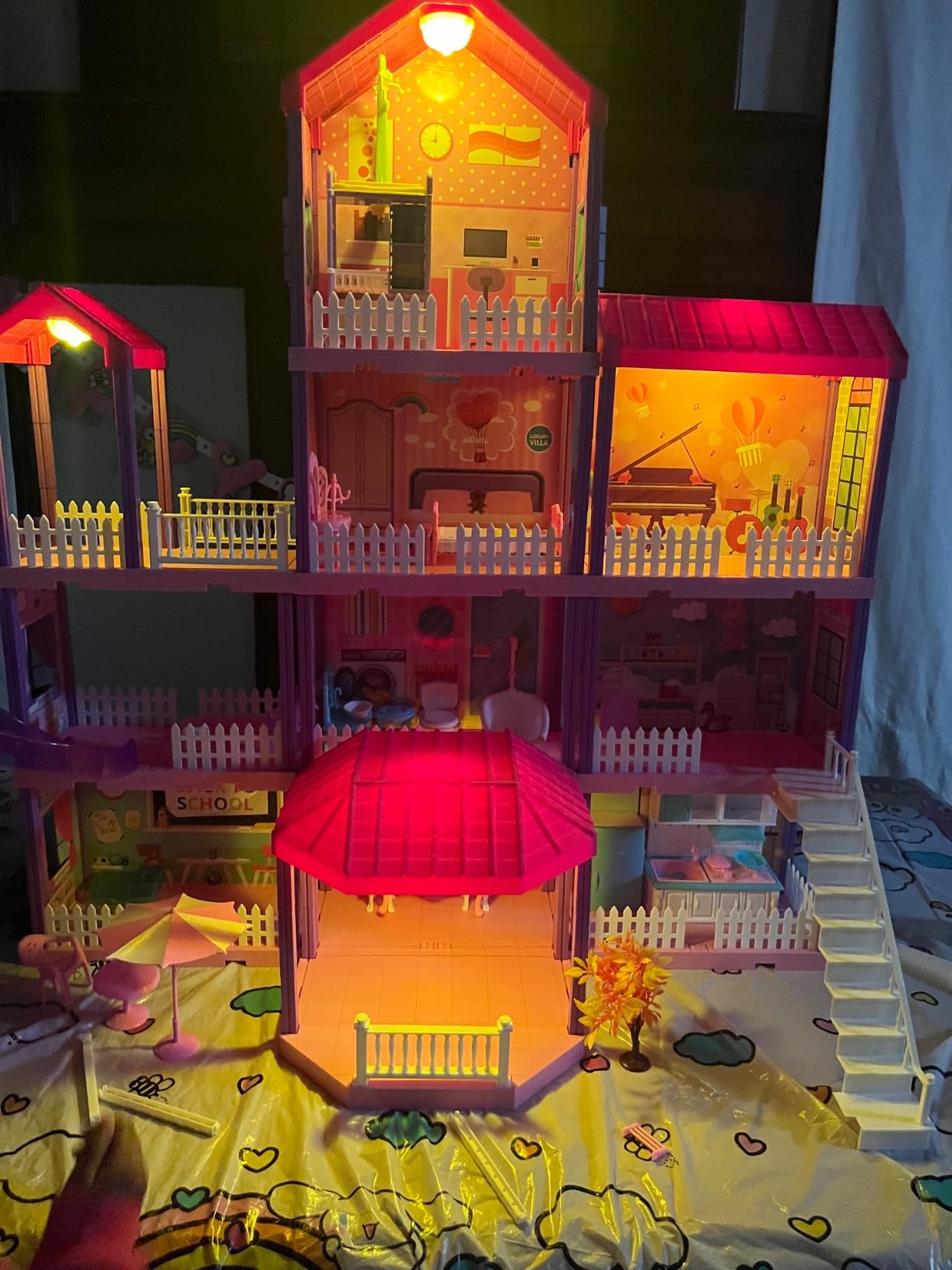
Animal figures, a play kitchen set, a doll and a blanket, or a small farm can keep a child busy for a surprising length of time. Children narrate, invent problems, and solve them, practicing language and empathy as they go. For ideas, our guide to the best pretend play toys covers a range of options, and children who love miniature homes may enjoy our overview of the best dollhouses.
Drawing, coloring, and making
A caddy of crayons, washable markers, blank paper, and a roll of stickers is one of the most flexible quiet time kits you can build. Add modeling dough or a reusable sticker scene and you have a station that changes with your child’s mood. Keep materials at child height so setup is entirely in your child’s hands.
Books, audio, and story play
A small pile of favorite picture books, or an audiobook on low volume, can round out a quiet time routine. These options are especially useful on days when hands need to rest, and they build language without a screen.
Choosing between creative options
If you are unsure where to begin, pick one activity from each of three categories: something to build, something to make, and something to imagine with. That variety usually gives children enough to choose from without overwhelming them.
Creative kits for calm playDrawing sets, dough, and pretend play props.
Shop Creative PlayBuilding a Quiet Time Routine That Works
The toys are only half the story. A predictable routine helps children understand what quiet time is, when it happens, and what is expected. Here is a simple approach many families find helpful.
1. Pick a consistent time and length
Choose a window that suits your household, such as after lunch or before dinner. Begin with a short period, perhaps fifteen minutes, and add time as your child gets comfortable. Children thrive on predictability, so keep the timing roughly the same each day.
2. Set up the space before you start
A cozy corner with a rug, a few cushions, a low table, and good light makes quiet time inviting. Place the chosen activities within easy reach. The goal is a spot your child wants to be in, not a place they are sent.
3. Offer a small choice
Let your child pick two or three activities from a basket. Choice builds buy-in, and it takes only a few seconds. Avoid an overflowing basket, since too many options can lead to flitting from one thing to the next.
4. Use a visual timer
A sand timer or a simple visual clock helps children see how long is left. It replaces “how much longer?” with a clear cue, and it makes the ending feel fair rather than sudden.
5. End with a warm reconnection
When quiet time ends, greet your child with a smile and a hug. Quiet time should feel like a gentle pause, not a separation. Ask what they made or discovered, and let them show you.
Tip for siblings: When more than one child shares quiet time, give each their own basket and a clear space. If you need ideas for calm shared play, our list of the best toys for siblings to play together is a helpful place to start.
Common quiet time mistakes to avoid
Even well-planned quiet time can stumble. The most common problem is starting too long. A child who has never played alone for half an hour will not manage it on day one, so build the habit in small steps and celebrate each success. Another frequent slip is offering too many choices. A crowded basket invites hopping from item to item, which is the opposite of the focus you are after.
Parents also sometimes treat quiet time as a reward or a consequence. When children sense it is a punishment, resistance grows. Present it as a normal, cozy part of the day, like lunch or bath time, and keep your tone matter-of-fact and warm. Finally, resist the urge to hover. If you keep checking in, correcting, or suggesting, children learn that quiet time is really shared time. Stay nearby, stay available, and let your child lead.
Matching quiet time to your child’s temperament
Some children dive into solo play with delight. Others need a slower start. A cautious child may prefer familiar toys and a parent within view, while an energetic child may need a few minutes of movement, such as stretching or a short walk, before settling into a puzzle. A highly creative child might thrive with open-ended art supplies, whereas a methodical child may love sorting and matching.
Watch what your child returns to again and again. Those repeated choices are your best clue to what belongs in the basket. Over time, you will notice patterns, such as a love of building in the morning and a preference for books in the afternoon, and you can shape quiet time around them.
Set up a cozy quiet cornerLow tables, play mats, and organizers for a calm play space.
Shop Quiet Corner GearStorage, Rotation, and Cleaning
A quiet time basket only works if it stays fresh and manageable. That means keeping the collection small, swapping toys in and out, and keeping everything clean.
Rotate rather than accumulate
Instead of offering everything at once, keep most toys in storage and rotate a handful into the quiet time basket every week or two. A toy your child has not seen for a fortnight often feels brand new. We explain the approach in detail in our guide on how often to rotate kids’ toys.
Small-space storage ideas
You do not need a playroom to make this work. A single lidded bin, a shelf with labeled baskets, or a hanging organizer can hold a full quiet time kit. For clever ideas, see our tips on organizing toy storage in small spaces.
Keep toys clean
Toys used during quiet time are handled constantly, and sometimes chewed. Wipe hard surfaces regularly, wash fabric items according to their labels, and check for wear. Our guide to cleaning plastic toys safely walks through gentle methods that keep children safe.
Introduce toys gradually
When a new toy joins the basket, present it without fanfare. A calm introduction sets the tone and keeps quiet time from turning into an event. Save exciting surprises for other times of day.
Organize your quiet time kitBins, baskets, and labeled storage for toys.
Shop Toy StorageSafety, Budget, and Buying Tips
Choosing quiet time toys does not have to be expensive or complicated. A thoughtful handful of items will serve better than a shelf of one-time novelties.
Safety checklist
- Check the age recommendation and small-parts warnings on every toy.
- Avoid button batteries and strong magnets around young children unless the product is clearly designed and labeled for their age.
- Look for smooth edges, non-toxic finishes, and sturdy construction.
- Inspect toys regularly and remove anything cracked or damaged.
- Stay within earshot during independent play, especially with toddlers.
Budget-friendly ideas
Plenty of excellent quiet toys cost little. Used puzzles, library books, homemade sensory bins, cardboard boxes, and a set of crayons all earn their keep. Secondhand shops and toy swaps can stretch a budget considerably, and many of the lists on our best toys roundup include options at a range of prices.
Quality over quantity
A few well-made, open-ended toys will outlast a pile of flashy gadgets. Think about the child you are buying for, what fascinates them, and which toys will still appeal after the novelty fades. If in doubt, choose the toy that asks a child to do something rather than watch something.
Bringing it all together
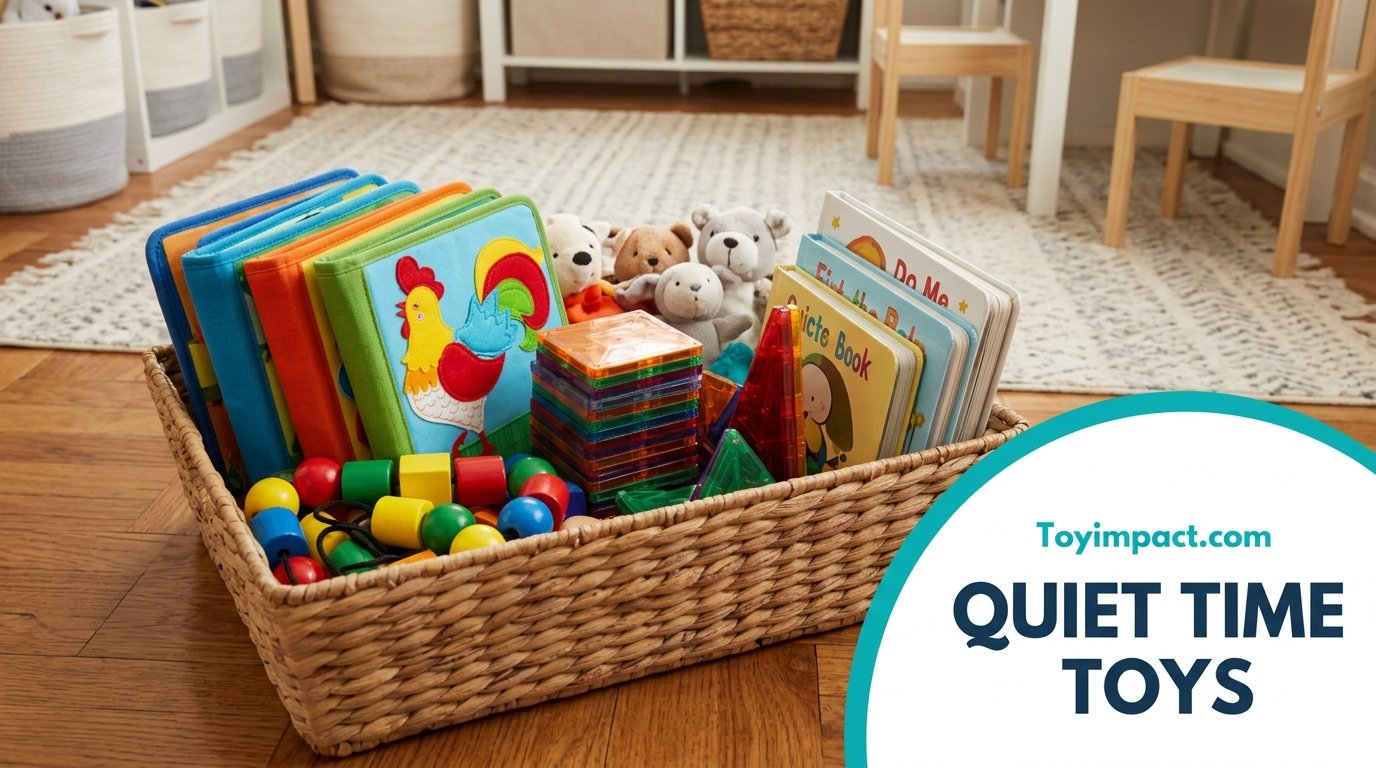
A well-rounded starter kit might include one puzzle, one building set, one creative kit, a few picture books, and a small sensory item. That is enough variety for most families to build a quiet time routine and enough restraint to keep the basket manageable.
Build a starter kitA few well-chosen items are all it takes.
Shop Starter KitsFrequently Asked Questions About Quiet Time Toys
What are quiet time toys?
Quiet time toys are calm, low-noise, mostly screen-free toys that help children play independently. Common examples include puzzles, busy books, lacing beads, building blocks, drawing kits, and sensory bins.
What is quiet time for kids?
Quiet time is a set period of the day when a child plays or rests calmly on their own. It often replaces a nap for toddlers who no longer sleep during the day, and it gives older children a chance to recharge.
How long should quiet time last?
Start with about ten to fifteen minutes for toddlers and extend gradually. Many preschoolers manage twenty to forty minutes, and school-age children may enjoy up to an hour. Follow your child’s cues and build up slowly.
Are quiet time toys good for toddlers?
Yes, as long as they are age-appropriate and safe. Chunky puzzles, stacking cups, large lacing beads, and soft books are all good choices. Toddlers still need to be within earshot, since their safety awareness is limited.
Can quiet time toys replace screen time?
They can offer a hands-on alternative. Many families use quiet time toys to fill periods that might otherwise default to a device. It is not about eliminating screens entirely, but about having a satisfying option that does not depend on one.
How many toys should be in a quiet time basket?
Three to five items is plenty for most children. A small, varied selection prevents overwhelm and keeps each item feeling special. Rotate items regularly to keep interest high.
What if my child refuses to play quietly?
Begin with shorter periods and stay nearby at first. Make the space inviting, let your child choose their activities, and use a visual timer. Consistency matters, and most children adjust over a couple of weeks. If it stays difficult, try different toy types to find what suits their temperament.
Are sensory toys good for quiet time?
Many children find them calming. Sensory bins, textured toys, and fidget-style items can help children settle. Because some fillers are small, match them to your child’s age and supervise accordingly.
Do quiet time toys have to be educational?
No. Enjoyment comes first. That said, most quiet toys naturally build skills such as focus, fine motor control, and problem solving, so learning happens even when the goal is simply to have fun.
Are wooden toys better for quiet time?
Wooden toys are popular because they are sturdy, quiet, and often open-ended, but they are not the only option. Well-made toys in other materials can work just as well. Choose based on safety, durability, and how your child plays.
How do I keep quiet time toys interesting?
Rotate toys every week or two, introduce new items gradually, and follow your child’s evolving interests. Storing most toys out of sight makes the ones in the basket feel fresh.
Can older kids use quiet time toys?
Absolutely. School-age children enjoy craft kits, model building, logic games, detailed puzzles, and books. Quiet time can become a favorite part of the day when children have a say in what goes into their basket.
Conclusion: Small Toys, Big Calm
Quiet time toys are simple in concept and powerful in practice. They give children a chance to focus, settle, and discover what they can do on their own, and they give parents a moment to breathe. You do not need a big budget or a dedicated playroom. A handful of thoughtful toys, a cozy corner, and a predictable routine are usually enough.
Begin small. Choose a puzzle, a building set, a creative kit, and a few books, offer them at the same time each day, and watch how your child responds. Adjust as they grow, rotate the basket often, and keep it warm and low-pressure. Over time, quiet time becomes less of a task and more of a treasured part of the day.
Ready to start your quiet time basket?Explore a range of calm, screen-free toys.
Shop Quiet Time ToysYou May Also Like
As an Amazon Associate, we earn from qualifying purchases. This means we may earn a small commission if you buy through links on this page, at no extra cost to you.