Why Do Kids Get Bored of Toys So Fast?
The real reasons behind toy abandonment — and what you can actually do about it
You spent forty-five minutes picking the perfect toy, watched your child tear it open with genuine delight, and then — three days later — found it buried under the couch, untouched. Sound familiar?
If you have ever stood in a living room knee-deep in abandoned playthings and wondered whether your child is the only one who cannot sustain interest in anything for more than a weekend, the short answer is: no. The slightly longer answer involves dopamine, developmental psychology, and a surprisingly simple fix that most families overlook entirely.
This guide unpacks every major reason children lose interest in toys so quickly — from brain chemistry and normal developmental patterns to the sneaky role of marketing and the unintended consequences of having too many choices. More importantly, it gives you concrete, research-informed strategies to help your child play more deeply and for longer stretches, without buying a single additional toy.
1. Why This Happens to Every Family
Before diving into the science, it helps to normalize something that many parents quietly stress about: almost every child, at every age, goes through cycles of intense interest followed by rapid abandonment of toys. This is not a character flaw, a parenting failure, or a sign that your child is ungrateful. It is a fundamental feature of how the developing brain processes and prioritizes new information.
Think about the last time you downloaded a new app on your phone. For the first few days, you opened it constantly. It felt exciting, useful, maybe even addictive. Then, gradually, the novelty faded. You started skipping it. Within two weeks, it sat on your third home screen gathering digital dust. Adults do this with books, hobbies, restaurants, and even relationships. Children do it with toys — only faster, because their brains are wired to seek novelty with far more urgency than adult brains.
The cycle typically looks like this: a child receives a new toy, engages with it intensely for a short period (sometimes minutes, sometimes days), then begins exploring it with decreasing enthusiasm until they either move on to something else or declare it boring. The parent, watching this happen for the fifteenth time, starts to wonder what they are doing wrong. The answer, in most cases, is nothing at all.
What matters is not whether your child gets bored — they will — but how you respond to that boredom. The instinct to solve it by buying something new is understandable but almost always counterproductive. Understanding why the boredom happens is the first step toward building a healthier relationship between your child and their toys. Resources at ToyImpact explore many of these dynamics in depth, but let us start with what is happening inside your child’s brain.
Children do not get bored of toys because the toys are bad. They get bored because their brains are doing exactly what they are supposed to do — scanning the environment for new patterns to decode.

Melissa & Doug 100-Piece Wood Blocks Set
A classic open-ended toy that never truly gets “old” because it becomes whatever your child imagines.
View on Amazon2. The Brain Science of “New”
At the center of toy boredom is a neurotransmitter called dopamine. Most people associate dopamine with pleasure, but neuroscientists now understand that its primary role is closer to anticipation and seeking behavior. Dopamine spikes not when we receive a reward, but when we encounter the possibility of a reward — the moment before unwrapping a gift, the instant a new toy appears on the shelf. This is why opening a new toy feels euphoric, and why the feeling dissipates so quickly once the novelty wears off.
In young children, this dopamine-driven novelty response is especially pronounced. A toddler’s brain is in what developmental scientists call an “exploration-exploitation” phase — it is biologically programmed to sample as many different stimuli as possible to build a comprehensive map of the world. Staying with one toy for too long, from the brain’s perspective, means missing out on other patterns that might be important. This is why a two-year-old can bounce from a shape sorter to a truck to a stuffed animal in the span of three minutes without seeming distressed about it.
This does not mean children cannot develop sustained attention. They absolutely can — and they do, when a toy or activity hits the right developmental sweet spot. The challenge is that the “sweet spot” changes rapidly as the child grows. A toy that was perfectly calibrated for your child at fourteen months may be too simple at twenty months, not because the toy changed, but because the brain did.
There is also a habituation effect at work. The brain literally stops responding to stimuli it has already processed. The tenth time a child presses a button and hears the same sound, the neural response is a fraction of what it was the first time. This is the same mechanism that lets you stop noticing the hum of a refrigerator or the smell of your own home. It is efficient, not ungrateful.
For children who are especially novelty-seeking — which can include kids with sensory processing differences or autism — this effect is amplified. These children may cycle through toys even faster, not because they are less engaged, but because their brains are processing sensory input at a different rate. Understanding this distinction is crucial: what looks like boredom may actually be a nervous system that has finished extracting information from a particular stimulus and is ready for the next challenge.

Learning Resources Spike the Fine Motor Hedgehog
A sensory-rich toy that satisfies novelty-seeking through color sorting, counting, and tactile exploration — all in one piece.
View on Amazon3. What’s Actually Normal — Attention Spans by Age
One of the most common reasons parents feel concerned about toy boredom is a mismatch between expectations and reality. Many parents assume that a three-year-old should be able to sit with a single activity for thirty minutes or more. In reality, the developmental norm for focused, independent play at that age is roughly five to fifteen minutes. Some children are on the lower end, some the higher end, and both are perfectly normal.
Understanding typical attention spans at each stage can save a tremendous amount of worry — and prevent the impulse to keep buying new toys in search of the “one that will finally hold their attention.” For a deeper look at what age kids typically stop playing with toys, there is a comprehensive guide on the topic, but here is a general framework for play engagement:
| Age Group | Typical Focus Span | What to Expect | Best Toy Types |
|---|---|---|---|
| 12–18 months | 1–3 minutes | Rapid exploration; picks up, drops, moves on | Sensory toys, stacking cups, simple cause-and-effect |
| 18 months–2 years | 3–6 minutes | Repetitive play emerges; will repeat an action many times | Shape sorters, push toys, simple puzzles |
| 2–3 years | 5–10 minutes | Functional play begins; uses toys for intended purpose | Play dough, blocks, vehicles, age-appropriate educational toys |
| 3–4 years | 8–15 minutes | Pretend play emerges; toys become props for stories | Dress-up, play kitchens, dollhouses |
| 4–5 years | 10–20 minutes | Cooperative play with others; rules and structure emerge | Board games, building sets, creative kits |
| 6–8 years | 15–30+ minutes | Sustained projects; can follow multi-step instructions | LEGO, science kits, art supplies |
Notice that even at age five, twenty minutes of focused independent play is on the high end of normal. If your preschooler abandons an activity after twelve minutes and comes to find you, that is not a sign of short attention — it is a sign that twelve minutes is exactly what their developing brain is wired for at that moment.
The implication is significant: instead of searching for a toy that will “finally keep them busy,” the more productive approach is to expect shorter play cycles and design an environment that supports natural transitions between activities without requiring constant parental intervention.

Magna-Tiles 100-Piece Clear Colors Set
Magnetic building tiles that grow with your child — from simple stacking at age 2 to complex architectural projects at age 8.
View on Amazon4. Too Many Toys, Too Little Play
Here is a counterintuitive truth that research has confirmed again and again: children with fewer toys available at any given time tend to play longer, more creatively, and more deeply than children surrounded by their entire collection. This is the paradox of choice in miniature, and it affects children even more powerfully than adults.
A widely cited study from the University of Toledo gave toddlers either four toys or sixteen toys and observed their play behavior. The children with four toys played with each toy for longer periods, engaged in more diverse types of play with each object, and showed less aimless wandering. The children with sixteen toys moved between them rapidly, spent less time with each one, and showed more signs of frustration and disengagement.
The mechanism is straightforward: when a child’s visual field is filled with options, their brain shifts into scanning mode rather than engagement mode. Every toy becomes a potential distraction from every other toy. The child is not bored with any single toy — they are overwhelmed by all of them at once. This is especially relevant in homes where toys have migrated from a child’s bedroom into every room of the house. If you are dealing with that kind of sprawl, a guide on organizing toy storage in small spaces can help you create boundaries that actually support deeper play.
The solution is not deprivation. Your child does not need fewer toys in total — they need fewer toys in their immediate field of play at any given time. This is the foundational principle behind toy rotation, which we will explore in detail later, but even a simple shift — clearing the play area down to five or six carefully chosen items — can produce an almost immediate change in how long your child engages with each one.
There is a practical side to this as well. Families with large toy collections often find that the toys with the most staying power are not the newest or most expensive ones, but the simplest. A set of wooden blocks, a bucket of crayons, and a few action figures will outperform a room full of electronic gadgets over the long term. For budget-conscious families looking to build a focused, effective toy collection, starting with quality toys under $20 for toddlers is a surprisingly effective strategy — price and play value rarely correlate the way we expect them to.
The One-Third Rule
A simple starting point: put roughly two-thirds of your child’s toys in storage. Leave one-third accessible and visible. Rotate every two to three weeks. Most parents who try this report a noticeable increase in play engagement within the first few days.
5. Open-Ended vs. One-Trick Toys
Not all toys are created equal when it comes to sustained engagement. The single biggest predictor of how long a toy will hold a child’s interest is whether it is open-ended — meaning it can be used in multiple ways, across multiple play scenarios, and at multiple developmental stages — or single-purpose, meaning it essentially does one thing and once that thing has been explored, the toy has nothing left to offer.
Consider the difference between a set of plain wooden blocks and a plastic toy that, when you press a button, plays a song and lights up. The electronic toy delivers a high-impact sensory experience on the first press. By the fifth press, the experience is identical. By the twentieth, the child has fully mapped the toy’s capabilities and their brain has moved on. The blocks, on the other hand, can be a tower today, a garage tomorrow, a castle next week, and a abstract sculpture the week after. There is no ceiling to explore.
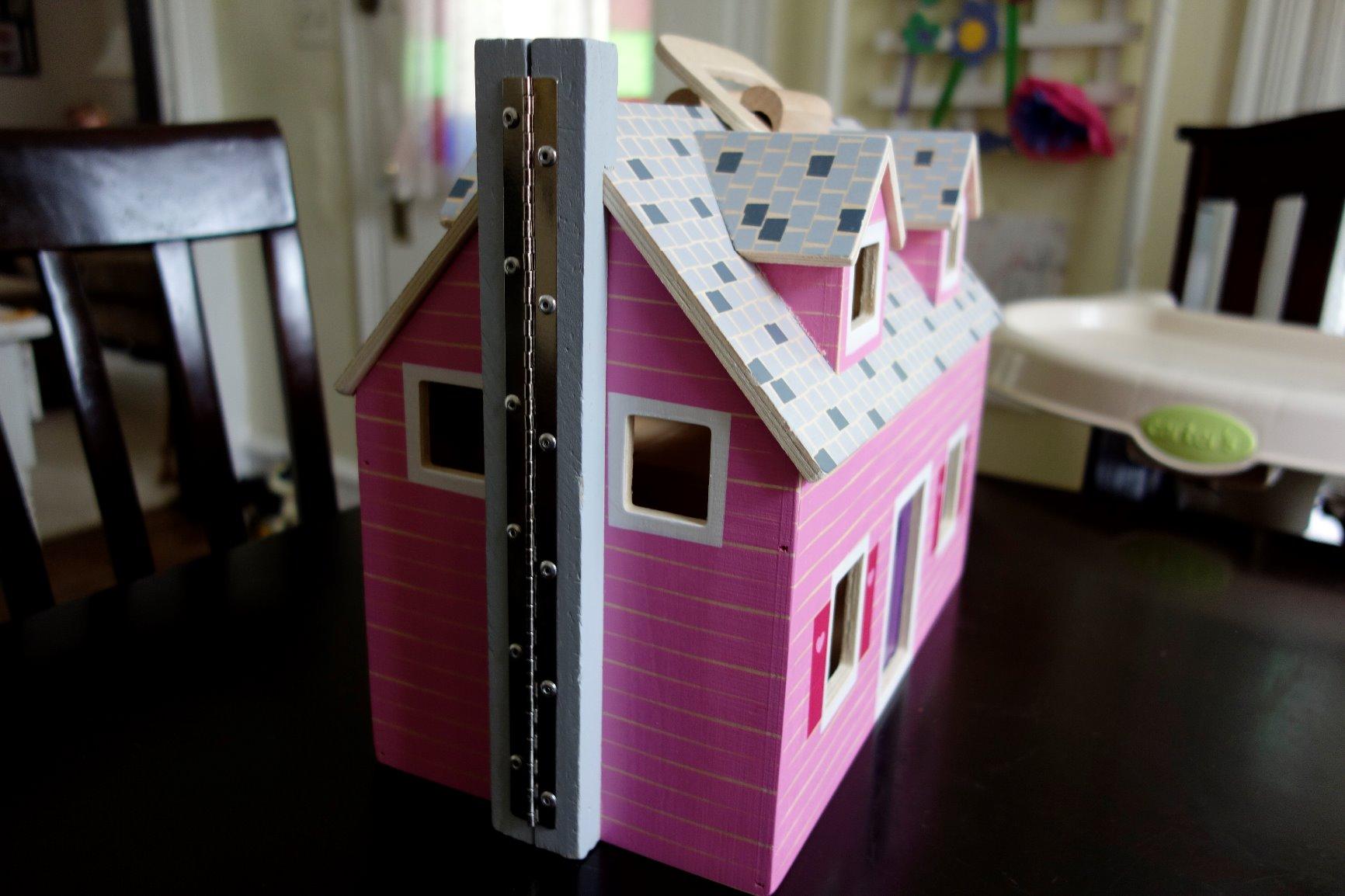
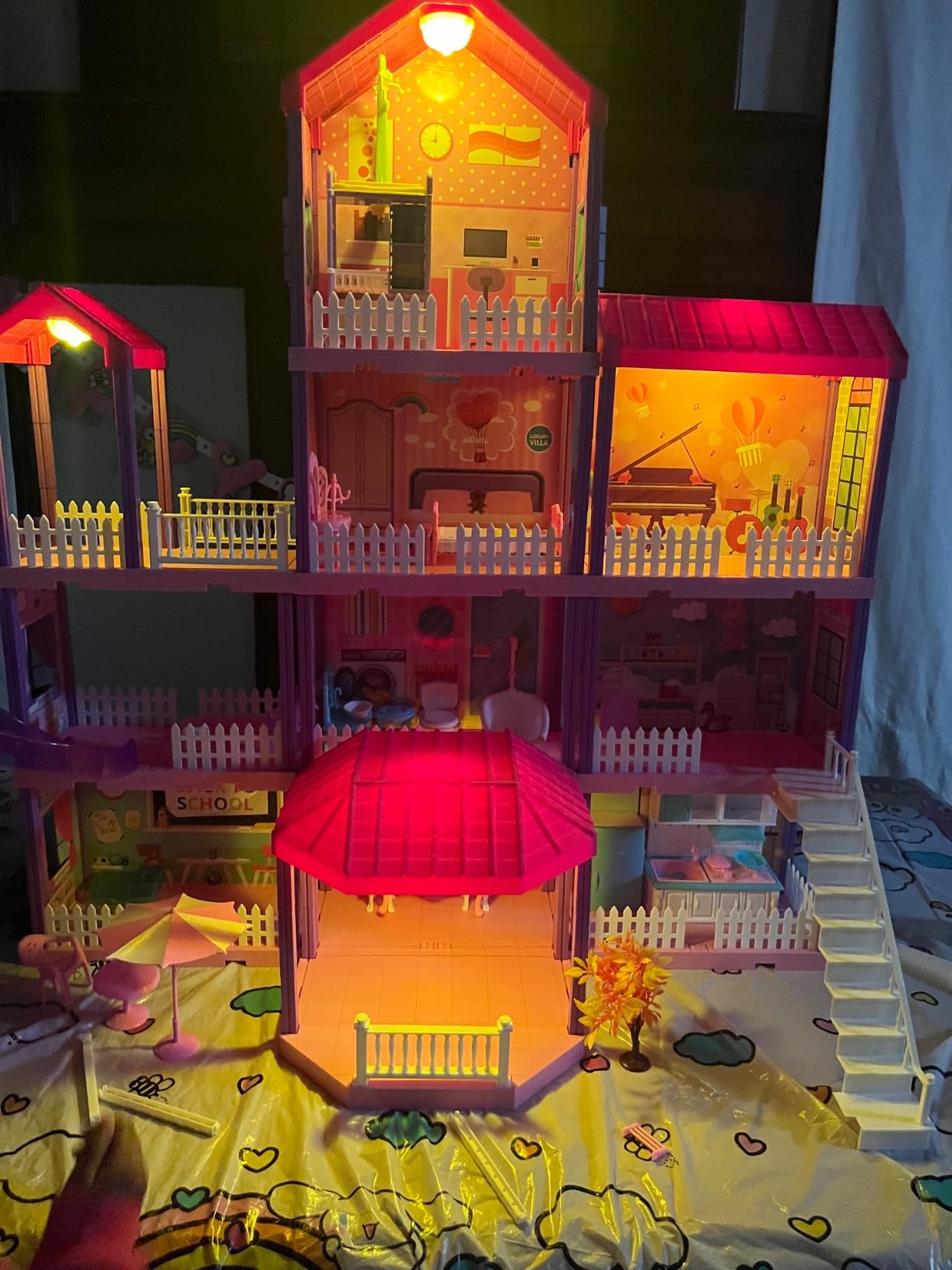
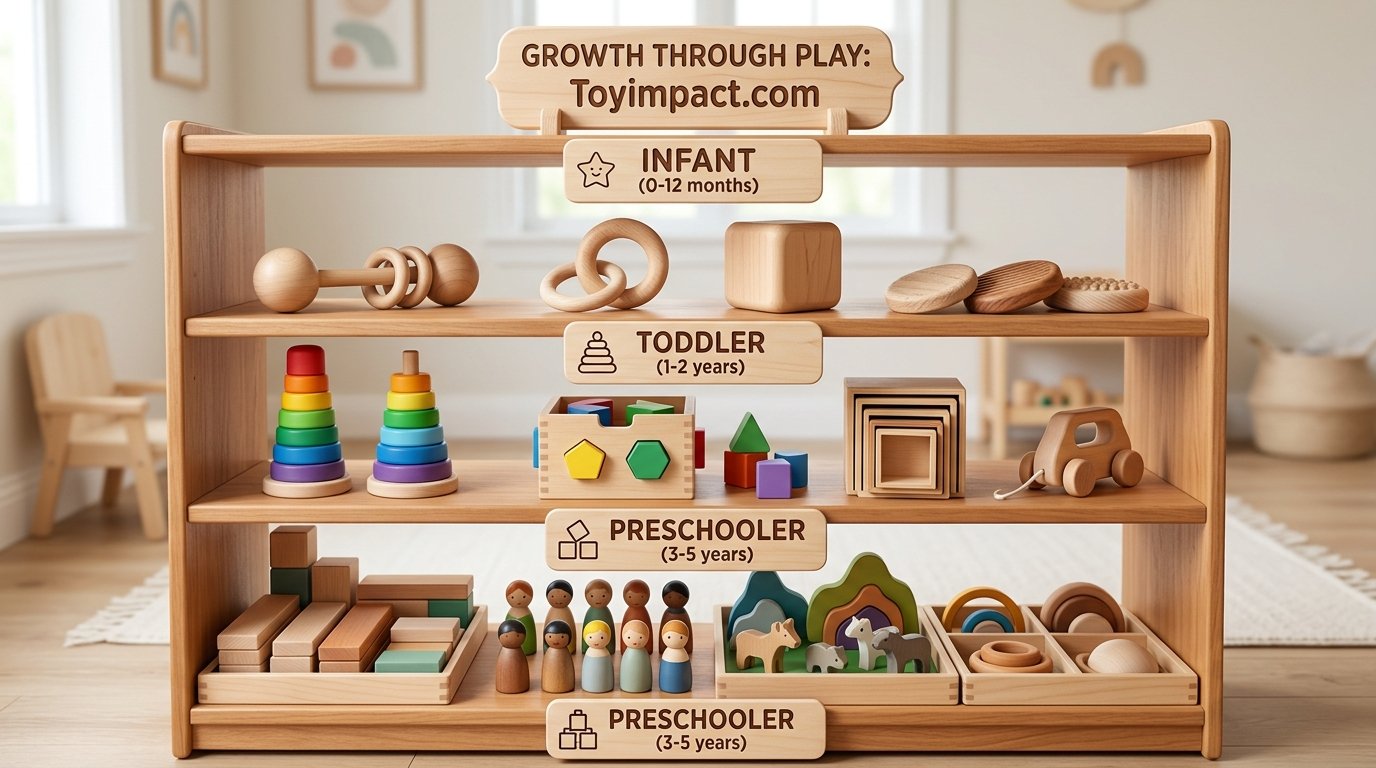
This is why wooden toys and other simple, natural-material toys consistently appear on “best toys” lists compiled by child development professionals. They are not nostalgic affectations — they are genuinely superior tools for sustained imaginative play. Similarly, pretend play toys like play kitchens, tool benches, and doctor kits remain engaging for years because the child, not the toy, supplies the narrative. A well-made dollhouse can be a vehicle for storytelling from age three well into the elementary years.
Montessori-aligned toys are designed with this principle at their core. In the Montessori framework, every material has a built-in “control of error” — a feature that lets the child self-correct without adult intervention — and is calibrated to a specific developmental window. A Montessori knobbed cylinder puzzle, for example, is not just a puzzle. It is a precision tool for visual discrimination, fine motor control, and concentration. The child can work with it dozens of times before the challenge is fully internalized.
| Feature | Open-Ended Toys | Single-Purpose Toys |
|---|---|---|
| Number of play modes | Unlimited — child invents uses | One to three fixed functions |
| Lifespan of interest | Months to years | Days to weeks |
| Developmental range | Grows with the child | Fits one narrow age window |
| Screen dependency | None | Often uses batteries/screens |
| Social play potential | High — naturally collaborative | Low — usually solo, turn-based |
| Examples | Blocks, art supplies, fabric, sand, figurines | Electronic learning tablets, single-function sound toys |
This is not to say that every single-purpose toy is a waste. Some electronic toys serve specific developmental purposes well. But as a general rule, if you want toys that hold interest longer, gravitating toward open-ended designs is the single most effective shift you can make.

Hape Pound & Tap Bench with Slide-Out Xylophone
Three toys in one — a hammer bench, a xylophone, and a cause-and-effect station. Keeps toddlers busy far longer than single-function toys.
View on Amazon6. The Marketing Machine Behind Toy Hype
Children do not develop toy preferences in a vacuum. They are surrounded by a sophisticated marketing ecosystem designed — with enormous budgets and decades of psychological research — to manufacture desire for specific products. Television commercials, YouTube unboxing videos, in-store displays, and peer pressure from classmates all work together to create an almost irresistible pull toward the newest, flashiest toy on the market.
The problem is that the qualities that make a toy marketable — lights, sounds, licensed characters, elaborate packaging, “surprise” mechanics — are almost perfectly inversely correlated with the qualities that make a toy sustain engagement. The very features that create the initial spike of excitement are the same features that burn out quickly. A toy that promises everything in its commercial delivers everything in the first five minutes. What is left after that?
This is particularly visible with trend-driven toys. Remote control toys are thrilling on day one, but unless the child develops a genuine interest in mechanics or racing, the novelty of pressing forward-and-backward wears thin quickly. Ride-on toys have slightly better staying power because they involve physical activity, but even these can lose their appeal once the child masters the basic movements.
As a parent, you cannot shield your child from marketing — nor should you try to. But you can become a more informed filter. When your child comes to you desperate for a specific toy they saw in a video, it helps to pause and ask: what will this toy actually look like in my child’s hands three weeks from now? If the honest answer is “abandoned on the floor,” that is useful information, even if it does not make the conversation with your child any easier in the moment.
One practical strategy is to introduce a waiting period. If your child wants a toy, write it on a wish list and revisit it in a week or two. Many of the “must-have” items will have been completely forgotten by then. The ones that survive the waiting period are more likely to reflect genuine interest rather than marketing-induced impulse.
The toy your child saw in a thirty-second commercial exists in a thirty-second fantasy. The toy your child actually plays with exists in the messy, unscripted reality of a Tuesday afternoon. These are very different things.

LEGO DUPLO Classic Brick Box
No screens, no batteries, no unboxing hype — just 120 colorful bricks that become whatever your toddler imagines. A toy that outlasts trends.
View on Amazon7. The Screen-Time Connection
There is a growing body of evidence suggesting that heavy screen exposure in early childhood does not just compete with physical toy play for time — it actually changes the brain’s expectations for stimulation. Fast-paced digital content delivers novelty at a rate that no physical toy can match. A swipe, a new image, a sound effect, a reward — every few seconds, the brain receives a fresh dopamine hit. When a child accustomed to this pace picks up a wooden puzzle that requires two minutes of patient trial-and-error to complete a single piece, the contrast can feel genuinely intolerable.
This does not mean screens are inherently destructive or that your child is ruined if they watch cartoons. But it does mean that the ratio of screen time to physical play time matters. Children who have significant daily screen exposure often need a transitional period — sometimes several days — where they complain of boredom before their brains readjust to the slower, more effortful rhythm of physical play. This period of “boredom” is not a sign that physical toys are inadequate. It is a withdrawal symptom from high-frequency stimulation, and it passes.
The practical takeaway is twofold. First, if you notice that your child’s toy interest has declined alongside an increase in screen time, the two may be related. Reducing screen exposure, even modestly, often produces a measurable uptick in physical play engagement within a week. Second, when you do allow screen time, choosing slower-paced, interactive content over fast-cut, passive content can soften the contrast with physical play.
For families who travel frequently and rely on screens as a sanity-preserving tool in airports and cars, it is worth exploring toys for car rides and long trips that provide stimulation without a screen. Magnetic drawing boards, sticker books, and small figurines for imaginative play can handle long stretches of travel just as effectively as a tablet, and they do not recalibrate the brain’s novelty expectations in the same way.
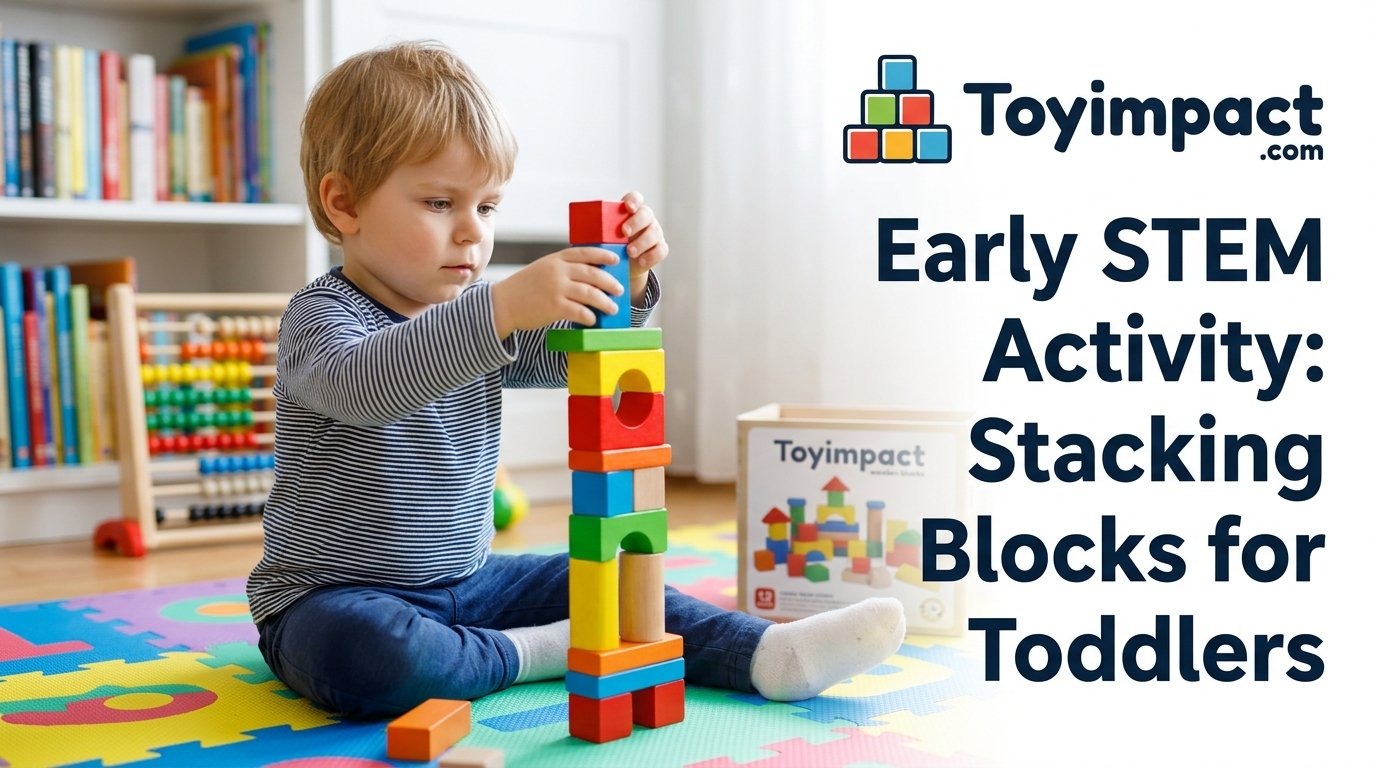
Even brief, deliberate periods of non-screen play can help. Introducing a STEM toy during a quiet afternoon — a magnifying glass, a set of gears, a simple balance scale — gives the brain a different kind of stimulation: slower, deeper, and ultimately more satisfying. The key is consistency. Five minutes of focused, screen-free play every day does more for attention development than an hour once a week.

Fat Brain Toys Teeter Popper
An endlessly engaging active sensory toy — rock, wobble, stand, sit. No batteries, no screens, just pure physical play that kids return to again and again.
View on Amazon8. Toy Rotation: Less Out, More Play
If there is one strategy that comes up again and again in research on children’s play quality, it is toy rotation. The concept is simple: instead of making all of your child’s toys available at all times, you divide the collection into groups and only put one group out at a time, rotating on a regular schedule. It sounds almost too basic to make a difference. It makes a enormous one.
Toy rotation works because it solves several problems simultaneously. It reduces the visual clutter that overwhelms children’s attention. It reintroduces “forgotten” toys with the psychological impact of something new. It teaches children to engage with fewer options more deeply. And it gives parents a powerful tool for managing toy acquisition — when you rotate, you realize how little your child actually needs at any given moment.
If you are wondering how often you should rotate kids’ toys, the answer depends on age, personality, and the size of your collection, but a general framework looks like this:
| Age Group | Rotation Frequency | Toys Out at Once | Notes |
|---|---|---|---|
| 1–2 years | Every 5–7 days | 4–6 items | Toddlers cycle fast; shorter rotations prevent habituation |
| 2–3 years | Every 7–10 days | 6–8 items | Include one “new” item per rotation to spark curiosity |
| 3–5 years | Every 10–14 days | 8–12 items | Preschoolers benefit from thematic rotations (building week, art week) |
| 5–8 years | Every 2–4 weeks | 10–15 items | School-age kids can handle more; rotate by interest area |
Benefits of Rotation
- Toys feel “new” again when reintroduced
- Reduces clutter and visual overwhelm
- Encourages deeper, longer play sessions
- Makes cleanup manageable for young children
- Slows the impulse to buy more toys
- Highlights which toys actually matter
Common Challenges
- Requires upfront organization effort
- Children may resist having “favorite” toys put away
- Needs a storage area out of sight
- Can feel rigid if schedule is too strict
- Works best with parental consistency
The initial setup is the hardest part. You need to sort the entire collection, decide on groupings, and find storage space. But once the system is in place, maintenance is minimal. Most families find that swapping a set of toys takes less than ten minutes, and the payoff — a child who plays independently for noticeably longer stretches — is immediate.

Humble Crew Kids Toy Organizer with 12 Bins
Open shelving with removable bins makes toy rotation seamless — swap a bin in under a minute, keep play areas curated and calm.
View on Amazon9. How to Pick Toys That Stick
Even with rotation and reduced quantities, some toys will always hold attention longer than others. Over the years, child development researchers and experienced parents have converged on a set of characteristics that reliably predict whether a toy will become a staple or a shelf-warmer. If you are building or rebuilding a toy collection with longevity in mind, these criteria are your compass.
The Seven Qualities of Long-Lasting Toys
- Multiple play modes. The toy can be used in more than one way. A set of puzzle toys that increases in difficulty as the child develops will outlast a single-difficulty puzzle by months.
- No prescribed “right” answer. Toys that allow open-ended exploration — where the child decides what success looks like — sustain interest because there is always another possibility to test.
- Physical engagement. Toys that involve the hands, the body, or both — building, pouring, scooping, balancing — create sensory feedback loops that keep the brain engaged.
- Social compatibility. Toys that work well when two or more children play together have inherently longer lifespans because the social dynamic adds an unpredictable, ever-changing layer to every session.
- Grows with the child. The best toys have a wide developmental range. A toddler stacks blocks into a tower; a five-year-old builds a marble run; an eight-year-old constructs a model city. Same toy, different play.
- Durability and repairability. Toys that break easily get thrown away. Toys made from wood, metal, or high-quality plastic last long enough to be handed down — and the fact that they persist in the child’s environment gives them more opportunities for renewed interest.
- Sensory richness without electronic dependency. Texture, weight, color, and temperature are all sensory inputs that do not require batteries. The more sensory information a toy provides through its material properties alone, the less it needs electronic features to stay interesting.
When you evaluate a potential purchase against these seven criteria, you will find that many popular toys fall short, while some of the simplest, least expensive options score remarkably high. A set of well-made wooden toys checks nearly every box. A bag of inexpensive play dough tools does the same. Meanwhile, a battery-operated toy that talks, walks, and lights up may score zero on all seven — spectacular in the box, forgettable within the week.
For families looking to introduce more intentional play without overwhelming a preschooler, a thoughtful selection of STEM toys designed for preschoolers can provide months of engagement when chosen well. The key is to look for toys that pose questions rather than deliver answers — gears that the child must figure out how to connect, magnets that attract and repel in surprising ways, building sets that topple and must be redesigned.

Melissa & Doug Scoop & Serve Ice Cream Counter
A beautifully made pretend play set that stays engaging for years — children create orders, practice counting, and build social skills through role play.
View on Amazon10. Bringing “Boring” Toys Back to Life
Before you donate a toy your child has abandoned, consider that the problem might not be the toy itself — it might be the context. Children are remarkably responsive to environmental cues, and a toy that has been ignored for weeks can suddenly become irresistible under slightly different conditions. This is not wishful thinking; it is a well-documented phenomenon in behavioral psychology called renewal, where changing the context around a stimulus restores the response it originally elicited.
Here are several proven strategies for reviving interest in forgotten toys:
Change the location
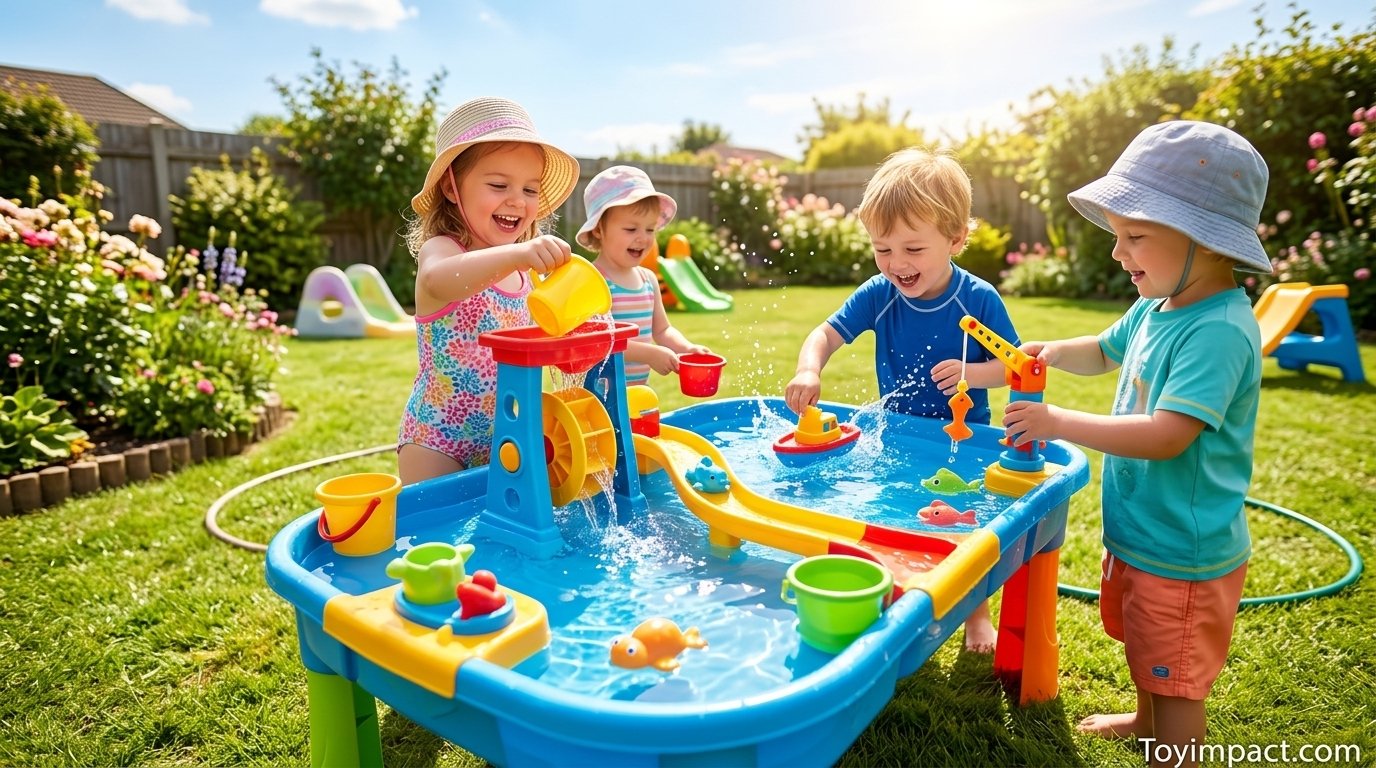
A toy that has been sitting on the same shelf in the same room for months has become invisible to your child’s brain. Move it to a different room — the kitchen table, the backyard, the bathroom during bath time — and it suddenly exists in a new context. Blocks that were boring in the playroom become fascinating on the patio. A water toy that was ignored indoors becomes the centerpiece of an afternoon when placed outside. If you have a yard, pairing a “boring” toy with a water table can create entirely new play scenarios.
Combine it with something else
Toys that have been played with in isolation can take on new life when paired with a different toy or material. Put figurines in a sandbox. Add painter’s tape to a set of cars to create roads on the floor. Give a dollhouse inhabitant a block-built swimming pool. The combinatorial possibilities are endless, and children often discover them naturally when given the opportunity. For families with multiple children, encouraging siblings to play together with a mix of previously ignored toys can spark collaborative scenarios neither child would have invented alone.
Model play, then step back
Sometimes children abandon toys not because they are bored, but because they have run out of ideas. Sit down with the toy for five minutes. Build something unexpected. Narrate a silly story. Ask “what if” questions. Once your child’s imagination is reactivated, step back and let them take over. Your role is a spark, not a sustained flame.
Reintroduce after a genuine absence
This is where toy rotation earns its reputation. A toy that has been in a closet for four weeks and reappears on the shelf can genuinely feel new to a young child. Their memory for objects is less fixed than adults assume — especially for toys they were not deeply attached to. The returning toy triggers the same novelty response as a brand-new purchase, except it costs nothing and creates no additional clutter.
Add a narrative frame
Children are natural storytellers, and sometimes all a toy needs is a story to live inside. “These blocks are not blocks — they are the walls of a castle that a dragon is about to attack.” “This puzzle is a map to buried treasure, and every piece you place gets us closer.” The toy has not changed, but the child’s relationship to it has.

LEGO Classic Medium Creative Brick Box
484 pieces of pure possibility. Combine with figurines, tape, or other toys to reinvent play scenarios endlessly.
View on Amazon11. Designing a Play Space That Works
The physical environment in which a child plays has a profound, often underestimated effect on how long they engage with their toys. A cluttered, visually chaotic play area sends a constant stream of “look at this instead” signals to the brain, fragmenting attention before it can deepen. A thoughtfully organized space, by contrast, invites the child to settle in, choose deliberately, and play with purpose.
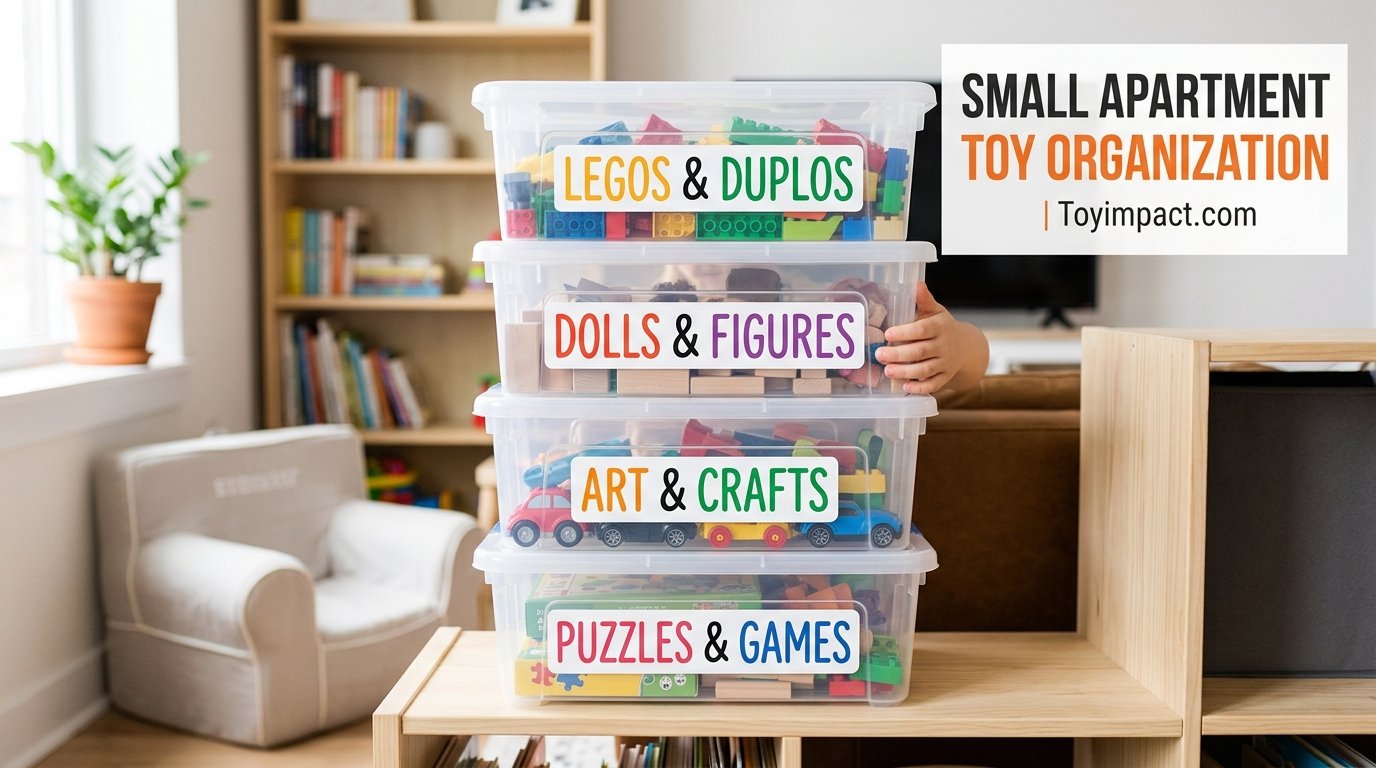
You do not need a dedicated playroom to create this effect. Even a corner of the living room or a section of the child’s bedroom can be transformed into a focused play environment with a few intentional choices. For families in apartments or small homes, there are excellent strategies for organizing toy storage in compact spaces that do not require a renovation or even a significant budget.
Key principles for a play-supporting environment:
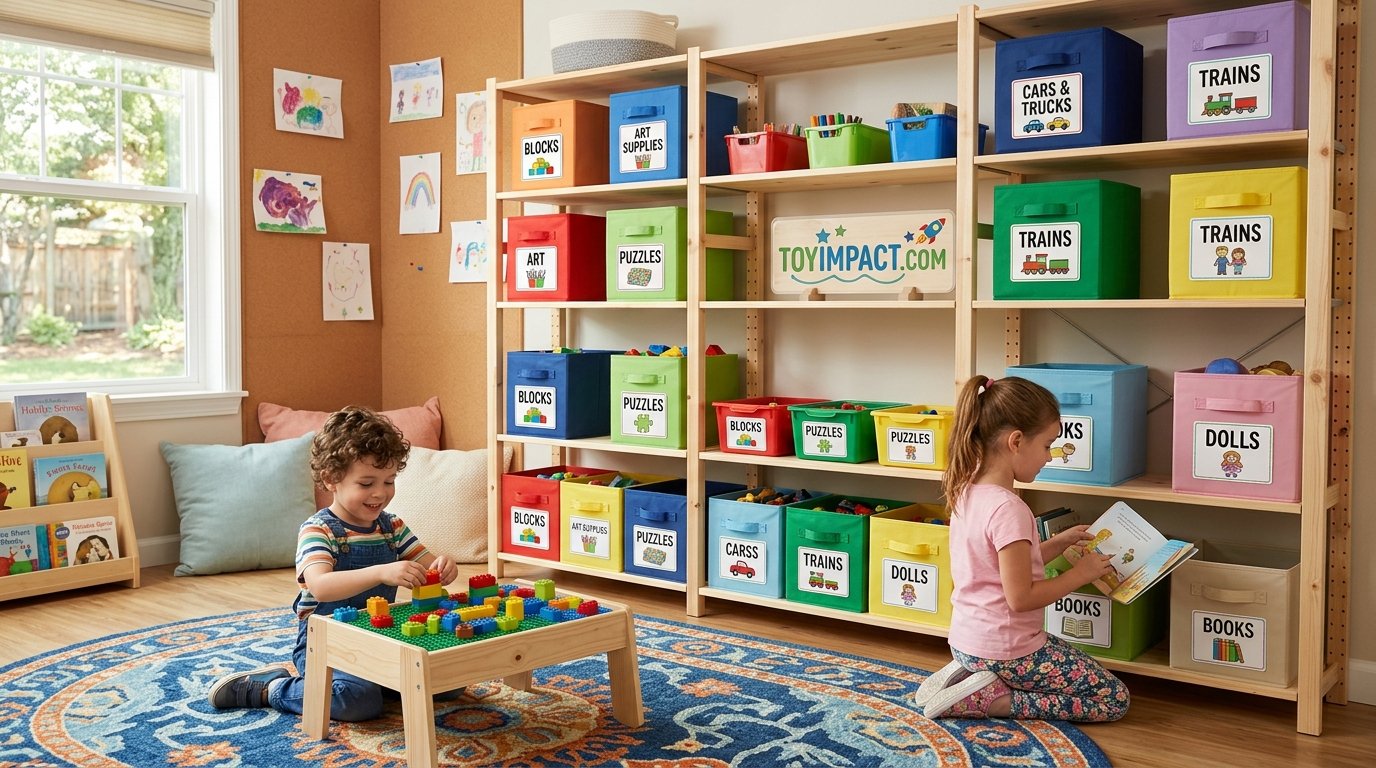
- Visibility over volume. Display a small number of toys on open shelves where the child can see and reach them independently. Closed bins and high shelves hide toys from view, which reduces spontaneous play. Montessori-inspired environments use low, open shelving for exactly this reason.
- Defined zones. Even in a shared space, creating a visual boundary — a rug, a low shelf turned sideways, a different floor color — signals “this is where play happens.” Children respond to spatial cues, and a defined zone helps them transition into a play mindset.
- Accessibility. If a child cannot reach a toy without asking for help, that toy might as well not exist. Everything in the active rotation should be at the child’s height, in a container they can open, and in a location they can navigate independently.
- Beauty matters. This might sound superficial, but children are drawn to environments that feel intentional and cared for. A neatly arranged shelf of colorful, varied toys is more inviting than a chaotic jumble in an overflowing bin. The arrangement itself communicates: this is worth your time.
- Cleanup ease. If putting toys away is complicated, it will not happen consistently. Use simple containers with picture labels (for pre-readers), one category per bin, and a clear “home” for every toy. When cleanup is effortless, it becomes a habit rather than a battle — and the toy stays in rotation rather than getting lost under the couch. Keeping toys clean is also part of maintaining their appeal; a guide on how to clean plastic toys safely helps ensure grimy, neglected-looking toys do not get passed over simply because they look uninviting.
The goal of all of this is to create what Montessori educators call a “yes space” — an environment where the child is free to explore without constantly being told “don’t touch that” or “that’s too high for you.” When the entire play area is child-accessible and parent-approved, the friction between desire and permission disappears, and play flows more naturally.

Wooden Kids Bookshelf and Toy Display Shelf
Low, open-front shelving that puts every toy at your child’s eye level — the foundation of any Montessori-inspired play space.
View on Amazon12. Boredom as a Superpower (And When to Look Deeper)
Before wrapping up, it is worth making the case that boredom itself is not the enemy. In fact, for children, boredom is one of the most powerful creative catalysts available. When a child says “I’m bored” and is not immediately handed a screen or a new toy, something remarkable happens: they start inventing. They turn a cardboard box into a spaceship. They give voices to stuffed animals. They draw on the sidewalk with chalk. They create elaborate imaginary worlds out of nothing but the contents of their own mind.
Research on creativity consistently shows that the most original ideas emerge not during periods of high stimulation, but during periods of relative quiet — when the brain is not being fed external input and is forced to generate its own. A child who is “bored” is a child whose brain is searching for something to create. The worst thing we can do, in many cases, is rescue them from that search too quickly.
This does not mean you should never offer a toy or activity when your child is struggling. But it does mean that the default response to “I’m bored” does not have to be “let me fix that.” Sometimes the best answer is: “That’s okay. What do you think you might want to do?” This small shift — from solving the boredom to sitting with it — builds a critical life skill: the ability to self-generate engagement without external input.
That said, there are situations where a child’s lack of interest in toys warrants closer attention. If your child consistently shows no sustained interest in any toy, activity, or form of play — not just new toys, but all toys — and this pattern persists across several months, it may be worth discussing with your pediatrician. Persistent, global disengagement can sometimes be an early indicator of developmental differences that benefit from professional evaluation. This is not about alarming parents; it is about ensuring that children who need support get it early, when interventions are most effective.
Children with sensory processing differences, autism spectrum traits, or attention-related challenges may engage with toys in ways that look different from typical play — and that is perfectly fine. For these children, sensory-focused toys specifically designed to match their processing style can make the difference between engagement and overwhelm. The key is observing your child’s unique play style and working with it, rather than measuring them against a norm that may not apply.
Ultimately, the question is not “how do I stop my child from getting bored?” — because boredom is inevitable and even beneficial. The question is “how do I build an environment where boredom leads to creativity rather than frustration?” And the answer, as we have explored throughout this guide, involves fewer but better toys, thoughtful rotation, a well-designed play space, and the willingness to let your child sit with the discomfort of having nothing to do — until they discover that they had everything they needed all along.
A child who can turn nothing into something will never truly be bored. That is not a toy you can buy — but it is a skill you can cultivate.

Educational Insights GeoSafari Jr. Talking Microscope
A STEM toy that channels boredom into genuine scientific curiosity — perfect for the child who is ready to look deeper at the world around them.
View on AmazonFrequently Asked Questions
At what age do kids typically stop playing with toys altogether?
Most children begin moving away from traditional toys between ages ten and twelve, though many continue with specific categories — building sets, art supplies, models — well into their teenage years. The transition is gradual and varies enormously by child. For a detailed, age-by-age breakdown, see this guide on what age kids stop playing with toys.
Is it normal for a toddler to lose interest in a toy after just one day?
Completely normal. Toddlers have very short attention spans — typically three to six minutes of focused play — and their brains are wired to seek novelty aggressively. A toy that captivates them on Monday and bores them by Tuesday is behaving exactly as developmental science predicts. This is not a sign of the toy’s failure or your child’s ingratitude; it is the brain doing its job of sampling the environment broadly.
How many toys should a child have out at one time?
A good rule of thumb is somewhere between six and twelve toys, depending on the child’s age. Toddlers do best with four to six items; preschoolers can handle eight to twelve. The key is that every toy should be visible, accessible, and something your child actually plays with. If a toy has been untouched for two weeks, it is taking up space without contributing — put it in rotation storage.
Do more expensive toys hold children’s attention longer?
Rarely. Price and play value have a surprisingly weak correlation. A $15 set of wooden blocks will outlast a $60 electronic gadget in nearly every longitudinal comparison. What matters more than price is the toy’s openness — whether it allows multiple modes of play — and its developmental fit with the child’s current stage. Some of the most enduring toys in any collection are the least expensive.
Can having too many toys actually cause behavioral problems?
While having many toys does not directly cause behavioral issues, research suggests it can contribute to shorter attention spans, difficulty with decision-making, and increased frustration. The mechanism is overstimulation: when the environment offers too many options, the brain shifts into a scanning mode that prevents deep engagement. Reducing the number of available toys often produces calmer, more focused play behavior within days.
How do I know if a toy is age-appropriate?
A toy is age-appropriate when it is challenging enough to engage the child but not so difficult that it causes frustration. If a toy is too easy, the child will lose interest quickly because there is nothing left to figure out. If it is too hard, they will give up. The sweet spot is a toy where the child can succeed about 70–80% of the time, with the remaining attempts providing a stretch. Manufacturer age ranges are a useful starting point but are not precise — watch your child’s actual response.
What types of toys hold a child’s attention the longest?
Open-ended toys with high replay value consistently outperform single-purpose toys. Building sets (blocks, magnetic tiles, LEGO), art supplies, pretend play props, sensory materials (play dough, sand, water), and simple outdoor toys like balls and jump ropes tend to have the longest engagement lifespans. Puzzle toys also perform well because they offer escalating difficulty and a clear sense of accomplishment.
Should I feel guilty for not sitting down and playing with my child?
Absolutely not. Independent play is a critical developmental skill, and children need opportunities to practice it. Your job is to set up an environment that supports independent play — the right toys, the right space, the right quantity — and then step back. Brief moments of connection (“Wow, look at what you built!”) are valuable, but you do not need to be on the floor for every play session. A child who can entertain themselves for fifteen minutes is developing a life skill.
Is boredom actually good for kids?
In moderation, yes. Boredom forces the brain to generate its own stimulation, which is the foundation of creativity, imagination, and problem-solving. Children who are never bored — because they are constantly entertained by screens, toys, or activities — miss opportunities to develop self-directed engagement. The goal is not to eliminate boredom but to create an environment where boredom can lead somewhere productive.
How often should I rotate my child’s toys?
It depends on the child’s age and the size of the collection, but generally every one to two weeks for toddlers and every two to four weeks for older children. Watch your child’s behavior for cues — if they start losing interest in the current set, it is time to rotate. The detailed breakdown in this toy rotation guide provides age-specific schedules and practical tips.
Does screen time make kids bored of real toys faster?
There is growing evidence that heavy screen exposure raises the brain’s baseline expectation for stimulation, making physical toys feel slow and under-stimulating by comparison. Children who reduce screen time often show a marked increase in physical play engagement within a week. The effect is not permanent and can be managed by balancing screen time with regular periods of screen-free play.
What should I do if my child shows zero interest in any toys?
If your child consistently shows no engagement with any toy across several months — not just a preference for certain types, but a near-total absence of interest — it is worth discussing with your pediatrician. Persistent disengagement can sometimes indicate developmental differences that benefit from early evaluation. For many children, however, what looks like disinterest is actually a mismatch between the toys offered and the child’s sensory or developmental needs. Specialized resources like sensory toy guides can help identify toys that match your child’s unique processing style.
The Takeaway
Your child’s tendency to get bored of toys quickly is not a problem to be solved — it is a signal to be understood. That signal tells you that the brain is working exactly as it should, scanning for novelty, testing patterns, and deciding what deserves sustained attention. Your role is not to feed the novelty machine with an endless stream of new purchases, but to create the conditions under which your child’s natural curiosity can go deeper with fewer things.
The formula is simpler than the toy industry would like you to believe: fewer toys out at once, chosen for openness and developmental fit, rotated regularly, displayed accessibly in a well-organized space, and given the breathing room of screen-free time. Do these things consistently, and you will likely find that your child’s attention span with toys improves not because the toys changed, but because the environment around them did.
And on the days when your child still looks at a shelf full of carefully curated toys and says “I’m bored”? Smile. Hand them a cardboard box. Walk away. Something wonderful is about to happen.
Ready to Build a Better Toy Collection?
Explore our curated guides to find toys that actually hold your child’s attention — organized by age, play style, and budget.
Browse Toy Guides at ToyImpactYou May Also Like
Best Travel Toys for Airplane
Screen-free options that keep kids engaged from takeoff to landing — tested on real flights with real kids.
Best Wooden Toys for Every Age
Why wooden toys outlast their plastic counterparts — and which ones are actually worth buying.
How to Organize Toy Storage in Small Spaces
Room-by-room, budget-friendly strategies for taming toy clutter when square footage is tight.
Best Puzzle Toys for Kids and Adults
Ten picks that build brains, not just entertain — from toddler chunky puzzles to adult brain teasers.