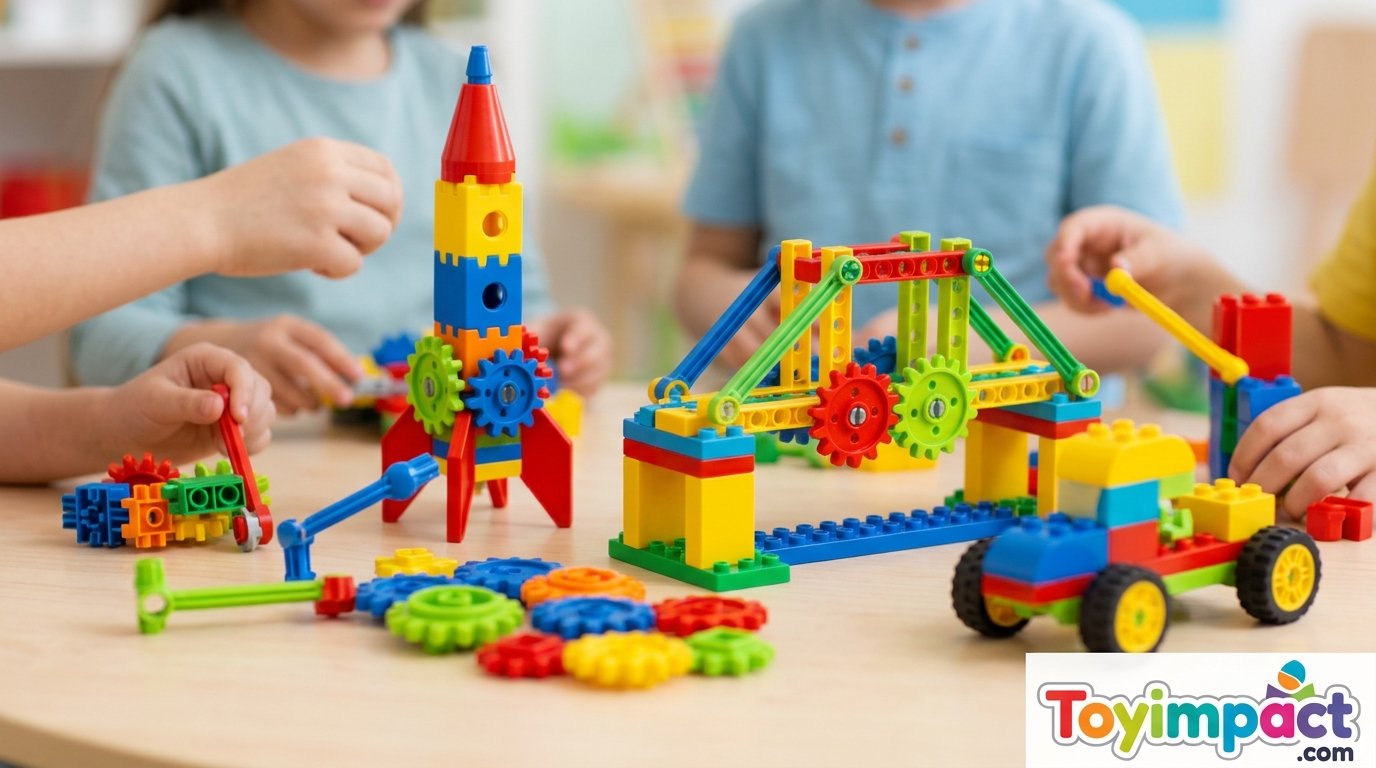
What Is a STEM Toy? The Complete Parent’s Guide to Smart, Purposeful Play
Everything you need to know about STEM toys — what they are, why they matter, how to choose them by age, and how to make them a natural part of your child’s everyday play.
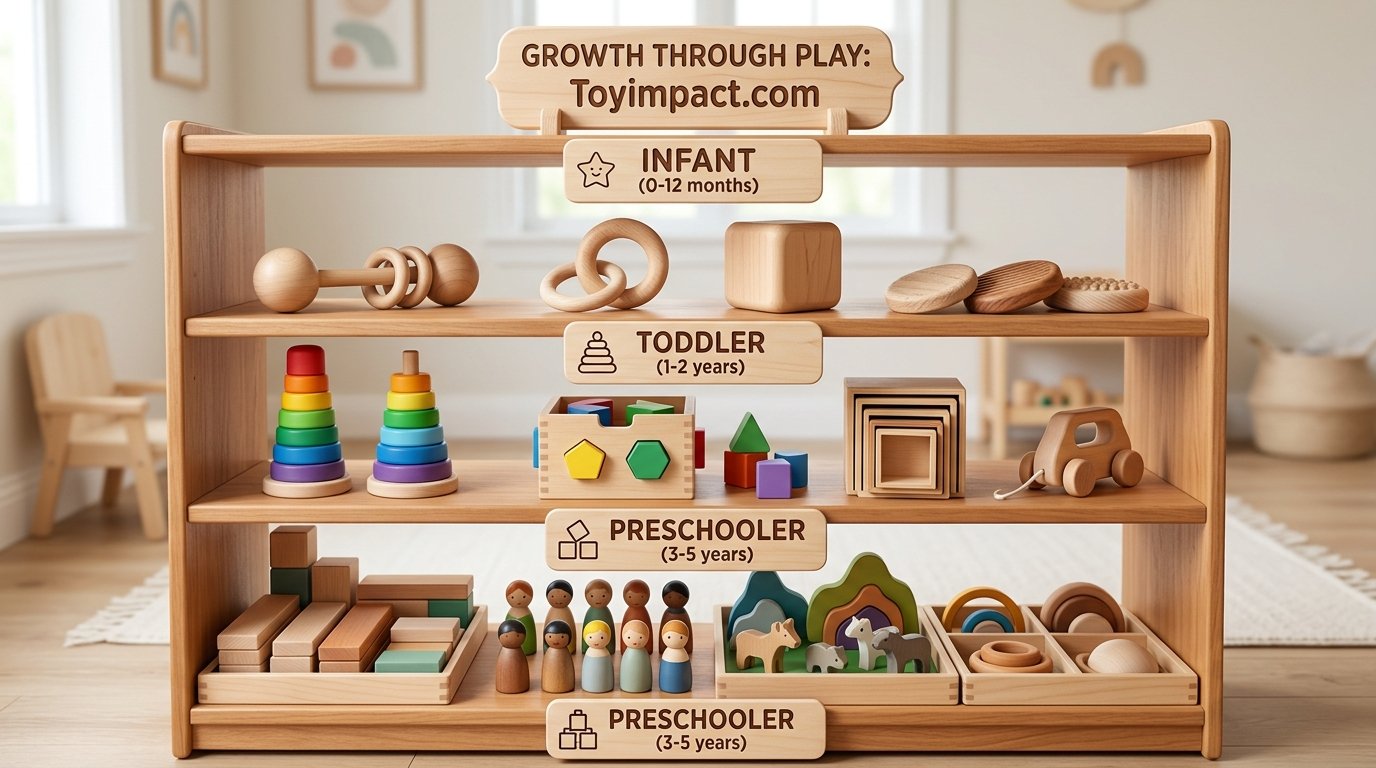
You are standing in a toy store — or more likely, scrolling through a website at 11 p.m. — and you keep seeing the same four letters everywhere: STEM. They are stamped across building sets, coding robots, chemistry kits, and even bath toys. Every product promises to “develop critical thinking” or “prepare your child for the future.” But what does that actually mean? And more importantly, is a STEM toy something your child genuinely needs, or just another marketing label designed to make you feel like you are falling behind?
The honest answer is more nuanced — and more encouraging — than the marketing suggests. STEM toys are not magic bullets, and they do not require your child to be a budding engineer or future coder. At their best, they are simply toys that make a child think with their hands, ask questions, test ideas, and discover how things work. That is it. And when you understand what that looks like across different ages, play styles, and interests, choosing the right one becomes far less stressful and far more rewarding.
This guide walks you through everything: what STEM toys actually are, how they differ from conventional playthings, which categories matter most, what to look for (and what to ignore) on the packaging, and how to introduce them in a way that feels natural rather than academic. Whether you are shopping for a toddler or a ten-year-old, this is the resource you will come back to.
1. What Exactly Is a STEM Toy?
A STEM toy is any plaything intentionally designed to nurture skills related to one or more of the four STEM disciplines: Science, Technology, Engineering, and Mathematics. That is the textbook definition, and while it is accurate, it misses the part that actually matters to a parent standing in a toy aisle. What separates a STEM toy from every other object on the shelf is not a label or a price point — it is what happens inside a child’s mind while they play with it.
A ball that rolls down a ramp is teaching a toddler about gravity, acceleration, and cause-and-effect — even if nobody calls it a “physics toy.” A set of interlocking gears that a six-year-old snaps together is introducing mechanical engineering, torque, and the principle of transferable motion. A board where a child places colored pegs in a logical sequence is building the same neural pathways they will eventually use to write code. None of these toys feel like school. All of them are quietly training the kind of reasoning, persistence, and curiosity that shape how a person approaches problems for the rest of their life.
The Defining Characteristics
Not every toy marketed as “STEM” genuinely earns that label. The term has become broad enough to lose some meaning, but there are real characteristics that separate authentic STEM toys from clever packaging:
- Active problem-solving: The child must figure something out — not just press a button and watch. A genuine STEM toy presents a challenge, even a small one, and invites the child to work through it.
- Tangible cause and effect: The child can see, hear, or feel the result of their actions. Stack the blocks too high and they fall. Connect the circuit incorrectly and the light does not turn on. This feedback loop is essential.
- Open-ended potential: The best STEM toys are not single-use puzzles. They can be explored in multiple ways, allowing the child to return to them over weeks or months and find new things to discover.
- Skill-building over entertainment: A toy that exclusively entertains — lights, sounds, passive spectacle — is not a STEM toy, even if the box says otherwise. A STEM toy engages the child as an active participant, not a spectator.
This distinction matters because the value of a STEM toy is not in its brand name or its price. It is in the quality of thinking it demands from the child holding it. You can learn more about how these principles apply across age groups in our guide on the best age to introduce Montessori toys, which share a similar philosophy of hands-on, self-directed discovery.
A Brief Origin Story
The concept of using play to teach science and engineering is not new — Froebel’s wooden blocks from the 1800s were arguably the first STEM toys, and the Montessori method has emphasized concrete, self-correcting learning materials for over a century. What is relatively new is the commercial labeling. As conversations about workforce readiness, coding literacy, and science education intensified, toy manufacturers began branding existing products and developing new ones under the STEM umbrella. The result has been both positive and confusing: more genuinely thoughtful toys exist than ever before, but so does a flood of products that use the label without the substance.
Learning to spot the difference — which this guide will help you do — is the single most valuable skill you can develop as a parent navigating the STEM toy landscape.

Award-winning magnetic building tiles that teach geometry, spatial reasoning, and creative engineering — a foundational STEM toy for ages 3 and up.
2. The Four Pillars: Science, Technology, Engineering, and Math Toys
The acronym STEM bundles four distinct disciplines into a single word, but each pillar has its own flavor of thinking, its own kind of play, and its own developmental rewards. Understanding the difference helps you choose toys that match your child’s natural interests — or gently expand them in new directions.
Science Toys: Exploring the “Why”
Science toys answer the question every young child already asks a hundred times a day: why? Why does ice melt? Why does the magnet stick to the fridge but not the wall? Why do some things float and others sink? A good science toy takes a phenomenon a child is already curious about and gives them the tools to investigate it themselves.
This category includes magnifying glasses, butterfly gardens, weather stations, crystal-growing kits, nature exploration sets, and simple chemistry experiments. The common thread is observation — the child is learning to look closely, ask questions, and draw conclusions based on evidence rather than guesswork. For younger children, even a set of nesting cups in the bath is a science toy if it invites exploration of volume and displacement.
Technology Toys: Understanding How Things Work
Technology in the STEM context does not mean screens and apps — though it can include them. At its core, a technology toy helps a child understand systems: inputs, outputs, sequences, and logic. Coding robots, circuit-building kits, programmable toys, and even simple machines like pulleys and levers all fall under this umbrella.
The key skill being developed here is sequential thinking — the ability to understand that actions happen in order, that changing one step changes the outcome, and that complex results can emerge from simple rules. A child programming a small robot to navigate around obstacles is learning the same logical reasoning they would use to write software, plan a recipe, or organize a project. For parents interested in this category, our review of the best remote-control toys covers several options that blend technology with pure fun.
Engineering Toys: Building and Problem-Solving
Engineering is where many children’s natural play instincts already live. Stacking blocks, building forts, constructing marble runs, connecting gears — these are all engineering activities because they involve designing a structure, testing it against real-world forces (usually gravity), and iterating when it does not work.
Engineering toys teach resilience more than any other category. A tower that falls is not a failure; it is data. The child learns to diagnose why it fell, adjust their approach, and try again. This iterative mindset — design, test, fail, refine — is the backbone of engineering thinking and, frankly, of most problem-solving in adult life. Building sets like LEGO, magnetic tiles, wooden blocks, and gear kits are all excellent engineering toys. If you want to explore the wooden variety specifically, our complete guide to the best wooden toys covers dozens of options organized by age and interest.
Math Toys: Patterns, Numbers, and Spatial Reasoning
Math toys often get the least attention because many parents associate math with worksheets and memorization. But early math is far more interesting than that. It is about patterns, symmetry, measurement, comparison, sorting, and spatial relationships — all things children explore naturally when the right materials are in front of them.
Tangrams, pattern blocks, counting bears, balance scales, measuring cups, and number lines are all math toys. So are puzzles, which develop spatial reasoning, shape recognition, and the ability to see how parts relate to a whole. The developmental value here is enormous: early math fluency is one of the strongest predictors of later academic success, stronger even than early reading ability, and it is built through play, not flashcards.
Where the Pillars Overlap
The most powerful STEM toys rarely fit neatly into a single category. A marble run is engineering (building the structure) and physics (understanding gravity and momentum). A coding robot is technology (programming sequences) and math (spatial navigation). A gardening kit is science (biology) and math (measurement and growth tracking). This overlap is a feature, not a problem — it mirrors how real-world thinking works. The goal is not to drill one subject but to help a child see how ideas connect.

Over 100 projects teaching real electrical engineering concepts — build working circuits, alarms, and more with snap-together components. Ages 8+.
3. Why STEM Toys Matter: The Developmental Benefits
Every parent wants their child to do well in school, land a good job, and navigate the world with confidence. STEM toys contribute to all of that — but not in the direct, linear way that marketing sometimes implies. They do not turn your four-year-old into an engineer. What they do is build the cognitive architecture that makes engineering, science, math, and every other form of complex thinking possible later on.
Cognitive Development and Problem-Solving
When a child engages with a STEM toy — figuring out how to balance a block tower, debugging a coding sequence, or discovering which objects sink and which float — they are exercising executive function skills: working memory, cognitive flexibility, and inhibitory control. These are the same skills that underpin academic performance across every subject, from reading comprehension to essay writing to algebra.
The critical difference between a STEM toy and a passive toy is agency. A child watching a screen is receiving information. A child figuring out a building challenge is generating hypotheses, testing them, and revising their mental model of how the world works. This active cycle of inquiry is how deep learning actually happens — and it is what many children are missing when play becomes purely passive. If your child seems to skim through their toys without really engaging, our article on why kids get bored of toys so fast explores exactly what is going on and how to fix it.
Spatial Reasoning
Spatial reasoning — the ability to visualize and manipulate objects mentally — is one of the most underappreciated skills in child development, and one of the strongest predictors of success in STEM fields. It is the skill that lets a child look at a flat diagram and imagine it in three dimensions, or mentally rotate a shape to see how it fits into a gap.
Building toys, puzzles, tangrams, and magnetic tiles all develop spatial reasoning directly. Research has shown that children who play regularly with spatial toys show measurable improvements in geometry, architecture, engineering, and even reading maps. The effect is especially pronounced when children are young — the preschool and early elementary years are the peak window for spatial skill development.
Persistence and Growth Mindset
A marble run that does not work on the first try. A circuit that does not light up. A tower that keeps toppling over. These small failures are among the most valuable things a STEM toy offers, because they teach a child that struggle is not a sign of inability — it is a step in the process.
Carol Dweck’s research on growth mindset has shown that children who are taught to see challenges as opportunities for learning — rather than evidence of their limits — perform better academically, take on harder tasks, and recover from setbacks more quickly. STEM toys provide a natural, low-stakes environment for practicing this mindset every day.
Creativity and Innovation
There is a persistent myth that STEM and creativity are opposites — that science is rigid and art is free. In reality, the most important breakthroughs in every STEM field have come from creative thinkers. A child designing their own marble run layout, inventing a new structure with building blocks, or figuring out an unconventional solution to a coding challenge is practicing exactly the kind of divergent thinking that drives innovation.
The best STEM toys support this by being open-ended — they provide the tools and constraints but leave the design to the child. This is also what makes them last: a child does not get bored of a building set the way they might get bored of a single-use activity, because the possibilities are limited only by imagination.

Over 480 pieces in 35 colors with windows, doors, wheels, and eyes — an open-ended building set that grows with your child’s imagination. Ages 4+.
4. STEM Toys vs. Traditional Toys: What’s the Real Difference?
Walk into any toy store and the distinction seems obvious: STEM toys are in the bright “educational” section, and traditional toys are everywhere else. But the real line between them is blurrier — and more interesting — than store layouts suggest.
Many traditional toys are already STEM toys in disguise. A set of wooden blocks teaches engineering and spatial reasoning. A ball teaches physics. A dollhouse supports social-emotional learning and narrative thinking, which are foundational to scientific communication. Even pretend-play toys like kitchen sets and doctor kits develop the hypothesis-testing and role-experimentation skills that underpin scientific inquiry. The idea that STEM toys are a separate, superior category is more marketing than reality.
That said, there are genuine differences worth understanding:
| Feature | STEM Toys | Traditional Toys |
|---|---|---|
| Primary Goal | Skill-building through active problem-solving | Entertainment, comfort, social play |
| Play Style | Exploratory, trial-and-error, open-ended | Imaginative, role-play, sensory |
| Feedback Loop | Built-in: child sees if their solution works | Often passive or externally driven |
| Failure Component | Yes — productive struggle is built in | Rarely — play is unstructured |
| Longevity | Often long (grows with the child’s ability) | Varies widely (some last years, some days) |
| Parent Involvement | Optional but enriching | Often needed to drive narrative play |
The False Binary
The most important thing to understand is that your child does not need to choose between STEM toys and traditional toys. A healthy play environment includes both. A child who spends all day with coding robots but never picks up a crayon or a stuffed animal is missing critical areas of development — and the same is true in reverse.
The goal is not to replace your child’s dollhouse with a chemistry set. The goal is to make sure their toy collection gives them opportunities to build, create, experiment, and imagine. A child who has access to ride-on toys for physical development, building sets for engineering thinking, art supplies for creative expression, and imaginative toys for social-emotional growth is getting a richer play diet than one who is limited to any single category.
When Traditional Toys Win
There are moments when a traditional toy is genuinely the better choice. A soft stuffed animal provides emotional comfort that a circuit board never will. A simple set of crayons develops fine motor control and self-expression in ways that are irreplaceable. Board games teach turn-taking, sportsmanship, and social negotiation. Do not let the STEM hype make you feel like every toy needs to be “educational” — sometimes the most valuable thing a toy can do is make a child feel safe, happy, and free.

Bridges physical and digital play with hands-on tangram, physics, and math games that respond to your child’s real-world actions on screen. Ages 6–10.
5. Choosing the Right STEM Toy by Age
A STEM toy that captivates a seven-year-old will frustrate a toddler. One that delights an infant will bore a ten-year-old. Age-appropriateness is not just about safety — it is about matching the toy’s challenge level to the child’s developmental stage so that play feels engaging rather than overwhelming or tedious.
Here is what to look for — and what to avoid — at every stage:
| Age Range | Developmental Focus | Best STEM Toy Types | What to Avoid |
|---|---|---|---|
| 0–18 months | Sensory exploration, cause-and-effect, grasping | Textured balls, stacking cups, simple cause-and-effect toys, nesting toys | Anything with small parts, complex assemblies, or electronic features that replace exploration |
| 18 months – 3 years | Fine motor, early problem-solving, spatial awareness | Shape sorters, large building blocks, simple puzzles, water play toys, push-and-pull toys | Toys that do all the work for the child (automated features), or those requiring skills they do not yet have |
| 3–5 years | Imaginative + logical thinking, counting, patterns, basic engineering | Magnetic tiles, beginner coding toys, magnifying glasses, balance scales, pattern blocks, gears | Highly structured kits with only one “correct” outcome; let them explore freely |
| 6–8 years | Reading-based instructions, multi-step projects, early coding logic | Building sets with instructions, science experiment kits, basic robotics, circuit kits, marble runs | Toys that are too simple (they will get bored) or too abstract without concrete materials |
| 9–12 years | Abstract reasoning, complex design, independent investigation | Advanced coding platforms, engineering kits, chemistry sets, 3D puzzles, programmable robots | Toys that feel “babyish” — at this age, they want to feel challenged and capable |
The Sweet Spot: Challenging but Achievable
The psychologist Lev Vygotsky described a “zone of proximal development” — the space between what a child can do independently and what they can do with just a little help. The best STEM toys live in this zone. They are hard enough to require effort and thought, but not so hard that the child gives up in frustration.
This is why adjustability and open-endedness matter so much. A building set that can be used for simple stacking at age three and complex architectural projects at age eight is a far better investment than a single-use kit that gets completed once and forgotten. If you are shopping for a specific age, our guides on educational toys for 3-year-old boys and gift toys for 5-year-old girls offer detailed, age-tested recommendations.
A Note on “Advanced” Labels
Manufacturers often slap “advanced” or “genius” on packaging to appeal to ambitious parents. Ignore the ego-stroking and focus on the actual skill requirements. A toy labeled “ages 8+” is not necessarily more educational than one labeled “ages 5+” — it may simply contain smaller parts or require reading ability. The right toy for your child is the one that meets them where they are, not the one with the most impressive age range on the box.
For a deeper look at age-based toy introduction strategies, including how different developmental philosophies approach the question, see our guide on how to introduce STEM toys to preschoolers.

150+ colorful interlocking gear pieces that teach mechanical engineering, cause-and-effect, and creative construction. A perennial favorite for ages 3–8.
6. The Best STEM Toy Categories
Not all STEM toys look the same. A chemistry kit and a set of magnetic tiles are both STEM toys, but they engage different skills, suit different ages, and appeal to different kinds of learners. Understanding the major categories helps you build a balanced toy collection rather than accidentally stacking everything in one lane.
Building and Construction Sets
This is the broadest and most versatile STEM category. Building sets teach engineering, spatial reasoning, physics, and creative problem-solving — all through the simple act of stacking, connecting, and constructing. Options range from classic wooden blocks to magnetic tiles to interlocking plastic bricks. The key feature is that the child is the architect: they decide what to build, how to build it, and what to do when it falls.
Building sets are also among the longest-lasting toys a child can own. A good set of wooden blocks or magnetic tiles will be played with from toddlerhood through the early school years, with the complexity of the constructions naturally increasing as the child grows.
Coding and Programming Toys
Coding toys teach the logic of programming without necessarily requiring a screen. Tangible coding toys — like robots that follow physical instruction cards or board games that require sequencing moves — introduce algorithmic thinking as early as age four. More advanced options include block-based programming environments and robots that can be coded via tablet apps.
The skill being developed here is not “how to code” in a vocational sense — it is computational thinking: the ability to break complex problems into ordered steps, recognize patterns, and debug errors. These skills transfer to every academic subject and most careers.
Science Experiment Kits
Science kits bring laboratory-style investigation into the home. They range from simple nature exploration sets (magnifying glasses, bug catchers, plant presses) to more involved chemistry and physics kits with guided experiments. The best ones include real scientific tools scaled for children, not just plastic imitations, and encourage the child to form predictions before testing them.
A word of caution: many science kits are designed as one-time activities. Once the experiments are done, the kit is done. Look for kits that include enough materials for multiple uses, or that suggest ways to extend the experiments with household items.
Engineering and Mechanics Kits
These kits focus specifically on how things move, connect, and bear loads. Gear sets, pulley systems, marble runs, and simple machine kits all belong here. They teach mechanical principles through hands-on assembly, and many include guided projects alongside open-ended building possibilities.
Marble runs deserve special mention: they are consistently among the most engaging STEM toys across a wide age range because they combine engineering (building the structure) with physics (predicting the marble’s path) and pure excitement (watching the marble complete the run).
Math Manipulatives
Math manipulatives are physical objects that make abstract mathematical concepts tangible. Pattern blocks, counting bears, fraction tiles, balance scales, and geoboards all help children see and touch the math they are learning. These are especially valuable for children who struggle with abstract number work — being able to physically move and arrange objects makes concepts like addition, subtraction, symmetry, and fractions concrete rather than symbolic.
Outdoor and Active STEM
STEM is not confined to a tabletop. Water tables teach fluid dynamics and volume. Gardening kits teach biology and ecology. Kites teach aerodynamics. Even a simple nature scavenger hunt is a science activity. Outdoor STEM toys have the added benefit of combining physical movement with intellectual engagement, which is particularly valuable for children who learn best through their bodies.
Hybrid STEAM Toys (Art + STEM)
The “A” in STEAM stands for Art, and the addition is not just a trend — it reflects the reality that creativity and analytical thinking are deeply intertwined. Toys that combine art and science — like color-mixing kits, circuit-powered art projects, or 3D drawing pens — appeal to children who might not gravitate toward traditional STEM toys but love creating things. This is a powerful on-ramp for many kids, especially those who see themselves as “artistic” rather than “scientific” (a false dichotomy that STEAM toys actively dissolve).

Screen-free coding for kids — program Botley to navigate obstacles, play music, and light up using simple remote programming. 100% hands-on. Ages 5+.
7. What to Look for in a Quality STEM Toy
Not every toy with “STEM” on the box delivers on its promise. Some are genuinely well-designed learning tools. Others are ordinary toys with a science-themed paint job. Here is how to tell the difference — and what to prioritize when you are comparing options.
Open-Ended Play Potential
The single most important feature of a quality STEM toy is that it can be used in more than one way. A toy with only one “correct” solution teaches a child to follow instructions. A toy with multiple possible outcomes teaches a child to think. This is the difference between a kit that builds one specific model (and then gathers dust) and a building set that becomes something new every time it comes off the shelf.
Built-In Feedback (Control of Error)
The Montessori concept of “control of error” is invaluable here. A well-designed STEM toy lets the child know — without adult intervention — whether their solution worked. The tower falls or it stands. The circuit lights up or it does not. The marble reaches the end or it gets stuck. This self-correcting feedback loop is what turns play into learning, because the child does not need an adult to tell them what went wrong. They can see it, diagnose it, and fix it themselves.
Durability and Material Quality
STEM toys take a beating. They get built, rebuilt, dropped, stepped on, and disassembled by enthusiastic hands. A quality STEM toy should be made from materials that can withstand repeated use: solid wood, thick plastic, strong magnets, well-soldered circuit connections. If a toy feels flimsy in the store, it will not survive a month at home.
Beyond durability, material quality affects the play experience itself. A wooden puzzle piece that fits precisely is more satisfying to manipulate than one that wobbles. A magnetic tile with a strong magnet holds structures together better than one with a weak one. These subtle differences add up to dramatically different play experiences.
Expandability
The best STEM toy systems can grow. A building set that is compatible with additional expansion packs. A coding robot that supports increasingly complex programming challenges. A science kit that encourages experiments beyond the included instructions. This expandability extends the toy’s useful life and increases its long-term value.
Screen-Free Options
While digital STEM tools have their place, the most developmentally valuable STEM play happens in three dimensions, with physical objects. A child manipulating real blocks, gears, and circuits is developing fine motor skills alongside cognitive ones — something a screen cannot replicate. Prioritize physical toys for younger children and save screen-based tools for ages six and up, where they can complement (not replace) hands-on play.
Signs of a Quality STEM Toy
- Multiple ways to play and solve problems
- Self-correcting feedback the child can observe
- Solid, durable construction materials
- Expandable with add-on sets or new challenges
- Appropriate difficulty for the target age
- Encourages collaboration alongside independent play
Red Flags to Watch For
- Only one “correct” way to use the toy
- Lights and sounds that substitute for actual interaction
- Flimsy materials that break after light use
- Vague “STEM” labeling with no specific skill identified
- Requires constant adult direction to use
- Completed once and never revisited

60 challenges from beginner to expert — a logic-driven marble run that develops spatial reasoning, planning, and engineering thinking. Ages 8+.
8. Common Myths About STEM Toys — Debunked
Between marketing hype, social media pressure, and well-meaning advice from other parents, a lot of misinformation circulates about STEM toys. Let us clear the air on the most persistent myths.
Myth #1: “STEM Toys Are Only for Gifted Kids”
This is perhaps the most damaging myth because it discourages exactly the families who would benefit most. STEM toys are not about identifying prodigies. They are about giving all children the opportunity to develop reasoning, curiosity, and problem-solving skills through play. A child does not need to be “good at math” to benefit from pattern blocks. They do not need to be “naturally science-minded” to enjoy a magnifying glass in the backyard. STEM toys are for every child, at every ability level, because the thinking skills they build are universal.
Myth #2: “My Toddler Is Too Young for STEM”
STEM play begins the first time an infant drops a ball and watches it roll. Toddlers are natural scientists — they test hypotheses constantly (what happens if I stack this here? what sound does this make? will this fit inside that?). The key at this age is not formal STEM instruction but providing open-ended objects that support this natural curiosity. Stacking cups, nesting blocks, water play, and simple shape sorters are all age-appropriate STEM toys for the youngest learners.
Myth #3: “STEM Toys Are Just for Boys”
This stereotype is not only outdated but actively harmful. Research consistently shows that girls are equally capable of STEM learning from the earliest ages — and that the gender gap in STEM fields is driven by social messaging, not ability. When girls are given the same access to building sets, coding toys, and science kits as boys, they engage with them just as enthusiastically and develop the same skills. The toy does not care about the child’s gender. Neither should you.
Myth #4: “They Have to Look ‘Techy’ to Count”
Some of the most powerful STEM toys look nothing like technology. A set of wooden blocks. A balance scale. A magnifying glass. A jar of dirt with a worm in it. The STEM value of a toy is not in its appearance — it is in the thinking it requires. Do not be seduced by flashing lights and circuit boards if a simpler, more open-ended toy would serve your child better.
Myth #5: “You Need to Be a STEM Parent to Use Them”
You do not need an engineering degree to hand your child a set of building blocks. The beauty of quality STEM toys is that they are self-explanatory — the child figures them out through exploration, not through parental instruction. Your role as a parent is not to teach but to provide the materials and, occasionally, to ask interesting questions: “What do you think will happen if…?” “Why do you think that fell?” “Can you make it even taller?” You do not need the answers. You just need the curiosity.
Myth #6: “STEM Toys Replace Formal Education”
STEM toys complement school — they do not replace it. What they provide that school often cannot is unstructured time to explore, fail, and discover without grades or deadlines. Think of them as practice for the thinking skills that make classroom learning more effective, not as a substitute for it.
For more on how play-based learning intersects with structured environments, our article on the best age to introduce Montessori toys explores how the Montessori philosophy bridges this gap beautifully.

One simple shape, infinite possibilities — these Danish-designed interlocking pieces build 2D mosaics and 3D sculptures. No batteries, no screens, pure creativity. Ages 5+.
9. Introducing STEM Toys Without Pressure
One of the fastest ways to make a child reject a STEM toy is to present it as a learning exercise. The moment a toy feels like homework, the play dies — and with it, all the developmental benefits. The art of introducing STEM toys is the art of making them feel like play, because that is exactly what they are.
Follow the Child’s Lead
Before you buy a single STEM toy, pay attention to what your child is already drawn to. Do they love building things? Start with construction sets. Are they fascinated by animals? Try a nature exploration kit. Do they love sorting and organizing? Pattern blocks and math manipulatives are a natural fit. The best STEM toy for any child is one that connects to an interest they already have, not one that imposes a new one.
This approach works because intrinsic motivation — doing something because it is genuinely interesting — produces far deeper engagement than extrinsic motivation (doing something because a parent said to). A child who chooses to explore a building set because they love building will spend far more time, try harder challenges, and learn more than one who is handed a “recommended” toy and told to play with it.
Set the Stage, Then Step Back
Place the toy in an inviting space. Maybe arrange a few magnetic tiles into a partial structure and leave the rest nearby. Put a magnifying glass next to a interesting leaf on the windowsill. Set up a marble run with the first three pieces connected and leave the rest in a basket. Then walk away. Let the child discover it on their own terms, in their own time.
This “prepared environment” approach — borrowed directly from Montessori philosophy — respects the child’s autonomy and curiosity. It says, “Here is something interesting,” without saying, “Now learn from it.” For more strategies on creating this kind of environment, see our detailed guide on how to introduce STEM toys to preschoolers.
Ask, Don’t Teach
When you do engage with your child during STEM play, resist the urge to explain or instruct. Instead, ask open-ended questions:
- “What do you think will happen if you put that piece there?”
- “Why do you think it fell?”
- “Can you think of another way to do it?”
- “What would you change next time?”
These questions do something remarkable: they shift the child from passive doing to active thinking. They also communicate a powerful message — “I trust your ability to figure this out” — which builds confidence and independence alongside cognitive skills.
Celebrate Process, Not Product
When your child shows you what they built, resist the first impulse to say, “That’s so cool!” Instead, try: “Tell me about how you made that.” or “What was the hardest part?” This shifts the focus from the outcome (which may or may not be impressive) to the thinking behind it (which always is). Children who are praised for effort and process develop more resilience, take on harder challenges, and enjoy learning more than children who are praised for results.

An interactive track system where kids design and build their own marble runs using magnetic tiles, curves, and gravity. 100+ pieces for limitless configurations. Ages 8+.
10. STEM Toys for Every Learning Style
Children do not all learn the same way. Some need to see concepts visually. Others need to touch and manipulate. Some think best in words, others in images. Recognizing your child’s dominant learning style does not mean limiting their toy selection — it means choosing entry points that make STEM thinking feel natural and enjoyable rather than forced.
Visual Learners
Visual learners think in pictures. They are drawn to color, pattern, and spatial relationships. For these children, STEM toys that emphasize visual design — magnetic tiles with translucent colors, pattern blocks that create mosaic designs, kaleidoscopes, and prism sets — will be especially engaging. Building toys with clear visual feedback (structures they can see from all angles) are also powerful.
Kinesthetic and Tactile Learners
These are the children who learn by doing. They need to touch, move, build, and take apart. Hands-on STEM toys are a natural fit: gears they can assemble, circuits they can snap together, clay they can mold into topographical maps, and water tables where they can experiment with flow and volume. Kinesthetic learners also thrive with outdoor STEM — gardening, nature exploration, and physics experiments that involve throwing, rolling, and building at full-body scale.
For children with heightened sensory needs, certain STEM toys can double as sensory tools. Textured building blocks, kinetic sand, and water play all provide the tactile input that some children need to stay regulated while they think. Our guide to sensory toys for autism covers many options that bridge sensory support and STEM learning.
Auditory Learners
Auditory learners process information through sound and language. For these children, STEM toys that incorporate sound — musical instruments that teach acoustics, coding toys that use audio feedback, or science kits focused on sound waves and vibrations — will be especially effective. You can also support auditory learners by talking through STEM play narratively: “Let’s see what happens when we connect this wire here…”
Social Learners
Some children learn best in the company of others. For these kids, STEM becomes most engaging when it is collaborative — building a structure with a sibling, working through a coding challenge with a parent, or competing to solve a marble run puzzle fastest. Many STEM toys are designed for individual use but can be easily adapted for pairs or groups. If your child thrives socially, look for cooperative STEM games and building sets large enough for shared projects.
Solitary Learners
Other children need quiet, focused time alone to process and explore. For these kids, a self-contained STEM toy with clear challenges — puzzle games, logic boards, single-player coding challenges, or intricate building sets — provides the deep concentration they crave. There is nothing wrong with a child who prefers to work alone; it is often a sign of strong independent thinking and self-regulation.

Over 75 experiments including erupting volcanoes, crystal growing, and water tornadoes — real science with real tools and guided instruction. Ages 8+.
11. Making STEM Part of Everyday Play
The most effective STEM education does not happen in a dedicated “learning time” with special toys. It happens in the cracks of everyday life — in the kitchen, the backyard, the bathtub, and the grocery store. When STEM thinking becomes a natural lens through which your child sees the world, the formal toys become supplements rather than the main event.
Kitchen Science
The kitchen is the most well-equipped laboratory most families own. Baking teaches measurement, fractions, and chemical reactions (why does the dough rise?). Making ice teaches states of matter. Mixing food coloring teaches color theory and diffusion. Cooking together is also a powerful way to build executive function skills — following sequences, managing time, and adjusting when something does not go as planned.
Building with Household Objects
Some of the most creative engineering happens with materials that were never designed to be toys. Cardboard boxes become castles and spaceships. Paper towel tubes become marble runs. Rubber bands and sticks become catapults. When you give a child permission to use household objects as building materials, you are sending a powerful message: engineering is not about having the right equipment. It is about seeing the potential in what is already around you.
Nature Walks as Science Expeditions
A walk around the block is a geology, biology, and ecology lesson if you frame it that way. Bring a magnifying glass. Stop to examine bugs, bark, and rocks. Count the petals on different flowers (they almost always follow Fibonacci sequences). Measure the depth of puddles after rain. Predict which objects a stream will carry and which it will leave behind. None of this requires preparation — just curiosity and a willingness to slow down.
Grocery Store Math
The grocery store is full of math opportunities for young children. Comparing prices, estimating totals, weighing produce, counting items, recognizing patterns in packaging. For older children, unit pricing introduces the concept of rate and proportion. These are real-world math applications that make abstract concepts tangible — and they cost nothing extra.
Bath Time Physics
Water is one of the most versatile STEM materials available, and every child has access to it in the bathtub. Pouring, filling, floating, sinking, displacement, flow, and volume are all physics concepts that children explore naturally during bath play. Add a few cups, funnels, and squeeze toys, and you have a fluid dynamics laboratory. Our guide to the best water table toys for the backyard covers many options that extend this kind of play outdoors.
Rotating Toys to Sustain Interest
One practical strategy for keeping STEM toys engaging over time is rotation. Instead of having all toys available at once, keep a smaller selection out and store the rest. Every few weeks, swap some items. A building set that has been in the closet for a month comes back feeling fresh. This approach also reduces overwhelm — fewer choices in front of a child means deeper engagement with each one. For a complete guide on rotation timing and strategy, see our article on how often to rotate kids’ toys.
The Power of Noticing
Perhaps the simplest way to make STEM part of everyday life is to model curiosity out loud. “I wonder why the ice melted so fast today.” “Look at how the shadow changes when the sun moves.” “I notice the pattern on this tile repeats.” When children hear the adults around them asking questions and observing the world, they internalize the message that curiosity is normal, valuable, and lifelong.

Colorful quills that fit into a hedgehog body — teaches counting, sorting, colors, and fine motor skills through tactile play. A perfect early STEM toy for ages 18 months+.
12. Where STEM Play Is Headed
The STEM toy landscape is not static. It is evolving in response to new research, shifting cultural values, and the expanding understanding of what “education through play” really means. Here are the trends shaping the future of STEM toys — and what they mean for your family.
From STEM to STEAM
The addition of “A” for Arts to the STEM acronym reflects a growing recognition that creativity is not separate from analytical thinking — it is essential to it. The most innovative people in every STEM field are also creative thinkers, and the toys of the future will increasingly blend artistic expression with scientific exploration. Expect to see more kits that combine painting with chemistry, music with coding, and sculpture with engineering.
Sustainability and Eco-Friendly Materials
Parents are increasingly asking not just “Will my child learn from this?” but “What is this toy made of?” The trend toward sustainable, non-toxic, and eco-friendly toy materials is accelerating, with more companies using recycled plastics, sustainably sourced wood, plant-based dyes, and minimal packaging. This is not just an environmental concern — it is also a STEM lesson. Children who grow up understanding where materials come from and where they go are developing the systems thinking that defines true scientific literacy.
Inclusive and Adaptive Design
The best STEM toys of the future will be designed for the widest possible range of learners, including children with physical disabilities, sensory processing differences, and neurodivergent thinking styles. This means larger grip surfaces, high-contrast visual elements, adjustable difficulty levels, and multisensory feedback. The goal is not to create separate “special needs” toys but to build universally accessible STEM experiences that work for everyone.
Connected Play Without Over-Screening
The tension between digital tools and screen-free play is being resolved through hybrid toys that use technology as a bridge rather than a destination. Augmented reality overlays that turn a physical building set into an interactive lesson. Apps that provide guided challenges for physical toys without replacing hands-on play. Coding platforms that start with tangible blocks and gradually transition to screen-based programming. The future is not anti-screen or pro-screen — it is thoughtful about when and how screens add value.
The Expanding Definition of “STEM”
As our understanding of intelligence and learning broadens, so does the definition of what counts as a STEM toy. Emotional intelligence games, social reasoning activities, and even narrative-building toys are being recognized for the cognitive skills they develop — skills that are increasingly valued in STEM careers. The rigid boundaries between “educational” and “imaginative” toys are dissolving, and the result is a richer, more holistic view of what children need to thrive.
The future of STEM play is not about turning children into miniature scientists or engineers. It is about giving them the thinking tools to approach any problem — in any field — with curiosity, confidence, and creativity.

24 guided experiments with real lab equipment sized for small hands — a gentle, play-based introduction to scientific method for the youngest experimenters. Ages 3+.
Frequently Asked Questions
What age should I start introducing STEM toys?
You can start from birth — though at that age, “STEM toys” look a lot like everyday objects. Textured balls, stacking cups, and simple cause-and-effect toys for infants are all building the sensory and cognitive foundations of STEM thinking. The formal concept of STEM toys becomes more relevant around age two or three, when children begin engaging in structured problem-solving and can benefit from building sets, shape sorters, and open-ended construction toys. The key is not the label on the box but the quality of thinking the toy encourages.
Are STEM toys worth the higher price?
Sometimes yes, sometimes no. Price is not a reliable indicator of educational value. A $40 coding robot might deliver far more developmental benefit than a $100 electronic gadget that does the thinking for the child. What matters is the toy’s design: Does it encourage active problem-solving? Can it be used in multiple ways? Will it grow with the child? A $20 set of wooden blocks that gets played with daily for three years is a far better value than a $60 kit that gets completed once and forgotten. Focus on quality of play, not price tag.
Can regular, non-STEM toys still support STEM learning?
Absolutely. A ball teaches physics. A cardboard box teaches engineering. Pretend-play toys teach social reasoning and narrative thinking, which are foundations of scientific communication. Even a simple set of crayons develops spatial awareness and fine motor control. The STEM label on a toy is a helpful pointer, but it is not the only path to STEM learning. Any toy that invites exploration, problem-solving, or creative thinking is contributing to your child’s cognitive development.
How many STEM toys does my child need?
Fewer than you think. Three to five well-chosen STEM toys, rotated periodically, will serve a child better than a room full of options. Research consistently shows that children engage more deeply when they have fewer choices — a phenomenon sometimes called the “paradox of choice.” Quality and variety across categories (building, science, math, coding) matter more than quantity. A small, thoughtful collection that gets played with regularly is the goal.
Do STEM toys actually help with school readiness?
Yes, significantly. The skills that STEM toys develop — counting, pattern recognition, spatial reasoning, sequencing, problem-solving, and persistence — are directly aligned with what children need to succeed in kindergarten and beyond. Early math skills in particular are one of the strongest predictors of later academic achievement, stronger even than early reading. STEM toys build these skills through play, which is exactly how young children learn best.
Are screen-based STEM toys as effective as physical ones?
For younger children (under six), physical STEM toys are generally more valuable because they develop fine motor skills alongside cognitive ones — something a screen cannot replicate. For older children, screen-based tools like coding platforms and virtual science labs can be excellent supplements, especially when they extend concepts first explored through physical play. The ideal approach is a thoughtful blend: hands-on first, digital second, with neither completely replacing the other.
What is the difference between STEM and STEAM toys?
STEAM adds “Arts” to the STEM framework, recognizing that creativity and design thinking are essential components of scientific and engineering work. In practice, STEAM toys combine analytical and creative activities — a circuit-building kit that results in an art project, a color-mixing experiment, or a building set that emphasizes architectural beauty alongside structural integrity. The distinction is more philosophical than practical: all good STEM toys encourage creative thinking, and the STEAM label simply makes that explicit.
How do I know if a toy is genuinely educational or just marketed that way?
Look past the packaging and ask three questions: (1) Does the child have to actively think and solve problems, or does the toy do the work for them? (2) Can it be used in more than one way, or is there only one “correct” outcome? (3) Does it include built-in feedback that lets the child know whether their approach worked? If the answer to all three is yes, you are looking at a genuinely educational toy. If the toy primarily lights up, plays sounds, and entertains passively, it is probably riding the STEM label without delivering the substance.
Can STEM toys help children who struggle in school?
Yes, and this is one of their most underappreciated benefits. Children who struggle with traditional classroom instruction often thrive with hands-on STEM toys because they learn through physical manipulation rather than abstract instruction. A child who cannot grasp fractions from a textbook may understand them instantly when using fraction tiles. A child who finds math worksheets frustrating may love the logic challenges in a marble run. STEM toys provide alternative pathways to the same concepts — and for many children, those pathways make all the difference.
Do I need to actively guide my child’s STEM play?
Less than you might think. The most valuable STEM play is self-directed — the child exploring, testing, and discovering on their own. Your role is to provide the materials, create an inviting environment, and occasionally ask open-ended questions (“What do you think will happen?”) rather than give instructions (“Do it this way”). When you do engage, focus on the thinking process rather than the outcome. Trust that your child is capable of figuring things out — that capability is exactly what STEM toys are designed to build.
What if my child prefers art over science?
That is not a problem — it is an opportunity. The boundary between art and science is far more porous than most people realize. Color-mixing is chemistry. Symmetry and patterns are mathematics. Building a sculpture is engineering. Architecture is both art and structural science. Lean into your child’s artistic interests by choosing STEAM toys that blend creative expression with analytical thinking. And do not worry about “balancing” them toward pure STEM — an artistic child who loves creating is already developing the spatial reasoning, pattern recognition, and design thinking that STEM fields require.
Where can I find affordable STEM toys?
Some of the best STEM “toys” are free or nearly free: household objects (cardboard, rubber bands, paper towel tubes), nature (rocks, leaves, insects, water), and the kitchen (baking, mixing, measuring). Beyond that, dollar-store items like magnifying glasses, measuring cups, and basic building materials offer tremendous STEM value at minimal cost. For manufactured toys, look for open-ended options like basic block sets and simple science supplies rather than expensive electronic gadgets. The price of a STEM toy has very little to do with its educational value — what matters is how your child plays with it.
The Bottom Line: It’s About Curiosity, Not Credentials
After all the categories, age guides, and feature checklists, the most important thing to remember about STEM toys is surprisingly simple: they are just toys. Good ones — the kind that actually matter — are the ones that make a child stop, think, wonder, and try. Not because someone told them to, but because something in front of them caught their attention and made them want to figure it out.
You do not need a degree in engineering to raise a child who thinks like one. You do not need a shelf full of expensive gadgets. You need a few well-chosen tools, a willingness to let your child explore without rushing to correct them, and the understanding that the mess, the failed attempts, and the ten-thousandth time they rebuild the same tower are not chaos — they are learning in its most natural, powerful form.
Start where your child is. Follow what excites them. Provide materials that invite exploration. And trust that the thinking skills they build through play today are the ones that will carry them through school, careers, and every problem they have not even imagined yet.
Explore our curated guides organized by age, interest, and play style — and discover the toys that will light up your child’s curiosity.





Pingback: The Ultimate Guide to the Best Toys for Every Age