What Are Motor Skill Toys? A Parent’s Complete Guide to Toys That Build Little Hands, Legs, and Confidence
Motor skill toys are simple, playful tools that help children strengthen the small muscles in their hands and the big muscles in their bodies, one stack, squeeze, climb, and scribble at a time. Here is everything you need to know to pick the right ones.
Transparency note: some links below are affiliate links. If you buy through them, we may earn a small commission at no extra cost to you. It helps keep this site running, and we only point you toward product types we would happily put in our own toy baskets.
1. What Are Motor Skill Toys?
Motor skill toys are toys designed to help children practice and strengthen physical movement. Some target fine motor skills (small hand and finger movements like grasping, pinching, and threading), while others target gross motor skills (large body movements like crawling, balancing, jumping, and pedaling).
If you have ever watched a toddler concentrate on dropping a chunky peg into a matching hole, tongue poking out, eyes locked in, you have seen a motor skill toy at work. The child is not thinking, “I am now developing my pincer grasp.” They are just having fun. That is the whole magic of this category. The toy hides the practice inside the play.
Unlike a toy that mostly lights up, sings, or talks, a motor skill toy asks the child to do something with their body. Push, pull, twist, stack, squeeze, thread, balance, kick, climb. The toy responds to the movement, and the child adjusts and tries again. That loop of trying, adjusting, and succeeding is how the brain and body learn to work as a team.
The term covers a surprisingly wide range. A set of stacking rings for a nine-month-old counts. So does a balance board for a six-year-old, a pair of child-safe scissors, a playdough kit, a sand and water table, or a simple bean bag toss. What connects them is purpose: each one gives a child a reason to move with intention.
You will often see motor skill toys grouped with early learning and developmental toys, and there is real overlap with STEM toys, since building, sorting, and problem-solving all rely on coordinated movement. A classic example is the humble stacking toy, which trains grasping, release, hand-eye coordination, and early spatial thinking all at once.
The good news for parents is that you do not need a huge collection. A handful of well-chosen toys, rotated thoughtfully, does more than a overflowing toy chest ever could. The rest of this guide walks you through exactly how to choose them.
Browse popular motor skill toys for babies, toddlers, and preschoolers.
2. Fine Motor vs. Gross Motor Skills: What’s the Difference?
Before you buy anything, it helps to understand the two big families of motor skills, because most toys lean toward one or the other.
Fine motor skills
Fine motor skills involve the small muscles in the fingers, hands, and wrists. They are the skills behind picking up a raisin, buttoning a shirt, holding a crayon, turning a page, using a fork, and eventually writing a full sentence. They also depend heavily on hand-eye coordination, which is the brain’s ability to guide the hands using what the eyes see.
Gross motor skills
Gross motor skills involve the large muscle groups in the arms, legs, and core. Rolling over, sitting up, crawling, walking, running, jumping, throwing, catching, and riding a bike are all gross motor achievements. These skills also include balance, posture, and body awareness, sometimes called proprioception.
How the two work together
The two are not separate boxes. A child needs a stable core and shoulders (gross motor) before their hands can move precisely (fine motor). That is why a toddler who spends lots of time crawling and climbing often develops better pencil control later. Strong trunk, steady hands. It is one of those quiet connections that surprises many parents.
| Feature | Fine Motor Skills | Gross Motor Skills |
|---|---|---|
| Muscles used | Fingers, hands, wrists | Arms, legs, core, back |
| Everyday examples | Buttoning, drawing, self-feeding | Walking, jumping, climbing |
| Typical toys | Lacing cards, pegboards, playdough, puzzles | Balance boards, ride-ons, ball sets, tunnels |
| School link | Handwriting, cutting, typing | Sitting posture, playground, sports |
| Best played | At a table or on the floor | Indoors with space or outdoors |
A well-rounded play space includes a bit of both. If you notice your child leans naturally toward one type of play, that is fine. Gently offer the other kind, and let curiosity do the rest.
Find fine motor sets and active play gear side by side.
3. Why Motor Skill Development Matters
It is tempting to think of motor skills as something children just pick up on their own, and to a large degree they do. But practice matters, and the right playthings make practice irresistible. Here is why this area deserves your attention.
Independence in daily life
Almost every step toward independence is a motor skill in disguise. Feeding themselves, brushing teeth, zipping a coat, pouring water, tying shoes. A child who has had plenty of chances to squeeze, pinch, twist, and pull will find these tasks less frustrating, and that confidence spills into everything else.
Readiness for school
Holding a pencil, cutting along a line, sitting upright at a desk, and moving safely on a playground all draw on motor development. Kindergarten teachers often notice which children arrive with strong hand control and body awareness. Play is the most natural way to build both before school begins.
Brain development
Movement and thinking are tightly linked. When a child figures out how to fit a shape through the right hole, they are practicing planning, problem-solving, and cause and effect, while also training their hands. Physical play also helps children regulate energy and emotion, which is why a good run around the yard can turn a grumpy afternoon around.
Confidence and mood
There is a special kind of pride on a child’s face when they finally stack the tower or balance across a line of pillows. Small wins like these build a “I can do hard things” mindset that lasts far longer than the toy itself.
Healthy habits
Active toys encourage children to move away from screens and toward their bodies. Kids who enjoy movement early are more likely to keep enjoying it. Even simple ride-on options, like the ones in our guide to the best ride-on toys, turn exercise into an adventure instead of a chore.
Quick reminder: Every child develops at their own pace. Milestones are helpful guideposts, not deadlines. If you ever feel concerned, your pediatrician can guide you.
Explore developmental toys that turn skill-building into fun.
4. Types of Fine Motor Skill Toys
Fine motor toys are usually small, tactile, and calm. They invite children to slow down and concentrate. Here are the main types you will run into.
Stacking and nesting toys
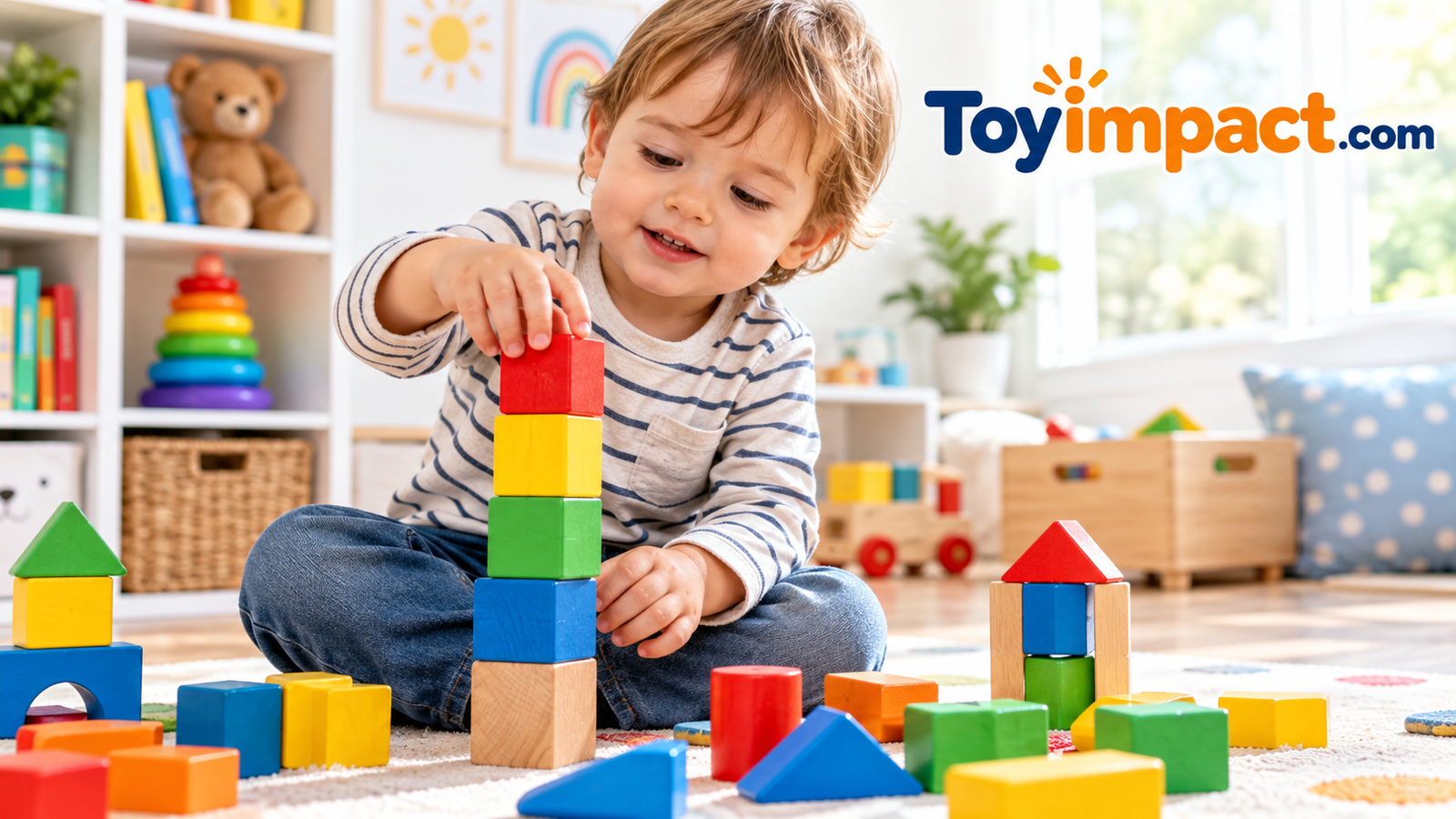
Rings, cups, and blocks teach grasp, release, and balance. They are among the first toys many babies master, and they grow with the child. A toddler might simply knock the tower over, a preschooler builds it carefully, and an older child turns it into a game with rules. If you want to go deeper, our explainer on what stacking toys are covers the variations.
Puzzles and shape sorters
Chunky knob puzzles are wonderful for early pincer practice, while jigsaw-style pieces develop precision and visual-spatial reasoning. The best puzzle toys offer a smooth difficulty curve so children stay challenged without giving up.
Lacing, threading, and beading
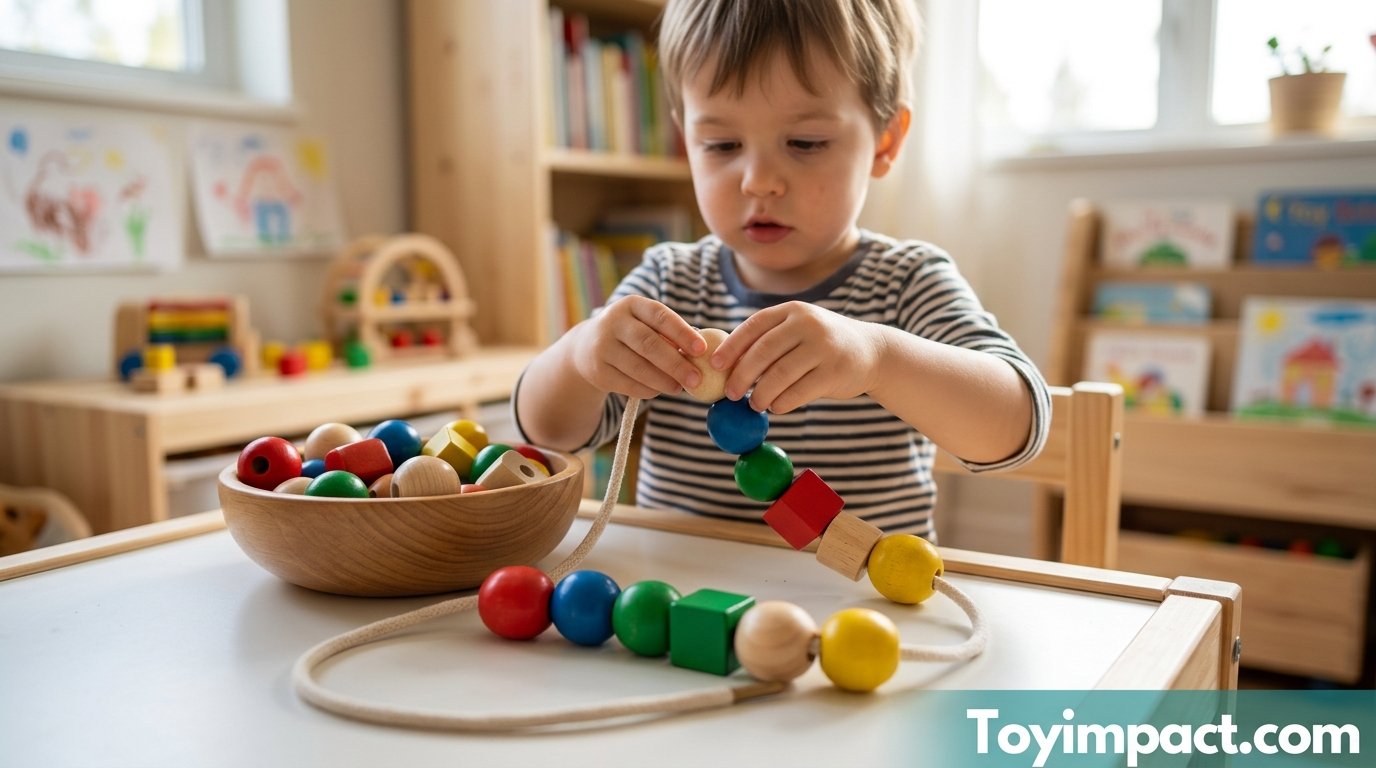
Large wooden beads on a shoelace or lacing cards with thick holes build bilateral coordination, which means using both hands together in different roles. One hand holds, the other threads. This skill later supports writing and cutting.
Pegboards and peg puzzles
Pressing colorful pegs into a board strengthens the fingertips and encourages counting, patterns, and color matching. Start with big pegs, then move to smaller ones as control improves.
Playdough and clay
Squeezing, rolling, pinching, and cutting dough is a full hand workout. It also builds the muscle endurance needed for longer writing sessions. Add child-safe tools, cookie cutters, and rolling pins for extra variety.
Building blocks and construction sets
From wooden blocks to interlocking bricks, building toys develop grip strength, planning, and creativity. Many wooden sets, such as those in our roundup of the best wooden toys, are durable enough to be handed down.
Busy boards and sensory boards
Latches, zippers, buttons, switches, and gears let children rehearse real-life tasks safely. They are especially popular with toddlers who love to fiddle with everything in the house.
Drawing and art supplies
Chunky crayons, washable markers, and finger paint are motor skill toys too. Moving from scribbles to shapes to letters is one of the most visible forms of fine motor progress.
Lacing cards, pegboards, busy boards, and more.
5. Types of Gross Motor Skill Toys
Gross motor toys are the noisy, wiggly, sweaty half of the category. They get the whole body involved and usually work best with a little open floor or backyard.
Ride-on and push toys
Push walkers, scooters, balance bikes, and tricycles build leg strength, balance, and steering. They also give children a taste of speed and independence. Our guide to the best ride-on toys breaks down which ones suit which ages.
Balls and throwing games
Rolling, kicking, throwing, and catching train coordination and timing. Start with soft, oversized balls for toddlers, and progress to smaller ones as tracking improves. Bean bags and target games are great for practicing aim.
Balance boards and stepping stones
Wobble boards, foam stepping stones, and balance beams strengthen the core and improve body control. Children love turning them into “lava” courses, which quietly builds planning and sequencing.
Tunnels, tents, and climbers
Crawling through a tunnel or scrambling over a foam climber works the whole body and builds spatial awareness. Indoor climbers are a lifesaver on rainy days.
Trampolines and hop toys
Mini trampolines and hopping balls develop leg power, rhythm, and coordination, and they burn off big energy fast. Always choose models with handles and follow the weight limits.
Water and sand play
Scooping, pouring, and carrying water uses arm strength and coordination, and it is wonderfully calming. See our picks for the best water table toys for the backyard if you want an outdoor setup.
Pretend play with movement
Dress-up, kitchen play, and role-play scenarios keep children on their feet, reaching, carrying, and pouring. Browse the best pretend play toys for ideas that blend imagination with movement.
Balance boards, ride-ons, tunnels, and active play sets.
6. Age-by-Age Guide to Motor Skill Toys
The best motor skill toy is one that meets your child where they are right now, with just a little stretch. The table below offers a general starting point. Remember that ages are typical ranges, not rules.
| Age | What They Are Working On | Great Toy Types |
|---|---|---|
| 0–6 months | Head control, reaching, grasping, tummy time strength | Soft rattles, play gyms, textured balls, tummy time mats |
| 6–12 months | Sitting, crawling, transferring objects, early pincer grasp | Stacking cups, soft blocks, activity cubes, board books |
| 1–2 years | Walking, stacking, scribbling, early pretend play | Push toys, chunky puzzles, shape sorters, big crayons |
| 2–3 years | Running, jumping, threading, simple puzzles | Ride-ons, lacing beads, playdough, building blocks |
| 3–4 years | Pedaling, cutting, drawing shapes, balancing | Tricycles, safety scissors, balance boards, pegboards |
| 4–6 years | Hopping, catching, writing letters, detailed building | Scooters, jigsaws, construction sets, craft kits |
Babies
In the first year, motor development is all about discovery. Babies learn that their hands belong to them, that objects can be grasped, and that dropping something makes a fun sound. Lightweight rattles, crinkly fabric books, and soft textured balls are ideal. Keep everything large enough to avoid choking risks.
Toddlers
Toddlers are practicing everything at once: walking, climbing, scribbling, stacking, and pretending. Budget matters at this age, since toddlers are gentle on nothing. Our list of the best toys under $20 for toddlers proves that great developmental play does not require a big spend.
Preschoolers
Three- to five-year-olds crave challenge and purpose. They want to build real things, draw real pictures, and ride real bikes. This is also a lovely age to explore educational toys for three-year-olds that combine motor practice with early counting, letters, and logic.
Early school age
Children around six and up refine what they already know. Their motor toys become craft kits, model building, sports gear, and more advanced puzzles. Precision and stamina are the goals now.
Find age-appropriate picks for babies, toddlers, and preschoolers.
7. Key Features of a Great Motor Skill Toy
With thousands of options, it helps to have a mental checklist. These are the traits that separate a toy your child will use for months from one that ends up at the back of a closet.
- Open-ended design. Toys that can be used in many ways, like blocks or dough, hold interest far longer than single-purpose gadgets.
- Right-sized challenge. It should be tricky enough to require effort but easy enough to lead to success within a few tries.
- Child-friendly grip. Pieces should fit small hands without being a choking hazard, with smooth edges and comfortable handles.
- Real feedback. A block that clicks, a peg that snaps in, or a ball that bounces tells the child instantly whether the movement worked.
- Durability. Motor skill toys get squeezed, thrown, and dropped. Sturdy construction pays off.
- Room to grow. Look for toys with multiple levels, extension packs, or uses that change with age.
- Easy to clean. Especially for babies and sensory play.
Fine motor toys vs. gross motor toys at a glance
| Consideration | Fine Motor Toys | Gross Motor Toys |
|---|---|---|
| Space needed | Small table or floor patch | Open room or yard |
| Energy level | Calm, focused | Active, energetic |
| Storage | Small bins, easy | Bulky, needs planning |
| Typical price range | Low to moderate | Moderate to higher |
| Good for | Quiet time, travel, waiting rooms | Burning energy, outdoor play |
If you follow the philosophy of child-led learning, you will notice many of these features match the ideas behind Montessori materials. Curious about when to begin? Check our piece on the best age to introduce Montessori toys.
Sturdy, open-ended toys built to last through years of play.
8. Safety and Materials: What Parents Should Check
Motor skill toys are meant to be handled, mouthed, thrown, and sat on, so safety deserves a thoughtful look. A few quick checks go a long way.
Choking hazards
For children under three, avoid toys with small parts that fit inside a toilet paper tube. Beads, pegs, and building pieces should be large. Read the age label and treat it as a safety guide, not a suggestion.
Materials
Solid wood, food-grade silicone, natural fabric, and BPA-free plastics are all popular. Wood is sturdy and classic, silicone is soft and easy to clean, and plastic is light and affordable. Whichever you choose, look for non-toxic finishes and water-based paints.
Safety standards
In the United States, look for toys that state they meet the ASTM F963 toy safety standard, and check that the seller is reputable. Avoid unbranded items with no safety information.
Magnets and batteries
Strong magnets and button batteries are serious swallowing hazards. Choose toys where compartments are screw-secured and magnets are sealed inside.
Gear for active play
For ride-ons, scooters, and balance bikes, a well-fitted helmet is a must. Check weight limits, look for wide stable bases, and supervise play near stairs, driveways, and water.
Regular inspection
Every few weeks, look over toys for cracks, splinters, loose parts, or peeling paint. Retire anything that is damaged. Keeping plastic toys hygienic matters too, and our guide on how to clean plastic toys safely walks you through gentle, effective methods.
Wood toys: pros
- Very durable
- Timeless and sturdy
- Often smooth and tactile
Wood toys: cons
- Can be heavier
- Not always waterproof
- Usually pricier
Look for clear age labels and quality materials.
9. How to Choose the Right Motor Skill Toys for Your Child
Now for the practical part. With the basics covered, here is a simple approach to picking toys without second-guessing yourself.
Step back and observe
Watch your child play for a few days. Do they love climbing furniture? They probably need more gross motor outlets. Do they tear pages out of books or pick at tiny objects? Fine motor toys may be a hit. Their behavior is the best guide you have.
Match the toy to the stage
Choose something just a step ahead of what they can already do. If they can stack three blocks, try a set with ten. If they can walk steadily, introduce a push toy with a bit more challenge.
Prioritize versatility
A set of blocks that works as a tower, a road, and a zoo beats a gadget that does one trick. Versatile toys extend playtime and give you better value.
Think about your space
Big climbers and ride-ons need room. If you live in a smaller home, favor compact options and look up ideas from our guide to organizing toy storage in small spaces.
Consider siblings
Toys that scale across ages get more use in busy homes. Cooperative sets, large floor puzzles, and building kits keep everyone engaged. For inspiration, see the best toys for siblings to play together.
Set a sensible budget
Some of the best motor skill toys cost very little: a set of measuring cups, a bag of pom-poms with tongs, or a cardboard box tunnel. Spend on sturdy staples, and get creative with the rest.
Buying purpose-made toys
- Designed with age and safety in mind
- Clear developmental goals
- Usually more durable
Watch out for
- Pricey sets with too many pieces
- Toys that do everything for the child
- Trends over usefulness
A few versatile toys go a long way.
10. Motor Skill Toys for Sensory Needs and Extra Support
Some children need a little more support building motor skills, whether because of developmental differences, sensory sensitivities, or simply a slower start. Motor skill toys can play a wonderful role here, ideally alongside guidance from a pediatrician or occupational therapist.
Sensory-friendly choices
Children who seek or avoid certain textures often benefit from toys that offer controlled sensory input. Think textured balls, weighted lap pads, therapy putty, and squishy fidget items. If you are shopping for a child with autism, our gift guide to sensory toys for autism highlights options that are both engaging and calming.
Adaptive features
Look for larger handles, easy-grip pieces, and toys that work with limited strength. Some puzzles come with thick knobs; some building sets use magnets or soft pieces that connect without pinching.
Work with professionals
An occupational therapist can suggest specific exercises and toys tailored to your child. They often use simple household items, so many of their ideas are budget-friendly and easy to repeat at home.
Keep it joyful
The single most important rule is to keep it fun. If a toy becomes a task, the benefits shrink. Celebrate effort more than results, and follow your child’s lead on what they enjoy.
Helpful cue: If your child seems consistently frustrated by tasks their peers manage easily, mention it at your next checkup. Early support can make a big difference, and it is never something to feel guilty about.
Textured, calming, and grip-friendly picks.
11. Building a Play Routine: Rotation, Storage, and Care
Great toys only help if children actually engage with them. A little planning makes the difference between a toy that gets used daily and one that gathers dust.
Rotate instead of overload
Too many choices can overwhelm a child and shorten attention spans. Keep a small selection out and store the rest, swapping them every so often. Not sure of the ideal rhythm? Read our advice on how often you should rotate kids’ toys.
Create an inviting setup
Low, open shelves let children pick their own toys, which builds independence. Group toys in trays or baskets by type: stacking, puzzles, art, building. A clear, calm layout invites deeper play.
Add short, daily motor moments
You do not need a formal schedule. Ten minutes of dough after breakfast, a balance walk on the way to the bath, or a bean bag toss before dinner adds up over weeks. Consistency beats intensity.
Take play on the road
Travel does not have to pause development. Compact fine motor toys like lacing cards, magnetic puzzles, and silicone pop-its are great for waiting rooms. If you have a long trip coming, check our lists of the best toys for car rides and the best travel toys for airplanes.
Play alongside them
Sitting on the floor with your child, even briefly, turns a toy into a shared experience. Narrate what they are doing, offer a small challenge, and let them lead. Your attention is the best “feature” any toy can have.
Introducing more advanced toys
As children grow, you can move toward building sets and logic toys. If you want to ease preschoolers into more structured challenges, our guide on how to introduce STEM toys to preschoolers offers a gentle roadmap, and the best STEM toys list can help you shop.
Storage trays, baskets, and activity mats for tidy play.
12. Common Mistakes to Avoid (and When to Ask for Help)
Even well-meaning parents fall into a few traps. Knowing them in advance saves money and stress.
Buying for the future child
It is tempting to buy the “big kid” version, but toys that are far too advanced lead to frustration. Choose for who your child is today, with a bit of room to grow.
Doing it for them
When a child struggles to fit a shape or thread a bead, the urge to jump in is strong. Try offering a small hint instead, like turning the piece slightly, and let them finish. The struggle is part of the learning.
Relying on screens and gadgets
Tablets and battery-powered gadgets can be fun in moderation, but they rarely replace hands-on movement. If your child seems bored with everything, you may enjoy our thoughts on why kids get bored of toys so fast. Often the fix is fewer toys, not more.
Ignoring the outdoors
Nothing beats grass, hills, sand, and puddles for gross motor growth. A few minutes outside each day offers more variety than any playroom can.
Comparing to other kids
Every child has strengths and off days. Comparing timelines rarely helps and often adds pressure. Focus on progress over time.
When to check in with a professional
Talk with your pediatrician if your child seems to lose skills they had before, avoids using one hand consistently, has unusual stiffness or floppiness, or falls well behind in movement compared with expectations for their age. Early conversations are a positive step, not a cause for alarm.
Pick one or two toys and build from there.
Frequently Asked Questions About Motor Skill Toys
What are motor skill toys in simple terms?
They are toys that help children practice physical movement. Fine motor toys train small hand and finger movements, while gross motor toys train large body movements like walking, jumping, and balancing.
What are examples of fine motor skill toys?
Stacking cups, lacing beads, pegboards, chunky puzzles, playdough, busy boards, building blocks, and large crayons are all good examples.
What are examples of gross motor skill toys?
Balls, push walkers, balance boards, tricycles, scooters, tunnels, foam climbers, and mini trampolines are common choices that get the whole body moving.
At what age should I start buying motor skill toys?
You can begin in the first few months with soft rattles, play gyms, and textured toys for tummy time. Choose toys that match your baby’s current abilities and always follow the age labels.
Are motor skill toys the same as educational toys?
They overlap but are not identical. Educational toys teach concepts like letters, numbers, or logic, while motor skill toys focus on movement. Many toys, such as puzzles and building sets, do both.
Do expensive motor skill toys work better?
Not necessarily. Price often reflects materials and branding rather than developmental value. Simple, well-made toys and everyday household items can be just as effective.
How many motor skill toys does my child need?
Fewer than you think. A small, well-chosen collection that covers both fine and gross motor play is plenty, especially when you rotate items to keep things fresh.
Can motor skill toys help with handwriting?
Yes. Activities like playdough, threading, building, and drawing strengthen the hand muscles and coordination that support pencil control later on.
Are wooden toys better than plastic for motor skills?
Neither is automatically better. Wood is sturdy and tactile, while plastic can be lighter and cheaper. What matters most is safe design, appropriate size, and whether the toy encourages purposeful movement.
How long should my child play with motor skill toys each day?
There is no magic number. Short, frequent sessions woven into daily life often work better than long structured ones. Follow your child’s interest and stop when they lose enthusiasm.
What if my child does not seem interested in these toys?
Try changing the setup, joining in yourself, or offering a different type of toy. Interests shift quickly. If reluctance continues alongside other concerns, mention it to your pediatrician.
Can I make DIY motor skill toys at home?
Absolutely. Sorting pom-poms with tongs, threading pasta on string, building cardboard tunnels, and making homemade playdough are budget-friendly ways to build skills. Always supervise and avoid small parts for young children.
Conclusion: Small Toys, Big Steps Forward
Motor skill toys may look simple, but they quietly support some of the most important work of childhood: learning to control a body and hands that are growing and changing every day. Whether your child is stacking their first cups, climbing over pillow mountains, or carefully threading beads, each moment of play is laying groundwork for confidence, independence, and learning.
You do not need a room full of gadgets. Start by watching what your child enjoys, choose a few toys that offer just the right challenge, keep safety front and center, and make time to play together. Blend fine motor and gross motor activities, rotate toys to keep them exciting, and celebrate every small victory.
Most of all, remember that play should feel like play. When children are laughing, concentrating, and proud of what they have done, the skills take care of themselves.
Explore top-rated motor skill toys and start building those skills today.