What Are Sensory Toys? A Parent’s Complete Guide to Play That Engages Every Sense
Squishy, glowing, crunchy, bumpy, jingly: sensory toys are built to be felt, seen, heard and moved with. Here is what they are, why they matter, and how to pick ones your child will actually love.
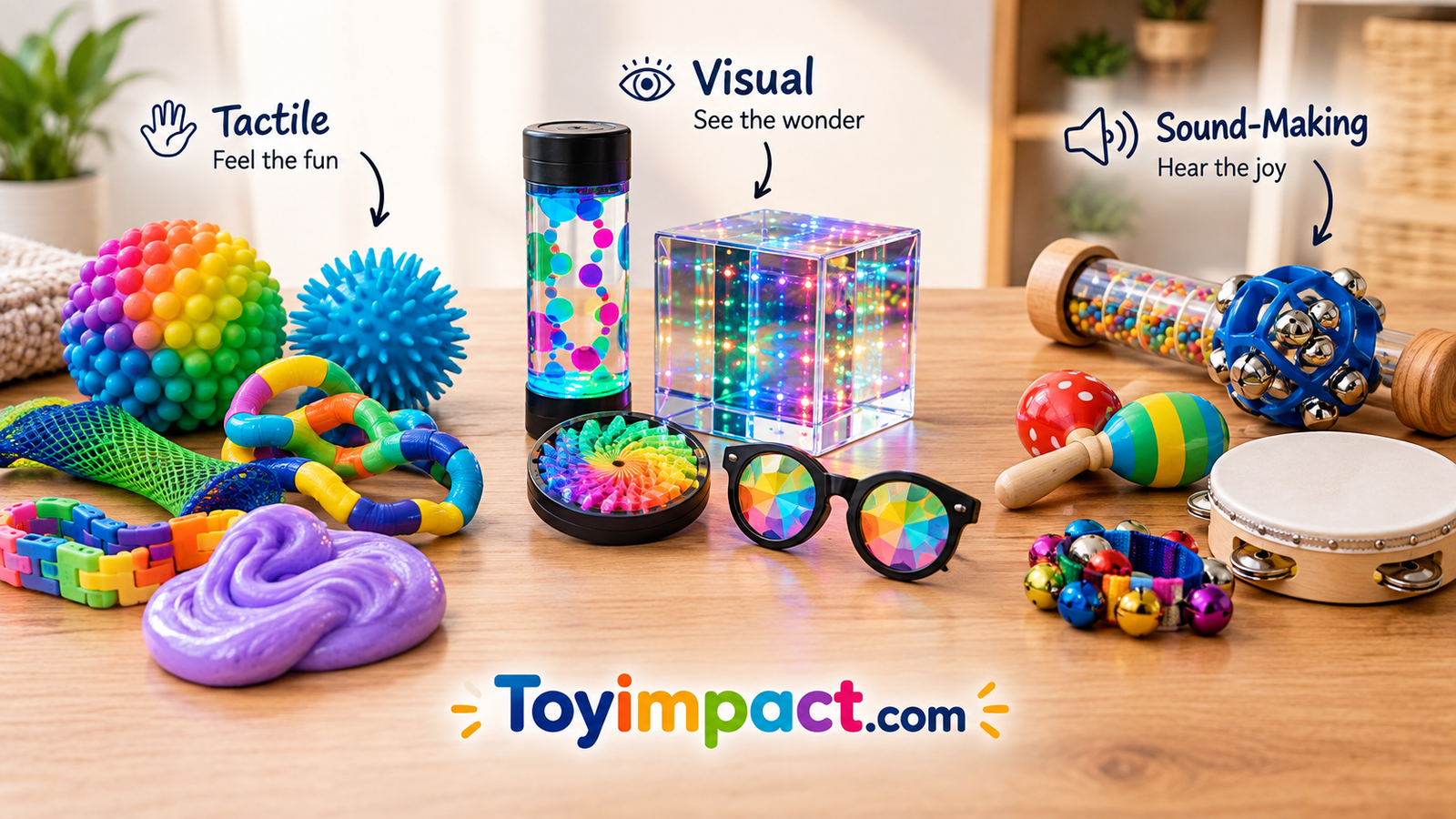
Walk into any toy aisle and you will see them: glittering liquid timers, stretchy noodle strings, bumpy rubber balls, weighted plush animals, rainbow rice bins. They look like ordinary toys at first glance, yet parents, teachers and therapists keep recommending them with a special kind of enthusiasm. So what are sensory toys, exactly, and why do they get so much attention?
In short, sensory toys are playthings designed to stimulate one or more of a child’s senses in a deliberate, engaging way. They invite a child to touch, look, listen, squeeze, spin, chew, balance or explore, and that hands-on exploration is one of the main ways young brains learn about the world. This guide walks through everything: the science in plain language, the different categories, what to buy at each age, how to keep things safe and clean, and how to weave sensory play into an ordinary day at home. Along the way you will find links to related guides on Toy Impact for going deeper.
1. What Sensory Toys Actually Are
A sensory toy is any toy whose main appeal comes from how it feels, looks, sounds, smells or moves, rather than from a storyline or a set of rules. A textured ball has no instructions. A glitter bottle has no goal. What they offer is input: a pattern of sensation that a child can seek out, repeat and study at their own pace.
That is what separates them from a lot of other toys. A board game asks you to follow rules. A construction set asks you to build something. A sensory toy simply asks you to notice. The child decides what to do with the experience, and this open-endedness is precisely why the category works for such a wide range of ages and abilities.
A simple working definition
If you want a one-line test, ask this: is the sensation itself the point of the toy? If the answer is yes, it is a sensory toy. A rainstick, a squishy stress ball, a bin of dried beans with scoops and a mirror-backed light panel all pass the test, even though they look nothing alike.
Where the idea came from
The term grew out of occupational therapy and early childhood education. Therapists noticed that children who struggled to process everyday sensations, such as scratchy clothes, loud rooms or unexpected touch, often responded well to structured, playful exposure to those sensations in a safe setting. Educators noticed that babies and toddlers learn best when several senses are involved at once. Toy makers followed, and the shelves filled up. Today the label covers everything from a five-dollar teether to a full multi-sensory room, so it helps to know what you are actually shopping for.
Browse popular sensory toys for kids
Shop Sensory Toys on Amazon2. The Senses Behind the Play
Most of us learned that humans have five senses. Therapists and researchers usually talk about at least eight, and knowing all of them makes it much easier to understand why sensory toys are so varied.
The familiar five
Touch covers texture, temperature, pressure and vibration. Sight covers color, light, movement and pattern. Hearing covers pitch, rhythm and volume. Taste and smell are closely linked and often engaged together, especially in babies who explore with their mouths and in kitchen-based play with herbs, fruit or dough.
The three hidden senses
Vestibular sense is your sense of balance and motion. It tells you when you are spinning, swinging, tilting or falling. Rocking horses, balance boards and swings all feed this sense.
Proprioception is your sense of where your body is in space and how much force your muscles are using. It is why you can pick up an egg without crushing it. Heavy work, such as pushing, pulling, squeezing, carrying and climbing, gives proprioceptive input. Weighted lap pads and resistance putty are built around it.
Interoception is your awareness of internal signals: hunger, thirst, a racing heart, needing the bathroom. It is subtler and harder to target with a toy, but calming, rhythmic sensory play can help children practice noticing how their bodies feel.
Why the extra senses matter
When people picture sensory toys, they often imagine only bright lights and squishy things. Yet many of the most effective tools work on the hidden senses. A child who seems restless may not need more stimulation for the eyes at all; they may be craving deep pressure or movement. Understanding the full list helps you match the toy to the need instead of guessing.
Find toys that engage touch, sound and movement
See Multi-Sensory Picks3. How Sensory Toys Work in the Brain
Every time a child squeezes a soft ball or watches glitter swirl through water, sensory nerves send signals to the brain. The brain sorts those signals, decides what is important, links them to earlier experiences and builds or strengthens connections. Repeated, varied experiences make those connections sturdier, which is why young children can spend twenty minutes pouring rice from one cup to another without getting bored.
Sensory processing in plain language
Sensory processing is how the nervous system receives, organizes and responds to information from the body and environment. Most children develop it smoothly through everyday life. Some children are more sensitive than average, so a tag in a shirt or a hand dryer can feel overwhelming. Others are less sensitive and actively seek intense input by crashing, spinning or chewing. Neither pattern is a character flaw; it is simply how their nervous systems are tuned.
Regulation: the calm and alert balance
You will often hear the word regulation around sensory toys. Regulation means moving between calm and alert states as the situation demands. A well-chosen sensory activity can nudge a child in either direction. Slow, rhythmic input, like a gentle liquid timer or a weighted blanket, tends to calm. Bouncy, crunchy or energetic input tends to wake up a sluggish body. Toys will not fix big feelings on their own, but they give children a safe, physical outlet while adults help them name and manage emotions.
Calming sensory tools for busy little brains
Explore Calming Toys4. The Main Types of Sensory Toys
Sorting sensory toys by the sense they target is the easiest way to shop. Many products overlap, so treat the categories as a map, not a set of walls.
| Type | Sense Targeted | Examples | Best For |
|---|---|---|---|
| Tactile | Touch | Squishy balls, textured mats, kinetic sand, play dough, sensory bins | Exploring textures, hand strength, calming |
| Visual | Sight | Liquid motion timers, light-up cubes, glitter jars, mirror panels | Focus, tracking, soothing screens-free time |
| Auditory | Hearing | Rainsticks, shakers, chimes, bells, sound books | Cause-and-effect, rhythm, listening |
| Oral | Mouth and taste | Teethers, chewable pendants, textured spoons | Babies, teething, oral seekers |
| Proprioceptive | Body awareness | Weighted plush, resistance putty, therapy bands, tunnels | Heavy-work needs, grounding |
| Vestibular | Balance and motion | Wobble cushions, mini trampolines, swings, balance boards | Movement seekers, coordination |
Tactile toys
These are the classics. Think of stretchy strings, poppable bubble fidgets, floam, water beads (with careful supervision) and sensory bins filled with rice, oats or pasta. Tactile play builds finger strength and gives children vocabulary for describing the world: rough, smooth, sticky, cold, bumpy. If your child loves getting their hands into things, our guide to motor skill toys pairs nicely with tactile play.
Visual toys
Visual sensory toys use color, light and slow movement to hold attention. Liquid timers, spinning discs and glitter bottles are favorites because the motion is predictable and gentle. They are especially popular in calm-down corners and at bedtime. You will find many of them in our roundup of quiet time toys.
Auditory toys
Musical and sound-making toys teach cause and effect: shake it, hear it. Rainsticks and ocean drums add a soothing layer, while drums and xylophones invite energetic play. For more ideas, see what we cover in musical toys.
Oral and chewable toys
Babies naturally explore with their mouths, and some older children continue to chew on clothing or pencils for sensory input. Food-grade silicone teethers and chew tools give them a safe alternative. Always check that any chewable product is made for the child’s age and is free from small detachable parts.
Proprioceptive and vestibular toys
These toys target movement and body awareness. Crawl-through tunnels, mini trampolines, wobble seats and swings give large-muscle input that many children crave. They are less likely to sit quietly on a shelf and more likely to turn into an obstacle course, which is exactly the point.
Compare tactile, visual and sound toys in one place
Shop Variety Sets5. Key Benefits of Sensory Toys
The appeal is not just that children enjoy them. Sensory play supports several areas of development at once, often without a child realizing they are practicing anything.
Fine and gross motor development
Squeezing, pinching, scooping and pouring strengthen the small muscles of the hands and fingers that later support writing and buttoning. Climbing, bouncing and balancing build gross motor skills, core strength and coordination.
Language growth
Sensory play generates natural conversation. Adults can describe what the child is doing: “That feels bumpy,” “The glitter is falling slowly,” “You squeezed it so hard!” Descriptive words paired with a real sensation stick more easily than words learned from a flashcard.
Focus and attention
Many children concentrate better when their hands or bodies are gently occupied. A quiet tactile object during story time, for example, can help a wiggly child stay with the group.
Emotional regulation
A predictable, soothing sensory experience gives children a tool for winding down after a hard day. Over time, they learn to reach for it on their own, which is a valuable self-soothing skill.
Cognitive skills and curiosity
Sensory play invites early science thinking: what happens when water meets sand, why does the ball bounce, which one is heavier? That curiosity connects directly to STEM toys and later learning.
Creativity and open-ended play
Because sensory materials have no fixed outcome, children invent their own uses. A bin of colored rice becomes a farm, a desert or a bakery. That freedom overlaps with what we describe in creative toys.
Pros
- Supports many developmental areas at once
- Works for a wide age and ability range
- Often inexpensive and easy to DIY
- Gives children a calm, screen-free outlet
- Encourages independent, child-led play
Cons
- Can be messy, especially bins and slime
- Some items pose choking risks for small children
- Too much stimulation can overwhelm sensitive kids
- Cheap products may have weak materials or strong odors
- Not a replacement for professional support when needed
Motor skill and tactile toys parents love
View Fine Motor Toys6. Sensory Toys by Age
The right toy changes as a child grows. What delights a four-month-old can bore a four-year-old, and what suits a school-age child may be unsafe for a baby. Use this table as a starting point and always follow the manufacturer’s age grading.
| Age Range | What They Are Exploring | Good Sensory Options |
|---|---|---|
| 0 to 6 months | Looking, listening, first grasping | High-contrast cards, soft crinkle books, rattles, play gyms, mirrors |
| 6 to 12 months | Mouthing, banging, reaching | Teethers, textured balls, soft blocks, treasure baskets of safe household items |
| 1 to 2 years | Pouring, stacking, cause and effect | Shakers, water play, fabric squares, large-piece sensory bins, ball pits |
| 2 to 3 years | Messy play, pretend, big movement | Play dough, kinetic sand, tunnels, mini trampolines, musical instruments |
| 3 to 5 years | Making, sorting, self-calming | Liquid timers, putty, sensory bottles, balance boards, slime |
| 6 years and up | Focus, stress relief, hands-on hobbies | Fidget tools, weighted lap pads, therapy bands, sensory craft kits |
Babies and young infants
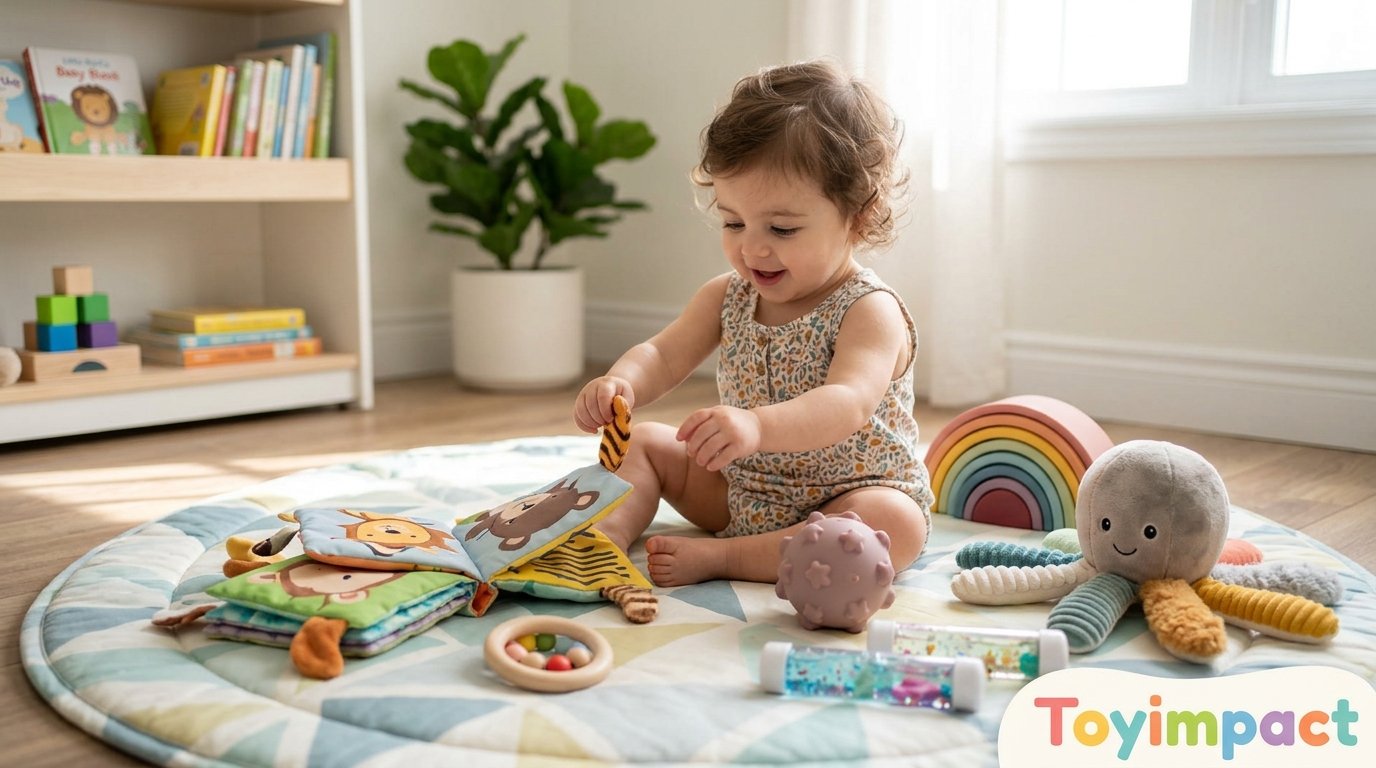
For the youngest children, simple is best. A baby needs a few interesting things to look at, hold and mouth, not a busy panel of flashing lights. Soft, washable, easy-to-grip toys are ideal, and a tummy-time mat with different textures does a lot of work.
Toddlers
Toddlers want to dump, fill, pour and squish. A shallow tray of dry oats with scoops or a tub of water with cups can keep them busy for surprising stretches. Many stacking toys also offer tactile variety through different textures and shapes. If you are shopping on a tight budget, our list of toys under $20 for toddlers includes several sensory-friendly choices.
Preschoolers and school-age children
Older children use sensory tools more purposefully. They may reach for putty to stay calm before a test or a weighted animal to settle at bedtime. They also enjoy more elaborate projects such as homemade slime, layered sensory jars and themed bins tied to a story or season. Our article on the best age to introduce Montessori toys is a useful companion, since Montessori materials lean heavily on tactile discovery.
Age-appropriate sensory toys for every stage
Shop Toddler Sensory Toys7. Sensory Toys for Autism, ADHD and Sensory Processing Differences
Sensory toys are often associated with neurodivergent children, and for good reason. Many autistic children and children with ADHD or sensory processing differences experience the world with heightened or muted sensitivity. Tools that offer predictable, controllable input can make daily life more comfortable.
Seekers and avoiders
It helps to think in terms of two broad patterns. Sensory seekers crave more input: they love spinning, crashing, chewing, loud sounds and strong textures. Sensory avoiders are easily overwhelmed and prefer soft, quiet, predictable experiences. Some children are both, depending on the sense and the day. Watching what your child chooses, and what they push away, tells you far more than any product label.
Matching toys to needs
A seeker might enjoy a chewable pendant, a crash pad or resistance bands. An avoider might prefer a soft weighted plush, noise-reducing headphones and a slow liquid timer. Neither list is universal, so introduce new items gradually and let the child lead. Our sensory toys for autism gift guide goes deeper on specific products and gift ideas.
Respecting comfort
Never force a child to touch or use something that distresses them. The goal is comfort and confidence, not toughening up. If a child shows persistent distress around everyday sensations, consider speaking with a pediatrician or occupational therapist, who can build a personalized plan.
Thoughtful sensory gifts and tools
See Sensory Gift Ideas8. Sensory Toys vs Fidget Toys vs Regular Toys
People often use these terms interchangeably, so let us clear up the differences.
| Feature | Sensory Toys | Fidget Toys | Regular Toys |
|---|---|---|---|
| Main purpose | Explore or regulate through sensation | Occupy hands to help focus | Play, pretend, build or compete |
| Size | Small to room-sized | Small, pocketable | Varies widely |
| Typical use | Free exploration, calm-down time | Quiet use at desks or in class | Structured or imaginative play |
| Age range | Newborn through adult | Usually 4 and up | Age-specific |
| Noise level | Quiet to loud | Usually quiet | Varies |
In practice, fidget toys are a subset of sensory toys built for discreet, portable use. A regular toy can also be sensory if its texture, sound or movement is central to the fun. The label matters less than whether the toy serves your child’s needs. Wooden toys, for instance, offer a warm, tactile feel that many children love, and our best wooden toys guide shows how natural materials can double as gentle sensory tools.
Discreet fidgets for school and travel
Browse Fidget Toys9. How to Choose the Right Sensory Toys
With so many options, choosing can feel overwhelming. A short checklist keeps things simple.
Start with your child, not the product
Notice what your child is already drawn to. Do they squeeze everything? Stare at spinning objects? Cover their ears in loud places? Those clues point to their sensory profile and guide your shopping.
Checklist before you buy
- Age grading: Follow the recommended age and check for small parts.
- Material quality: Look for non-toxic, BPA-free, phthalate-free plastics or food-grade silicone for anything mouthed.
- Intensity: Choose gentle sound and light for sensitive kids; brighter and louder for seekers.
- Durability: Toys that get squeezed, stretched and chewed need to hold up.
- Cleanability: Wipeable or washable surfaces save you a lot of trouble.
- Versatility: Open-ended items last longer than single-trick gadgets.
- Noise level: Consider the rest of the household, especially for classroom or apartment use.
Start small
Resist the urge to buy a large set on day one. Pick two or three toys covering different senses, watch how your child uses them and add from there. Children often gravitate toward a single favorite, and you will save money by learning what it is first.
Think about where it will be used
A car ride calls for compact, quiet items. Our guides to toys for car rides and long trips and travel toys for airplanes highlight options that keep hands busy without making a mess. For warm days outside, water play is a sensory goldmine; see water table toys for the backyard.
Start with a small, versatile sensory set
Find a Starter Set10. Safety, Materials and Cleaning
Because sensory toys are meant to be touched, squeezed and often mouthed, safety deserves extra attention.
Choking and small parts
Children under three are at higher risk of choking. Avoid loose beads, small balls, water beads and button batteries unless the product is clearly designed and labeled for the age of your child. Supervise all sensory bin play with young children, and choose large fillers like big pasta shapes or oats.
Water beads and slime
Water beads expand dramatically when soaked and can be dangerous if swallowed, so many pediatric groups advise keeping them away from young children altogether. Slime and putty should be made from non-toxic ingredients and stored in sealed containers.
Materials to look for
Food-grade silicone, untreated hardwood, organic cotton and BPA-free plastics are safe choices for most sensory items. Be cautious with strong chemical smells, peeling paint and products with no clear safety labeling.
Keeping toys clean
Sensory toys pick up germs quickly since they are touched, drooled on and dropped. Wipe hard plastic with mild soap and water, machine wash fabric items when the label allows and let everything dry fully to prevent mold, especially in bath and water toys. For a step-by-step routine, read our guide to cleaning plastic toys safely.
Safe, non-toxic sensory toys for little hands
Shop Non-Toxic Options11. Using Sensory Toys at Home
Buying the toys is the easy part. Getting real value from them takes a bit of intention.
Create a calm-down corner
A small cozy nook with a beanbag, a soft blanket, a liquid timer and a few chewy or squishy items gives your child a place to reset. Present it as a comfortable retreat, not a punishment spot. Let your child help set it up so it feels like theirs.
Build sensory moments into routines
Use sensory play to smooth tricky transitions. A bin of dried beans while dinner cooks, a heavy-work chore like carrying laundry before homework, or a slow bedtime glitter jar can all reduce friction without any big effort.
Rotate instead of dumping everything out
A wall of toys can overwhelm a sensitive child and dull everyone’s interest. Keep a few items out and store the rest, swapping them every week or two. Our post on how often to rotate kids’ toys explains the timing, and organizing toy storage in small spaces helps if you are short on room.
Play alongside your child
You do not need to direct the play. Simply sit nearby, describe what you see and follow your child’s lead. Your calm presence teaches as much as the toy does. Sensory play also opens the door to make-believe, which you can extend with ideas from our pretend play toys list.
Keep it inclusive
Sensory needs have nothing to do with gender, and children of every kind enjoy tactile, musical and movement-based play. If you want to think about broader toy choices, see our overview of gender-neutral toys.
Set up a cozy calm-down corner
Shop Calm-Down Items12. Common Mistakes and Easy DIY Ideas
Mistakes to avoid
- Overstimulating: More lights, sounds and textures is not always better. Watch for covered ears, irritability or shutting down.
- Buying by hype: A viral toy may not suit your child at all.
- Ignoring supervision: Even gentle-looking sets can have small parts.
- Expecting instant calm: Skills develop with practice, so keep the tools available when everyone is relaxed, not only during meltdowns.
- Skipping the mess plan: A tray, a mat or a towel underneath makes sensory play far more relaxing for adults.
Simple DIY sensory ideas
- Sensory bottle: Fill a clear plastic bottle with water, clear glue and glitter, then seal the cap with strong glue.
- Rice or oat bin: Add scoops, cups and small safe objects to hunt for.
- Texture board: Glue scraps of felt, sandpaper, foil and corduroy onto cardboard.
- Homemade play dough: Flour, salt, water and oil make a soft dough; add a drop of scent for extra fun.
- Balance path: Lay cushions and tape lines across the floor for a vestibular challenge.
DIY options are wonderfully budget friendly, and they let you tailor the sensation to your child. Pair them with a few store-bought favorites for the best of both worlds.
Add finishing touches to your DIY sensory play
Get Sensory Bin SuppliesFrequently Asked Questions About Sensory Toys
What are sensory toys in simple terms?
They are toys designed mainly to stimulate the senses, such as touch, sight, hearing, balance or body awareness, so that children can explore and regulate themselves through play.
What do sensory toys do for kids?
They support motor skills, language, focus, curiosity and emotional regulation. They also give children a safe, enjoyable way to explore textures, sounds and movements.
Are sensory toys only for children with autism?
No. Every child benefits from sensory experiences. They are especially helpful for autistic children and those with ADHD or sensory processing differences, but they are for everyone.
At what age can babies start using sensory toys?
Right from birth, in simple forms like high-contrast cards, soft rattles and textured play mats. Keep items age-appropriate and supervise closely.
Are sensory toys the same as fidget toys?
Not exactly. Fidget toys are a type of sensory toy made for small, quiet hand movements. Sensory toys also include large items like tunnels, swings and sensory bins.
How many sensory toys does a child need?
Just a few. Two to four well-chosen items covering different senses, rotated regularly, usually work better than a large pile.
Can sensory toys be overstimulating?
Yes. Bright lights, loud sounds and busy textures can overwhelm sensitive children. Watch your child’s reactions and scale back if you see distress.
Are sensory toys safe for toddlers who put everything in their mouths?
They can be, as long as they are large enough not to be a choking hazard, made of non-toxic materials and labeled for the child’s age. Always supervise.
Do sensory toys help with anxiety or focus?
Many children find that calming or fidget-style tools help them settle and concentrate. They are supportive tools, not treatments, so talk with a professional about significant concerns.
What are some cheap or homemade sensory toy ideas?
Sensory bottles, rice bins, texture boards, homemade play dough and balance paths made from cushions are all inexpensive and easy to set up.
How do I clean sensory toys?
Wipe hard plastics with mild soap and water, machine wash fabric items if the label allows and dry everything thoroughly. Avoid harsh chemicals on anything a child will mouth.
Can adults use sensory toys too?
Absolutely. Putty, fidget tools, weighted lap pads and desk toys are popular with adults who want to stay calm and focused.
Conclusion: Sensory Play Is Simply Learning Through Living
So, what are sensory toys? They are tools that turn touch, sight, sound and movement into opportunities to explore, learn and settle. They range from a humble bin of oats to a fancy liquid timer, and their real power lies in matching the right sensation to the right child at the right moment. Watch your child, start small, prioritize safety and let curiosity lead. You will quickly discover which textures they crave, which sounds they love and which movements help them feel at home in their own body.
Whether you are shopping for a baby, a busy toddler or a school-age child who needs something to hold during homework, there is a sensory toy that fits. Take your time, enjoy the process and remember that play is never wasted time.
Ready to build your child’s sensory toolkit?
Shop Sensory Toys Now