Best Dollhouse: The Definitive Buying Guide for Every Age, Budget, and Play Style
From portable wooden starter houses to sprawling four-story princess castles to build-it-yourself miniature kits for teens and adults — everything you need to choose the perfect dollhouse without second-guessing yourself.
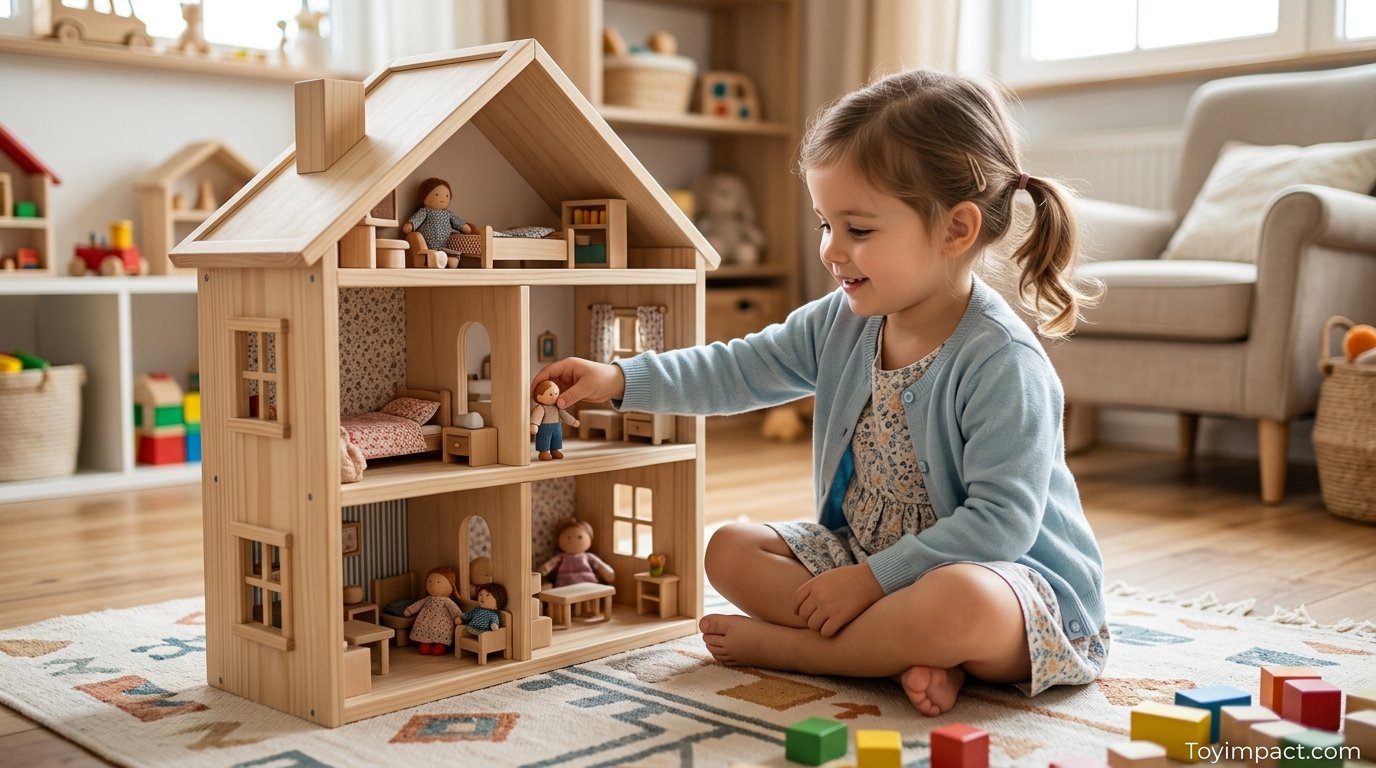
Why Dollhouses Still Matter in a Screen-Saturated World
There is a particular kind of magic that happens when a child opens the tiny front door of a dollhouse and carefully places a miniature family inside. It is not the magic of flashing lights or algorithmically served entertainment — it is the quieter, deeper magic of a child constructing a world. In an era when screens compete fiercely for every spare minute of a child’s attention, the dollhouse remains one of the few toys that can hold a young person’s focus for thirty, forty, even sixty minutes at a stretch, with no battery required and no software update pending.
Part of the reason dollhouses endure is biological. Between the ages of two and eight, children enter what developmental psychologists call the symbolic play stage — a period where a block can become a phone, a blanket can become a castle, and a small plastic figure can become a person with a name, a job, and a complicated emotional life. A dollhouse provides the perfect scaffold for this kind of play. It offers a recognizable structure — rooms, doors, stairs, furniture — that anchors a child’s imagination without constraining it. The house gives shape to stories, but the child writes them.
There is also growing research suggesting that pretend play with structured toys like dollhouses supports the development of executive function — the set of cognitive skills that includes working memory, flexible thinking, and self-regulation. When a four-year-old decides that the doll is hungry, walks the figure to the kitchen, selects a tiny plate, and narrates the meal, she is practicing planning, sequencing, and perspective-taking all at once. These are the same skills she will later use to organize a book report, navigate a social conflict, or manage her time on a test.
For parents, dollhouses offer a rare convergence: a toy that children genuinely love and one that supports meaningful development without feeling like homework. They are also endlessly shareable — siblings, friends, and visiting cousins can all participate in the same dollhouse narrative, making them one of the best toys for siblings to play together across age gaps.
In this guide, we have researched, compared, and hands-on evaluated the top dollhouses on the market — from the compact, portable Melissa & Doug classics to the sprawling four-story fantasy houses, from toddler-safe interactive models to the growing world of build-it-yourself miniature kits that are captivating teens and adults. Whatever your child’s age, play style, or your budget, this guide will help you make a confident choice.

How to Choose the Right Dollhouse: The Complete Decision Framework
Walking into a toy store — or scrolling through an online marketplace — and seeing the sheer variety of dollhouses available can be paralyzing. Tiny studio apartments sit next to three-foot-tall Victorian mansions. Wood models compete with plastic ones. Some come fully furnished; others arrive as a box of parts and a dream. Before you look at a single product, it helps to run through a few key questions that will narrow the field dramatically.
Age and Developmental Stage
This is the single most important factor. A dollhouse designed for a five-year-old — with small furniture, delicate hinges, and intricate accessories — will frustrate a two-year-old and bore a ten-year-old. Conversely, a toddler-safe model with chunky, oversized pieces will feel babyish to a kindergartner who wants to arrange a tiny bookshelf. Think about where your child is right now, not where they will be in two years. You can always upgrade later, but a dollhouse that misses the mark today will gather dust.
For the youngest children (ages 18 months to 3 years), look for models with large, rounded pieces, minimal choking hazards, and simple open-and-close features. The Montessori philosophy of following the child applies here: the toy should meet the child’s current motor and cognitive abilities, not push beyond them. For preschoolers (ages 3 to 5), dollhouses with multiple rooms, working doors, and a moderate number of furniture pieces hit the sweet spot. For school-age children (ages 6 to 10), larger, more detailed houses with accessories that invite complex storytelling become compelling.
Size and Space
Dollhouses range from models that fold shut and tuck under a bed to multi-story structures that dominate an entire corner of a playroom. Before you buy, measure the space where the dollhouse will live — and think about where it will live when it is not being played with. If you live in a small apartment, a compact or foldable model is essential. Portable dollhouses that close like a suitcase solve this problem elegantly: they are full-featured during play and invisible during the rest of the day.
Material: Wood vs. Plastic vs. Cardboard
Each material has distinct advantages. Wooden dollhouses tend to be sturdier, more aesthetically pleasing, and longer-lasting. They develop a warm patina over time and can be passed down through generations. Plastic dollhouses are generally lighter, easier to clean, and often come with more interactive features like lights and sounds. Cardboard and fabric dollhouses are the most affordable and the most portable, though they sacrifice durability. For most families, the decision comes down to a trade-off between longevity and features: wood wins on the former, plastic often wins on the latter.
Included Accessories vs. Separate Purchases
Some dollhouses arrive as a complete package — house, furniture, dolls, and accessories all in one box. Others are sold as empty shells, expecting you to furnish them separately. Neither approach is inherently better, but they suit different families. All-in-one sets eliminate decision fatigue and ensure everything fits. Open-ended houses invite personalization and allow the collection to grow over time, which can extend the toy’s useful life by years.
Open-Ended Play Potential
The best dollhouses are the ones that grow with the child. A house that can be a bakery on Monday, a hospital on Tuesday, and a family home on Wednesday will outlast one with a fixed, specific theme. Look for neutral room layouts, versatile furniture, and houses that don’t lock children into a single narrative. This is especially important if you plan to pass the dollhouse down to younger siblings — a gender-neutral, theme-flexible house will appeal to a much wider audience.

Best Wooden and Classic Dollhouses
There is a reason wooden dollhouses have remained essentially unchanged in their basic design for over a century. They work. A well-made wooden house offers something that no amount of electronic features can replicate: the tactile warmth of natural material, the satisfying weight of a miniature chair that feels substantial in small hands, and the durability to survive being knocked off a table, sat upon by an enthusiastic toddler, and used as a parking garage for toy cars — all before being handed down to the next child in the family.
Melissa & Doug Fold & Go Wooden Dollhouse — The Portable Classic
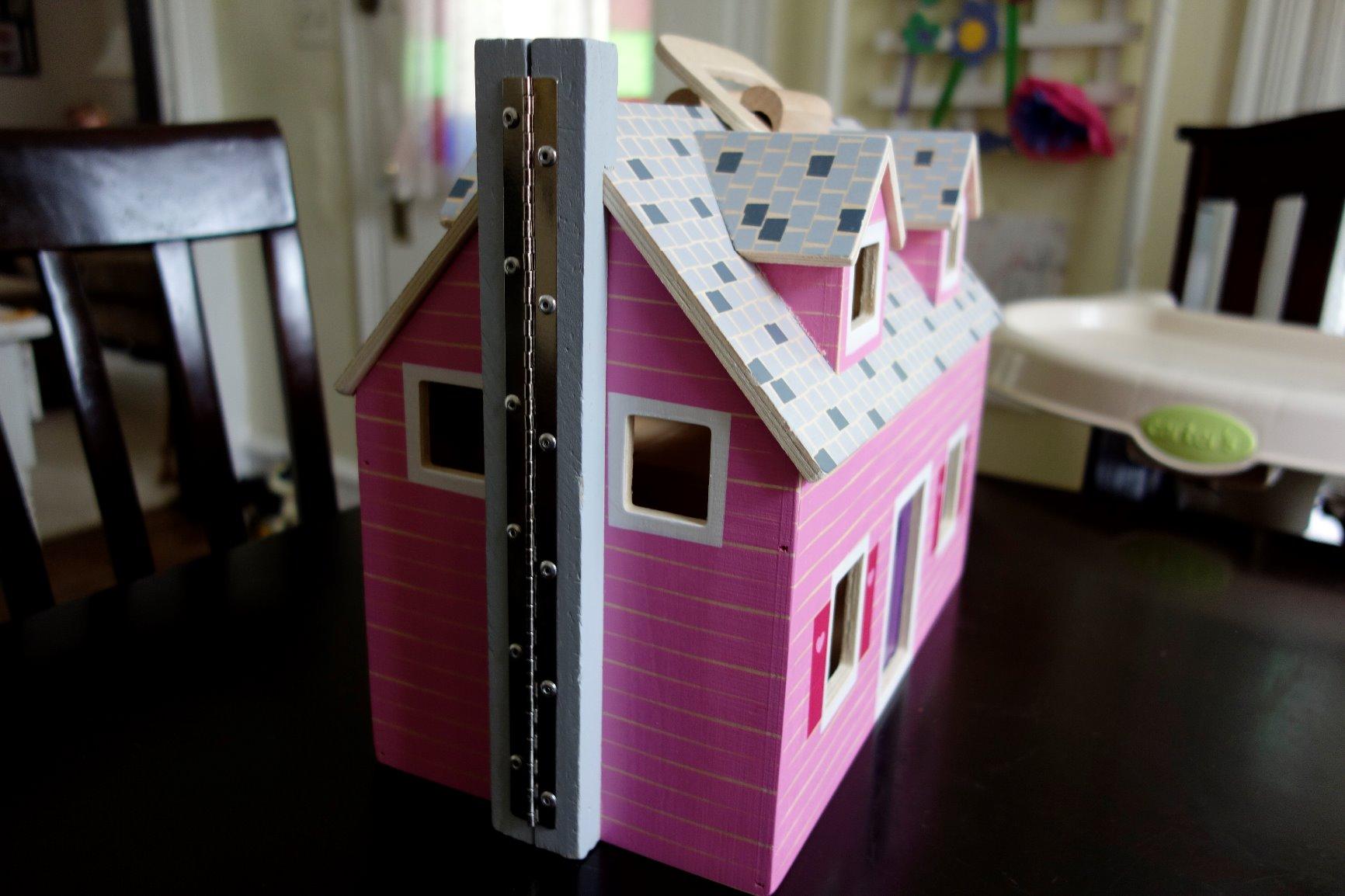
The Melissa & Doug Fold & Go Wooden Dollhouse has been a bestseller for years, and understanding why requires looking at it from the perspective of both the child and the parent. For the child, it offers everything needed to begin imaginative play immediately: two dolls, eleven pieces of furniture spanning a bedroom, bathroom, kitchen, and living area, and a sturdy wooden house with four rooms spread across two stories. The furniture is chunky enough for small hands to grasp easily, colorful enough to be visually engaging, and proportioned correctly for the included dolls.
For the parent, the Fold & Go solves the single biggest logistical problem with dollhouses: storage. The entire unit closes like a briefcase, with a carry handle on top and a latch that keeps everything inside during transport. A child can carry it from room to room, bring it to a grandparent’s house, or tuck it into a closet when company arrives. When open, it stands on its own and provides a stable play surface. When closed, it occupies roughly the footprint of a medium-sized suitcase.
- Age range: 3 years and up
- Material: Solid wood with child-safe paint finishes
- Included: 2 poseable dolls, 11 furniture pieces
- Rooms: 4 rooms on 2 stories (bedroom, bathroom, kitchen, living room)
- Portability: Closes flat with carry handle, latch keeps pieces inside
- Dimensions (open): Approximately 10″ H × 14″ W × 12″ D
What We Love
- Extremely portable — truly goes anywhere
- No assembly required out of the box
- Furniture and dolls included; no extra purchases needed
- Chunky, toddler-friendly proportions
- Durable enough to survive years of enthusiastic play
- Gender-neutral design works for all children
What to Consider
- Compact size means older children may outgrow it quickly
- Limited room count for complex storytelling
- Cannot add additional furniture or expand
- Dolls are simple — no changeable clothes
Melissa & Doug Take-Along Wooden Doorbell Dollhouse — The Sound Surprise
If the basic Fold & Go is the reliable family sedan of dollhouses, the Take-Along Doorbell model is the sportier sibling. It shares the same portable, close-and-carry design philosophy but adds an interactive twist: four working doorbells, each producing a different sound, one for each of the four doors on the house. There are also two working lock-and-key pairs, giving children the added satisfaction of physically unlocking a door before pressing the doorbell.
The house includes four poseable wooden dolls and enough furniture to populate the rooms. The key-and-lock mechanism is particularly engaging for the three-to-five age group, where fine motor challenges are welcomed rather than resented. Children in this window love the feeling of operating a real mechanism — turning a key, hearing a click, opening a door — and this dollhouse delivers that tactile satisfaction in spades.
- Age range: 3 years and up
- Material: Solid wood
- Included: 4 poseable wooden dolls, furniture, 2 keys
- Interactive features: 4 working doorbells (different sounds), 2 working locks with keys
- Portability: Fold-and-carry design with handle
- Batteries: 2 AAA required (not always included)
What We Love
- Doorbell and key features add engaging interactive play
- Four dolls allow for family or friend scenarios
- Same portable design as the classic Fold & Go
- Excellent fine motor skill development through key turning
What to Consider
- Batteries required for doorbell sounds
- Sounds may become repetitive for parents (a universal toy truth)
- Slightly heavier than the non-doorbell version
- Same compact size limitations as the Fold & Go
Both Melissa & Doug models represent the “buy it once, use it for years” philosophy that has made the brand a staple in homes and preschools. If portability is your primary concern and your child is in the three-to-six range, either model is a strong choice. The doorbell version adds engagement but also adds the small ongoing cost of batteries and the risk of sound fatigue (for the parent, not the child — children rarely tire of pressing doorbells).
For families who value open-ended, screen-free play, these wooden houses are a natural fit alongside other excellent wooden toys that prioritize material quality and imaginative engagement over electronic features.

Best Large Princess and Fantasy Dollhouses
If your child’s imagination runs toward fairy tales, royal families, and grand adventures that require multiple rooms and at least one slide, the world of large-format dollhouses delivers spectacularly. These are the showpiece toys — the ones that produce wide eyes and open mouths on birthday morning, the ones that dominate a playroom corner for months (or years), and the ones that invite the kind of elaborate, multi-character storytelling that smaller houses simply cannot accommodate.
The trade-off is real, however. Large dollhouses require space — both for play and for storage. They are rarely portable. They often require assembly that can test a parent’s patience. And their sheer size can sometimes overwhelm younger children who do not yet have the imaginative vocabulary to fill ten rooms with stories. The sweet spot for these models tends to be children ages four through ten, with the most engaged play happening between five and eight.
beefunni 4-Story Princess Dollhouse — The Grand Statement
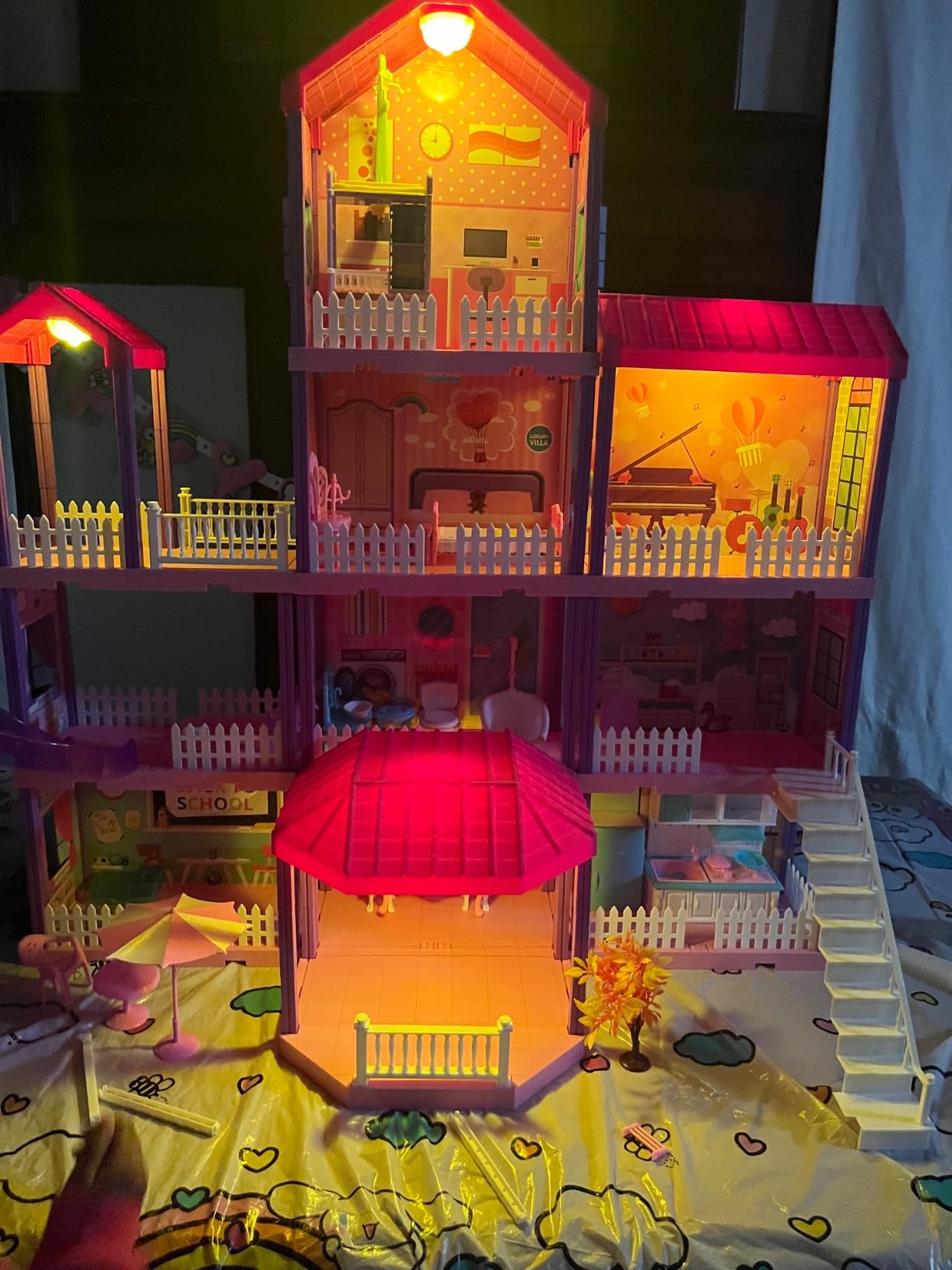
The beefunni 4-Story Princess Dollhouse is, in a word, substantial. Standing over three feet tall when fully assembled, it features eleven distinct rooms spread across four stories, connected by a central staircase and a working elevator. The house comes with two dolls, extensive furniture, and — perhaps its most distinctive feature — integrated LED lighting in several rooms that activates when you press a button.
The lighting is not just decorative; it genuinely changes the play experience. Children instinctively narrate differently when a room is “lit up” — bedtime stories happen in the dim bedroom, meals happen in the bright kitchen. This kind of environmental cueing supports the kind of sequential, narrative play that builds language skills and emotional intelligence.
Assembly is the main hurdle. The house arrives flat-packed and requires roughly 45 to 90 minutes of adult assembly time, depending on your experience with similar products. The instructions are generally clear, though some parents report that the elevator mechanism requires careful attention. Once assembled, however, the structure is solid and stable, with wide legs that resist tipping.
- Age range: 3 years and up (best for ages 4–10)
- Stories: 4 stories, 11 rooms
- Included: 2 dolls, extensive furniture set, LED lights
- Interactive features: Working elevator, LED room lighting
- Height: Approximately 36 inches (90 cm)
- Assembly: Required (45–90 minutes)
- Material: ABS plastic with printed details
What We Love
- Eleven rooms provide enormous storytelling space
- LED lighting adds immersive environmental play
- Working elevator is a standout feature
- Sturdy once assembled — handles enthusiastic play well
- Excellent holiday and birthday gift — high “wow factor”
What to Consider
- Requires significant assembly time
- Needs a dedicated space — not portable at all
- LED lights require batteries
- Smaller furniture pieces may not suit children under 4
- Plastic construction lacks the tactile warmth of wood
Dream Doll House — 4 Stories, 10 Rooms with Slide
The Dream Doll House takes the “bigger is better” philosophy and adds one feature that children universally adore: a slide. Yes, a working slide connects the upper floors to the ground level, allowing dolls to whoosh from the third story to the first in a single, satisfying descent. It is the kind of feature that sounds gimmicky on paper but proves to be the single most-used element in practice.
Beyond the slide, the house offers ten rooms, two princess figures, and a pink-and-purple color palette that leans heavily into the fantasy-princess aesthetic. The furniture set includes a vanity, bathtub, kitchen set, and bedroom pieces. Like the beefunni model, this is a plastic construction that requires assembly, though the process is slightly simpler and faster.
- Age range: 3–10 years
- Stories: 4 stories, 10 rooms
- Included: 2 princess figures, furniture set
- Interactive features: Working slide, open balcony
- Color palette: Pink and purple (very princess-themed)
- Assembly: Required (30–60 minutes)
What We Love
- The slide is genuinely delightful and keeps children engaged
- Slightly simpler assembly than comparable large houses
- Strong princess fantasy appeal for children who love that theme
- Competitive price point for the size
What to Consider
- Very pink — limited appeal for children who prefer neutral themes
- Plastic furniture is less detailed than wooden equivalents
- Slide can cause dolls to fly off if pushed too aggressively
- No lighting features
For families debating between these two large-format options, the decision often comes down to two factors: interactive features versus theme flexibility. The beefunni model wins on features (lights, elevator, more rooms) and offers a slightly more neutral aesthetic that can flex between princess play and everyday family scenarios. The Dream Doll House wins on pure fun factor — the slide is irresistible — and on ease of assembly, though its very pink palette may limit its versatility.
Both models make excellent gifts for the child who has already expressed a strong interest in dollhouse play and is ready for a larger, more immersive experience. If your child is just starting out, however, a smaller, simpler model (like the Melissa & Doug options covered earlier) is usually a better first step.


Best Dollhouses for Toddlers (Ages 1–3)
Toddlers approach dollhouses fundamentally differently than older children. Where a five-year-old sees a setting for elaborate narratives, a two-year-old sees an interesting collection of things to open, close, push, pull, stack, and — occasionally — taste. The right toddler dollhouse acknowledges this reality rather than fighting it. It prioritizes large, safe pieces over intricate detail. It rewards simple cause-and-effect actions (open a door, push a button) over complex storytelling. And it is built to survive the kind of enthusiastic, sometimes rough handling that comes with the territory.
For toddlers, the Montessori approach to toy selection is particularly relevant. The philosophy emphasizes materials that are introduced at the right developmental moment — not too early to frustrate, not too late to bore. A dollhouse for a toddler should have a built-in “control of error” — the child can tell on their own whether an action worked (did the door open? did the figure fit in the seat?) without needing adult guidance.
Playskool Weebles My Smart House — The Toddler Powerhouse
The Playskool Weebles My Smart House is designed specifically for the youngest dollhouse enthusiasts, with an age recommendation starting at 12 months. This immediately sets it apart from most competitors, which target ages three and up. The house features chunky, rounded Weeble figures (those classic wobble-but-don’t-fall-down characters) and responds to their placement with lights, sounds, and phrases.
The “smart” aspect comes from the house’s ability to recognize which Weeble figure is placed in specific spots — drop a figure on the kitchen chair, and you might hear cooking sounds; place one in the bedroom, and you might hear a lullaby. This responsive feedback loop is enormously engaging for toddlers, who are in the thick of learning cause and effect. The figures themselves are sized well above choking-hazard thresholds, with smooth, rounded edges and no small detachable parts.
- Age range: 12 months and up
- Material: Durable plastic with rounded edges
- Included: Weeble figures, interactive furniture
- Interactive features: Responsive sounds, lights, and phrases when figures are placed
- Safety: No small parts; all pieces exceed choking-hazard size requirements
- Batteries: 2 AA required
What We Love
- True toddler-safe design starting at 12 months
- Responsive sounds and lights delight the youngest users
- Weeble figures are iconic, safe, and satisfying to hold
- Excellent cause-and-effect learning tool
- Sturdy construction survives drops and throws
What to Consider
- Very simple — older toddlers (3+) may lose interest quickly
- Electronic features require batteries
- Limited room count and furniture variety
- Not a traditional dollhouse aesthetic — more playhouse than house
What Makes a Great Toddler Dollhouse: Key Features
When evaluating any dollhouse for a child under three, run through this checklist:
- Size of parts: Every piece should be too large to fit through a standard toilet paper roll tube (the informal choking-hazard test). If any component can fit inside that tube, it is not safe for a toddler.
- Edge quality: Rounded, smooth edges everywhere. No sharp corners, no rough seams, no paint that chips.
- Stability: The house should be wide-based and difficult to tip over. Toddlers pull themselves up on furniture and lean on surfaces — the dollhouse needs to handle this.
- Simplicity: Fewer rooms, fewer pieces, and clearer “what goes where” structure. A toddler dollhouse should have obvious spots for figures to sit, stand, and sleep.
- Weight of pieces: Furniture should be heavy enough to feel satisfying but light enough that a falling piece will not injure. Plastic is generally safer than wood for this age group.
- Open sides: At least two sides of the house should be open so a child can reach in from multiple angles. Houses that only open from the front frustrate toddlers who have not yet developed the spatial reasoning to play from a single viewpoint.
For parents building a toddler play space that goes beyond dollhouses, our guide to the best toys under $20 for toddlers offers excellent complementary picks that pair well with a first dollhouse.

Best DIY and Miniature Dollhouse Kits
Here is something the toy industry did not predict a decade ago: the explosive growth of build-it-yourself miniature dollhouse kits among teenagers and adults. What began as a niche crafting hobby has become a genuine cultural phenomenon, with brands like Rolife, Robotime, CUTEBEE, and others producing exquisitely detailed miniature rooms, cottages, bookshops, and cafes that arrive as sheets of pre-cut wood, fabric, paper, and tiny accessories, requiring hours of patient assembly.
These are not children’s toys in the traditional sense, though older children (ages 10 and up) with strong fine motor skills and patience absolutely can and do enjoy them. They are primarily marketed to teens, college students, and adults who find the meditative process of building a miniature world deeply satisfying. Think of them as the dollhouse equivalent of adult coloring books or LEGO Architecture sets — a childhood concept elevated into a craft hobby.
Rolife DIY Miniature Dollhouse Kits — The Gold Standard
Rolife (a sub-brand of Robotime) has become the leading name in this category, and for good reason. Their kits are consistently well-designed, with clear instructions, precisely pre-cut parts, and a final product that looks genuinely impressive on a shelf. The range spans cozy reading nooks, garden greenhouses, European-style cafes, attic bedrooms, and dozens of other themed scenes.
Each kit typically includes laser-cut wooden pieces, miniature furniture parts, LED lighting components (usually with a small battery-powered light string), fabric pieces for curtains and upholstery, and printed paper elements for books, artwork, and decorative details. Assembly time ranges from four to fifteen hours depending on complexity, and the process requires patience, steady hands, and — for the most detailed kits — a pair of tweezers.
- Age range: 14 years and up (some kits suitable for 10+ with supervision)
- Material: Laser-cut wood, paper, fabric, LED components
- Assembly time: 4–15 hours per kit
- Scale: Typically 1:24
- Includes: Pre-cut pieces, LED lights, miniature accessories, instructions
- Tools needed: Tweezers recommended; some kits benefit from a craft knife
- Glue: Not always included — check kit contents
What We Love
- Stunning finished product — genuinely display-worthy
- Meditative, screen-free building experience
- Huge variety of themes and difficulty levels
- LED lighting adds a beautiful final touch
- Excellent gift for crafty teens and adults
What to Consider
- Not suitable for young children — small parts and fragile final product
- Requires significant time commitment
- Some kits have small parts that are easily lost
- Instructions can be challenging for first-time builders
- Finished pieces are display items, not play items
GuDoQi DIY Miniature Dollhouse Kit (1:24 Scale)
The GuDoQi kits follow a very similar format to Rolife — pre-cut wooden parts, miniature furniture, LED lights, and printed accessories — but tend to be positioned at a slightly lower price point. The quality is generally comparable, though some builders note that the paper and fabric components can be slightly less refined. Where GuDoQi excels is in offering complete kits that include everything needed (including glue in most cases), reducing the frustrating “I need to make a craft store run mid-project” experience.
The music box feature in some GuDoQi kits is a charming addition — a small wind-up mechanism that plays a melody when the completed house is turned. It is a detail that elevates the finished product from “craft project” to “keepsake.”
- Age range: 14 years and up
- Scale: 1:24
- Includes: All materials including glue, LED lights, music box mechanism (select kits)
- Assembly time: 4–12 hours
- Standout feature: Music box functionality in select models
CUTEBEE / Rolife Book Nook Kits — The Shelf Display Trend
Perhaps the most innovative entry in the miniature dollhouse world is the “book nook” concept — a miniature diorama designed to slot between books on a shelf, creating the illusion of a tiny world existing between the pages. These kits build miniature libraries, cozy cafes, enchanted forest passages, and Harry Potter-inspired alleyways, all in a slim, vertical format that fits standard bookshelves.
Book nook kits have exploded in popularity as gifts, particularly among teens, college students, and young adults who want a creative project and a unique piece of room decor in one package. They are typically simpler and faster to assemble than full miniature dollhouse kits (two to five hours), making them an excellent entry point for someone curious about the hobby but not ready to commit to a twelve-hour build.
- Age range: 12 years and up
- Format: Vertical diorama designed to fit between books on a shelf
- Assembly time: 2–5 hours
- Includes: Pre-cut wood, LED lights, miniature scene elements
- Standout feature: Functional room decor when complete
For adults and teens who enjoy the tactile, meditative quality of these miniature builds, the experience shares much in common with other puzzle and construction toys that reward patience and spatial thinking.


Best Audio and Story-Based Dollhouses
A relatively new category in the dollhouse world merges physical play with audio storytelling, creating an experience that is part toy, part audiobook, part screen-free entertainment system. These products acknowledge a reality that many traditional dollhouse makers have been slow to accept: many modern children are growing up in homes where audio content — podcasts, audiobooks, music — is already a part of their daily routine. The best audio-based dollhouses channel that familiarity into a physical play experience, giving children a reason to put down a screen while still engaging with the narrative-driven content they crave.
Little Tikes Story Dream Machine — Gabby’s Dollhouse Collection
The Story Dream Machine is not a dollhouse in the traditional sense — it does not have rooms you furnish or figures you move from kitchen to bedroom. Instead, it is a licensed-character audio toy based on the popular Gabby’s Dollhouse animated series, designed to project stories onto a wall or ceiling while playing corresponding audio narration and sound effects. Children insert story cartridges (three stories are included, with additional collections available), and the device projects illustrated scenes while narrating the tale.
Think of it as a modern, kid-friendly take on the story projector that some parents may remember from their own childhoods, but with higher-quality audio, brighter projections, and a beloved licensed character tying it all together. The appeal for children who already love Gabby’s Dollhouse is immediate and powerful — these are characters they already know and care about, brought into their bedroom in a new, immersive format.
- Age range: 3 years and up
- Type: Audio/story projector toy (not a traditional dollhouse)
- License: Gabby’s Dollhouse (DreamWorks)
- Includes: Story projector unit, 3 story cartridges
- Features: Wall/ceiling projection, audio narration, sound effects, nightlight mode
- Batteries: Yes (specific requirements vary by model)
- Expandable: Additional story cartridge packs sold separately
What We Love
- Screen-free audio entertainment — great for bedtime routines
- Licensed characters children already love
- Nightlight mode extends usefulness beyond playtime
- Different from anything else in the dollhouse category
- Encourages listening comprehension and story engagement
What to Consider
- Not a traditional dollhouse — no physical room play
- Additional story cartridges are an ongoing cost
- Children not familiar with Gabby’s Dollhouse may be less engaged
- Projection works best in darker rooms
For families who want to encourage audio-based play — a growing trend backed by research on attention span, imagination, and sleep quality — the Story Dream Machine occupies a unique niche. It is best understood not as a dollhouse alternative but as a complementary product: the kind of toy a child uses during quiet time or bedtime, distinct from the hands-on dollhouse play that happens during the day.
The broader trend here is important. We are seeing a significant increase in products that blend physical and audio play, and the Gabby’s Dollhouse collection is one of the most successful executions of this concept. If your child is a fan of the show, this is a near-guaranteed hit.

Best Dolls and Accessories to Pair with Your Dollhouse
A dollhouse without dolls is an empty stage. And while most dollhouses come with at least one or two figures, the reality is that children quickly want more characters — parents, siblings, pets, friends, teachers, and the occasional dragon. Choosing the right companion dolls and accessories extends the life of any dollhouse dramatically and allows the child’s stories to grow in complexity and emotional depth.
Barbie Dreamtopia and Disney Princess Sets — The Companion Category
Barbie and Disney Princess dolls are consistently among the top-selling companion toys for dollhouse play, and the reason is straightforward: children already know these characters. A Barbie or Elsa doll arrives with a built-in personality and backstory that the child can either follow or reinvent entirely. The Dreamtopia line, in particular, offers fantasy-themed dolls (mermaids, fairies, princesses) that pair naturally with the pink-and-purple princess dollhouses covered earlier.
Disney Princess doll sets offer a broader range of characters, from Moana’s adventurous spirit to Cinderella’s classic elegance. For children who are building complex dollhouse narratives, having a diverse cast of characters — different body types, different skin tones, different storylines — enriches the play enormously.
The main consideration with branded dolls is scale. Barbie dolls are roughly 11.5 inches tall, which means they need a dollhouse scaled to accommodate that height. Many large-format dollhouses (like the beefunni or Dream Doll House models) are designed for this scale, but smaller houses like the Melissa & Doug Fold & Go use a smaller figure size. Always check the dollhouse’s compatible doll size before purchasing companion figures.
Furniture Expansion Packs
If your dollhouse came with a basic furniture set, expanding it is one of the most effective ways to keep play fresh. Look for furniture sets that match your dollhouse’s scale (1:12, 1:16, or 1:24, depending on the house) and that add new room types — a garden set, a garage, a nursery, or a home office. Wooden furniture sets tend to be more durable and more aesthetically pleasing than plastic, though they are also more expensive.
DIY Accessories: The Low-Budget Expansion
Some of the best dollhouse accessories cost almost nothing. A small fabric scrap becomes a blanket. A bottle cap becomes a table. Popsicle sticks become a fence. Children who are encouraged to create their own accessories from household materials develop resourcefulness and creativity that goes far beyond the dollhouse itself. This is also an excellent rainy-day craft activity that pairs perfectly with dollhouse play.
For families building out a complete pretend play ecosystem, dollhouse accessories combine well with play kitchen sets, doctor kits, and other role-play toys that extend the same narrative muscles.
Doll Scale Compatibility Chart
| Dollhouse Type | Typical Scale | Compatible Dolls | Doll Height |
|---|---|---|---|
| Melissa & Doug Fold & Go | ~1:16 | Included wooden dolls, Calico Critters | 3–4 inches |
| beefunni 4-Story / Dream Doll House | ~1:12 | Barbie, Disney Princess, LOL Surprise | 10–12 inches |
| Playskool Weebles My Smart House | Proprietary | Weeble figures only | ~3 inches |
| Rolife/GuDoQi Miniature Kits | 1:24 | Not designed for doll play — display only | N/A |
| Generic Large Plastic Houses | ~1:12 to 1:16 | Varies — check manufacturer specs | 4–12 inches |

Complete Dollhouse Comparison Table
With so many options covering different age ranges, sizes, materials, and play styles, having everything in one place makes the decision dramatically easier. The table below lines up every dollhouse covered in this guide against the factors that matter most: age suitability, included items, portability, interactive features, and price category.
| Dollhouse | Age | Material | Stories | Included | Portable? | Interactive | Price |
|---|---|---|---|---|---|---|---|
| Melissa & Doug Fold & Go | 3+ | Wood | 2 | 2 dolls, 11 furniture | Yes — folds shut | None | $$ |
| M&D Take-Along Doorbell | 3+ | Wood | 2 | 4 dolls, furniture, 2 keys | Yes — folds shut | 4 doorbells, 2 locks | $$ |
| beefunni 4-Story Princess | 3+ | Plastic | 4 | 2 dolls, furniture, LED | No | LED lights, elevator | $$ |
| Dream Doll House (4 Story) | 3–10 | Plastic | 4 | 2 figures, furniture | No | Working slide | $$$$ |
| Playskool Weebles Smart House | 12 mo+ | Plastic | 2 | Weeble figures, furniture | Lightweight, movable | Sounds, lights, phrases | $$ |
| Rolife DIY Miniature Kit | 14+ | Wood/Paper | 1 | All materials, LED | Display piece | LED lighting | $$ |
| GuDoQi DIY Miniature Kit | 14+ | Wood/Paper | 1 | All materials + glue, LED | Display piece | LED, music box (select) | $–$$ |
| CUTEBEE/Rolife Book Nook | 12+ | Wood/Paper | 1 | All materials, LED | Fits on bookshelf | LED lighting | |
| Story Dream Machine (Gabby’s) | 3+ | Plastic/Electronic | N/A | Projector, 3 stories | Yes — compact unit | Audio, projection, nightlight | $$$$ |
| Barbie/Disney Doll Sets | 3+ | Plastic/Fabric | N/A | Doll + accessories | Yes | Companion dolls | $–$$ |
Price Key: = Under $20 | $$$$ = $20–$60 | $$$ = $60–$120+

Age-by-Age Buying Guide: What to Choose and When
Children’s relationship with dollhouses changes dramatically as they grow, and understanding those shifts helps you choose the right house at the right time. This section breaks down the ideal dollhouse type for each developmental stage, from the first birthday through the tween years and beyond.
12–24 Months First Explorations
At this age, a “dollhouse” is really just an interesting object with things to open and close. Toddlers are not yet engaging in symbolic play — they are in the sensory-motor stage, learning about the world through touch, taste, sound, and repetitive action. The ideal “dollhouse” for this age is chunky, durable, and interactive in a cause-and-effect way. The Playskool Weebles My Smart House is the standout choice here. Large, rounded figures that respond with sounds and lights when placed in specific spots give toddlers the immediate feedback loop their brains crave.
Avoid houses with small furniture, delicate hinges, or removable accessories. At this age, everything goes in the mouth, and anything that can be detached will be detached — and potentially swallowed. If you want a wooden option, the Melissa & Doug Fold & Go can work under close supervision, but remove all furniture except the largest pieces until the child is past the mouthing stage. For more ideas on age-appropriate toddler toys, see our dedicated guide.
2–3 Years The Transition Window
Between two and three, children begin to show the earliest signs of symbolic play — a block becomes a phone, a spoon becomes a microphone. This is the perfect window to introduce a simple, sturdy dollhouse with a small number of clear rooms and chunky, easy-to-manipulate furniture. The Melissa & Doug Fold & Go is ideal at this stage: it provides enough structure to suggest play scenarios without overwhelming the child with too many options or too-small pieces.
At this age, children typically play alongside rather than with other children (parallel play), so the dollhouse is primarily a solo activity. Keep sessions short — ten to twenty minutes is plenty — and let the child lead. If they want to stack all the furniture in one room and ignore the rest, that is fine. There is no wrong way to play with a dollhouse at two.
Our guide on what age kids stop playing with toys is worth reading at this stage — spoiler: they don’t stop if the toys are right, but the type of play evolves significantly.
3–5 Years The Golden Age of Dollhouse Play
If there is a single age range where dollhouses deliver maximum impact, this is it. Children between three and five are deep in the symbolic and dramatic play stage, capable of creating multi-character narratives with dialogue, conflict, resolution, and emotional nuance. A dollhouse becomes a canvas for processing the world — a child who just had a new sibling might create stories about a baby joining a doll family; a child starting preschool might narrate a doll’s first day at school.
This is the age to move beyond the simplest models and offer a house with more rooms, more furniture, and more characters. Both the Melissa & Doug models work beautifully here, and children at the older end of this range (four to five) are often ready for the larger princess houses if that aligns with their interests. The key is matching the dollhouse to the child’s narrative capacity — a child who creates complex stories needs more rooms and characters than one who is still in simple scenario play.
This is also a wonderful age to rotate dollhouse accessories — swap out the bedroom set for a kitchen set, introduce a pet figure, or add a vehicle. Regular rotation keeps the play environment fresh without requiring new purchases. The STEM learning principles that apply to building toys also apply here: when children arrange furniture, they are practicing spatial reasoning and problem-solving.
5–8 Years Complex Narratives and Social Play
Older children use dollhouses differently than preschoolers. The play becomes more collaborative (friends and siblings join in), more detailed (rooms get decorated, characters get backstories), and more rules-based (children may establish “house rules” for their dolls). Large-format houses like the beefunni 4-Story or Dream Doll House shine during this stage, providing enough space for multiple children to play simultaneously and enough rooms for complex, multi-scene stories.
This is also the age when children begin to care about aesthetics — they want the house to look a certain way, and they may spend as much time arranging furniture and decorating rooms as they do narrating stories. If your child shows this inclination, consider offering craft supplies (fabric scraps, paper, markers) for creating custom decorations.
8–12+ Years The DIY and Collector Stage
As children approach double digits, traditional dollhouse play often fades — but it does not always disappear. Some children transition into the collector/builder mode, becoming interested in miniatures, scale models, and DIY kits. This is where Rolife, GuDoQi, and Book Nook kits come in. They offer the satisfaction of dollhouse-adjacent play — creating a tiny, detailed world — but in a format that feels age-appropriate and even sophisticated. The meditative building process and the impressive finished product appeal to tweens and teens in a way that a traditional plastic dollhouse no longer does.
For Adults: The Craft Hobby
It is worth acknowledging explicitly that a significant and growing segment of the miniature dollhouse market consists of adult buyers — college students, young professionals, retirees, and hobbyists of all ages. These buyers are not purchasing for a child; they are purchasing for themselves. The Rolife and CUTEBEE kits in particular have found an enthusiastic adult audience who values the screen-free, tactile, meditative building experience and the beautiful finished product.

Getting the Most from Your Dollhouse: Tips for Richer Play
A dollhouse is only as good as the play that happens inside it. While children are naturally imaginative, there are things parents and caregivers can do — small, low-effort interventions — that dramatically increase the depth, duration, and developmental value of dollhouse play. None of these tips require buying additional products. They all require only attention and intentionality.
1. Let the Child Lead — Completely
The single most important rule of dollhouse play: the child decides. If your four-year-old puts the doll in the bathtub, hands it a sandwich, and declares it is “eating lunch in the bath because it’s a holiday,” that is not wrong — that is creative thinking of the highest order. Resist the urge to correct, direct, or narrate. Sit nearby, be available, but let the child drive the story. Research consistently shows that child-led play produces more learning than adult-directed play, because the child is simultaneously the author, director, and actor.
2. Ask Open-Ended Questions
Instead of telling the child what to do, ask questions that extend the narrative: “What happens next?” “How does that doll feel about that?” “Where is the family going today?” These questions signal that you are interested and engaged without taking control. They also build the child’s narrative thinking and emotional vocabulary — skills that transfer directly to reading comprehension, writing, and social skills later on.
3. Introduce “Problems” for the Dolls to Solve
Older preschoolers and school-age children thrive on narrative conflict. A gentle way to enrich dollhouse play is to introduce a low-stakes problem: “Oh no, the doll is hungry but the kitchen is closed — what should she do?” or “The doll wants to visit her friend but it’s raining outside — how will she get there?” These prompts teach problem-solving, planning, and perspective-taking. They also keep the play going when children might otherwise lose interest.
4. Rotate Accessories and Furniture Regularly
The concept of toy rotation applies powerfully to dollhouses. Instead of leaving the same furniture in the same rooms indefinitely, swap pieces every week or two. Move the kitchen to a different room. Introduce a new figure. Replace the bedroom set with an outdoor patio set (or improvise one from blocks and fabric). This novelty effect re-engages children with the same house and prevents the “I’m bored with my dollhouse” complaint that often leads parents to buy a new one unnecessarily.
5. Combine with Other Toy Categories
A dollhouse does not have to exist in isolation. Combine it with educational building toys to construct a neighborhood around the house. Add small animal figures for a farm or pet store scenario. Use play food from a kitchen set for a restaurant scene. The dollhouse becomes the hub of a larger play ecosystem, which keeps it relevant for much longer.
6. Create Stories Together Before Bed
Some families use the dollhouse as a pre-bedtime ritual: together, parent and child create a short story using the dolls and furniture, ending with the dolls going to sleep. This gentle, predictable routine helps children wind down, reinforces narrative skills, and creates a warm shared memory. It is particularly effective for children who resist bedtime — the story provides a natural transition between active play and rest.
7. Photograph the Scenes
This is a surprisingly powerful tool. Encourage your child to set up a scene — a birthday party, a picnic, a family dinner — and then photograph it together. Children love seeing their creations captured, and the act of “framing” a scene encourages them to think about composition, arrangement, and aesthetics. Over time, you can compile these photos into a simple storybook, which becomes a cherished keepsake.
8. Use the Dollhouse for Social-Emotional Learning
Dollhouses are natural vehicles for exploring emotions. When a child’s doll is sad, angry, scared, or excited, the child has a safe, low-risk way to explore those feelings. You can gently prompt this: “It looks like the doll is feeling left out. What could her friend do to help?” This kind of guided emotional exploration is one of the most powerful developmental benefits of dollhouse play, and it requires nothing more than a few figures and a parent willing to engage.

Care, Storage, and Making Your Dollhouse Last
A quality dollhouse is an investment — not just financially, but in the hours of play, imagination, and connection it supports. Taking care of it properly ensures it lasts through one child’s entire dollhouse phase and potentially into the next child’s, or even the next generation’s. Here is everything you need to know about maintaining, storing, and protecting your dollhouse.
Cleaning Wooden Dollhouses
Wood requires a gentle touch. Never submerge a wooden dollhouse in water or use harsh chemical cleaners. Instead, wipe surfaces with a damp cloth (warm water, no soap for routine cleaning) and dry immediately. For sticky residue or stubborn marks, a tiny amount of mild dish soap in warm water works well — dampen the cloth, wipe, then follow with a clean damp cloth to remove soap residue, and dry thoroughly. Avoid spray cleaners, antibacterial wipes, and anything with bleach or ammonia, as these can strip the finish and dry out the wood over time.
Over years of use, wooden dollhouses may develop small dents or scratches. This is normal and even charming — it is the patina of a well-loved toy. If you want to minimize visible wear, apply a thin coat of food-grade mineral oil once or twice a year, which nourishes the wood and provides a subtle protective layer. For a deeper dive into toy cleaning best practices, our guide on how to clean plastic toys safely covers techniques that apply to mixed-material houses as well.
Cleaning Plastic Dollhouses
Plastic is more forgiving. Most plastic dollhouses can be wiped down with a damp cloth and mild soap. For houses with electronic components (lights, sounds, elevators), remove batteries before cleaning and avoid getting moisture near battery compartments or speaker grilles. A soft-bristle toothbrush works well for cleaning textured surfaces and hard-to-reach corners. Allow everything to air dry completely before reinserting batteries.
Storing Small Furniture and Accessories
The biggest ongoing challenge with dollhouses is not the house itself — it is the dozens of tiny chairs, tables, beds, plates, cups, and figures that accompany it. These small pieces are easily lost, stepped on, or vacuumed up. The solution is a dedicated storage system:
- Small bins or bags: Ziplock bags, small fabric pouches, or clear containers work well. Label them by room type (kitchen, bedroom, bathroom) for easy retrieval.
- Inside the house: For portable dollhouses like the Melissa & Doug models, store all furniture inside the house when it is closed. This is what the latch-and-carry design was made for.
- Shelf storage: For larger houses that cannot be moved, dedicate a shelf or bin near the house for accessories. Teaching children to put pieces away in a designated spot at the end of each play session is a life skill that will serve them well beyond the dollhouse years.
For families navigating toy storage in tight quarters, our comprehensive guide to organizing toy storage in small spaces has creative solutions that work for dollhouses and their accessories.
Protecting Large Dollhouses
Large, stationary dollhouses are vulnerable to two things: dust and enthusiastic siblings. A simple solution for dust is a fitted sheet or custom-sized fabric cover draped over the house when it is not in use. This keeps the rooms clean and the furniture in place, and it takes seconds to remove when play time arrives. For households with younger siblings who might be tempted to “redecorate” an older child’s carefully arranged house, designate the dollhouse as a supervised play area for the younger child or use a baby gate to create a physical boundary.
When to Repair vs. Replace
A broken hinge on a wooden dollhouse door is worth repairing — a dab of wood glue and a clamp for an hour will fix it permanently. A cracked plastic wall panel on a large house may or may not be fixable depending on the severity; super glue works for minor cracks, but structural breaks usually signal the end of that house’s useful life. The general rule: if the repair costs more than half the price of a replacement and the house has already been used for several years, it may be time to upgrade.
Passing Down and Donating
Well-maintained wooden dollhouses have excellent longevity and can be passed down through families or donated to preschools, daycares, and children’s hospitals. Before donating, clean the house thoroughly, check for any loose parts or sharp edges, and include as many accessories as possible. A complete dollhouse with all its pieces is far more useful to the receiving organization than a bare house with missing furniture.

Frequently Asked Questions About Dollhouses
Most children are ready for their first dollhouse between 18 months and 3 years, depending on the child’s development and the type of house. For children under 2, a chunky, toddler-safe model like the Playskool Weebles My Smart House (designed for 12 months and up) is the safest starting point. For children 3 and up, the Melissa & Doug Fold & Go is a universally excellent first dollhouse. The key is matching the house to the child’s current motor skills and play style — not buying ahead in hopes they will “grow into it.” For more guidance on age-appropriate toy introduction, see our Montessori age guide.
Neither material is universally “better” — each has distinct strengths. Wooden dollhouses are more durable, more aesthetically pleasing, and tend to last longer. They develop a warm patina with age and are often heirloom-quality. Plastic dollhouses are lighter, easier to clean, and more likely to include interactive features like lights, sounds, and working elevators. They also tend to be less expensive for the same amount of play space. The right choice depends on your priorities: if durability and aesthetics matter most, choose wood. If features and price matter most, choose plastic. If you want the best of both, a wooden house supplemented with plastic accessories is a popular compromise. Our guide to the best wooden toys covers the material choice in depth.
This comes down to your living situation and your child’s play habits. If you live in a small space, travel frequently, or want a dollhouse that can move between rooms and houses, a portable model like the Melissa & Doug Fold & Go is the clear choice — it closes flat and carries like a suitcase. If you have a dedicated playroom and your child is the kind of kid who sets up elaborate scenes and returns to them day after day, a large-format house like the beefunni 4-Story will provide a richer play experience. There is no wrong answer here; both approaches have produced millions of happy play hours.
Doll scale compatibility varies by house. Melissa & Doug portable houses use approximately 3–4 inch dolls (included, and compatible with Calico Critters). Large plastic houses like the beefunni and Dream Doll House are scaled for 10–12 inch dolls (Barbie-size). The Playskool Weebles house uses proprietary Weeble figures. Always check the manufacturer’s recommended doll size before purchasing companion figures. Our gift guide for 5-year-old girls includes scale-appropriate doll pairings.
Absolutely. While marketing has traditionally directed dollhouses toward girls, the developmental benefits — narrative thinking, emotional intelligence, spatial reasoning, social skills — are equally valuable for all children. Boys engage in the same types of rich, imaginative play with dollhouses as girls do. If your son is interested, choose a house with a neutral or versatile theme rather than a heavily princess-themed model, or lean into whatever theme excites him — some boys want a fire station dollhouse, others want a spaceship, and some want a regular house with a family. Follow the child’s interest.
Most children engage actively with dollhouses for three to five years, typically between ages 2 and 7 or 3 and 8. The intensity of play peaks around ages 4–6, when children are deep in the symbolic play stage. After that, many children transition to more complex, narrative-driven play that continues for another year or two before naturally fading. Children who are introduced to DIY miniature kits in their tween and teen years often rediscover dollhouse-adjacent play in a new format. The key to longevity is rotating accessories and following the child’s evolving interests. For more on how play patterns shift, see our article on what age kids stop playing with toys.
No, but they can enhance play for certain children. Electronic features (LED lights, doorbell sounds, responsive phrases) add an extra layer of engagement, particularly for toddlers and children who are sensory-seeking. However, many children — and many child development experts — find that the richest dollhouse play happens with simple, non-electronic models that require the child to supply the sound effects, the lighting (via imagination), and the story themselves. If your child is already deeply imaginative, a classic wooden house will serve them beautifully. If your child tends to need more external stimulation to engage, interactive features can bridge that gap.
Yes, genuinely. The DIY miniature dollhouse kit market has exploded among adults in recent years, driven by the same appeal as adult coloring books, LEGO sets for grown-ups, and model train kits: the meditative, screen-free satisfaction of building something beautiful with your hands. Brands like Rolife and CUTEBEE specifically market to adults and older teens, and their kits are designed with that audience in mind — detailed, challenging, and meant to be displayed on a shelf or desk when finished. That said, children 10 and up with strong fine motor skills and patience can absolutely enjoy these kits with some adult supervision.
For toddlers and young preschoolers (ages 2–3), two to four rooms is plenty. The child’s imagination fills in the gaps. For older preschoolers and early elementary children (ages 4–7), four to eight rooms provide enough variety for complex storytelling without overwhelming the child with choices. For school-age children (ages 7–10), eight to eleven rooms allow for multi-character narratives with subplots. More rooms is not always better — some children prefer a smaller, more manageable house where they can keep track of everything that is happening.
Yes, significantly. Dollhouse play supports multiple developmental domains simultaneously: language development (narrating stories, using dialogue), emotional intelligence (exploring feelings through characters), social skills (turn-taking, collaboration when playing with others), spatial reasoning (arranging furniture, understanding room layouts), fine motor skills (manipulating small figures and objects), and executive function (planning, sequencing, self-regulation). It is one of the most developmentally rich toys available, which is why it has remained a staple of childhood for centuries. Pairing dollhouse play with STEM-oriented toys creates a well-rounded play environment.
The Melissa & Doug Fold & Go Wooden Dollhouse is the best dollhouse for small apartments by a wide margin. When open, it occupies a modest footprint on any table or floor. When closed, it tucks into a closet, under a bed, or on a shelf — essentially invisible. The Take-Along Doorbell version offers the same portability with additional interactive features. For very small spaces, the CUTEBEE/Rolife Book Nook kits are worth considering: they are not traditional dollhouses, but they occupy only the space between two books on a shelf. For more small-space solutions, see our toy storage guide for small spaces.
Not in the traditional sense. The Story Dream Machine is an audio and projection toy that brings the Gabby’s Dollhouse animated series to life through stories, sounds, and wall projections. It does not have physical rooms or furniture for doll play. Think of it as a complementary product rather than a dollhouse alternative — it fills a different niche (screen-free audio entertainment, bedtime stories, nightlight) and pairs well alongside a traditional dollhouse rather than replacing one.
The Best Dollhouse Is the One That Gets Played With
After researching and comparing every major dollhouse on the market — from the elegant simplicity of the Melissa & Doug Fold & Go to the sprawling grandeur of the beefunni 4-Story, from the toddler-safe interactivity of the Playskool Weebles to the meditative craftsmanship of a Rolife miniature kit — the most important insight is also the simplest: the best dollhouse is the one your child actually plays with.
That sounds obvious, but it is worth saying because parents often make the mistake of choosing based on what looks most impressive in a product photo or what has the highest review count. What matters is not the size of the house or the number of features — it is whether the house matches your child’s age, interests, and play style. A $30 portable wooden house that gets played with every day for three years delivers infinitely more value than a $150 showpiece that sits in the corner gathering dust.
Here is our condensed recommendation:
- Best overall for most families: Melissa & Doug Fold & Go Wooden Dollhouse — timeless, portable, and perfectly sized for the peak dollhouse years (ages 3–6).
- Best for toddlers (12 mo+): Playskool Weebles My Smart House — safe, interactive, and designed for the youngest users.
- Best large-format house: beefunni 4-Story Princess Dollhouse — LED lights, elevator, eleven rooms, and the “wow factor” that makes it an unforgettable gift.
- Best for DIY enthusiasts: Rolife Miniature Dollhouse Kits — stunning, meditative, and perfect for teens and adults who want to build their own tiny world.
- Best budget/fun factor: Dream Doll House (4 Stories) with slide — the working slide alone is worth the price of admission.
Whatever you choose, know that you are giving your child more than a toy. You are giving them a stage for their imagination, a laboratory for their emotions, and a small world entirely their own. That is worth every penny.
Shop All Dollhouses on Amazon


