How to Clean Squishy Toys Without Ruining the Squish
Squishies collect dust, lint, pet hair and sticky fingerprints fast, and they are easy to damage with the wrong cleaner. Here is the gentle, step-by-step way to get them fresh again while keeping the soft, slow-rising feel kids love.
Anyone who has found a beloved squishy at the bottom of a backpack knows the feeling. It is linty, a little tacky, maybe stained with something nobody wants to identify, and it has lost some of its bounce. Squishy toys are soft, porous, and often coated in a thin paint layer, so they behave very differently from a hard plastic block or a rubber duck. Scrub too hard and the face wears off. Soak too long and foam turns into a soggy sponge. Use the wrong solvent and the surface goes sticky for good.
The good news is that a squishy toy is almost always rescuable. With a few household supplies, a patient touch, and the right order of steps, you can lift dirt, remove that tacky film, and get the toy drying safely. This guide walks through every stage, from figuring out what your toy is made of to storing it so it stays clean afterward. If you have a mixed pile of toys to deal with, our broader guide on how to clean plastic toys safely is a helpful companion read.
Why Squishy Toys Need Special Care
Squishy toys sit in a strange middle ground between a plush and a plastic toy. Many are made from polyurethane foam, a material full of tiny open cells that trap air. That structure is what lets a squishy slowly rise after you press it. It is also why dirt and moisture get in so easily. Others are made from thermoplastic rubber or silicone, which are smoother and less absorbent but attract lint and hair through static and a slightly tacky surface.
Most squishies also carry decoration: printed faces, glitter, scented coatings, or a shiny glossy skin that is sprayed on after moulding. That finish is the first thing to go when a toy is cleaned aggressively. So the goal of any cleaning method is to remove surface dirt with as little water, friction and chemical exposure as possible.
What actually gets on a squishy toy
- Dust, lint and pet hair that cling to the slightly tacky skin.
- Body oils and food residue from small hands, which darken light colours over time.
- Sticky film caused by aged coatings, warm storage or contact with other soft plastics.
- Dye transfer from newspaper, coloured fabrics, or neighbouring toys in a bin.
- Germs from being squeezed, carried, and sometimes chewed by younger siblings.
Because squishies are such heavily handled sensory items, they deserve a regular clean. Many families keep one in a pocket or backpack as a fidget or comfort object, which is exactly the type of toy described in our explainer on what sensory toys are. Toys that live in hands all day pick up more grime than shelf toys ever will.
Quick rule of thumb: use the driest method that works. Start with dry brushing, move to a damp cloth, and only wash with soapy water if the first two do not do the job.
Stock up on gentle cleaning basics before you start.
Shop soft microfiber clothsKnow What Your Squishy Is Made Of
Before you touch water or soap, spend a minute working out the material. Squishy is a loose term, and three or four different products all get sold under it. The right method for a foam mochi is the wrong method for a silicone stress ball.
Slow-rise polyurethane foam
These are the classic bakery-item and animal squishies. They feel light, spring back slowly, and usually have a painted or glossy skin. Foam absorbs liquid like a sponge, so treat it as water-shy. Wipe, blot, and dry thoroughly.
TPR or soft rubber squishies
Thermoplastic rubber toys feel stretchy, sometimes squishy-jelly. Some are hollow and some are filled with gel or beads. They tolerate light washing better than foam but can turn sticky over time and attract lint.
Silicone squishies
Silicone is smoother, denser and generally the easiest material to wash. It handles a mild soap and quick rinse without absorbing water.
Filled squishies, mochi and stress balls
Toys filled with starch, flour, beads, or gel have a thin outer skin. A small tear can leak filling, so avoid rubbing or pressing hard. Surface wipe only, and check for cracks as you go.
Light-up or electronic squishies
Some novelty squishies contain small batteries or LEDs. Never immerse them. If the toy has a battery compartment, take a moment to read our guide on which toys have button batteries so you know what is inside and how to keep it secure for young children.
| Type | How it feels | Water tolerance | Best first approach |
|---|---|---|---|
| Polyurethane foam | Light, slow-rising | Low | Dry brush, then damp cloth |
| TPR / soft rubber | Stretchy, jelly-like | Medium | Damp cloth, quick soapy wipe |
| Silicone | Smooth, dense | High | Light hand wash and rinse |
| Filled mochi / gel | Squashy with thin skin | Low | Surface wipe only |
| Battery or LED squishy | Varies | None to submerge | Barely damp cloth, keep dry |
If you are unsure, assume foam. It is the most fragile material, and a method that is safe for foam is safe for everything else on the list.
Not sure what your toy is? A soft-bristled brush works safely on all of them.
Find soft brushesSupplies You Actually Need
You do not need a cabinet of specialist products. Most of what works best is already in a kitchen or bathroom drawer. The key is keeping everything mild and unscented where possible, since fragrance and strong solvents are the main triggers for stickiness and colour damage.
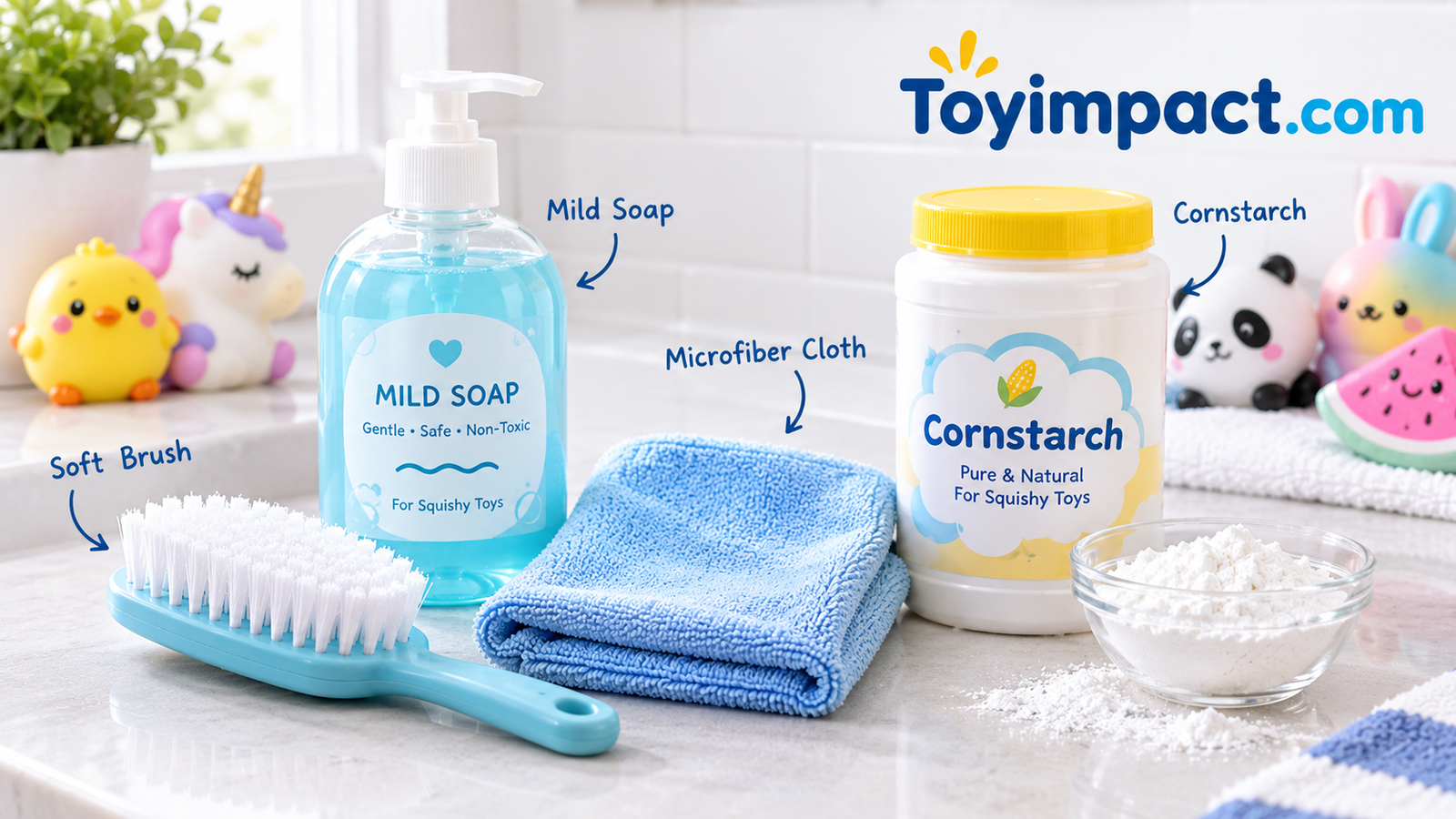
- Soft-bristled brush: a clean baby brush, soft toothbrush, or makeup brush for dust and crevices.
- Two or three microfiber cloths: one damp, one for drying, one spare.
- Mild liquid soap: baby shampoo or a gentle dish soap with no scrubbing beads or bleach.
- A shallow bowl of lukewarm water: not hot, since heat can warp soft plastics.
- Cotton swabs: for eyes, seams and the patch test.
- Cornstarch or baby powder: the secret to fixing tacky surfaces.
- Lint roller or masking tape: for hair and fuzz.
- Clean towel and a mesh rack: for proper drying.
- Diluted white vinegar (optional): for light sanitizing on TPR and silicone only.
Safe to use
- Mild baby shampoo or gentle dish soap
- Lukewarm water
- Microfiber cloths and soft brushes
- Cornstarch for tackiness
- Diluted vinegar, on non-foam toys
Avoid completely
- Bleach and strong disinfectants
- Acetone, nail polish remover
- Undiluted rubbing alcohol on painted faces
- Scouring pads or stiff brushes
- Washing machines and dishwashers
If there are other soft toys in the house, it may be tempting to toss everything in together. Resist it. Squishies do not survive agitation, heat or spin cycles, and the printed features will almost certainly rub off.
A small toy-cleaning kit keeps the whole routine in one spot.
Browse gentle soapsDry Dust and Lint Removal
Wet cleaning a toy that still has hair and grit on it just turns dirt into mud, which then gets pushed into the surface. Always start dry. This step alone often revives a squishy that looks worse than it really is.
Hold the toy in one hand and use a soft brush in short, light strokes, always moving away from your hand. Work from the top of the toy down toward the base. Pay attention to grooves around eyes, ears, tails and any embossed detail, where lint collects. For pet hair and fibres, press a lint roller or a loop of masking tape against the surface and lift straight up instead of dragging, which can smear tackiness across the toy.
Handling stubborn fuzz
If lint has bonded to a slightly sticky spot, do not pick at it with your nails. Dust a tiny pinch of cornstarch over the area first, let it sit for a minute, and then brush. The powder breaks the bond between the fuzz and the surface. You will use this trick again in Step 5.
Keep this step quick. Two minutes of brushing per toy is plenty, and it means the rest of the process needs less water.
Lint rollers and soft brushes make this step effortless.
Shop mini lint rollersPatch Test the Cleaner
No two squishies are quite alike, even within the same brand. Paint, glitter and coatings vary widely, and cheaper toys often have printed details that lift with a bit of moisture. A patch test takes about three minutes and can save a favourite toy.
Mix a few drops of mild soap into a small bowl of lukewarm water until it barely foams. Dip a cotton swab, squeeze out most of the liquid, and touch it to a hidden area, such as the underside or the back of the base. Hold gently for a few seconds, then blot with a dry cloth and look at the swab and the toy. If you see colour on the swab, the surface turns cloudy, or the spot feels tacky, stop. That toy should only be wiped with a barely damp cloth.
Warning signs: colour on the swab, a cloudy patch, a shiny wet look that does not fade, or a sticky feel after drying all mean the coating is sensitive. Switch to dry brushing and the dampest-cloth method only.
This is also a good moment to look for rips or seams. If a squishy has a small tear or starch is leaking, it is best cleaned with dry methods only and then retired if the tear grows.
Cotton swabs are the easiest way to test and to clean tiny crevices.
Get precision swabsGentle Hand Wash
Once the patch test passes, you can clean the toy properly. Fill a shallow bowl with lukewarm water and add a few drops of mild soap. Stir until it just begins to foam. Too many suds are hard to rinse and leave a film.
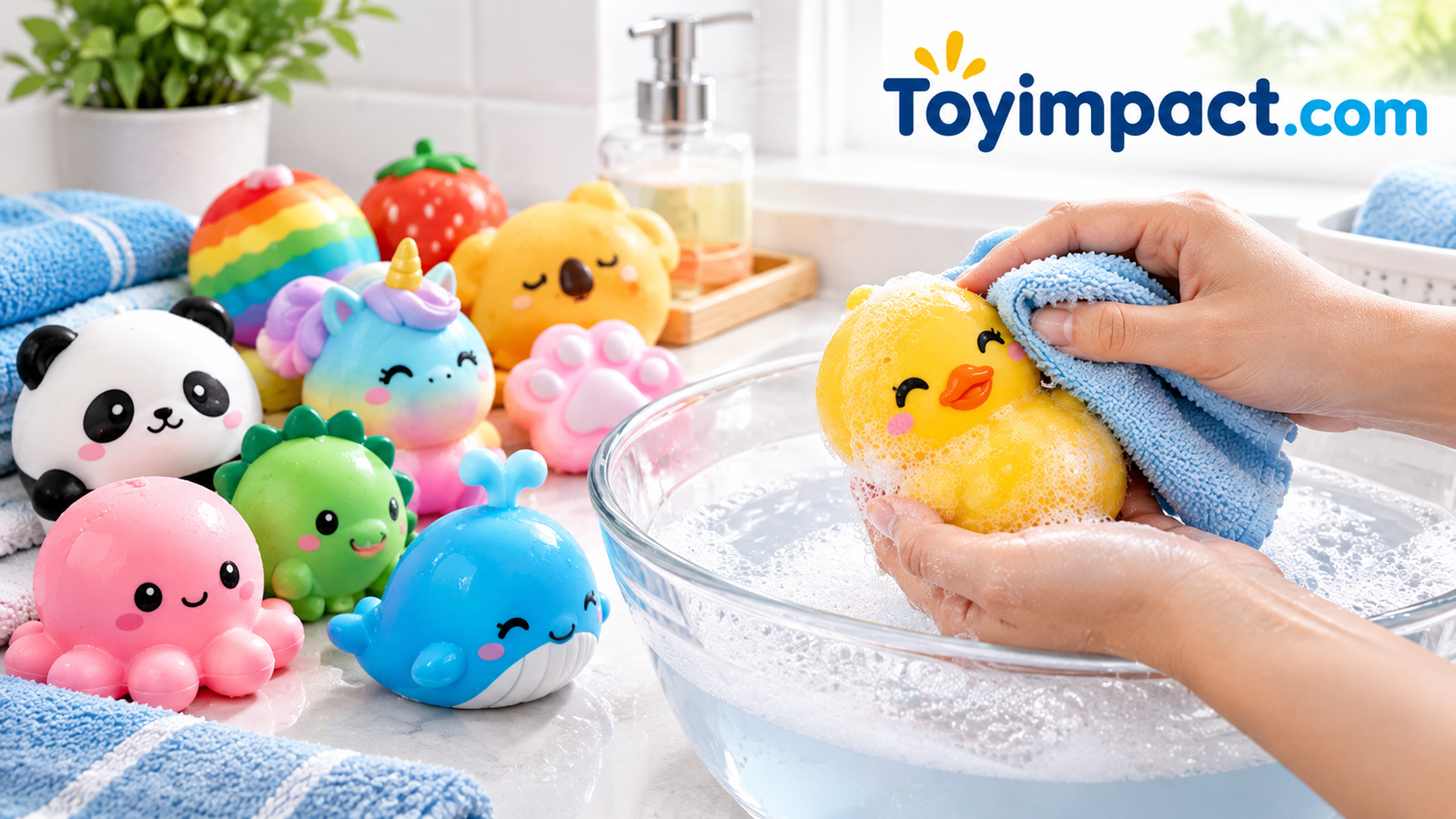
Dip a clean microfiber cloth into the water and wring it out well. It should feel damp, not dripping. Dab, do not rub, in small sections. For silicone and TPR toys, you can lightly wipe in small circles. For foam toys, blot and lift rather than dragging, and never squeeze the toy while it is wet, because you will pull water deep into the foam.
Cleaning faces, eyes and details
Use a cotton swab lightly dampened with the soapy water for painted faces, small eyes and glitter. Roll it over the detail instead of scrubbing back and forth. Change the swab as soon as it looks dirty so you are not smearing grime around.
How long to spend on each toy
Aim for a few minutes per toy. The temptation is to keep going until every mark is gone, but stubborn stains are better dealt with in Step 5 with a targeted approach. Over-washing is the most common way squishies end up sticky, dull or misshapen.
If the toy has been used as a bath or splash accessory, it might hold onto trapped moisture. The same care principles apply as in our practical guide on how to clean bath toys, where hidden dampness and mildew are the main concerns.
Gentle, dye-free soap is kinder to painted squishy faces.
See baby shampoosRinse Without Soaking
Soap residue is the hidden cause of many sticky squishies. It dries into a faint film that catches lint all over again. Rinsing removes it, but this is the point where foam toys are at greatest risk, so use a wipe-rinse instead of holding the toy under a tap.
Take a fresh cloth, wet it under the tap with clean lukewarm water, and wring it thoroughly. Wipe the toy in the same sections you washed, turning the cloth to a clean side often. Repeat two or three times until the cloth stops picking up suds. Silicone and hard TPR toys can be given a brief rinse straight under a gentle stream, then shaken and patted dry immediately.
Wipe-rinse (best for foam)
- Almost no water absorbed
- Protects painted faces
- Quick drying
Full running rinse
- Only for silicone or solid TPR
- Risk of water in seams
- Longer drying time
Never rinse a toy with hot water thinking it will clean better. Heat can soften the coating, make a surface shiny and tacky, and permanently change the shape of soft rubber.
Extra microfiber cloths make rinsing and drying much easier.
Shop lint-free clothsTackle Sticky Spots and Stains
If the toy is still sticky or marked after a wash, a few targeted tricks usually finish the job. The important idea is to treat the specific problem rather than washing the entire toy again.
Tacky surface
A squishy that feels slightly gummy is one of the most common complaints. Dust a thin layer of cornstarch or baby powder over the surface, gently massage it in with clean fingers, and brush off the extra. The powder absorbs the tackiness and leaves a matte, silky feel. Repeat lightly if needed. Do this outdoors or over a sink if your child has sensitivities to powders, and keep the toy away from faces until it is fully brushed off.
Pen, marker and colour transfer
Dab, never rub, with a cotton swab that has a very small amount of soapy water. Ink and dye transfer are often permanent on porous foam, and a harsh remover can strip paint. It is usually better to accept a faint mark than to remove the toy’s face.
Food, grease and grime
Work a drop of mild soap on a damp swab across the grease mark for a few seconds, then wipe clean with a clear damp cloth. Repeat rather than pressing harder.
Tip: Keep a tiny shaker of cornstarch with the toy supplies. Even clean squishies benefit from a light dusting once a month, because it keeps the surface from becoming gummy in warm rooms.
Baby powder and cornstarch keep sticky squishies smooth.
Shop talc-free powdersDry the Right Way
Drying is where cleaned squishies either recover or quietly go wrong. Trapped moisture is what causes musty smells, mould spots inside foam and a permanently flat feel. Patience matters here more than at any other step.
First, blot the toy with a clean towel, pressing gently. Do not wring, twist or squeeze it. Then place the squishy on a dry towel or a mesh rack in a room with good airflow. Turn it every hour or so so that every side gets air. A small fan on a low setting in the room speeds things along without overheating the toy.
| Material | Typical drying time | Signs it is really dry |
|---|---|---|
| Foam | Several hours to overnight | Springs back at normal speed, no cool damp feel |
| TPR / rubber | 1 to 3 hours | Surface feels smooth, no tack |
| Silicone | 30 to 60 minutes | No water beading in seams |
| Filled mochi / gel | Wipe dry, 30 minutes | Skin is dry and not slippery |
Do not use a hairdryer, radiator, oven or direct sunlight to hurry it up. Heat can melt the coating, shrink foam, and cause colours to yellow. If a squishy still feels cool or damp inside after a full day, give it more time in a well-ventilated space before it goes back to the toy box.
A breathable mesh drying rack keeps toys off damp surfaces.
Find drying racksSanitize and Restore the Squish
Regular washing removes most germs, but if a toy has been shared during a cold, dropped somewhere questionable, or handled by several children, a light sanitizing step is reasonable. The key word is light. Squishies do not tolerate the strong products that work on hard plastic.
For silicone and TPR toys, a cloth dampened with a mixture of one part white vinegar to three parts water is a mild, food-safe option. Wipe the surface, do not spray directly, and follow with a clear damp cloth. Skip vinegar on foam squishies, on painted faces you have not tested, and on any toy with electronics. For those, extra-thorough washing and complete drying is the safest route.
Bringing the bounce back
Once the toy is fully dry, give it a few slow, gentle squeezes and releases in your hands. This encourages the foam cells to reopen and move air again. If it is still flat, leave it in a dry room for another day. Foam squishies that have taken on water in the past often stay slightly slower to rise, and that is normal.
Never mix vinegar with bleach or other cleaners, and never use undiluted alcohol on a painted or printed squishy. If you are unsure whether a product is safe, choose plain mild soap and water.
Unscented, fragrance-free wipes are a gentle option for quick between-wash cleanups.
Shop unscented wipesCleaning Methods by Material at a Glance
Here is a fast reference you can screenshot for the next time squishies come home smelling like a school bus. It summarizes what each material tolerates so you do not have to repeat the patch test logic every time.
| Method | Foam | TPR / rubber | Silicone | Filled / gel |
|---|---|---|---|---|
| Dry brush and lint roller | Yes | Yes | Yes | Yes |
| Damp cloth wipe | Yes, barely damp | Yes | Yes | Yes, barely damp |
| Mild soap hand wash | Cloth only | Yes | Yes | Cloth only |
| Running water rinse | No | Brief, if solid | Yes | No |
| Diluted vinegar wipe | No | Yes | Yes | Test first |
| Cornstarch for tackiness | Yes | Yes | Yes | Yes |
| Machine wash / dishwasher | Never | Never | Avoid | Never |
Which method is best overall?
For most families the winning combination is a dry brush, a damp microfiber wipe, and a cornstarch dusting once in a while. It is fast, cheap and kind to every type of squishy. Full washing is best reserved for silicone and solid rubber toys, and for the occasional emergency.
Dry and damp-cloth routine
- Protects paint and coatings
- No long drying wait
- Works on every material
Where it falls short
- Struggles with heavy grime
- Cannot remove deep stains
- Takes more frequent repeats
A useful mindset is to treat squishies more like a delicate craft item than a rugged toy. If you already like keeping a small collection of tactile favourites, you may enjoy reading about the best sensory toys in this gift guide, which covers many soft, squeezable options and how families use them day to day.
Want a fresh replacement or a bigger collection of soft fidget toys?
Browse squishy toysStorage, Routines and When to Replace
Cleaning is only half the battle. Where a squishy lives between cleanings decides how quickly it gets dirty again, and whether it stays soft or turns gummy.
Store them smartly
- Keep them separate from other soft plastics. Different rubbers can react with each other and cause stickiness or colour transfer.
- Use breathable containers. Mesh bags or open bins are better than sealed plastic tubs that trap humidity.
- Avoid heat. Never leave squishies in a hot car, on a sunny windowsill or near a heater.
- Line the bin with a clean cloth. It stops dust and reduces dye transfer from printed paper or fabric.
If space is limited, take a look at our tips on organizing toy storage in small spaces. Giving fragile toys their own compartment makes a big difference. And if your child has a rotating collection, the idea of rotating toys regularly is a natural time to give squishies a quick wipe before they go back on the shelf.
A simple cleaning schedule
| How the toy is used | Quick brush and wipe | Full gentle wash |
|---|---|---|
| Shelf display only | Once a month | Every few months |
| Everyday play at home | Every week or two | Once a month |
| Carried in bags or pockets | Weekly | Every two to three weeks |
| After illness or dropped in dirt | Right away | Same day, then dry fully |
Squishies on the go
Squishies are popular for travel because they are silent, light and satisfying to squeeze. If you are packing them for a trip, a small zip pouch keeps lint out. See our picks in the best toys for car rides and long trips and the best travel toys for airplanes for more ideas. Because they are so quiet, they also fit well among quiet time toys, and their squeeze-and-release play helps small hands, which links to what we describe in our piece on motor skill toys.
When it is time to let go
Even well-kept squishies do not last forever. Consider retiring a toy when you notice any of these signs:
- A tear or split that is growing, especially on filled toys.
- A stubborn sticky feel that returns quickly even after cornstarch.
- A musty smell that persists after thorough drying.
- Crumbling or flaking foam or coating.
- Exposed batteries or broken electronics.
Children often get bored of favourites at different stages, and that is normal. If you are curious about the pattern, we look at why kids get bored of toys so fast. For budget-friendly swaps, our list of the best toys under $20 for toddlers is worth a look, and you can browse our overall best toys roundup for more inspiration. Always keep small squishies away from children who still mouth objects, because they can be a choking hazard when pieces break off.
Breathable storage bins keep toys clean and shape-safe between play sessions.
Shop toy storageCleaning squishies in classrooms and shared homes
When several children handle the same squishies, the cleaning rhythm needs to speed up. A shared basket should get a quick dry wipe at the end of each week and a proper wash or spot clean every two weeks. Keep a labeled tub for “needs cleaning” squishies so kids can drop used ones there instead of returning them to the play bin. This one habit prevents dirty toys from mixing with clean ones and makes the routine feel like part of tidy-up time rather than a chore.
Siblings who share toys benefit from the same approach. If one child is sick, pull the squishies they touched, clean them, and let them rest before returning them to circulation. It is a small effort that helps stop germs from hopping from child to child. For ideas on toys that suit more than one kid at a time, browse our guide to the best toys for siblings to play together.
Keeping travel and backpack squishies fresh
Squishies that ride in backpacks, car seats, and airplane tray tables collect crumbs and lint faster than any other kind. Give each travel squishy its own small zip pouch or lidded container so it is not rubbing against snacks, crayons, and tissues. After a trip, pull it out, brush it off, and give it a quick dry wipe before it goes back into the regular collection. If you plan long journeys, our lists of the best toys for car rides and long trips and the best travel toys for airplanes include compact, easy-to-wipe alternatives that hold up better than delicate slow-rise foam.
Cleaning squishies used as sensory or calming tools
Many families use squishies as fidgets, stress relievers, and calming aids. Because these toys are squeezed for long stretches, often during stressful moments, they pick up oils and moisture from hands quickly. Keep a second squishy on hand so one can dry while the other is in use, and make a habit of wiping the toy down at least once a week. If sensory tools are a big part of your routine, our explainer on what sensory toys are shows how different textures serve different needs, and it can help you choose options that are easier to keep clean.
Signs it is time to retire a squishy
No cleaning method can rescue every squishy. Retire a toy when you notice any of the following: the surface has split or is peeling in flakes, the toy stays sticky no matter how well it is washed and dried, a musty smell returns after cleaning, dark spots appear inside a foam or gel body, or the filling has started to leak. Squishies are inexpensive and meant to be enjoyed, so it is far better to replace one than to risk a child handling a damaged or moldy toy. Recycle the packaging, dispose of the old squishy with household trash, and use the moment to pick a sturdier replacement if the old one wore out quickly.
A quick pre-play habit that saves the most effort
If you only adopt one habit from this guide, make it hand washing before squishy time. Clean, dry hands leave far less oil and food residue on the surface, which means less stickiness, fewer stains, and a much longer life for every toy in the collection. Pair that with a designated storage tub and a short weekly wipe, and you may find you rarely need the deeper methods above at all.
Frequently Asked Questions About Cleaning Squishy Toys
Can you wash squishy toys with water?
Yes, but how much water depends on the material. Silicone and solid rubber squishies handle a quick wash and rinse, while foam and filled squishies should only be wiped with a barely damp cloth. Soaking is never a good idea because trapped water leads to mould and a flat feel.
How do you clean a sticky squishy?
Dust a light layer of cornstarch or baby powder over the toy, rub it gently with clean fingers, and brush off the extra. The powder absorbs the tacky film. If stickiness comes back fast, wash off any soap residue with a damp cloth first, then re-apply the powder.
Can you put squishies in the washing machine?
No. Machine agitation, heat and spinning can tear the skin, strip paint and permanently deform foam. Hand cleaning is the only safe method.
What soap is best for squishy toys?
Mild, unscented baby shampoo or a gentle liquid dish soap works best. Use only a few drops in lukewarm water and avoid products with bleach, strong fragrance, or scrubbing particles.
How do you get lint and hair off a squishy?
Use a soft brush or a lint roller. Press and lift rather than dragging, and dust a little cornstarch over the spot first if the fuzz is stuck. It is easier and safer than picking at it with your fingers.
Can you disinfect squishy toys?
You can lightly sanitize silicone and TPR toys with a cloth dampened with one part white vinegar to three parts water. For foam, stick to a careful mild soap wipe and full drying. Do not use bleach, and avoid undiluted alcohol on painted or printed faces.
How long does it take a squishy to dry?
Silicone can dry in under an hour, TPR in a few hours, and foam often needs several hours or overnight. It should feel room temperature, not cool or damp, and spring back at its usual pace.
Why did my squishy get sticky after washing?
The most likely causes are leftover soap residue, too much heat, or an aging coating. Wipe with a clean damp cloth, let it dry fully, and then dust with cornstarch. If the surface stays gummy, the coating may be breaking down.
How do you clean a squishy with glitter or a painted face?
Use a cotton swab with a tiny amount of soapy water and roll it lightly over the area, never scrubbing. Patch test on a hidden spot first, because glitter and paint on cheaper toys can lift easily.
How often should you clean squishy toys?
A quick brush and wipe every week or two is enough for toys in regular play, with a full gentle wash once a month. Clean sooner after illness, spills or anything that makes them visibly dirty or smelly.
How do you fix a squishy that has lost its squish?
Make sure it is completely dry, then squeeze and release it gently several times to reopen the foam cells. If it stays flat, it may have absorbed water or aged out, and replacing it is the practical answer.
Is it safe for young children to play with cleaned squishies?
Cleaning helps, but squishies are still not appropriate for children who mouth toys, because small pieces can break off. Supervise play, check for damage regularly, and avoid toys with loose batteries or parts for little ones.
Conclusion: Small Steps, Softer Squishies
Cleaning squishy toys does not need to be stressful or complicated. Start dry, test carefully, wash gently, rinse with a wipe, tackle problems one at a time, dry patiently, and only sanitize when it is truly needed. Treat the toy as a delicate item, and it will stay soft, bright and fun for much longer.
Build the habit into your routine with a small kit of soft brush, microfiber cloths, mild soap and cornstarch, and you will rarely have to face a really grubby squishy again. Store them in a breathable space, keep them away from heat, and replace them when they show real signs of wear.
Ready to give your squishies a fresh start? Grab your gentle cleaning kit.
Shop toy cleaning supplies