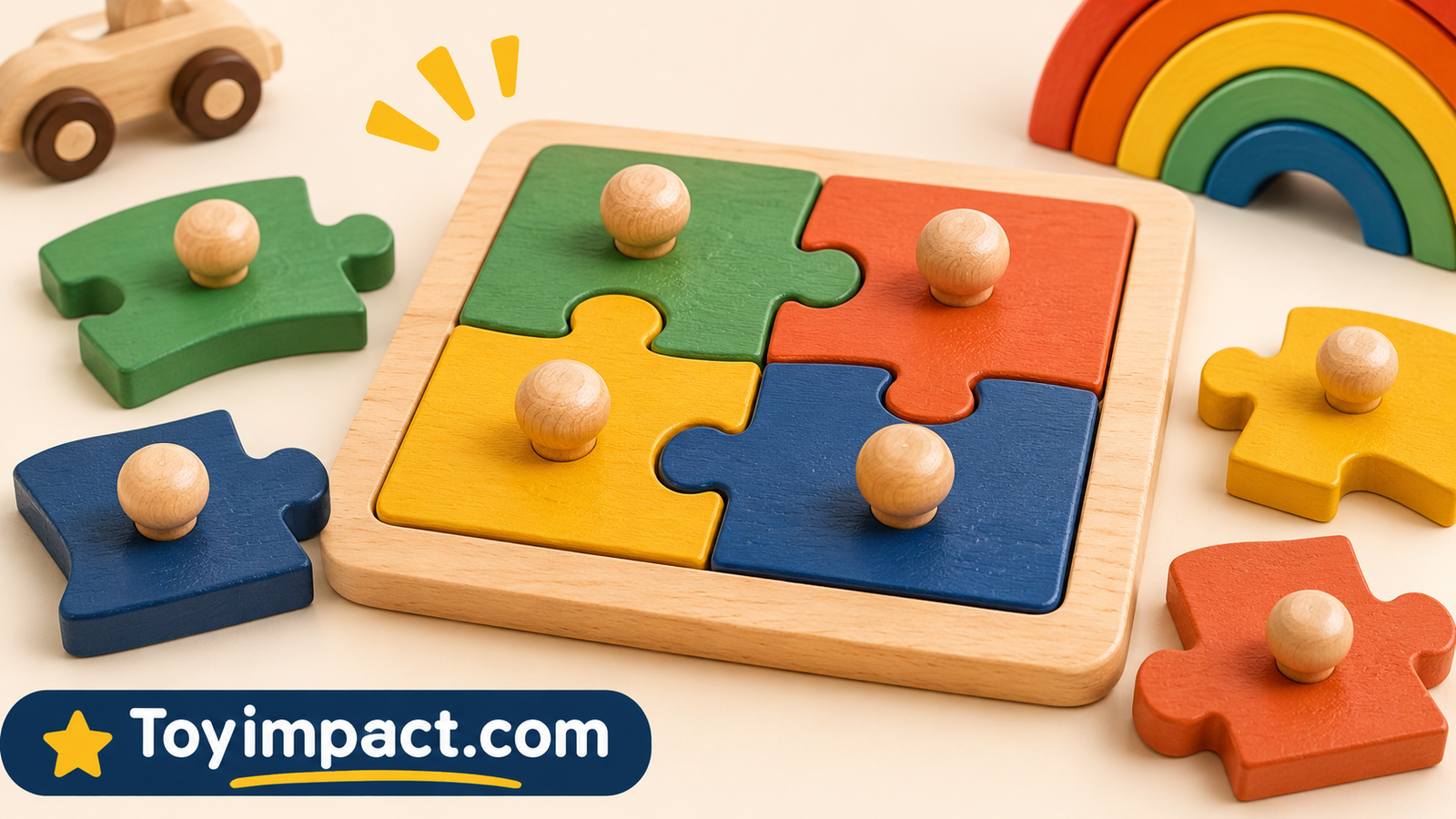
Are Puzzles Good for Toddlers? What Puzzle Play Really Builds in the Early Years
Puzzles are one of the few toddler toys that quietly train hand strength, spatial thinking, patience and vocabulary at the same time. Here is what puzzle play actually develops, which types work at which age, where it goes wrong, and how to choose one your toddler will actually finish.
Are Puzzles Good for Toddlers?
Yes — and better than most parents realise. A toddler puzzle is not really about the picture on the board. It is one of the earliest chances a child gets to hold a problem in their head, test a solution, fail harmlessly and try again.
The Short Answer
Yes, puzzles are excellent for toddlers. They build hand strength and hand-eye coordination, develop spatial reasoning and early maths language, and teach patience in a low-stakes way. The key is choosing a puzzle that is slightly, not far, beyond what your toddler can already do — and letting them struggle a little before stepping in.
What makes puzzles unusual in the toddler toy box is that they are self-correcting. A piece either fits or it does not. There is no adult telling the child they were wrong, no score, no flashing light. The feedback comes from the object itself, which means a toddler can repeat the attempt dozens of times without ever feeling judged. That combination — challenge, instant feedback, and emotional safety — is close to ideal for early learning.
Puzzles also produce something parents rarely get from toddler toys: quiet. A child absorbed in fitting pieces is practising sustained attention, a skill that is increasingly valuable and increasingly rare in a world of fast-moving screens. If you are weighing puzzle play against other “educational” options, the wider question of whether educational toys really work is worth reading first — the short version is that the toy matters far less than the interaction around it.
Over the sections below we will look at exactly what puzzle play develops, compare the different puzzle types available, map them against toddler ages, weigh puzzles against other popular toys, and cover the safety and buying decisions that actually make a difference at home.
Start With a Simple Wooden Puzzle
A chunky single-shape puzzle is the gentlest first step into puzzle play.
Check Price on Amazon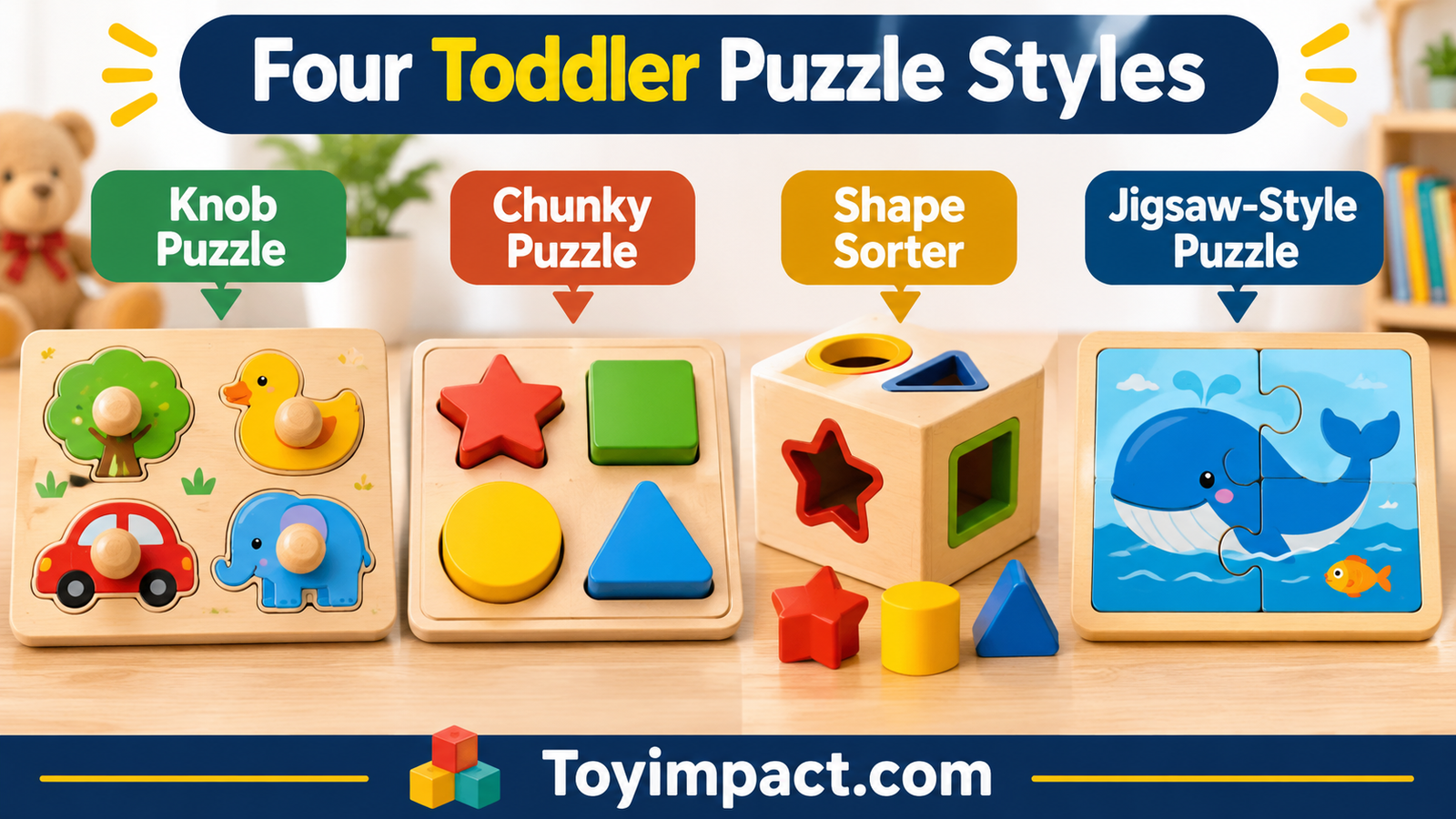
From knob boards to chunky jigsaws: different puzzle styles train different skills, and most toddlers benefit from owning more than one type.
1. What Actually Happens in a Toddler’s Brain During Puzzle Play
To an adult, a toddler pushing a piece into a board looks like simple play. Inside the child’s head, something considerably more complex is going on.
Every puzzle attempt begins with visual analysis. The child has to look at a piece, notice its shape, compare it against the empty spaces, and predict which hole it might belong to. Then comes rotation: mentally turning the piece, or physically spinning it, until the outline matches. Finally there is testing — pressing the piece in and finding out instantly whether the prediction was right.
That loop — look, predict, test, adjust — is a genuine problem-solving cycle, and toddlers run it over and over without being prompted. It is also the same basic loop used in science and engineering much later on. Which is why puzzle play so often appears alongside construction play in discussions about early STEM toys: the subject matter is different, but the thinking habit is the same.
Why the “trial and error” part matters most
It is tempting to place the piece for your toddler. Resist where you can. When a toddler tries a piece, discovers it does not fit, and reaches for another, they are learning something profound: that being wrong is information, not failure. Children who get plenty of that experience early tend to approach harder tasks later with more confidence and less avoidance.
A toddler puzzle is not a test of intelligence. It is a safe place to practise being wrong and trying again.
Memory and concentration
Simple puzzles also stretch working memory. A child who has found where the red circle goes has to hold that information while searching for the blue square. Over time, this strengthens the ability to keep information in mind while acting on it — one of the core components of attention and, later, of following multi-step instructions.
If you want to see how this fits into the wider picture of reasoning toys, our guide to the best STEM toys covers which play types genuinely build thinking skills rather than just claiming to.
What Progress Looks Like
First your toddler forces pieces into any space. Then they rotate a piece before trying. Then they stop trying a piece in the wrong hole altogether. Each of those shifts is a visible sign of growing reasoning — far more meaningful than how fast the puzzle is finished.
Try a Wooden Shape Puzzle
Simple outlines give toddlers the clearest chance to practise fitting and matching.
Check Price on Amazon2. Fine Motor Skills and Hand-Eye Coordination
This is where puzzles deliver their clearest, most measurable benefit — and it starts with the knob.
The small knob or peg on a toddler puzzle piece is not decorative. It is designed to be grasped between thumb and forefinger, which is exactly the pincer grip used later for holding a pencil, using scissors, fastening buttons and handling cutlery. Every time a toddler lifts a piece by its knob and places it precisely, they are rehearsing a movement that will matter for years.
Grasp, wrist and pressure control
Placing a piece correctly requires more than grip strength. The wrist has to rotate the piece into alignment. The hand has to steady the board while the other hand works — bilateral coordination. The pressure has to be right: enough to seat the piece, not so much that the whole board slides away. These are finely graded movements, and toddlers build them through repetition rather than instruction.
Hand-eye coordination in real time
Hand-eye coordination is the ability to use visual information to guide hand movement, and puzzles are a demanding trainer. The child sees the outline, plans the movement, and corrects continuously as the piece approaches the slot. Unlike stacking blocks, which tolerate imprecision, puzzle pieces demand accuracy — which is precisely why they work so well.
Pincer Grasp
Thumb and forefinger work on knobs and small pieces, laying groundwork for pencil control.
Bilateral Control
One hand stabilises the board while the other manipulates — both sides learning to work together.
Wrist Rotation
Turning a piece into position builds the rotational control needed for drawing curves and letters.
Visual Tracking
Eyes follow a piece from board to slot, strengthening the eye-hand link used in reading and writing.
It is worth noting that puzzles are one part of a wider fine motor diet. Stacking, threading, drawing, play dough and construction play all develop the same muscle groups from different angles, and children benefit from variety. Our explainers on motor skill toys and stacking toys cover the complementary options well.
And if your toddler is very young, remember that all of this begins with exploration rather than completion. Babies and young toddlers mouth, bang, fill and dump long before they fit anything into anything — the timeline in when do babies start playing with toys is useful context.
Build Fine Motor Skills
Look for knob or peg pieces sized for small fingers to grasp easily.
Check Price on Amazon3. Problem-Solving, Patience and Frustration Tolerance
Ask experienced toddler teachers which toy best teaches patience and puzzles come up again and again. The reason is simple: a puzzle cannot be rushed.
Most toddler toys respond instantly to whatever the child does. Stack a block and it stacks. Press a button and it lights up. A puzzle is different — it demands a plan before it rewards action. The child has to look, think, choose, and persist through attempts that do not work. That gap between wanting and achieving is where patience grows.
The value of productive struggle
Developmental specialists often talk about “productive struggle”: a task that is hard enough to require effort but not so hard that the child gives up. Good puzzles sit exactly in that zone. The piece will not simply fall into place, but it can be solved, and the child can feel the moment when it does.
That feeling — the click of a piece seating correctly after several tries — is a genuine emotional reward. It teaches the association between effort and satisfaction, which is far more useful long term than any particular puzzle skill.
Handling the meltdown moment
Frustration is normal and useful, up to a point. When it tips into tears, step in with a prompt rather than a solution: “Which hole looks like this piece?” or “What happens if you turn it around?” Coaching keeps the ownership with the child. Solving it for them removes the very thing the puzzle was providing.
The One-Piece Rule
If a puzzle is causing repeated frustration, take pieces away rather than adding help. Reducing a puzzle to three or four pieces restores the challenge to the right level, and you can add pieces back as confidence returns.
Attention and quiet time
Puzzle play is also one of the most reliable ways to build sustained, self-directed attention in a toddler. There is no autoplay and no notification, just a task worth finishing. For families trying to build a calmer daily rhythm, puzzles make an excellent anchor activity — see our guide to quiet time toys for more ideas that work in the same slot.
One caution: attention is closely tied to challenge level. If a toddler repeatedly abandons puzzles, it is usually a fit problem rather than a character problem. Why kids get bored of toys so fast explains what is usually going on underneath.
Encourage Focused Play
A few simple puzzles on a low shelf invite independent, quiet play.
Check Price on Amazon4. Language, Shapes, Colours and Early Maths
Puzzles are quietly one of the most language-rich toddler toys available, largely because they give adults so much to talk about.
Vocabulary that sticks
Playing with a puzzle naturally produces precise words: circle, square, star, corner, edge, flat, round, beside, under, next to, turn it, push it in, take it out. These are positional and descriptive words that underpin later maths and reading comprehension, and they stick because the child can see and touch what they mean.
Parents can extend this without making it feel like a lesson. Narrating what you see works beautifully: “You tried the circle in the star hole — that didn’t fit. Where does the circle go?” Simple commentary gives language a model while keeping the play in the child’s hands.
Sorting, matching and early maths
Before a toddler can count, they can categorise. Puzzles invite sorting by colour, by shape, by size — all of which are foundational maths skills. A puzzle board with several similar pieces also introduces the idea of matching by attribute, which is the basis of early geometry and pattern recognition.
Counting sneaks in too. “How many pieces are left? Two! Which one goes first?” is number sense built into ordinary play rather than drilled separately.
Shapes and Geometry
Recognising outlines, comparing corners and curves, and understanding how forms relate to one another.
Colours and Categories
Grouping by colour or attribute, a direct precursor to sorting, patterning and early number work.
Positional Language
Words like above, below, beside and through give toddlers the vocabulary of spatial relationships.
If you want to build on this direction deliberately, our guides to introducing STEM toys to preschoolers and the best age to introduce Montessori toys both cover how to pace early learning without turning play into pressure.
Add a Shape Sorter
Shape sorters pair perfectly with puzzles for early maths language.
Check Price on Amazon6. Puzzle Types Compared: Which Ones Build Which Skills
“Puzzle” covers a wide range of very different toys. Each type develops something slightly different, and most toddlers benefit from owning two or three rather than several of the same.
| Puzzle Type | Typical Age Fit | Main Skills Built | Best For | Watch Out For |
|---|---|---|---|---|
| Knob / Peg Puzzles | Around 12 months and up | Pincer grasp, shape recognition, hand-eye coordination | First puzzles and fine motor practice | Knobs must be firmly attached and too large to swallow |
| Chunky / Stand-Up Puzzles | Around 18 months and up | Grasping, imaginative play, vocabulary, fitting | Toddlers who want pieces they can carry and play with | Pieces can be chewed; check edges and paint |
| Shape Sorters | Around 12 months and up | Matching, spatial reasoning, trial and error, persistence | Early problem-solving and shape vocabulary | Frustration if shapes are too similar or slots too tight |
| Simple Jigsaws | Around 2 years and up | Part-to-whole thinking, visual analysis, patience | Toddlers ready for pieces that join together | Too many pieces overwhelms quickly; start small |
| Floor Puzzles | Around 2 and up | Gross motor movement, sequencing, shared play | Two children working together on a big project | Needs floor space; pieces are easy to lose |
| Sound / Lift-the-Flap Puzzles | Around 18 months and up | Cause-and-effect, memory, vocabulary, anticipation | Toddlers who need extra motivation to engage | Sound units need secure battery compartments |
Why knob puzzles are the classic starting point
Knob puzzles earned their place as a first puzzle for good reasons. The knob makes the piece easy to grasp, the board provides a clear boundary, and each piece has exactly one home. For a child still developing grip strength, that clarity is a huge advantage over free-floating jigsaw pieces.
When to move on to jigsaws
The shift to jigsaws usually happens when a toddler starts completing board puzzles quickly and losing interest. Jigsaws add a new demand: pieces must connect to each other, not just fit a hole. That is a genuine step up in part-to-whole thinking, and it is where many children first experience the satisfaction of building a picture.
For a curated shortlist across these styles, our best puzzle toys guide breaks down options by type and stage. And if wooden options appeal, best wooden toys is a good companion piece, along with our honest look at wooden versus plastic toys.
Explore Toddler Jigsaws
Look for a small piece count with large, sturdy pieces and a clear picture.
Check Price on Amazon7. Age-by-Age Puzzle Guide for Toddlers
Getting the difficulty right matters more than getting the price right. A puzzle that is too hard gets abandoned; one that is too easy gets ignored. Here is how the stages typically unfold.
| Stage | Puzzle Style | What They Are Learning | How Adults Help Best |
|---|---|---|---|
| Under 12 months | Soft or thick single-piece boards | Grasping, banging, mouthing, cause-and-effect | Let them explore freely; do not push fitting yet |
| 12 to 18 months | Knob puzzles with a few distinct shapes | Pincer grasp, matching, first attempts at fitting | Model one piece, then hand over control |
| 18 to 24 months | Shape sorters, chunky puzzles, simple boards | Trial and error, rotation, shape and colour words | Ask questions rather than placing pieces |
| 2 to 3 years | Simple jigsaws, picture boards, wooden sets | Part-to-whole thinking, planning, patience | Work alongside them, not on their behalf |
| 3 years and up | Floor puzzles, themed jigsaws, multi-scene sets | Sequencing, narrative, longer focus, collaboration | Join in as a partner and let them lead |
Reading the readiness signals
Children do not follow age bands perfectly, and the printed guidance on the box is a safety reference rather than a skill forecast. Watch the child instead. Ready signals include watching you do a puzzle with interest, attempting to fit pieces, and returning to a puzzle unprompted. Not-ready signals include chewing pieces, tipping the board, or wandering away within moments.
The preschool transition
Between two and three, most children move from fitting to building. This is the stage where puzzles start to overlap with other reasoning toys — construction, sorting games and simple matching activities. If you want ideas for this age band, we have a guide to educational toys for three-year-olds that pairs well with a puzzle shelf.
A Simple Difficulty Test
Before buying, count the pieces and ask whether your toddler could complete roughly a third of it unaided. That is close to the right level — enough success to stay engaged, enough challenge to keep learning.
Shop Puzzles by Age
Match piece size and complexity to your toddler’s current stage.
Check Price on Amazon8. Puzzles vs. Other Popular Toddler Toys
Puzzles are excellent, but no single toy covers everything. Here is how they compare with the other staples in most toddler toy boxes.
| Toy Type | Core Skills | Open-Endedness | Frustration Level | Pairs Well With |
|---|---|---|---|---|
| Puzzles | Visual analysis, fine motor, patience, shape language | Low to moderate | Moderate when difficulty is wrong | Blocks, books, sorting games |
| Building Blocks | Balance, spatial reasoning, creativity, construction | Very high | Low | Puzzles, pretend play figures |
| Magnetic Tiles | Symmetry, 3D geometry, colour, cause-and-effect | Very high | Low | Blocks, vehicles, small figures |
| Pretend Play Sets | Language, empathy, roles, narrative thinking | High | Very low | Puzzles, dollhouses, dress-up |
| Play Dough & Art | Hand strength, imagination, sensory input, expression | Extremely high | Very low | Cutters, stamps, blocks |
| Electronic Toys | Cause-and-effect, sound recognition, letters or numbers | Low | Low | Best used sparingly alongside hands-on play |
Puzzles versus blocks
These are natural partners rather than rivals. Blocks teach balance and open-ended design; puzzles teach accuracy and completion. A toddler with both tends to move fluidly between creative and analytical play. Our building blocks guide and our look at whether LEGO support development cover construction play in depth.
Puzzles versus magnetic tiles
Magnetic tiles build structures quickly and reward big, dramatic constructions, which suits toddlers who get frustrated easily. Puzzles demand more precision and more persistence. Many families use tiles for high-energy play and puzzles for calm, focused play — a genuinely useful distinction. See best magnetic tiles if you are considering both.
Puzzles versus screen-based “educational” apps
Hands-on puzzle play involves physical manipulation, immediate spatial feedback and self-directed pacing in a way that screen activities rarely match. If you are weighing this up, are screen-free toys better and are electronic toys bad for toddlers both look at the evidence calmly.
And for older toddlers building towards more complex play, construction sets such as LEGO sets extend many of the same reasoning skills.
Round Out the Toy Shelf
Pair one or two puzzles with blocks and open-ended play for balance.
Check Educational Toys on Amazon9. How to Introduce Puzzles Without Frustration
Plenty of toddlers ignore puzzles that parents assumed would be a hit. Usually the problem is not the puzzle — it is the introduction.
Start with fewer pieces, not more
Empty the board and put out three pieces only. Success first, complexity later. A child who completes a reduced puzzle twice will happily attempt the full version; a child who is handed a full board and fails repeatedly will walk away.
Model once, then hand over
Do one piece slowly, with narration, then pass control back. Many toddlers learn by watching a single demonstration, and the handover matters more than the demonstration. Avoid hovering or correcting — nothing kills puzzle play faster than an adult supervising it.
Make it available rather than scheduled
A puzzle on a low shelf gets played with far more than one in a cupboard. In our experience, availability beats enthusiasm every time. Leave a puzzle out on a small table during a calm part of the day and see what happens without any prompting at all.
Follow Their Interest
Animals, vehicles, farm scenes — the picture matters far more to toddlers than the piece count.
Keep Sessions Short
Ten engaged minutes beat thirty reluctant ones. Stop while it is still enjoyable.
Praise the Effort
“You kept trying until it fitted” builds more persistence than “You’re so clever.”
Let Them Be Wrong
A piece in the wrong hole is information. Give it a moment before stepping in.
What to do when a toddler refuses puzzles
Do not force it. Instead, bring puzzle-like thinking into play they already enjoy: hide pieces around the room for a treasure hunt, fit shapes into play dough, or sort coloured pieces into bowls. The underlying skills transfer, and interest often circles back later. If you suspect sensory factors are at play, our guide to sensory toys and sensory toys for autism are helpful starting points.
Find a First Puzzle
Choose high-contrast images and a small number of large pieces to begin.
Check Price on Amazon10. Safety, Materials and Hygiene
Toddler toys live in mouths as much as in hands. A few straightforward checks keep puzzle play safe without turning it into a source of anxiety.
Size and choking hazards
This is the first and most important check. Any piece small enough to fit entirely into a toddler’s mouth is a choking hazard, regardless of the age label. Knobs must be firmly attached and large enough to be impossible to swallow. Loose jigsaw pieces from older siblings’ sets should be kept entirely out of reach.
Materials and finishes
Wooden puzzles are popular for their durability and feel, while plastic ones tend to be lighter and washable. What matters is that the finish is non-toxic and the edges are smooth, with no splinters, peeling paint or loose laminate. If material questions concern you, our guide to whether plastic toys are safe covers what actually matters.
Battery-operated puzzle toys
Sound puzzles add engagement but add a safety responsibility too. Battery compartments must be screwed shut and intact, and button batteries are extremely dangerous if swallowed. See what toys have button batteries for a clear overview, and how to clean battery corrosion if you find an old unit in the toy box.
| Pros | Cons |
|---|---|
|
|
Keeping puzzles clean
Toddler puzzles get chewed, sneezed on and dragged across floors. Regular cleaning is straightforward: warm soapy water, a soft cloth and full air-drying for wooden boards, and a wipe-down for plastic. Avoid soaking wooden puzzles or using harsh chemicals. The full method is in how to clean plastic toys safely.
Choose Safe, Well-Made Puzzles
Look for non-toxic finishes, secure knobs and smooth, splinter-free edges.
Check Price on Amazon11. Buying, Storage and Keeping Puzzles Interesting
Choosing well and storing well matters more than buying more. A handful of well-chosen puzzles, rotated intelligently, will outperform a shelf full that never gets touched.
What to look for when buying
- Clear, high-contrast artwork. Toddlers match by outline and colour before they match by detail.
- Sturdy pieces. They will be dropped, sat on and chewed. Thin card warps quickly in toddler hands.
- Appropriate piece count. Fewer, larger pieces first. Complexity should arrive gradually.
- Engaging subject matter. The picture is what makes a toddler want to finish it.
- Replay value. Puzzles that build a scene or tell a story invite repeat play far more than abstract patterns.
Buying second-hand
Puzzles are one of the best categories of toy to buy used, since quality wooden and board puzzles last for years. Check for missing pieces, warped boards, chipped paint and loose knobs, and wash thoroughly before use. Our guides to buying used toys and second-hand toy safety cover the practical checks in detail.
If budget is tight, there are genuinely good options in lower price bands — see the best toys under 20 for toddlers — and plenty of simple puzzles can be made at home with cardboard and a craft knife.
Storage that actually works
Most puzzle frustration at home is really storage frustration. Pieces end up mixed between sets and the puzzle becomes unplayable. The fix is simple: one shallow tray or zip bag per puzzle, stored upright where a toddler can see and reach it. If space is tight, our guide to organising toy storage in small spaces is packed with workable ideas.
Rotation beats accumulation
Keep two or three puzzles out and store the rest. Swapping them every week or two restores novelty without buying anything new — a technique covered in how often to rotate kids’ toys. It also answers the question of quantity: most toddlers need far fewer toys than the market suggests, as we discuss in do kids need so many toys.
And if you are shopping for gifts, puzzles sit beautifully alongside other hands-on options — see the best toys for Christmas for a fuller list, and what age kids stop playing with toys for reassurance about how interests shift over time.
Build a Small Puzzle Library
A few well-chosen puzzles rotated weekly outlast a crowded toy shelf.
Check Price on Amazon12. Extending Puzzle Play Into Creative Play
The final piece of the puzzle, so to speak, is what happens after the last piece clicks into place. Puzzles are naturally finite, but they can easily become a launch pad for wider play.
From picture to story
Once a puzzle is complete, ask what is happening in the scene. Who lives here? What happens next? Where is that animal going? This simple shift turns a matching task into narrative play, which builds vocabulary and imagination at the same time. Many toddlers will happily retell the story of their puzzle again and again.
Take it apart on purpose
Some toddlers become reluctant to dismantle a finished puzzle. Treat disassembly as its own activity: “Let’s take it apart and see if you can do it faster this time.” Framing the rebuild as the game removes the sense of loss and doubles the practice.
Mix puzzles with open-ended toys
Puzzle pieces become ingredients in a pretend shop, roads in a block city, or sorted treasures in a collection. Combining structured and unstructured play is where the richest learning happens — and it is the same principle behind pairing puzzles with pretend play toys and creative toys.
Three Quick Extensions
Sort it: group pieces by colour or shape before starting. Trace it: place pieces on paper and draw around them. Story it: build the puzzle and tell the story together.
For older toddlers who want bigger projects, building toys extend many of the same skills in three dimensions — our building blocks and LEGO set guides cover the options by age and stage.
Add Some Open-Ended Play
Pair one or two puzzles with blocks and pretend play for balanced development.
Check Price on AmazonFrequently Asked Questions
Question 1Are puzzles actually good for toddlers?
Yes. Puzzle play develops fine motor control, hand-eye coordination, spatial reasoning, early maths language and patience all at once. The self-correcting nature of puzzles — a piece either fits or it does not — also teaches toddlers that mistakes are information rather than failure, which is valuable well beyond playtime.
Question 2At what age should a toddler start puzzles?
Most children begin with simple knob puzzles somewhere around the first birthday, once grasping is well established. Before that, thick single-piece boards are more about exploration than fitting. Always follow the age guidance on the packaging for safety, and watch the child’s interest rather than the calendar.
Question 3What type of puzzle is best for a first puzzle?
A wooden knob puzzle with a handful of clearly different shapes is the classic starting point. The knob makes grasping easy and the board gives a clear boundary. Avoid puzzles with many similar-looking pieces early on.
Question 4How many puzzle pieces should a toddler have?
Start with a very small number of large pieces and increase gradually. A good rule of thumb is to choose puzzles your toddler can mostly complete unaided, with just enough challenge to keep them engaged. If a puzzle causes repeated tears, remove pieces rather than adding help.
Question 5Do puzzles help with speech and language?
Indirectly but genuinely. Puzzle play generates rich vocabulary around shapes, colours, positions and actions, and it gives adults plenty to talk about. Extending a finished puzzle into a story builds narrative skills further. See pretend play toys for complementary ideas.
Question 6Are wooden puzzles better than plastic ones?
Both work well. Wooden puzzles tend to be sturdy and pleasant to handle; plastic ones are lighter and easy to clean. What matters is non-toxic finishes, secure knobs and a difficulty level that suits your child. Our comparison of wooden versus plastic toys covers the trade-offs honestly.
Question 7My toddler refuses to do puzzles. Should I worry?
No. Children develop interests at very different rates, and many toddlers prefer movement or pretend play first. Try reducing the piece count, choosing a subject they love, or bringing puzzle-like thinking into other play. Interest often arrives later.
Question 8Are puzzles good for toddlers with autism or sensory needs?
Many children find puzzles calming and absorbing because they are predictable, self-paced and visually structured. Others find certain textures or sounds difficult. Start with a simple wooden puzzle in a quiet space and follow the child’s response. Sensory toys for autism is a useful companion guide.
Question 9How many puzzles does a toddler need?
Fewer than most people think. Two or three puzzles in rotation is usually plenty, with the rest stored away and swapped every week or two. Rotation restores novelty without adding clutter — see how often to rotate kids’ toys.
Question 10Are second-hand puzzles safe?
Generally yes, and they are often excellent value. Check for missing pieces, warped boards, chipped paint and loose knobs, and wash thoroughly before use. Are second-hand toys safe covers the full checklist.
Question 11Are puzzles better than educational apps for toddlers?
They build different things, but hands-on puzzle play involves physical manipulation, spatial feedback and self-paced problem-solving that screens rarely match. Most families find puzzles a stronger foundation in the early years. See are screen-free toys better for a fuller comparison.
Still Choosing?
A simple wooden knob puzzle is the safest first purchase for most toddlers.
Check Price on AmazonFinal Verdict: Are Puzzles Good for Toddlers?
Yes — and they earn that answer across almost every measure that matters. Puzzles strengthen small hands, sharpen visual thinking, build early maths and shape language, and give toddlers a genuinely safe place to practise patience and persistence. Few toys deliver so much developmental return in such a small, quiet, inexpensive package.
The value is not automatic, though. It depends on fit: a puzzle that is slightly beyond what your toddler can already do, pieces sized safely for their age, and an adult who models once and then steps back. Get that right and puzzle play becomes one of the calmest, most productive parts of the day.
Puzzles also work best as one part of a varied play diet, alongside blocks, pretend play, art, movement and books. No single toy does everything — but puzzles do more than most, and they do it quietly.
Ready to Start Puzzle Play?
Begin with one simple wooden puzzle and add pieces as skills grow.
Shop Toddler Puzzles on AmazonYou May Also Like
Browse All Toy Guides
Reviews, comparisons and play advice for every age and interest.
Visit the site → Outdoor PlayBest Water Table Toys for the Backyard
Sensory-rich outdoor play for warm afternoons.
Read the guide → Gift GuidesBest Gift Toys for 5-Year-Olds
Age-matched present ideas that actually get played with.
Read the guide → TravelBest Toys for Long Car Rides
Quiet, contained play that survives the back seat.
Read the guide → Active PlayBest Ride-On Toys
Balance, coordination and big-muscle fun.
Read the guide → Imaginative PlayBest Dollhouses
Miniature worlds that grow storytelling and social language.
Read the guide → Tech PlayBest Remote Control Toys
Hand-eye coordination and cause-and-effect with a controller.
Read the guide → Round-UpThe Best Toys, Round-Up
Our starting point for finding the right toy faster.
Read the guide → TravelBest Travel Toys for Airplanes
Compact, low-mess play for tight tray tables.
Read the guide → ExplainersWhat Are Musical Toys?
Rhythm, listening and expression beyond the puzzle table.
Read the guide → Care GuidesHow to Clean Bath Toys
Keeping mould-prone toys hygienic and safe.
Read the guide → Care GuidesHow to Clean Squishy Toys
Simple methods for soft, squeezable favourites.
Read the guide →As an Amazon Associate we earn from qualifying purchases. Prices and availability are subject to change.
Best Remote Control Toys

QUNREDA 4WD Stunt RC Car
View on Amazon
Monster Jam Official Grave Digger RC Truck
View on Amazon
BEZGAR/FDCTR Stunt RC Crawler
View on Amazon
DJI Mini 4K Drone
View on Amazon
Beginner Foldable Mini Drone (1080P)
View on Amazon
HEX BOTS Wall Crawler Gecko
View on Amazon
Ruko 1088 Smart Robot
View on Amazon
RC Excavator/Construction Toy
View on Amazon
Motor Dayz Polaris RZR RC UTV
View on Amazon
AEROQUEST Lamborghini RC Car
View on AmazonBest Dollhouse
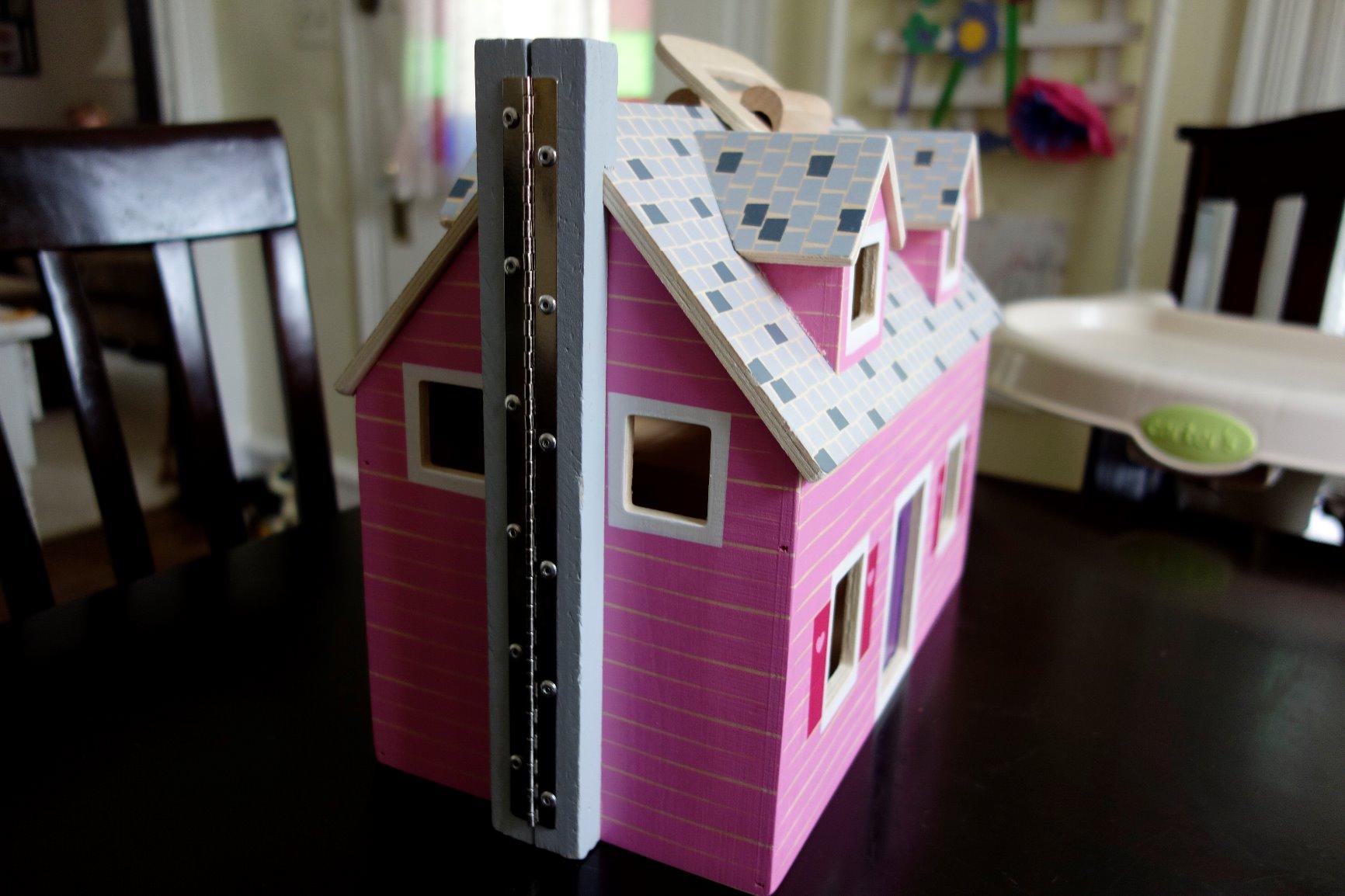
Melissa & Doug Fold & Go Wooden Dollhouse
View on Amazon
Melissa & Doug Take-Along Wooden Doorbell Dollhouse
View on Amazon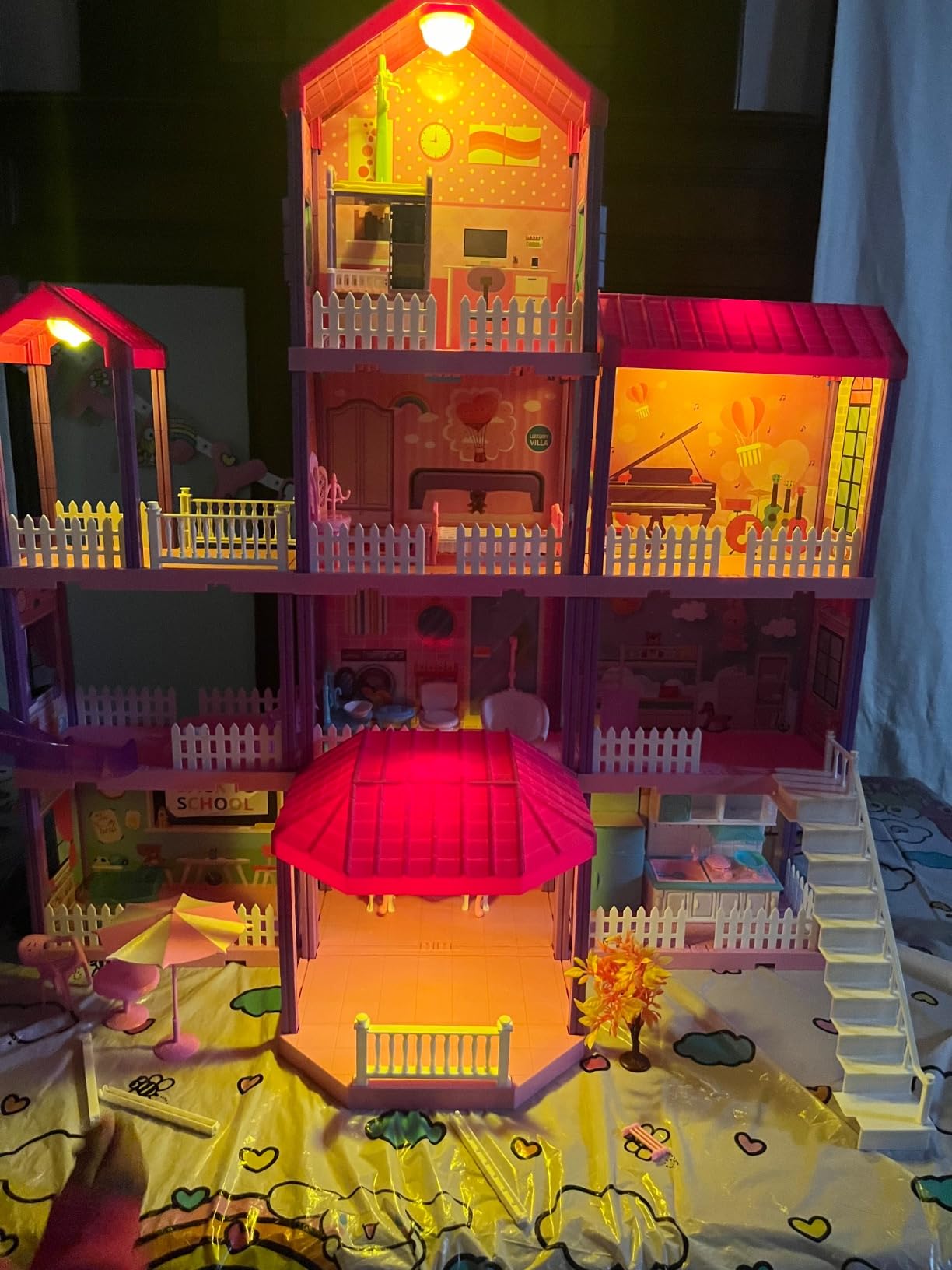
beefunni 4-Story Princess Dollhouse
View on Amazon
Dream Doll House (4 Stories, 10 Rooms)
View on Amazon
Playskool Weebles My Smart House
View on Amazon
Rolife DIY Miniature Dollhouse Kits
View on Amazon
CUTEBEE/Rolife Book Nook Kits
View on Amazon
Little Tikes Story Dream Machine (Gabby's Dollhouse)
View on Amazon
Barbie Dreamtopia & Disney Princess Doll Sets
View on AmazonBest Puzzle Toys

Educational Insights Kanoodle
View on Amazon
Rubik's Cube Original 3x3
View on Amazon
Melissa & Doug Farm Animals Chunky Puzzle
View on Amazon
Melissa & Doug Minnie Mouse Dress-Up Puzzle
View on Amazon
Shashibo Shape Shifting Box
View on Amazon
Speed Cube Sets (Multi-Pack)
View on Amazon
Wooden Dinosaur Jigsaw Puzzle 4-Pack
View on Amazon
Coogam/BONNYCO Wooden Tangram Sets
View on Amazon
ROKR 3D Wooden Mechanical Puzzle Kits
View on Amazon
1000-Piece Adult Jigsaw Puzzles (Ravensburger/Galison)
View on AmazonBest Pretend Play Toys

Melissa & Doug Dust, Sweep & Mop 6-Piece Set
View on Amazon
Melissa & Doug Slice and Bake Cookies Set
View on Amazon
Melissa & Doug Scoop & Serve Ice Cream Counter
View on Amazon
Melissa & Doug Wooden Pizza Party Play Set
View on Amazon
Potato Head Pet-Tato Tots
View on Amazon
Fisher-Price Little People Caring for Animals Farm
View on Amazon
Fisher-Price Little People Moana & Maui's Canoe
View on Amazon
Casdon Dyson Cordless Vacuum
View on Amazon
JOYIN Play Food Cutting Set
View on Amazon
Fisher-Price Little People Forest Friends Carry Case
View on AmazonBest Ride-On Toys

Radio Flyer Classic Red Tricycle
View on Amazon
Little Tikes Cozy Coupe
View on Amazon
24V Electric Ride-On Car
View on Amazon
PlasmaCar
View on Amazon
3-in-1 Ride-On w/ 17 Sensory Activities
View on Amazon
Play22 Ride-On Excavator
View on Amazon
John Deere Ride-On Tractor
View on Amazon
Spider-Man ATV-Style Ride-On
View on Amazon
Mercedes-Benz Convertible Two-Seater
View on Amazon
Hedstrom Bouncin' Bluey Hopper
View on AmazonBest Wooden Toys

Battat Wooden Activity Cube
View on Amazon
Melissa & Doug 100-Piece Building Blocks
View on Amazon
BRIO World Deluxe Railway Set
View on Amazon
Melissa & Doug Deluxe ABC/123 Blocks
View on Amazon
Melissa & Doug Farm Animals Peg Puzzle
View on Amazon
16 PCS Wooden Montessori Balancing Stones
View on Amazon
21-Piece Wooden Pretend Play Set
View on Amazon
35-Piece Wooden Dollhouse Furniture Set
View on AmazonBest Water Table Toys

Step2 Rain Showers Splash Pond
View on Amazon
Little Tikes Fun Zone Dual Dumping Delight
View on Amazon
Step2 Naturally Playful Sand & Water Table
View on Amazon
Little Tikes Anchors Away Pirate Ship
View on Amazon
Step2 Big Freeze Ice Cream Water Table
View on Amazon
Hape Rain or Shine Water Table
View on Amazon
Step2 Great Outdoors Water Table
View on Amazon
5. Social and Emotional Development
Puzzles look solitary, but they do a surprising amount of social-emotional work.
Confidence and competence
Completing a puzzle gives a toddler something specific to feel proud of. Unlike open-ended toys, where there is no clear finish, a puzzle has a definite end point — and reaching it builds what psychologists call self-efficacy: the belief that effort leads to success. Children accumulate that belief in small moments, and puzzle completion is one of the cleanest small moments available.
Turn-taking and shared play
Toddlers mostly play alongside each other rather than together, but a puzzle on the floor is a natural bridge. Two children can take turns placing pieces, can hand pieces to each other, or can each be responsible for a section of the board. This is early cooperative play, and it is considerably less contentious than sharing a single prized toy.
For families with more than one child at similar stages, our guide to toys siblings can play with together covers the play types that reliably reduce conflict.
Emotional regulation
The emotional side is easy to underestimate. A puzzle asks a toddler to manage disappointment — the piece does not fit, the board slides, a piece is missing — without an adult fixing it. Done well, that is emotional regulation practised dozens of times a week in a genuinely low-stakes setting.
Language That Helps
Try naming the feeling and the next step together: “That was tricky and it annoyed you. Let’s look at the shape again.” Emotional labelling plus a plan is one of the most useful things a parent can model during play.
Puzzles also have a practical social advantage: they work for any child regardless of gender expectations or interests. Our explainer on gender-neutral toys looks at why that matters when choosing playthings.
Play Together
A large floor puzzle makes an easy shared activity for two children.
Check Price on Amazon